This chapter covers Reproduction from the 2nd Year (FSc Part-II) Biology syllabus of the Punjab Curriculum and Textbook Board (PTB/PCTB). Reproduction is the mechanism that produces new generations and maintains a species population, and every species reproduces by one or both of two fundamentally different strategies: asexual reproduction, requiring only a single parent and producing genetically identical offspring by mitosis, and sexual reproduction, usually requiring two parents whose meiotically produced gametes fuse to form a genetically variable offspring. These notes are prepared by freebooks.pk.
The chapter covers reproduction in plants (life cycles, parthenocarpy, seed dormancy, fruit set and ripening, photoperiodism and vernalisation), asexual reproduction in animals (parthenogenesis, tissue culturing and cloning, identical twins), the general biology of sexual reproduction and fertilization patterns (oviparous, viviparous, ovoviviparous), and human reproduction in detail, including the male and female reproductive systems, the menstrual cycle, pregnancy and birth, test tube babies, and sexually transmitted diseases.
Learning Objectives
- Differentiate asexual and sexual reproduction, and describe the common methods of each.
- Describe seed plant reproductive adaptations: parthenocarpy, seed dormancy, and fruit set and ripening.
- Explain photoperiodism and vernalisation and their role in synchronising plant reproduction with the environment.
- Describe asexual reproduction in animals: parthenogenesis, tissue culturing and cloning, and the formation of identical twins.
- Differentiate oviparous, viviparous and ovoviviparous patterns of animal development.
- Describe the structure and function of the human male and female reproductive systems.
- Describe the hormonal control of the human menstrual cycle and the process of pregnancy and birth.
- Describe test tube babies and common sexually transmitted diseases.
Key Concepts
Asexual and Sexual Reproduction: An Overview
Reproduction is of two fundamental types. Asexual reproduction requires only a single parental organism, which gives rise to offspring by mitotic cell division, so that the total chromosome content of the cell is exactly replicated and passed on to daughter cells, making the offspring genetically identical to the parent; its common methods are fission, sporulation, budding, vegetative propagation, artificial propagation, parthenogenesis and apomixis. Sexual reproduction usually involves two parents, and a fertilized egg is produced through the union of meiotically produced specialized sex cells (egg and sperm) from each parent; meiosis, or reduction division, gives rise to gametes in a process called gametogenesis, in which the chromosome number is halved (haploid) and reshuffling of genes produces genetic recombination, an important factor in the survival and adaptation of a species. In plants that show alternation of generations between a diploid sporophyte and a haploid gametophyte, meiosis occurs during spore formation, called sporogenesis.
Although asexual reproduction allows a very rapid increase in the number of genetically alike individuals from a single parent, it is not an adaptive method and may, at some stage, jeopardize the survival of a species facing a changing environment. Humans have favoured asexual reproduction for their own purposes, commonly in plants, and now tissue culture technique in plants and cloning in animals are being adopted to produce organisms of valuable characteristics without any change in their genetic makeup; however, cloning's disadvantages, such as rapid aging and low resistance to environmental stress and disease, remain limitations for commercial ventures, and cloning is also still not fully accepted socially and morally.
Reproduction in Plants: Life Cycles, Parthenocarpy, Seed Dormancy and Fruit Development
In plants, both sexual and asexual reproduction occur; layering, grafting and budding are common artificial modes of asexual reproduction, while in sexual reproduction plants show a diplohaplontic life cycle, alternating between diploid sporophyte and haploid gametophyte generations, which may be isomorphic (vegetatively similar) or heteromorphic (dissimilar). Seed plants are predominant around us due to their superior sexual reproduction: modification of the flower and inflorescence for pollination, gamete transfer by pollen tubes, food storage for the developing embryo, protection by seed coats, and dispersal aided by fruit formation in angiosperms; seeds can also endure unfavourable conditions in a dormant form and germinate once conditions become favourable. The evolution of the pollen tube, which safely transports the male gametes to the female gamete in the ovule under hostile land conditions, was a key step in land adaptation by seed plants (spermatophytes), evolving in parallel with the seed itself.
Parthenocarpy is the development of fruit without fertilization and hence without seed formation, seen in banana, pineapple, and some varieties of orange and grape, and is caused by hormonal imbalance, usually high auxin levels in the ovary; it can also be induced artificially for commercial purposes by adding auxins to crops such as tomato and pepper. Seed dormancy is a special resting condition that enables an embryo to survive long periods of unfavourable environmental conditions such as water scarcity or low temperature, during which the embryo ceases or limits its growth, of great survival importance since it prevents a dormant seed from germinating prematurely in response to a brief accidental stimulus such as a warm winter spell. Germinating pollen is a rich source of auxin, which is necessary for fruit set, the retention of the ovary that becomes the fruit after fertilization (without it, abscission of flowers normally occurs, leading to low fruit yield); after fertilization the developing seeds continue to produce auxins, gibberellins and cytokinins, which stimulate fruit development, and fruit ripening is often accompanied by a burst of respiratory activity called the climacteric, associated with ethylene production.
Photoperiodism and Vernalisation
Photoperiodism is the response of plants to variations in day length (photoperiod), affecting flowering, fruit and seed production, bud and seed dormancy, leaf fall and germination; it was first studied in 1920 by Garner and Allard, who found that tobacco flowers only after exposure to a series of short days and classified flowering plants into short-day plants (requiring short days for flowering), long-day plants (requiring long days) and day-neutral plants (flowering independent of photoperiod). Later studies revealed that it is really the length of the uninterrupted dark period, not the day length, that is critical, so short-day plants are more accurately described as long-night plants: if the long night is interrupted by a short flash of light, flowering is prevented in short-day plants but promoted in long-day plants. The pigment responsible for detecting light and dark is phytochrome, which exists in two interconvertible forms, P660 (absorbs red light at 660 nm, converted to P730) and P730 (absorbs far-red light at 730 nm, converted back to P660); P660 to P730 conversion occurs in daylight and P730 to P660 conversion occurs in darkness, so the rate of this reconversion provides the plant with a biological 'clock' for measuring the duration of darkness, ultimately triggering production of the flowering hormone florigen in the leaves, which travels through the phloem to the floral buds to initiate flowering.
Vernalisation is the stimulation of flowering in biennial and perennial plants by exposure to low temperature, received by the shoot apex of a mature stem or the embryo of a seed (unlike photoperiodism, which is detected by the leaves); the required chilling duration varies from four days to three months, with temperatures around 4 degrees Celsius being especially effective, and low temperature is believed to stimulate production of a hormone called vernalin, now generally believed to be a form of gibberellin. Together, photoperiodism and vernalisation synchronise the reproductive behaviour of plants with their environment, ensuring reproduction occurs at favourable times of year and that members of the same species flower simultaneously, encouraging cross-pollination and genetic variability.
Asexual Reproduction in Animals: Parthenogenesis, Cloning and Twins
Asexual reproduction is less common in animals than in plants, but still occurs by binary fission, multiple fission (as in animal-like protoctists), budding (Hydra), parthenogenesis, tissue culturing, cloning and the formation of identical twins. Parthenogenesis is the development of an egg without fertilization, seen in ants, bees and wasps; in honeybees, males (drones) develop from unfertilized haploid eggs (haploid parthenogenesis) laid by the queen, who stores sperm received from a drone in a pouch and can choose whether or not to fertilize each egg she lays, while in some organisms such as aphids, diploid parthenogenesis occurs, in which egg-producing cells undergo a modified meiosis with total non-disjunction, retaining the diploid chromosome number so the diploid egg develops directly into a young female; parthenogenesis has the advantage of accelerating the normal reproductive rate.
In tissue culturing, cambium tissue excised from a plant can be stimulated with nutrients, cytokinins and auxin (IAA) to grow continuously and differentiate into a new plant genetically identical to the parent, a technique widely used for rapid propagation of desired varieties, with similar techniques now developed for animal cell tissue culture; in flowering plants, one form of parthenogenesis called apomixis allows a diploid cell of the ovule (from the nucellus or megaspore) to develop directly into a functional embryo without a male gamete. Organisms produced from a single cell by subculturing are called clones; in vertebrates, a somatic cell nucleus is transplanted into an egg cell whose own nucleus has been destroyed by ultraviolet radiation, and the resulting egg develops into an organism genetically identical to the nucleus donor, useful for cloning desirable animals (such as prize bulls or racehorses) and for quantitative study of hormone, drug and antibody action on cells, though its application to humans raises serious moral questions, and cloned populations lack genetic diversity, making them vulnerable if an environmental hazard such as a disease outbreak occurs. In higher vertebrates including man, if the two blastomeres of a two-celled embryo separate and each develops independently, the result is two genetically identical individuals called identical twins (produced mitotically, i.e. asexually); if instead more than one egg is independently fertilized, the resulting individuals are called fraternal twins or triplets, each with a different genetic combination (produced sexually).
Sexual Reproduction: Gamete Evolution and Fertilization Patterns
Asexual reproduction is thought to be a more primitive form of reproduction than sexual reproduction; over evolutionary time, mechanisms evolved for the production and union of gametes, with meiosis and genetic recombination driving the development of more complex life forms and gamete types, from identical gametes (isogametes) to the heterogametic condition of motile male gametes (sperm or antherozoid) and non-motile female gametes (eggs or ova). Sexual reproduction, though slower to increase population size than asexual reproduction, has the advantage of producing genetically variable offspring through genetic recombination, a crucial factor for adaptation to changing environments; organisms may be unisexual (having one sex) or hermaphrodite/bisexual (having both sexes), and while advanced sexual reproduction favours unisexuality in animals, bisexuality is generally retained in plants, and even bisexual animals such as tapeworm and earthworm ensure cross-fertilization to preserve the benefits of genetic recombination.
Fertilization, the union of gametes, may occur outside the body (external fertilization) or inside the female's body (internal fertilization). External fertilization occurs in an aquatic environment, where male gametes can swim toward female gametes in the surrounding water, and development is also typically external due to the relatively stable conditions of water, as in frogs and fish. In terrestrial animals, fertilization is internal, with sperm lodged inside the female body; this may still be followed by external development, as in reptiles and birds, which lay shelled eggs to protect the developing embryo from harsh terrestrial conditions (such animals are called oviparous). In mammals, internal fertilization is followed by internal development inside the female body, culminating in live birth (viviparous); in a few mammals such as the duck-billed platypus and spiny anteater, internal fertilization leads to internal development of a young one inside a shelled egg, which is laid and then hatches (ovoviviparous). Viviparous and ovoviviparous animals provide substantially more protection to their developing young, with nourishment supplied either through food stored in the egg or, in viviparous mammals, through the placenta.
The Human Male Reproductive System and Spermatogenesis
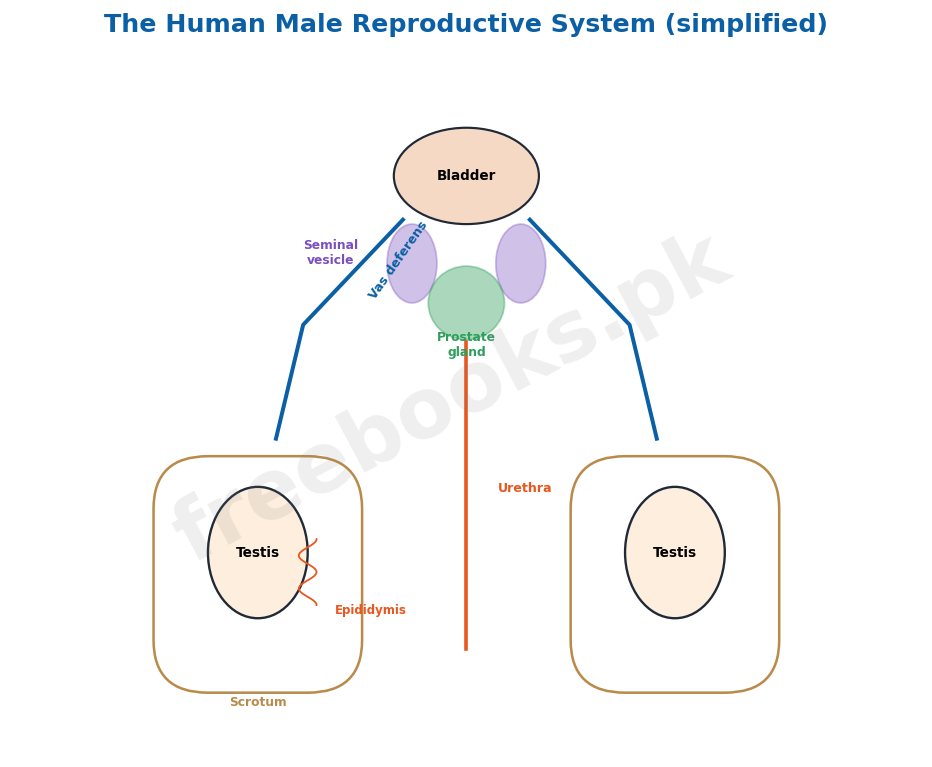
Reproduction in man involves separate male and female reproductive systems. The male reproductive system consists of external genitalia, including a pair of testes lying outside the body in the sac-like scrotum, and the male copulatory organ used to transfer sperm into the female reproductive tract. Each testis consists of a highly complex duct system called the seminiferous tubules, in which repeated mitotic division of the germinal epithelium produces spermatogonia; these increase in size and differentiate into primary spermatocytes, which undergo meiotic division to form secondary spermatocytes and then spermatids, which eventually differentiate into mature sperm, with fluid secreted by Sertoli cells providing a liquid medium, protection and nourishment for the developing sperm within the tubules. Mature sperm are transferred to the main duct of the male reproductive tract, the vas deferens (formed from the highly convoluted epididymis), before passing through the urinogenital duct and being discharged out of the body.
Between the seminiferous tubules lie interstitial cells (Leydig cells) that secrete the hormone testosterone, which is essential for the successful production of sperm and also controls the development of male secondary sexual characteristics during puberty, such as facial hair growth, voice deepening and increased muscle mass.
The Human Female Reproductive System and the Menstrual Cycle
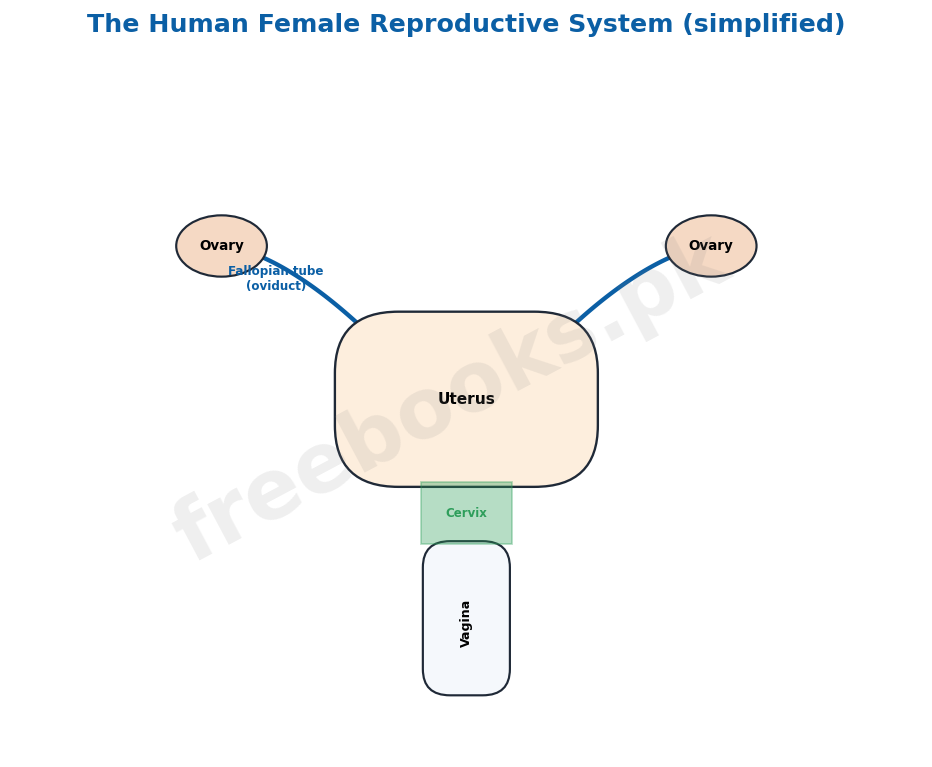
The female reproductive system consists of a pair of ovaries lying within the body cavity, oviducts (fallopian tubes), the uterus, and the external genitalia. Germ cells in the ovary produce numerous oogonia, which divide mitotically to form primary oocytes, enclosed in groups of follicle cells; each primary oocyte divides meiotically into a haploid secondary oocyte and a first polar body, and the second meiotic division proceeds only as far as metaphase, remaining incomplete until the oocyte is actually fertilized by a sperm. In humans, normally only one ovum is discharged from the ovary at a time, a process called ovulation; the ovum is then transferred to the oviduct (fallopian or uterine tube), which opens into the uterus, and fertilization, when it occurs, takes place in the proximal part of the oviduct, with the resulting zygote entering and implanting in the uterus, where a placenta forms between the uterine and foetal tissues to exchange oxygen, carbon dioxide, waste and nutrients; the uterus opens into the vagina through the cervix.
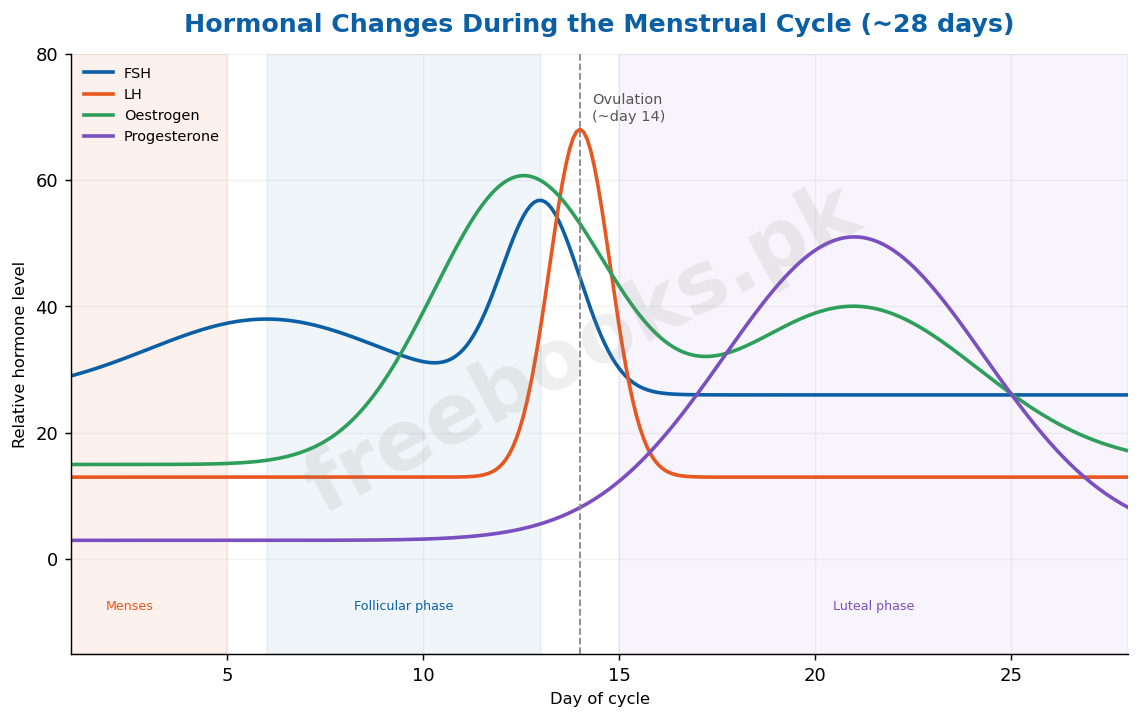
In females, unlike the continuous gamete production of males, egg production is cyclic: the periodic reproductive cycle, called the menstrual cycle, is completed in approximately 28 days and involves both the ovaries (ovarian cycle) and the uterus (uterine cycle), regulated by pituitary gonadotrophins in five key steps. First, at puberty the pituitary releases follicle stimulating hormone (FSH), stimulating the development of several primary follicles, of which normally only one continues to grow while the rest degenerate through follicle atresia. Second, under FSH stimulation the growing ovarian follicle produces oestrogen, which stimulates and vascularises the endometrium (uterine lining) while simultaneously inhibiting further pituitary FSH secretion. Third, the resulting fall in FSH and rise in oestrogen triggers the pituitary to secrete luteinizing hormone (LH), which induces ovulation, the release of the ovum from the follicle. Fourth, the ruptured follicle cells transform into the corpus luteum, a yellowish glandular structure that secretes progesterone, which further develops the endometrium and makes it receptive to implantation of a zygote. Fifth, if fertilization does not occur, the corpus luteum degenerates, progesterone secretion falls, the spongy endometrium breaks down, and the resulting discharge of blood and cell debris is called menstruation, usually lasting 3 to 7 days, after which the cycle begins again; the permanent cessation of the menstrual cycle, called menopause, marks the end of ovum production in a woman's life.
Pregnancy, Birth, Test Tube Babies and Sexually Transmitted Diseases
The total human gestation period (pregnancy) is usually about 280 days. Once established, the placenta secretes progesterone, which maintains the pregnancy (any disturbance in its secretion may cause premature birth or miscarriage), while the embryo remains enclosed in the protective, shock-absorbing amniotic fluid within the amniotic sac; from the beginning of the third month, the embryo is termed a foetus, with most major organs formed by the twelfth week and the rest of gestation devoted to growth. Birth is now understood to involve substantial foetal involvement in its timing: ACTH released from the foetal pituitary stimulates the foetal adrenal gland to release corticosteroids, which cross the placental barrier into the maternal circulation and cause a decrease in progesterone production; this progesterone decline stimulates the maternal pituitary to release oxytocin, which induces labour by causing rhythmic contractions of the uterine wall, pushing the baby downward through the dilating cervix until delivery; within 10 to 45 minutes after birth, the uterus contracts further to separate and expel the placenta (the 'afterbirth'), with bleeding controlled by contraction of smooth muscle surrounding the uterine blood vessels, and average blood loss of about 350 cubic centimetres.
Test tube babies (in vitro fertilization) help parents who are unable to conceive naturally due to physiological or physical abnormalities in either parent: sperm and ovum are fertilized in vitro (outside the female body), and the resulting zygote is implanted into the mother's uterus, where the placenta establishes itself and the remaining development proceeds normally to birth. Sexually transmitted diseases (STDs) are spread through sexual contact from carriers to healthy partners; gonorrhoea, caused by the bacterium Neisseria gonorrhoeae, mainly affects the mucous membrane of the urinogenital tract and can cause serious eye infections in newborns delivered through an infected birth canal; syphilis, caused by the spirochaete Treponema pallidum, damages the reproductive organs, eyes, bones, joints, central nervous system, heart and skin; genital herpes, caused by herpes simplex virus type 2, produces genital soreness and ulcers and can be transmitted to an infant during birth, damaging the eyes and central nervous system; and AIDS (Acquired Immune Deficiency Syndrome) is also commonly spread by sexual contact. All of these diseases can be controlled and prevented by avoiding sexual contact with an infected or carrier individual and maintaining hygienic conditions, with long-term medication available for treatment except, at present, for AIDS.
Important Definitions
Parthenocarpy
The development of fruit without fertilization and without seed formation, caused by hormonal imbalance (usually high auxin), as seen in banana and some varieties of grape and orange.
Seed dormancy
A special resting condition that enables a plant embryo to survive long periods of unfavourable environmental conditions, during which growth ceases or is greatly limited.
Photoperiodism
The response of a plant's growth and flowering to the relative length of day and night (photoperiod).
Vernalisation
The stimulation of flowering in biennial and perennial plants by prior exposure to a period of low temperature.
Parthenogenesis
The development of an egg into a new individual without fertilization by a sperm.
Oviparous
Describes animals, such as reptiles and birds, that lay shelled eggs in which the embryo develops externally after internal fertilization.
Viviparous
Describes animals, such as most mammals, in which the embryo develops fully inside the mother's body and is born alive.
Menstruation
The periodic discharge of blood and endometrial tissue from the uterus that occurs when fertilization does not take place, marking the end of one menstrual cycle.
Key Facts
| Item | Fact |
|---|---|
| Menstrual cycle length | The human menstrual cycle is completed in approximately 28 days (with individual variation). |
| Menstruation duration | Menstrual bleeding usually lasts 3 to 7 days. |
| Gestation period | Total human pregnancy (gestation) is usually about 280 days. |
| Average blood loss at birth | Average blood loss during afterbirth/placental separation is about 350 cm³. |
| Phytochrome forms | P660 absorbs red light (660 nm) and converts to P730; P730 absorbs far-red light (730 nm) and converts back to P660. |
| Vernalisation temperature | Around 4°C is found to be the most effective temperature for vernalisation; chilling duration required ranges from 4 days to 3 months. |
| Major foetal organs formed | Most major organs of the human foetus are formed by the 12th week of pregnancy. |
| Placental separation time | The placenta typically separates from the uterine wall and is expelled within 10-45 minutes after birth. |
Diagrams & Illustrations
The Human Male Reproductive System: a simplified labelled diagram showing the testis (within the scrotum), epididymis, vas deferens, seminal vesicle, prostate gland and urethra of the human male reproductive system.
The Human Female Reproductive System: a simplified labelled diagram showing the ovaries, fallopian tubes (oviducts), uterus, cervix and vagina of the human female reproductive system.
Hormonal Changes During the Menstrual Cycle: a graph showing the relative levels of FSH, LH, oestrogen and progesterone across the approximately 28-day human menstrual cycle, aligned with the follicular, ovulation and luteal phases.
Short Questions & Answers
Differentiate asexual and sexual reproduction in terms of parent number and genetic outcome.
Asexual reproduction requires only one parent and produces offspring genetically identical to that parent via mitosis, with no gametes or meiosis involved; sexual reproduction usually requires two parents whose meiotically produced haploid gametes fuse at fertilization, producing genetically variable offspring through genetic recombination.
What is parthenocarpy, and give two examples of fruits that commonly show it.
Parthenocarpy is the development of fruit without fertilization and without seed formation, caused by hormonal imbalance (usually high auxin levels in the ovary); banana and pineapple are common natural examples, and it can also be artificially induced in tomato and pepper.
Differentiate short-day plants and long-day plants in terms of their flowering requirement.
Short-day plants flower when the uninterrupted dark period exceeds a critical length (effectively requiring long nights, e.g. cocklebur, tobacco), while long-day plants flower when the dark period is shorter than a critical length (effectively requiring short nights, e.g. henbane, spinach); day-neutral plants flower independently of photoperiod altogether.
What is parthenogenesis, and how does it differ in honeybees and aphids?
Parthenogenesis is the development of an egg without fertilization; in honeybees it is haploid parthenogenesis, where unfertilized haploid eggs develop into haploid male drones, while in aphids it is diploid parthenogenesis, where a modified meiosis with total non-disjunction retains the diploid chromosome number, so the diploid egg develops into a young female.
Differentiate oviparous and viviparous animals with one example each.
Oviparous animals, such as reptiles and birds, undergo internal fertilization but lay shelled eggs in which the embryo develops externally; viviparous animals, such as most mammals, undergo internal fertilization followed by internal development of the embryo inside the mother's body, culminating in live birth.
List, in order, the five key hormonal steps of the human menstrual cycle.
(1) Pituitary FSH stimulates development of primary follicles; (2) the growing follicle secretes oestrogen, which builds the endometrium and inhibits further FSH; (3) falling FSH and rising oestrogen trigger a pituitary LH surge, inducing ovulation; (4) the ruptured follicle becomes the corpus luteum, secreting progesterone to prepare the endometrium for implantation; (5) if fertilization does not occur, the corpus luteum degenerates, progesterone falls, and the endometrium breaks down as menstruation.
Long Questions & Answers
Describe the structure and function of the human male reproductive system, including the process of sperm formation.
The human male reproductive system is built around a pair of testes, which lie outside the main body cavity within the sac-like scrotum, an arrangement that keeps the testes at a slightly lower temperature than the rest of the body, a condition essential for normal sperm production, together with the male copulatory organ, which is used to transfer sperm into the female reproductive tract during mating. Within each testis lies a highly complex, tightly coiled duct system called the seminiferous tubules, and it is here that spermatogenesis, the formation of mature sperm, takes place: repeated mitotic division of cells in the germinal epithelium lining the tubules produces spermatogonia, which grow in size and differentiate into primary spermatocytes; each primary spermatocyte then undergoes the first meiotic division to form two secondary spermatocytes, and each of these undergoes a second meiotic division to form spermatids, so that each original primary spermatocyte ultimately gives rise to four haploid spermatids, which then differentiate through a process of extensive structural remodelling (developing a head, midpiece and tail) into mature, motile sperm. Throughout this process, specialised Sertoli cells within the seminiferous tubules secrete a nourishing fluid that provides the developing sperm cells with a protective liquid medium and essential nourishment while they mature within the tubules. Once mature, sperm are transferred out of the seminiferous tubules into the epididymis, a highly convoluted duct in which sperm complete their maturation and are stored, before passing into the vas deferens, the main duct of the male reproductive tract, and ultimately through the urinogenital duct to be discharged from the body during ejaculation. In addition to their role in physically producing sperm, the testes also have a vital endocrine function: scattered between the seminiferous tubules are interstitial cells, also called Leydig cells, which secrete the steroid hormone testosterone; this hormone is essential for successful, ongoing sperm production and is also responsible for controlling the development of male secondary sexual characteristics that emerge at puberty, such as the growth of facial and body hair, deepening of the voice, and increased muscle mass, distinguishing testosterone's role as both a reproductive and a developmental hormone.
Describe the five key hormonal steps of the human menstrual cycle, and explain what happens if fertilization does not occur.
The human menstrual cycle is a periodic reproductive cycle completed in approximately 28 days that coordinates cyclic changes in both the ovaries (the ovarian cycle) and the uterus (the uterine cycle), and unlike the continuous gamete production seen in males, it ensures that egg production and release in females occurs only once per cycle, regulated throughout by pituitary gonadotrophin hormones acting in a precise five-step sequence. The cycle begins when, from puberty onward, the pituitary gland releases follicle stimulating hormone (FSH), which stimulates several primary follicles within the ovary to begin developing simultaneously, although normally only a single dominant follicle continues to mature with its primary oocyte while the remaining follicles undergo a degenerative process called follicle atresia and break down. In the second step, the single growing follicle, under continued FSH stimulation, itself begins producing the hormone oestrogen, which has two important simultaneous effects: it stimulates and vascularises the endometrium, the internal lining of the uterine wall, preparing it for a possible pregnancy, while at the same time inhibiting further secretion of FSH from the pituitary gland through negative feedback. In the third step, this combination of falling FSH and steadily rising oestrogen levels eventually triggers the pituitary gland to release a surge of luteinizing hormone (LH), and this LH surge is what actually induces ovulation, the rupture of the mature follicle and release of the ovum from the ovary. In the fourth step, following the release of the egg, the ruptured follicle cells do not simply degenerate but instead transform into a distinctive yellowish glandular structure called the corpus luteum, which begins secreting the hormone progesterone; progesterone continues the work oestrogen began, further developing the endometrium and specifically making it receptive to the implantation of a fertilized zygote, effectively preparing the uterus for a potential pregnancy. The fifth and final step depends entirely on whether fertilization has actually occurred during this cycle: if it has not, the corpus luteum, receiving no signal to persist, begins to degenerate on its own, causing progesterone secretion to fall sharply; without progesterone's continued support, the thickened, spongy endometrium can no longer be maintained and undergoes breakdown, and the resulting discharge of blood and cellular debris from the uterus through the vagina is what is experienced as menstruation, typically lasting 3 to 7 days, after which the entire five-step cycle begins again with a fresh round of FSH release; if fertilization has occurred, by contrast, the corpus luteum persists and progesterone secretion is maintained, sustaining the endometrium and supporting the establishment of pregnancy instead.
MCQs with Answers
Asexual reproduction produces offspring that are: (a) genetically variable (b) genetically identical to the parent (c) always haploid (d) always sterile
Correct Answer: (b) genetically identical to the parent. Asexual reproduction occurs by mitosis, so offspring are exact genetic copies of the single parent.
Parthenocarpy, seen in bananas and pineapples, results in fruit development: (a) with normal seed formation (b) without fertilization and without seed formation (c) only after vernalisation (d) only in short-day plants
Correct Answer: (b) without fertilization and without seed formation. Parthenocarpy is fruit development without fertilization, so no seeds are formed; it is caused by hormonal imbalance (usually high auxin).
A short-day plant will fail to flower if its long night is interrupted by a brief flash of which colour of light? (a) blue light (b) green light (c) red light (d) far-red light alone
Correct Answer: (c) red light. Red light interrupting the long night prevents flowering in short-day plants; far-red light can reverse this effect.
Vernalisation refers to the stimulation of flowering by prior exposure to: (a) long days (b) low temperature (c) high humidity (d) darkness alone
Correct Answer: (b) low temperature. Vernalisation is the stimulation of flowering in biennial/perennial plants by a period of low (chilling) temperature, detected by the shoot apex.
In honeybees, male drones develop through which process? (a) diploid parthenogenesis (b) haploid parthenogenesis (c) normal sexual reproduction (d) apomixis
Correct Answer: (b) haploid parthenogenesis. Honeybee drones develop from unfertilized haploid eggs, a process called haploid parthenogenesis.
Animals such as reptiles and birds that undergo internal fertilization but lay shelled eggs for external development are called: (a) viviparous (b) ovoviviparous (c) oviparous (d) parthenogenetic
Correct Answer: (c) oviparous. Oviparous animals fertilize internally but lay shelled eggs in which the embryo develops externally, protected by the shell.
Sperm cells mature and are produced within which structure of the testis? (a) interstitial (Leydig) cells (b) seminiferous tubules (c) epididymis (d) vas deferens
Correct Answer: (b) seminiferous tubules. Spermatogenesis occurs within the seminiferous tubules of the testis, lined by germinal epithelium and Sertoli cells.
The hormone that induces ovulation by triggering the rupture of the mature ovarian follicle is: (a) FSH (b) oestrogen (c) LH (luteinizing hormone) (d) progesterone
Correct Answer: (c) LH (luteinizing hormone). A surge of luteinizing hormone (LH), triggered by falling FSH and rising oestrogen, induces ovulation.
The corpus luteum, formed from the ruptured follicle after ovulation, mainly secretes: (a) FSH (b) LH (c) oestrogen only (d) progesterone
Correct Answer: (d) progesterone. The corpus luteum secretes progesterone, which develops the endometrium and prepares it for implantation.
Which sexually transmitted disease is caused by the bacterium Neisseria gonorrhoeae? (a) Syphilis (b) Genital herpes (c) Gonorrhoea (d) AIDS
Correct Answer: (c) Gonorrhoea. Gonorrhoea is caused by the gram-negative bacterium Neisseria gonorrhoeae, affecting the mucous membrane of the urinogenital tract.
Quick Revision Summary
- Two reproduction types: Asexual (1 parent, mitosis, identical offspring: fission/sporulation/budding/vegetative propagation/parthenogenesis/apomixis) vs Sexual (2 parents, meiosis+gamete fusion, genetically variable offspring).
- Plant reproduction: Parthenocarpy (fruit w/o fertilization, high auxin, banana/pineapple) | Seed dormancy (survival rest state) | Fruit set/ripening (auxin/gibberellin/cytokinin -> climacteric -> ethylene ripens).
- Photoperiodism: SDP (long-night plants, e.g. tobacco) vs LDP (short-night plants, e.g. henbane) vs DNP (independent). Phytochrome: P660 (red light) <-> P730 (far-red light); P660->P730 in day, reverse at night = biological clock -> florigen -> flowering. Vernalisation: low temp (~4°C) stimulates flowering via vernalin/gibberellin, sensed by shoot apex.
- Animal asexual reproduction: Parthenogenesis (haploid=honeybee drones; diploid=aphids), Tissue culturing/cloning (somatic nucleus -> enucleated egg -> clone), Identical twins (2-cell stage splits, mitotic/asexual) vs Fraternal twins (multiple eggs fertilized, sexual).
- Fertilization patterns: External (aquatic, e.g. frog/fish) vs Internal (terrestrial). Oviparous (shelled egg, external development – reptiles/birds) vs Viviparous (internal development, live birth – mammals) vs Ovoviviparous (shelled egg develops internally, e.g. platypus).
- Human male system: testes (scrotum) -> seminiferous tubules (spermatogonia -> primary spermatocyte -> secondary spermatocyte -> spermatid -> sperm) -> epididymis -> vas deferens -> urinogenital duct. Sertoli cells nourish sperm; interstitial (Leydig) cells secrete testosterone.
- Human female system + menstrual cycle (~28 days, 5 steps): FSH (grows follicle) -> oestrogen (builds endometrium, inhibits FSH) -> LH surge (ovulation) -> corpus luteum/progesterone (prepares endometrium) -> if no fertilization: corpus luteum degenerates -> menstruation (3-7 days). Gestation ~280 days; birth triggered by fetal ACTH -> corticosteroids -> falling progesterone -> oxytocin -> labour. Notes by freebooks.pk.
Exam Tips
- Build a two-column comparison table (asexual vs sexual reproduction) exactly as in Table 18.2 of the textbook – parent number, gametes, meiosis, offspring identity, occurrence, reproduction speed – this comparison is a very common exam question.
- Memorise the phytochrome conversion pair as one clean rule: P660 –(red light, day)–> P730 –(far-red light, night)–> P660, and link it directly to flowering promotion/inhibition in SDPs vs LDPs.
- Keep parthenogenesis examples paired precisely: honeybee = haploid parthenogenesis (drones), aphid = diploid parthenogenesis (females) – exam questions often test this exact pairing.
- Learn the oviparous/viviparous/ovoviviparous distinction with one animal example each (bird, mammal/human, platypus) rather than just the definitions alone.
- Write out spermatogenesis as a five-step numbered chain (spermatogonia -> primary spermatocyte -> secondary spermatocyte -> spermatid -> sperm) and be ready to state which steps are mitotic vs meiotic.
- Memorise the menstrual cycle as a five-step numbered sequence with hormone names in order (FSH -> oestrogen -> LH -> progesterone -> menstruation) – this is one of the most frequently asked long questions in this chapter.
- For STDs, build a compact 3-column table (disease, causative organism, key effect) for gonorrhoea, syphilis and genital herpes – this format matches how the question is usually asked.