
This chapter covers Biotechnology from the 2nd Year (FSc Part-II) Biology syllabus of the Punjab Curriculum and Textbook Board (PTB/PCTB). Since Mendel's work was rediscovered in 1900, geneticists have made startling advances leading to a new era of DNA technology, enabling the production of substances such as human insulin, drugs and vaccines, environmental clean-up bacteria, and genetically improved plants and animals; gene therapy in humans is now undergoing clinical trials. These notes are prepared by freebooks.pk.
The chapter covers recombinant DNA technology (cloning a gene, obtaining genes, restriction endonucleases, vectors, genomic libraries), the polymerase chain reaction (PCR) and DNA analysis techniques (DNA fingerprinting, gene sequencing), the Human Genome Project, biotechnology products from transgenic bacteria, plants and animals, cloning of transgenic animals, gene therapy, and tissue culture techniques and their applications in agriculture.
Learning Objectives
- Describe the components and process of recombinant DNA technology (gene of interest, restriction enzymes, vectors, DNA ligase).
- Explain the concept of a genomic library and how a specific gene can be located within it using probes.
- Describe the polymerase chain reaction (PCR) and its applications in DNA analysis and forensic science.
- Explain gene sequencing methods and the two primary goals of the Human Genome Project.
- Describe biotechnology products derived from transgenic bacteria, plants and animals.
- Explain the cloning of transgenic animals, using Dolly the sheep as an example.
- Describe gene therapy, including ex vivo and in vivo methods, with examples.
- Describe tissue culture techniques (micropropagation, meristem culture, protoplast culture, anther culture) and their applications.
Key Concepts
Recombinant DNA Technology: Obtaining Genes and Molecular Tools
Cloning of a gene produces many identical copies; recombinant DNA technology (genetic engineering) is used when a large quantity of a gene is required, while the polymerase chain reaction (PCR) can create copies more quickly within a laboratory test tube. Recombinant DNA technology aims to synthesise recombinant DNA containing DNA from two different sources, requiring: a gene of interest to be cloned, molecular scissors to cut it out, a molecular carrier (vector) on which to place it, and an expression system into which the gene-vector combination is introduced to produce a specific product. There are three ways to obtain a gene of interest: isolating it directly from a chromosome (using restriction endonucleases to cut at flanking sites), synthesising it chemically in the laboratory (for small genes), or synthesising complementary DNA (cDNA) from messenger RNA using the enzyme reverse transcriptase.
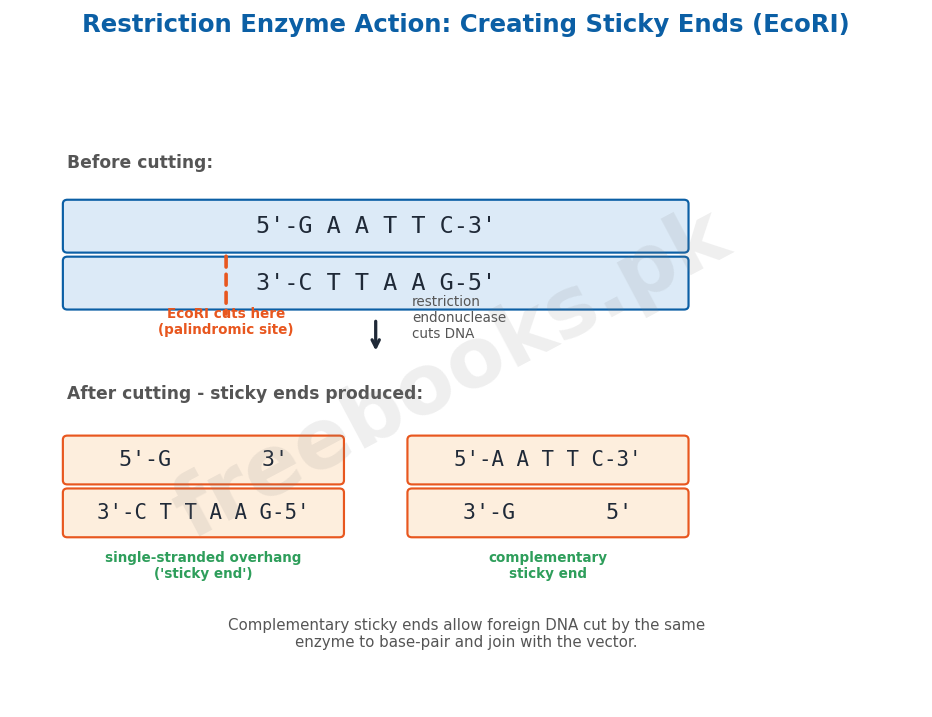
Restriction endonucleases (restriction enzymes) are natural bacterial enzymes that cut viral DNA to protect the bacterium from infection, without harming the bacterium's own chromosome; Hamilton O. Smith isolated the first restriction enzyme in 1970, and over 400 have since been identified (about 20 in common use), each cutting DNA at specific palindromic sequences (symmetrical 4-6 nucleotide sequences). EcoRI, a commonly used restriction enzyme, cuts double-stranded DNA to leave single-stranded, complementary overhangs called 'sticky ends,' which can bind to any DNA cut by the same enzyme through complementary base pairing, facilitating insertion of foreign DNA into a vector. A vector is the means by which recombinant DNA is introduced into a host cell; a common vector is the plasmid, a natural, extra-chromosomal, circular DNA molecule (discovered while studying Escherichia coli) that often carries antibiotic-resistance genes – plasmid pSC101 carries tetracycline resistance, while pBR322 carries both tetracycline and ampicillin resistance, enabling selection of bacteria that have taken up a modified plasmid.
Building Recombinant DNA and Genomic Libraries
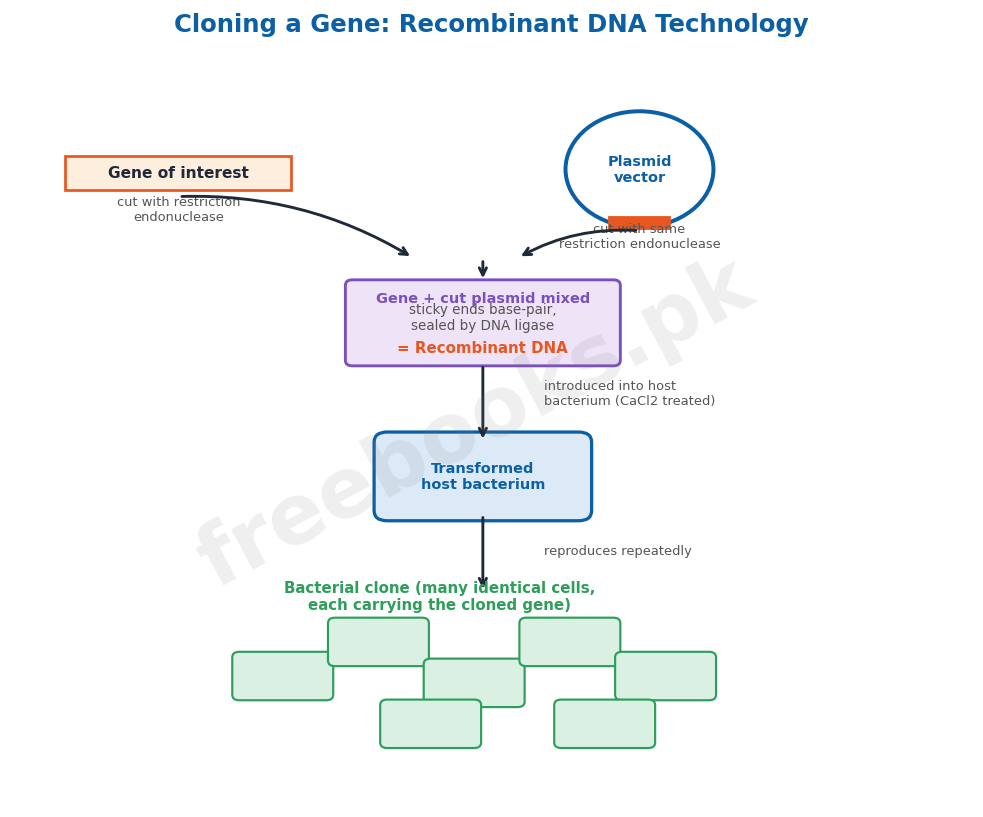
To prepare recombinant DNA, a plasmid is cut with the same restriction enzyme used to isolate the gene of interest, and the gene is then joined to the plasmid's sticky ends using the enzyme DNA ligase, which seals the foreign DNA into the vector, producing recombinant (chimaeric) DNA. A clone is a large number of identical molecules, cells, or organisms derived from one original; bacterial cells, especially when treated with calcium chloride to increase membrane permeability, readily take up recombinant plasmids, and as the bacterium reproduces, each resulting cell in the bacterial clone carries at least one copy of the plasmid (and hence the gene of interest), allowing the cloned gene or its protein product to be isolated. Besides plasmids, bacterial viruses (such as lambda phage) can also serve as vectors: after the phage infects a bacterium, the recombinant DNA it carries directs production of many new viruses, each carrying a copy of the cloned gene.
A genomic library is a collection of bacterial or bacteriophage clones, each carrying a different DNA segment from a source organism, together representing that organism's entire genome; it is made by slicing an organism's DNA into fragments and inserting them into vectors taken up by host bacteria. A specific gene can be located within a genomic library using a probe, a single-stranded, radioactively or fluorescently labelled nucleotide sequence that hybridises (base-pairs) specifically with its complementary target DNA sequence, allowing bacterial colonies carrying the gene of interest to be identified, isolated, and further analysed or cloned.
The Polymerase Chain Reaction (PCR) and DNA Analysis
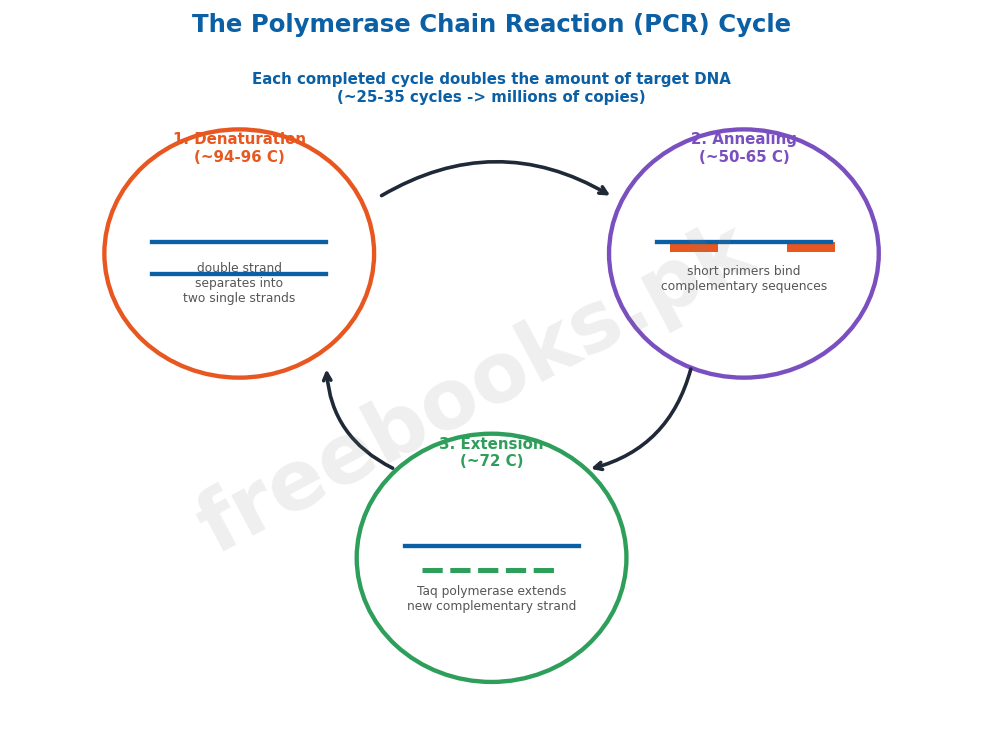
Kary B. Mullis developed the polymerase chain reaction (PCR) in 1983, providing a fast, inexpensive way to create millions of copies of a specific DNA sequence directly in a test tube, so precise that it can amplify a target present at less than one part per million in a DNA sample; PCR takes its name from DNA polymerase, the enzyme that repeatedly carries out replication to generate millions of copies, though it does not replace gene cloning when large quantities of protein product are needed. Before PCR, primers (about 20-base sequences complementary to the DNA flanking the target region) must be prepared, since DNA polymerase can only extend, not initiate, a DNA strand; the temperature-insensitive (thermostable) Taq polymerase, extracted from the hot-spring bacterium Thermus aquaticus, allows repeated heating cycles (to separate DNA strands) without needing to add fresh enzyme, and PCR is now performed automatically using a thermocycler.
DNA fingerprinting analyses an individual's entire genome using restriction enzymes to produce a unique collection of differently sized DNA fragments (restriction fragment length polymorphisms, RFLPs), separated by size using gel electrophoresis and visualised as a distinctive banding pattern using genetic marker probes recorded on X-ray film; since DNA is inherited, a person's fingerprint resembles that of their parents, enabling applications such as identifying remains, resolving disputed parentage cases (a child's bands must match both biological parents), and forensic criminal investigation (matching suspect DNA to evidence from a crime scene). PCR amplification and DNA analysis are also used to diagnose viral infections, genetic disorders and cancer, to trace human evolutionary history, and even to sequence DNA from ancient specimens, such as a 76,000-year-old mummified human brain and a 17-20 million-year-old plant fossil.
Gene Sequencing and the Human Genome Project
Methods developed in the late 1970s allow the nucleotide sequence of a purified DNA fragment to be determined by generating DNA pieces of different sizes (all starting from the same point but ending at different points), separating them by size on agarose gel, and reading the sequence directly from the gel; Sanger's method uses dideoxyribonucleoside triphosphates to terminate DNA synthesis at specific points, while the Maxam-Gilbert method chemically cuts DNA into fragments of different sizes. Modern automated sequencing uses chain-terminating nucleotides labelled with different coloured fluorescent dyes, allowing all four synthesis reactions in one tube; a laser-based detector reads the fluorescent colour of each band as it passes, and a computer records the resulting sequence – this automation has enabled sequencing of the genomes of many organisms, including bacteria, yeasts, Drosophila, Arabidopsis, mouse and human.
The Human Genome Project, a massive international effort originally funded by the U.S. government, has two primary goals: constructing a genetic map showing the sequence of genes along each chromosome (achieved for human chromosome 22 in 1999 and for the entire genome by 2001, revealing a genome 25 times larger than any previously sequenced), often relying on RFLPs to help pinpoint disease-causing genes (since a particular RFLP and a nearby defective gene, such as the one causing Huntington's disease, are often inherited together); and constructing a complete base-sequence map of all three billion base pairs of the human genome (equivalent to roughly 200 volumes of a 1000-page encyclopaedia), a goal that has now been fully achieved.
Biotechnology Products: Transgenic Bacteria and Transgenic Plants
Organisms with a foreign gene inserted into them are called transgenic organisms. Transgenic bacteria, grown in large vats called bioreactors, are used to produce biotechnology products such as insulin, human growth hormone, tissue plasminogen activator, haemophilia factor VIII, and hepatitis B vaccine; other transgenic bacteria have been engineered to protect plants from frost damage (frost-minus bacteria), protect corn roots from insects (via an insect toxin gene), clean up oil spills and toxic waste, act as biofilters against airborne pollutants, remove sulfur from coal, and even extract metals such as copper, uranium and gold through enhanced bioleaching.
Transgenic plants are produced by introducing foreign genes into immature embryos or into protoplasts (plant cells with the cell wall removed), often using an electric current to create temporary pores in the plasma membrane for DNA entry; foreign genes have made cotton, corn and potato pest-resistant (via an insect toxin) and soybeans herbicide-resistant, with transgenic crops planted on over 70 million acres worldwide by 1999. Since regenerating cereal grains from protoplasts is difficult, other methods are used for crops like corn and wheat: the bacterium Agrobacterium (which naturally infects plants) can be engineered to carry a recombinant plasmid into plant cells, and the 'particle gun' developed by Sanford and Klein (1987) bombards plant tissue with DNA-coated microscopic metal particles. Plants have also been engineered to produce biodegradable plastic, human hormones, clotting factors, and antibodies (e.g. in corn and soybean seeds) for medical use.
Transgenic Animals and Cloning of Transgenic Animals
Techniques for inserting genes into animal eggs (by micro-injection or vortex mixing with silicon-carbide needles) have produced transgenic fish, cows, pigs, rabbits and sheep, many carrying the gene for bovine growth hormone to increase size; genetically engineered fish are kept in escape-proof ponds due to ecological concerns. 'Gene pharming,' the use of transgenic farm animals to produce pharmaceuticals secreted in their milk, is being pursued for treatments of cystic fibrosis, cancer, and blood diseases; antithrombin III, used to prevent blood clots during surgery, is currently produced by a herd of transgenic goats. Researchers have also engineered mice to secrete human growth hormone in their urine rather than milk, since urine offers practical advantages (produced by all animals from birth, unlike milk, which only mature females produce).
Cloning a transgenic animal (asexual reproduction using only that one animal's genes) is the preferred way to obtain identical copies once a useful transgenic animal has been produced; although it was long believed adult vertebrates could not be cloned (since specialised cells turn off most of their genes), scientists at the Roslin Institute in Scotland announced the successful cloning of an adult sheep, Dolly, in 1997, followed by cloned calves and goats. The technique involves injecting an enucleated egg with a diploid (2n) nucleus from an adult somatic cell (e.g. cumulus cells, which cling to the egg after ovulation), then chemically stimulating the egg to begin dividing; the resulting offspring has the genotype and phenotype of the nucleus donor. Human cloning is currently prohibited by presidential order in the United States, though some other countries continue related research.
Gene Therapy
Gene therapy is the insertion of genetic material into human cells to treat a disorder, either by supplying healthy genes to compensate for faulty ones or by using genes to treat conditions such as cancer and cardiovascular disease; it uses two main approaches, ex vivo (cells are removed, modified, and returned to the patient) and in vivo (genetic material is delivered directly into the patient's body). In ex vivo therapy for severe combined immunodeficiency syndrome (SCID), caused by a missing adenosine deaminase (ADA) enzyme needed for T and B cell maturation, bone marrow stem cells are removed, infected with a retrovirus carrying a normal ADA gene, and returned to the patient, producing sustained improvement in immune function. Similarly, for familial hypercholesterolemia (a liver receptor deficiency causing dangerously high blood cholesterol), a portion of excised liver tissue is infected with a retrovirus carrying the normal receptor gene, lowering serum cholesterol in several patients.
In vivo gene therapy is being tested for cystic fibrosis (caused by a missing chloride ion channel gene), using liposomes coated with the therapeutic gene sprayed into the nostrils, though limited gene transfer has so far restricted its success; gene therapy is also used to make cancer patients more tolerant of chemotherapy or make tumours more vulnerable to it, and a plasmid-coated balloon catheter carrying a vascular endothelial growth factor gene has been used during coronary angioplasty to promote blood vessel growth around obstructed arteries. Future applications may include treating haemophilia (via cells with normal clotting-factor genes, possibly in implanted organoids) and Parkinson's disease (via grafted dopamine-producing cells).
Tissue Culture and Genetic Engineering of Plants for Improved Traits
Tissue culture is the growth of tissue in an artificial liquid culture medium; German botanist Gottlieb Haberlandt proposed in 1902 that plant cells are totipotent (each cell retains the full genetic potential of the organism), and in 1958 Cornell botanist F.C. Steward confirmed this by growing a complete carrot plant from a small piece of phloem tissue, whose dividing cells first formed an undifferentiated callus before differentiating into shoots and roots. Tissue culture has led to micropropagation, the commercial mass production of genetically identical (clonal) seedlings, often via meristem culture (using auxin and cytokinin to stimulate new shoot growth from a shoot tip), which has the added benefit of producing virus-free plants, since meristem tissue itself is naturally virus-free. Protoplasts (cell-wall-free plant cells) can also regenerate a new wall, divide, and be manipulated into somatic embryos, sometimes encapsulated as shippable 'artificial seeds' and mass-produced in bioreactors for crops like tomato and celery and ornamentals like lilies; anther culture allows haploid plants to be generated from pollen grain cells, useful for producing homozygous diploid plants (after chromosome doubling) that directly express recessive traits, while cell suspension cultures (e.g. of Cinchona ledgeriana for quinine, or Digitalis lanata for digitoxin) can produce valuable plant chemicals without farming the whole plant.
Traditional hybridisation (crossing different plant varieties) has long been used to combine desirable traits, but modern genetic engineering allows direct gene transfer into a plant protoplast, using high-voltage electric pulses to create temporary membrane pores for DNA entry (demonstrated early on by inserting the firefly luciferase gene into tobacco, making the plants glow under luciferin). Since cereal protoplasts are difficult to regenerate, alternative methods are used for crops like corn and wheat: the Agrobacterium bacterium can carry a recombinant plasmid into intact plant cells, or the 'particle gun' can bombard plant callus tissue with DNA-coated metal particles. Genetic engineering has produced crops with improved agricultural traits (herbicide, salt, drought and cold tolerance, improved yield) and improved food quality traits (altered fatty acid, protein, starch and amino acid content, disease resistance); notable achievements include salt-tolerant Arabidopsis (engineered to sequester excess sodium in vacuoles) and soybeans producing modified, healthier oleic acid-based oils, with ongoing research aiming to introduce the more heat- and drought-efficient C4 photosynthetic pathway into rice.
Important Definitions
Recombinant DNA
DNA formed by joining DNA segments from two different sources, such as a gene of interest inserted into a plasmid vector.
Restriction endonuclease
A bacterial enzyme that cuts DNA at specific palindromic sequences, used as a molecular scissor in recombinant DNA technology.
Vector
The means (such as a plasmid or virus) by which recombinant DNA is introduced into a host cell.
Genomic library
A collection of bacterial or bacteriophage clones, each carrying a different DNA fragment, that together represent an organism's entire genome.
Polymerase chain reaction (PCR)
A laboratory technique that rapidly creates millions of copies of a specific DNA sequence using repeated cycles of DNA polymerase-driven replication.
Transgenic organism
An organism that has had a foreign gene inserted into its genome.
Gene therapy
The insertion of genetic material into human cells to treat a disorder, either by supplying healthy genes or using genes therapeutically.
Totipotent
Describes a cell (such as a plant cell) that retains the full genetic potential to develop into a complete organism.
Key Facts
| Item | Fact |
|---|---|
| First restriction enzyme discovery | Hamilton O. Smith isolated the first restriction enzyme in 1970; over 400 have since been identified, about 20 in common use. |
| PCR development | Kary B. Mullis developed PCR in 1983; PCR can amplify a target present at less than 1 part per million of total DNA. |
| Taq polymerase source | Taq polymerase (thermostable) is extracted from the hot-spring bacterium Thermus aquaticus. |
| Human genome size | The human genome contains about 3 billion base pairs, about 25 times larger than any other genome sequenced at the time. |
| Chromosome 22 and full genome sequencing dates | Human chromosome 22 was sequenced in 1999; the full human genome was published in 2001. |
| First cloned mammal | Dolly the sheep, cloned at the Roslin Institute, Scotland, was announced in 1997 – the first cloned adult vertebrate. |
| Transgenic crop acreage (1999) | Transgenic crops were planted on more than 70 million acres worldwide in 1999. |
| Ancient DNA sequencing examples | PCR has enabled sequencing of DNA from a 76,000-year-old mummified human brain and a 17-20 million-year-old plant fossil. |
Diagrams & Illustrations
Restriction Enzyme Action: Creating Sticky Ends: a diagram showing a restriction enzyme (e.g. EcoRI) cutting double-stranded DNA at a palindromic recognition sequence to produce complementary single-stranded 'sticky ends' that can bind foreign DNA cut by the same enzyme.
Cloning a Gene: Recombinant DNA Technology: a flow diagram showing the steps of gene cloning: cutting the gene of interest and a plasmid vector with the same restriction enzyme, joining them with DNA ligase to form recombinant DNA, and introducing this into a host bacterium to form a bacterial clone.
The Polymerase Chain Reaction (PCR) Cycle: a diagram showing the three repeating steps of a PCR cycle: denaturation (heating to separate DNA strands), annealing (primers bind complementary sequences), and extension (Taq polymerase synthesizes new complementary strands), doubling the DNA with each cycle.
Short Questions & Answers
What is a restriction endonuclease, and why is it called a 'molecular scissor'?
A restriction endonuclease is a bacterial enzyme that cuts DNA at specific palindromic sequences; it is called a molecular scissor because it precisely cuts out or opens DNA at defined sites, enabling a gene of interest and a vector to be cut and later joined together in recombinant DNA technology.
What is a vector, and give one example.
A vector is the means by which recombinant DNA is introduced into a host cell; a common example is a plasmid, a natural, circular, extra-chromosomal bacterial DNA molecule that can carry a gene of interest into a host bacterium.
What is a genomic library, and how is a specific gene located within it?
A genomic library is a collection of bacterial or bacteriophage clones, each carrying a different DNA fragment, together representing an organism's entire genome; a specific gene is located using a labelled probe, a single-stranded nucleotide sequence that hybridizes specifically with its complementary target sequence.
Why is Taq polymerase essential for PCR?
Taq polymerase, extracted from the heat-tolerant bacterium Thermus aquaticus, is thermostable and can withstand the high temperatures used to separate DNA strands during each PCR cycle, so it does not need to be replaced between cycles, allowing PCR to be automated in a thermocycler.
What is DNA fingerprinting, and name one of its applications.
DNA fingerprinting is a technique that analyzes an individual's unique pattern of restriction fragment length polymorphisms (RFLPs) using restriction enzymes and gel electrophoresis; applications include forensic criminal identification, resolving disputed parentage cases, and identifying human remains.
What is meristem culture, and why does it produce virus-free plants?
Meristem culture is a tissue culture technique in which new shoots are grown from a shoot tip using auxin and cytokinin in liquid medium; it produces virus-free plants because meristem tissue itself is naturally free of plant viruses, unlike other plant tissues.
Long Questions & Answers
Describe the complete methodology for producing recombinant DNA to be used in gene cloning.
Producing recombinant DNA for the purpose of gene cloning follows a carefully sequenced series of steps, each depending on a specific molecular tool, and understanding the full methodology requires tracing this process from the initial identification of the gene of interest all the way through to its expression inside a living host cell. The process begins with obtaining the gene of interest itself, which can be accomplished in one of three distinct ways: it can be directly isolated from a chromosome by cutting out the DNA on either flanking side of the gene using specific restriction endonuclease enzymes; if the gene happens to be relatively small, it can instead simply be synthesized chemically from scratch in a laboratory setting; or, in what is actually one of the most common approaches used in practice, it can be synthesized indirectly starting from a purified sample of the corresponding messenger RNA molecule, using the specialized enzyme reverse transcriptase to work backward from RNA to produce a complementary DNA molecule, generally referred to simply as cDNA. Once the gene of interest has been successfully obtained through whichever of these three methods proves most suitable, the next essential step involves selecting an appropriate vector, meaning the specific molecular carrier that will actually be used to transport this gene of interest into a living host cell where it can subsequently be replicated and expressed; one of the most commonly used types of vector for this purpose is a bacterial plasmid, which is a naturally occurring, small, circular loop of DNA that exists separately from a bacterium's main chromosome and that frequently carries useful marker genes of its own, such as genes conferring resistance to particular antibiotics, which later prove extremely valuable for identifying and selecting successfully transformed bacterial colonies. With both the isolated gene of interest and the chosen plasmid vector now available, the critical step of actually constructing the recombinant DNA molecule itself can begin, and this is accomplished by treating both the plasmid vector and the DNA containing the gene of interest with the exact same specific type of restriction endonuclease enzyme; because restriction enzymes cut DNA at highly specific palindromic recognition sequences in a characteristically staggered fashion, this treatment leaves both the cut plasmid and the excised gene fragment with matching single-stranded overhanging ends, commonly referred to as 'sticky ends,' precisely because their exposed, complementary bases readily allow them to bind back together again through ordinary complementary base pairing wherever they happen to meet. Once the gene of interest and the opened plasmid vector have been mixed together and allowed to associate through this sticky-end base pairing, a second essential enzyme, DNA ligase, is then introduced into the reaction mixture, and this enzyme performs the crucial final sealing step by permanently joining the sugar-phosphate backbones of the two DNA pieces together at the point where they meet, thereby covalently uniting what were originally two entirely separate pieces of DNA, derived from two genuinely different biological sources, into one single, continuous, unified molecule that is now properly termed recombinant DNA, sometimes also called chimaeric DNA in recognition of its hybrid, composite origin. With the recombinant DNA molecule now fully assembled, the final major step in the overall methodology involves successfully introducing this newly constructed recombinant plasmid into an appropriate living host cell, most commonly a bacterium such as Escherichia coli, a process that is typically made significantly more efficient by first treating the host bacterial cells with calcium chloride, which has the effect of temporarily increasing the permeability of their outer cell membrane and thereby substantially improving the efficiency with which the bacterial cells will subsequently take up the recombinant plasmid DNA from the surrounding solution. Once a given host bacterium has successfully taken up a copy of the recombinant plasmid, that single transformed bacterial cell will then begin to reproduce and divide repeatedly in the ordinary way, and because the plasmid itself is able to replicate independently within the bacterium alongside its own normal chromosome, every single one of the many new daughter bacterial cells produced through this ongoing division will likewise inherit and continue to carry at least one complete copy of that same recombinant plasmid, thereby collectively forming what is properly termed a bacterial clone; critically, because the originally inserted gene of interest remains fully intact and functional within this recombinant plasmid throughout this entire process, every single bacterium making up this expanding clone population will now also carry, and importantly will actively express, that same gene of interest, meaning the clone as a whole will now reliably manufacture whatever specific protein product that particular gene happens to encode, and this desired protein product, or alternatively simply many additional purified copies of the cloned gene itself, can then finally be successfully harvested, isolated and purified directly from this rapidly growing bacterial clone population for whatever further practical, medical or research purpose was originally intended.
Explain the polymerase chain reaction (PCR), describing how it is carried out to produce multiple copies of a DNA segment, and discuss its major applications.
The polymerase chain reaction, universally known simply by its abbreviation PCR, was originally developed by the American biochemist Kary B. Mullis back in 1983, and it represented an absolutely revolutionary advance in molecular biology precisely because it provided researchers, for the very first time, with the ability to rapidly and inexpensively generate literally millions of identical copies of one single, specific, targeted sequence of DNA directly within an ordinary laboratory test tube, entirely replacing the far slower, more cumbersome and considerably more expensive earlier methods that had previously been available for obtaining multiple copies of a particular DNA sequence of interest. The overall technique takes its distinctive name quite directly from DNA polymerase, which is specifically the same natural cellular enzyme that is ordinarily responsible for carrying out the entire process of DNA replication within any living cell, and PCR is properly described as a 'chain reaction' specifically because this same DNA polymerase enzyme is made to repeatedly and continuously carry out fresh rounds of replication over and over again in immediate succession, with each successive round essentially doubling the total quantity of the specific target DNA sequence present, until an extraordinarily large number, potentially many millions, of identical copies of that original target sequence have ultimately been produced within the reaction tube. Before the actual PCR amplification process itself can even begin, however, it is first absolutely essential to have prepared and made available a pair of short synthetic DNA sequences known as primers, each one typically only about twenty nucleotide bases in length, and these primers must be specifically designed and synthesized so that they are precisely complementary to the two short stretches of known DNA sequence that lie directly on either flanking side of the particular target DNA region that is actually intended to be amplified; these primers turn out to be genuinely indispensable to the entire procedure because DNA polymerase itself, despite being perfectly capable of extending an already-existing strand of nucleotides, is nevertheless completely incapable of spontaneously initiating brand new DNA synthesis entirely from scratch on its own, meaning it absolutely requires a short, pre-existing, already double-stranded starting point, provided specifically by these bound primers, from which it can then begin extending. The actual PCR procedure itself, once all necessary primers, template DNA, free nucleotides and DNA polymerase enzyme have been properly combined together within the reaction tube, proceeds through a repeating cycle made up of three distinct, precisely temperature-controlled steps that are carried out automatically and repeatedly using a specialized piece of laboratory equipment called a thermocycler: first, during the denaturation step, the entire reaction mixture is briefly heated to a very high temperature, typically somewhere in the region of 94 to 96 degrees Celsius, which has the direct physical effect of breaking apart the hydrogen bonds holding the two original strands of the template DNA double helix together, thereby fully separating them into two individual single strands; second, during the subsequent annealing step, the temperature of the reaction mixture is then rapidly lowered to a considerably cooler temperature, typically somewhere around 50 to 65 degrees Celsius, which allows the short synthetic primer sequences present in great excess within the tube to specifically locate, bind to, and base-pair with their exactly complementary target sequences on each of the two now-separated single template DNA strands; and third, during the final extension step, the reaction temperature is then raised once again to an intermediate working temperature, typically around 72 degrees Celsius, which represents the optimal working temperature for the specific heat-tolerant DNA polymerase enzyme employed in the reaction, allowing that enzyme to actively bind at each primer site and then proceed to synthesize an entirely new, complementary DNA strand by progressively adding individual nucleotides one at a time, extending outward from each bound primer along the length of the template strand. This entire three-step cycle of denaturation, annealing and extension is then simply repeated over and over again, typically for something in the range of twenty-five to thirty-five full repeated cycles in total, and because each successive completed cycle has the direct mathematical effect of precisely doubling the total number of copies of the specific target DNA sequence that are present within the reaction tube relative to the number present just before that particular cycle began, this repeated cyclical doubling process rapidly and predictably generates an enormously exponential increase in the overall quantity of the desired target DNA sequence, typically yielding many millions of essentially identical copies after only a relatively modest total number of completed cycles, usually requiring in practice only a few hours total to complete the entire automated procedure from start to finish. A particularly crucial practical enabling factor underlying the entire modern PCR technique is specifically the use of a special thermostable variant of DNA polymerase, most commonly a form known as Taq polymerase, which is originally naturally extracted directly from Thermus aquaticus, a distinctive bacterium that is naturally found thriving in extremely hot natural springs; because this particular thermostable form of the enzyme is able to comfortably withstand the very high denaturation temperatures used repeatedly throughout the PCR cycling process without itself becoming permanently damaged or destroyed by that repeated heating, it conveniently never needs to be freshly added again between each successive PCR cycle, which is precisely the specific technical feature that first made full automation of the entire PCR process practically possible in the first place. In terms of its now extraordinarily widespread and diverse practical applications, PCR technology is very commonly employed for numerous important purposes across many different fields, including the rapid diagnosis of active viral infections, inherited genetic disorders and various forms of cancer directly from small clinical samples; for forensic scientific investigations, where it is routinely used to successfully identify criminal suspects, missing persons or unidentified human remains from only very minute biological samples such as tiny traces of blood, hair or skin cells recovered from a crime scene; and additionally for detailed evolutionary and archaeological research purposes, where its remarkable sensitivity has famously enabled successful genetic sequencing efforts even on extremely old and degraded biological samples, including notably a human brain sample recovered from a naturally mummified body estimated to be around 76,000 years old, as well as an ancient fossilized plant specimen judged to be somewhere between roughly 17 and 20 million years old.
MCQs with Answers
Restriction endonucleases cut DNA at specific sequences called: (a) codons (b) primers (c) palindromic sequences (d) introns
Correct Answer: (c) palindromic sequences. Restriction enzymes cut DNA at specific palindromic (symmetrical) recognition sequences.
A common type of vector used to introduce recombinant DNA into a host bacterium is a: (a) ribosome (b) plasmid (c) mitochondrion (d) centriole
Correct Answer: (b) plasmid. Plasmids, natural circular extra-chromosomal DNA molecules, are commonly used as vectors in recombinant DNA technology.
The enzyme that seals a gene of interest into a cut vector, forming recombinant DNA, is called: (a) DNA polymerase (b) restriction endonuclease (c) DNA ligase (d) reverse transcriptase
Correct Answer: (c) DNA ligase. DNA ligase joins (seals) the sticky ends of a gene of interest and a cut vector to form recombinant DNA.
A single-stranded, labelled nucleotide sequence used to locate a specific gene in a genomic library is called a: (a) primer (b) probe (c) vector (d) plasmid
Correct Answer: (b) probe. A probe is a labelled single-stranded sequence that hybridizes with its complementary target gene sequence to locate it.
The polymerase chain reaction (PCR) was developed in 1983 by: (a) Hamilton O. Smith (b) Kary B. Mullis (c) Fred Sanger (d) Karl Landsteiner
Correct Answer: (b) Kary B. Mullis. Kary B. Mullis developed PCR in 1983, revolutionizing rapid DNA amplification.
The thermostable DNA polymerase used in PCR, extracted from Thermus aquaticus, is called: (a) DNA ligase (b) Taq polymerase (c) reverse transcriptase (d) restriction endonuclease
Correct Answer: (b) Taq polymerase. Taq polymerase, extracted from the heat-loving bacterium Thermus aquaticus, withstands PCR's high denaturation temperatures.
DNA fingerprinting relies on differences between individuals in their: (a) codon usage (b) restriction fragment length polymorphisms (RFLPs) (c) ribosome number (d) chromosome shape
Correct Answer: (b) restriction fragment length polymorphisms (RFLPs). DNA fingerprinting exploits restriction fragment length polymorphisms (RFLPs), unique fragment patterns produced by restriction enzyme digestion.
The first mammal successfully cloned from an adult somatic cell nucleus was: (a) a mouse named Snuppy (b) a sheep named Dolly (c) a goat named Bessie (d) a cow named Daisy
Correct Answer: (b) a sheep named Dolly. Dolly the sheep, cloned at the Roslin Institute in Scotland (announced 1997), was the first mammal cloned from an adult cell nucleus.
Ex vivo gene therapy for SCID (severe combined immunodeficiency) targets a deficiency of which enzyme? (a) insulin (b) adenosine deaminase (ADA) (c) DNA ligase (d) Taq polymerase
Correct Answer: (b) adenosine deaminase (ADA). SCID patients lack adenosine deaminase (ADA), essential for T and B cell maturation; ex vivo gene therapy restores a functional ADA gene via bone marrow stem cells.
Meristem culture is favoured for micropropagation partly because meristem tissue is naturally: (a) virus-free (b) haploid (c) resistant to herbicides (d) salt-tolerant
Correct Answer: (a) virus-free. Meristem tissue is naturally free of plant viruses, so plants propagated via meristem culture are also virus-free.
Quick Revision Summary
- Recombinant DNA basics: Gene of interest + Molecular scissors (restriction endonuclease, e.g. EcoRI, cuts at palindromic sequences -> sticky ends) + Vector (plasmid/virus) + DNA ligase (seals gene into vector) = Recombinant/chimaeric DNA. 3 ways to get a gene: isolate from chromosome, synthesize chemically, make cDNA from mRNA (reverse transcriptase).
- Cloning: transformed bacteria (CaCl2 treated) take up recombinant plasmid -> reproduce -> bacterial clone, all expressing gene of interest. Genomic library = collection of clones covering whole genome; probe (labelled complementary sequence) locates specific gene.
- PCR (Mullis, 1983): primers (~20 bases) + Taq polymerase (thermostable, from Thermus aquaticus) + thermocycler = millions of copies via denaturation -> annealing -> extension cycles. DNA fingerprinting: restriction enzymes -> RFLPs -> gel electrophoresis -> probe hybridization -> banding pattern (forensics, paternity, identification).
- Gene sequencing: Sanger's dideoxy method / Maxam-Gilbert method -> automated fluorescent sequencing. Human Genome Project: 2 goals = genetic map (gene locations, RFLPs help find disease genes) + base sequence map (3 billion bp); chromosome 22 sequenced 1999, full genome 2001.
- Transgenic organisms = foreign gene inserted. Transgenic bacteria (bioreactors) -> insulin, growth hormone, vaccines, oil-spill cleanup. Transgenic plants -> pest/herbicide resistant crops (Agrobacterium, particle gun methods), improved traits table (herbicide/salt/drought/cold tolerant, improved yield/quality).
- Transgenic animals: gene inserted into eggs -> larger fish/livestock; gene pharming (drugs in milk/urine, e.g. antithrombin III from goats). Cloning of transgenic animals: enucleated egg + adult somatic cell nucleus (e.g. cumulus cells) -> Dolly the sheep (1997, Roslin Institute) = first cloned adult vertebrate.
- Gene therapy: Ex vivo (cells removed, modified with retrovirus, returned – e.g. SCID/ADA deficiency, familial hypercholesterolemia) vs In vivo (direct delivery – e.g. cystic fibrosis via liposomes, angioplasty balloon with VEGF gene). Tissue culture: totipotency (Haberlandt 1902, Steward 1958 carrot) -> callus -> micropropagation/meristem culture (virus-free clones), protoplast/somatic embryos, anther culture (haploid->homozygous diploid), cell suspension culture (quinine, digitoxin). Notes by freebooks.pk.
Exam Tips
- Memorise the 4-component recombinant DNA technology checklist in order (gene of interest -> molecular scissors -> vector -> expression system) – this exact sequence structures most 'describe recombinant DNA technology' long questions.
- Keep restriction enzyme + DNA ligase as a paired 'cut and paste' fact: restriction endonuclease CUTS DNA at palindromic sites (sticky ends), DNA ligase SEALS/joins DNA pieces together – these are commonly confused in exams.
- Learn the PCR three-step cycle (denaturation -> annealing -> extension) with one temperature-related fact for each step, plus why Taq polymerase specifically is essential (thermostable, survives repeated heating).
- Build a simple 2-column table distinguishing gene cloning (bacterial-based, large protein quantities) from PCR (test-tube based, fast DNA copies, no protein product) since exams often test this distinction directly.
- Remember Dolly the sheep as one linked fact: 1997, Roslin Institute (Scotland), first cloned adult vertebrate, made from an enucleated egg + adult cumulus cell nucleus.
- For gene therapy, keep ex vivo vs in vivo as opposite directions with one named disease example each (ex vivo = SCID/ADA deficiency and familial hypercholesterolemia; in vivo = cystic fibrosis via liposomes, angioplasty/VEGF).
- Memorise the tissue culture technique-to-purpose pairing (micropropagation=mass clonal seedlings, meristem culture=virus-free clones, anther culture=haploid/homozygous plants, cell suspension culture=chemical production like quinine) rather than the definitions alone.