This chapter covers Variety of Life from the 1st Year (FSc Part-I) Biology syllabus of the Punjab Curriculum and Textbook Board (PTB/PCTB). With well over a million known species of animals and plants, biologists need a logical system to organize this diversity — the chapter builds the taxonomic hierarchy from species up to kingdom, explains Linnaeus's binomial nomenclature, and traces how classification systems evolved from two kingdoms to Whittaker's influential five-kingdom system. These notes are prepared by freebooks.pk.
The second half of the chapter turns to viruses — non-cellular infectious particles that sit at the boundary of what we call life. It covers their discovery, structure, the lytic and lysogenic life cycles of bacteriophages, retroviruses such as HIV, and major viral diseases including smallpox and hepatitis, giving essential background for the immunology and microbiology topics that follow in later chapters.
Learning Objectives
- Define species and describe the taxonomic hierarchy from species to kingdom.
- Explain binomial nomenclature and its rules, with examples.
- Trace the development of classification systems from two kingdoms to Whittaker's five-kingdom system.
- Describe the characteristics and structure of viruses, including the virion, capsid and envelope.
- Describe the lytic and lysogenic cycles of a bacteriophage.
- Explain what retroviruses are and how HIV causes AIDS.
- Describe major viral diseases, including smallpox and the different types of viral hepatitis.
Key Concepts
Principles of Classification and Taxonomic Hierarchy
With well over a million known species of animals and half a million of plants, biologists need a meaningful system of classification based on relationship and similarity in form and structure, not arbitrary traits such as colour or height. A species is defined as a group of natural populations that can interbreed freely among themselves and produce fertile offspring, but are reproductively isolated from all other such groups in nature; each species has its own distinct structural, ecological and behavioural characteristics and does not exchange genes with other species, though interbreeding cannot be used as a criterion for species recognition in organisms that reproduce mainly asexually.
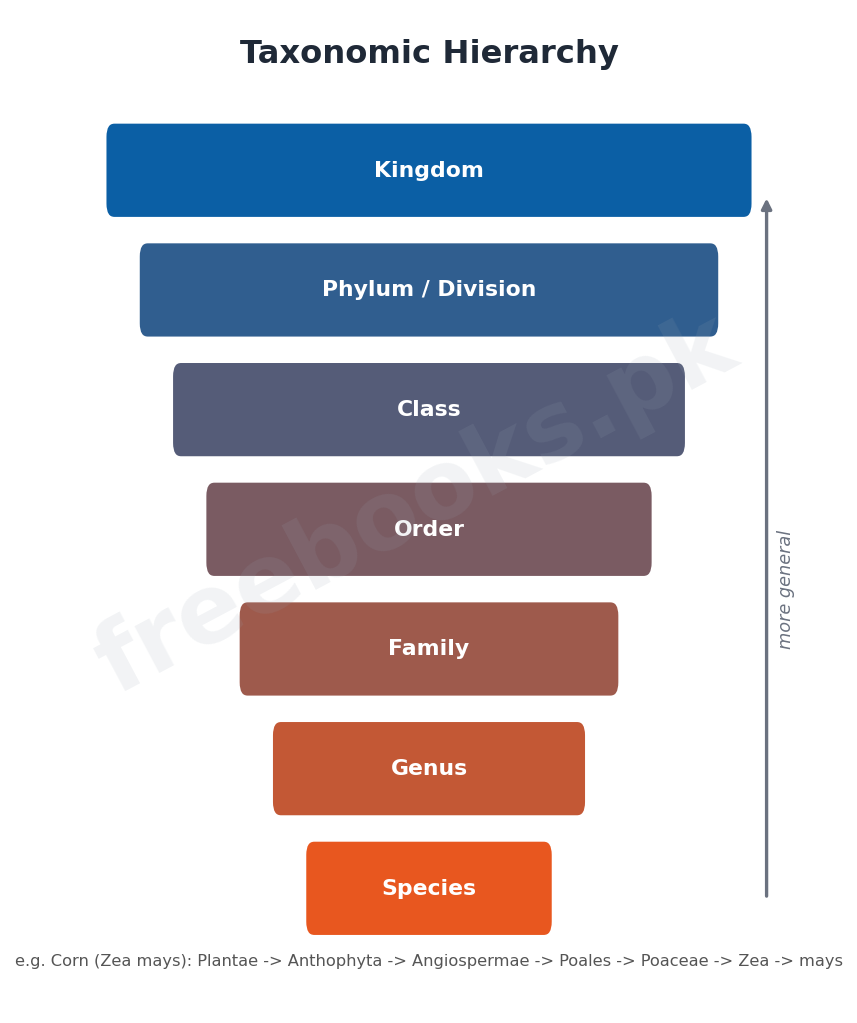
Species are grouped into a hierarchy of increasingly general categories (taxa): a genus contains one or more related species, a family contains related genera, an order contains related families, a class contains related orders, a phylum (or division, for plants, algae and fungi) contains related classes, and a kingdom contains related phyla. Members of a lower category resemble one another more closely than members of a higher one — for example, corn (Zea mays) belongs to kingdom Plantae, division Anthophyta, class Angiospermae, order Poales, family Poaceae, genus Zea and species mays.
Binomial Nomenclature
Common names of plants and animals vary by region and language and often cause confusion — the same plant may have several common names, and a single common name (such as "blue bell" or "blackbird") may refer to several unrelated organisms. During the 18th century, the Swedish botanist Carolus Linnaeus (1707-1778) devised a scientific naming system, publishing his list of plant names in 1753 and his list of animal names in 1758, much of which is still used today.
Linnaeus's system, giving every species a two-word scientific name derived from Latin, is called binomial nomenclature. The first word is the genus (generic name) and always begins with a capital letter; the second word is the specific name and begins with a lowercase letter — for example, onion is Allium cepa, amaltas is Cassia fistula, and man is Homo sapiens. Potato (Solanum tuberosum) and brinjal (Solanum melongena) share the same generic name, reflecting their close relationship. Every species has only one scientific name worldwide, and while early classification was based on morphology (appearance), it has since been refined using cytology, physiology, genetics and molecular biology.
Two to Five Kingdom Classification Systems
For centuries, living things were split into just two kingdoms: Plantae (autotrophs, which make their own food from simple inorganic material) and Animalia (heterotrophs, which depend on autotrophs or decaying matter for food), with bacteria placed among the plants. This system broke down for organisms such as Euglena, which has both plant-like (chlorophyll) and animal-like (no cell wall) features, and it ignored the fundamental difference between prokaryotic and eukaryotic cells. In 1866 Ernst Haeckel proposed a third kingdom, Protista, for organisms like Euglena and bacteria, and in 1937 Edouard Chatton coined the terms prokaryotic (before a nucleus) and eukaryotic (true nucleus) to distinguish bacteria and blue-green algae from plant and animal cells. Fungi (such as bread mould, yeast and mushrooms) were also difficult to classify, since although they resemble plants, they are heterotrophs that obtain food by decomposing and absorbing organic material and have chitin, not cellulose, in their cell walls.
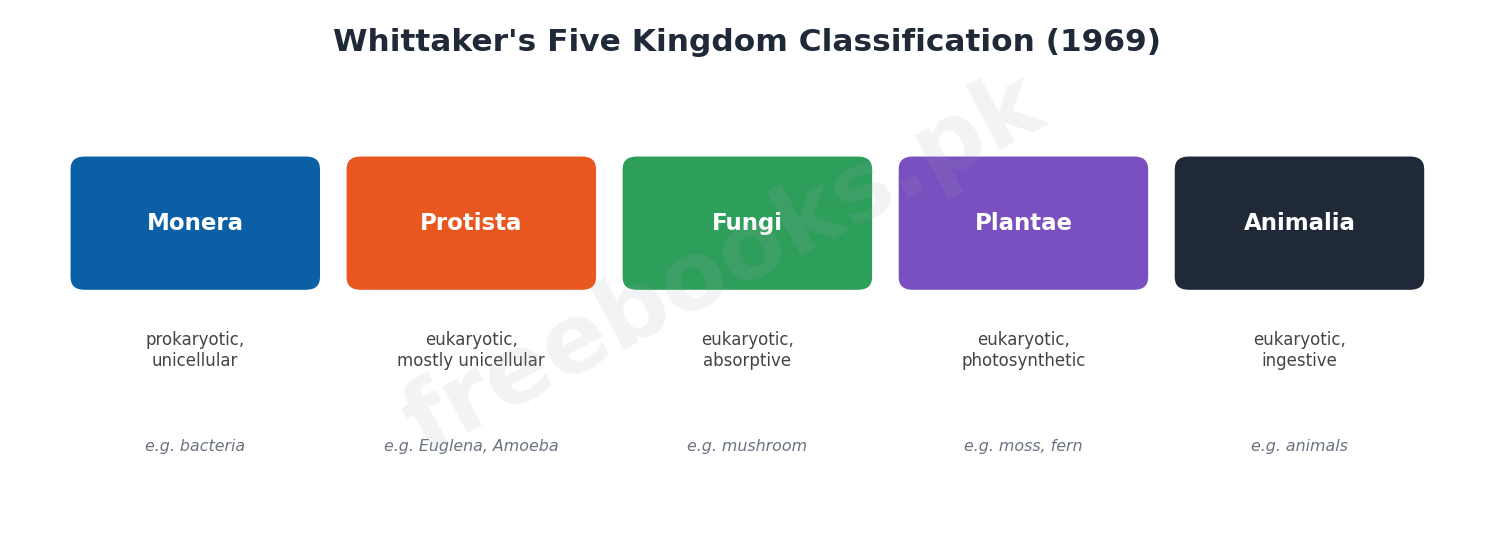
In 1969 Robert Whittaker proposed the five-kingdom system, based on three levels of cellular organization (prokaryotic unicellular, eukaryotic unicellular, eukaryotic multicellular) and three modes of nutrition (photosynthesis, absorption, ingestion): Monera (prokaryotic unicellular organisms such as bacteria), Protista (mainly eukaryotic unicellular organisms such as Euglena and Amoeba), Plantae (eukaryotic multicellular autotrophs), Fungi (eukaryotic multicellular absorptive decomposers) and Animalia (eukaryotic multicellular organisms that ingest and digest food). In 1988, Lynn Margulis and Karlene Schwartz modified Whittaker's system by also considering cytology, genetics and organelles of symbiotic origin such as mitochondria and chloroplasts, naming the five kingdoms Prokaryotae (Monera), Protoctista (Protista), Plantae, Fungi and Animalia.
Viruses: Discovery and Characteristics
The modern concept of a virus emerged gradually. Edward Jenner's 1796 cowpox vaccination against smallpox was the first effective prevention of a viral disease, though the cause was unknown at the time. In 1884 Charles Chamberland found that an agent causing rabies could pass through filters that trapped bacteria, and in 1892 Ivanowski showed that a similarly filterable agent caused tobacco mosaic disease in plants. In 1935 Stanley successfully crystallized the tobacco mosaic virus, revealing that these particles contained only nucleic acid and protein. Bacteriophages (viruses that infect bacteria) were discovered independently by Twort (1915) and D'Herelle (1917), who named them "bacteria eaters" after observing that infected bacterial colonies underwent lysis.
Viruses are extremely small (ranging from about 20 nanometres in parvoviruses to 250 nanometres in poxviruses, 10 to 1000 times smaller than most bacteria), so small they can only be seen with an electron microscope and can pass through filters that trap bacteria. They cannot be grown on artificial media and can reproduce only inside living host cells (animal, plant or microbial), making them obligate intracellular parasites; they lack the metabolic machinery to synthesize their own nucleic acid and protein and instead hijack the host cell's biosynthetic machinery, a process called replication. Viruses are generally resistant to common antibiotics such as penicillin and streptomycin, since these drugs target bacterial structures that viruses do not have.
Structure of Viruses
The complete, mature, infectious virus particle is called a virion. At its centre is the genome, a core of nucleic acid (either DNA or RNA), surrounded by a protein coat called the capsid, which is built of protein subunits called capsomeres and gives the virion its shape (for example, the herpes virus capsid has 162 capsomeres, while the adenovirus capsid has 252). In some animal viruses, the nucleic acid plus capsid (together called the nucleocapsid) is further wrapped in an envelope derived from the host cell membrane; viruses without an envelope are called naked virions. Viruses may be polyhedral (many-sided), helical (spiral), enveloped or complex in shape; bacteriophages, for example, occur in icosahedral (20-faced) or helical forms, often with a distinct head and tail.
The most recently discovered and least understood infectious agents are prions (identified in 1983), which appear to be infectious proteins with no nucleic acid at all, unlike every other organism, which stores its genetic information in DNA or RNA; prions are linked to mad cow disease and certain rare brain infections in humans.
Life Cycle of Bacteriophages
Much of the classical research on bacteriophages used T-phages that infect Escherichia coli, especially T2 and T4, whose structure (studied by electron microscopy) resembles a tadpole with a DNA-filled hexagonal head and a complex tail ending in tail fibres used for attachment. Infection begins with attachment (adsorption) of the tail fibres to a specific receptor site on the bacterial cell wall, followed by penetration, in which the tail releases the enzyme lysozyme to dissolve part of the cell wall so the tail core can inject the phage's DNA into the cell, leaving the empty protein coat outside.
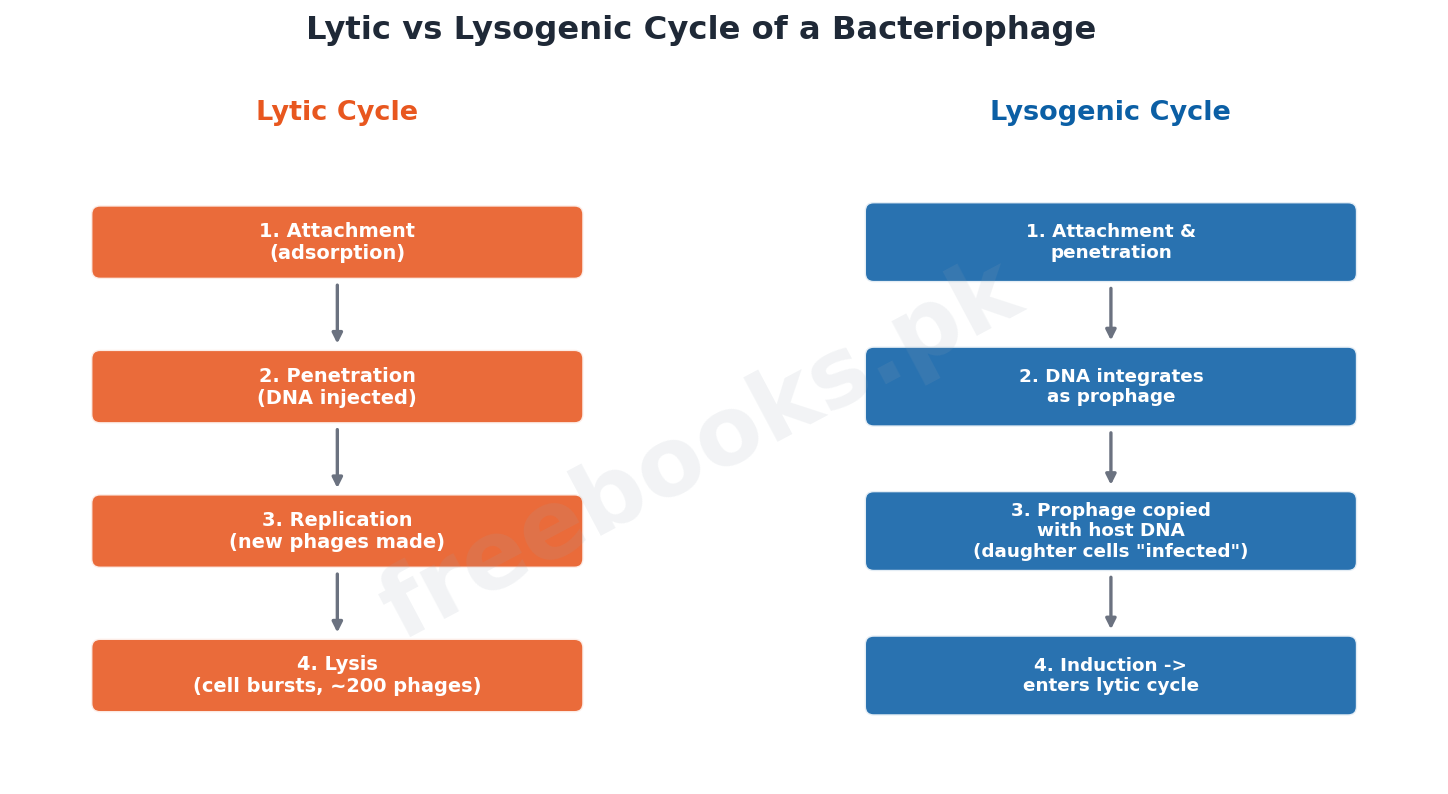
Once inside, the viral DNA can follow one of two paths. In the lytic cycle, the viral DNA immediately takes over the host's biosynthetic machinery, directing the synthesis of new phage components; within about 25 minutes roughly 200 new bacteriophages are assembled and the bacterial cell bursts (lysis), releasing the new phages to infect other bacteria — a phage that causes this is called a lytic (virulent) phage. Alternatively, in lysogeny, the viral DNA becomes incorporated into the bacterial chromosome as a prophage, and the bacterium continues to live and reproduce normally, passing the prophage on to all its daughter cells; the prophage may later detach and enter the lytic cycle, a process called induction, and lysogenic bacteria are resistant to infection by the same or related phages. A phage that causes lysogeny is called a temperate (lysogenic) phage.
Retroviruses, HIV and AIDS
Retroviruses (oncoviruses) are single-stranded RNA tumour viruses, spherical, about 100 nanometres across, enveloped by host plasma membrane, and associated with tumour formation in several animal species. Most retroviruses can only infect host cells bearing the specific receptor they recognize. Their defining feature is a unique enzyme, reverse transcriptase, which converts the single-stranded RNA genome into double-stranded DNA; this viral DNA can then be incorporated into the host genome as a provirus and passed on to daughter cells, which in some cases converts normal cells into cancer cells.
The most familiar retrovirus is the human immunodeficiency virus (HIV), which causes acquired immune deficiency syndrome (AIDS). First recognized in the early 1980s and identified as the causal agent in 1984, HIV mainly infects helper T-lymphocytes, key cells of the immune system; as HIV infection progresses, the loss of helper T-lymphocytes causes the immune system to fail, leaving the infected person vulnerable to other infections and diseases. HIV is transmitted through intimate sexual contact, contact with blood, and breast feeding; prevention relies on avoiding direct contact with these routes of transmission and using sterile needles and syringes, and experimental vaccine trials in humans began in the early 2000s.
Viral Diseases: Smallpox and Hepatitis
Smallpox, caused by an enveloped DNA poxvirus, is an ancient disease producing fluid-filled skin lesions that become pitted scars; it was declared eradicated worldwide by the World Health Organization in 1980 following mass immunization. Other important viral diseases include herpes simplex (a DNA virus causing lesions of the mouth, lips and skin), influenza (an enveloped RNA virus causing widespread epidemics), mumps and measles (large enveloped RNA paramyxoviruses, both highly contagious in childhood), and polio (caused by poliovirus, one of the smallest known viruses, mainly affecting children).
Hepatitis is inflammation of the liver, usually from viral infection, causing jaundice, abdominal pain, liver enlargement and fatigue, and it can become chronic or lead to liver cancer. Hepatitis A (a non-enveloped RNA virus) spreads through contact with infected faeces and causes a relatively mild, short illness; Hepatitis B (a DNA virus, common across Asia and Africa) spreads through blood, breast milk, saliva and sexual contact, and can become chronic, though a genetically engineered vaccine is available; Hepatitis C (an enveloped RNA virus) spreads mainly through blood and often becomes chronic liver disease, with no vaccine currently available; Hepatitis D, E (spread through faeces) and the less-understood Hepatitis F and G complete the known forms. Good hygiene, routine vaccination where available, and screening of donated blood, organs and tissue all help control the spread of viral hepatitis.
Important Definitions
Species
A group of natural populations that can interbreed freely and produce fertile offspring, but is reproductively isolated from other such groups.
Binomial nomenclature
The scientific naming system, devised by Linnaeus, that gives every species a two-part Latin name: genus followed by specific epithet.
Kingdom
The broadest taxonomic category; in the five-kingdom system: Monera, Protista, Fungi, Plantae and Animalia.
Virus
A non-cellular infectious particle of DNA or RNA, usually enclosed in a protein coat, that can reproduce only inside a living host cell.
Virion
The complete, mature, infectious virus particle, consisting of nucleic acid enclosed in a capsid (and sometimes an envelope).
Capsid
The protein coat of a virus, built of subunits called capsomeres, that encloses and protects the viral genome.
Bacteriophage
A virus that infects bacteria, replicating via either the lytic or the lysogenic cycle.
Retrovirus
An RNA virus, such as HIV, that uses the enzyme reverse transcriptase to convert its RNA genome into DNA inside the host cell.
Key Facts
| Item | Fact |
|---|---|
| Binomial nomenclature founder | Carolus Linnaeus (1707-1778) – plant names published 1753, animal names 1758. |
| Five-kingdom system | Proposed by Robert Whittaker, 1969. |
| Modified five-kingdom system | Lynn Margulis and Karlene Schwartz, 1988 (added symbiotic organelles). |
| Virus size range | About 20 nm (parvoviruses) to 250 nm (poxviruses). |
| First viral disease prevention | Edward Jenner's cowpox vaccination against smallpox, 1796. |
| Tobacco mosaic virus crystallized | Stanley, 1935 – showed viruses are nucleic acid + protein. |
| Bacteriophage discovery | Twort (1915) and D'Herelle (1917), independently. |
| Smallpox eradication | Declared eradicated worldwide by WHO in 1980. |
Diagrams & Illustrations
Taxonomic Hierarchy: Species to Kingdom: a step diagram showing the classification hierarchy from the most specific to the most general level: species, genus, family, order, class, phylum/division, kingdom.
Whittaker's Five Kingdom Classification: a chart of the five kingdoms proposed by Whittaker – Monera, Protista, Fungi, Plantae and Animalia – each labelled with its cell type and mode of nutrition.
Lytic vs Lysogenic Cycle of a Bacteriophage: a diagram comparing the lytic cycle (attachment, injection, replication, lysis releasing new phages) with the lysogenic cycle (viral DNA incorporated as a prophage, replicated harmlessly with the host chromosome until induction triggers the lytic cycle).
Short Questions & Answers
Define species and state why interbreeding cannot always be used as a criterion.
A species is a group of natural populations that can interbreed freely and produce fertile offspring but are reproductively isolated from other such groups; this criterion cannot be applied to predominantly asexually reproducing organisms, which do not interbreed at all.
What is binomial nomenclature? Give an example.
Binomial nomenclature, devised by Linnaeus, gives every species a two-part Latin name: a capitalized genus name followed by a lowercase specific name, for example Homo sapiens for man.
Differentiate the lytic and lysogenic cycles of a bacteriophage.
In the lytic cycle, viral DNA immediately takes over the host cell to produce new phages and bursts the cell (lysis), while in the lysogenic cycle, viral DNA is incorporated into the bacterial chromosome as a harmless prophage that is copied along with the host's DNA until induction triggers the lytic cycle.
What is a virion? Name its two main parts.
A virion is the complete, mature, infectious virus particle, made of a nucleic acid genome (DNA or RNA) enclosed in a protein coat called the capsid.
Differentiate prions from viruses.
Viruses contain nucleic acid (DNA or RNA) enclosed in a protein coat, whereas prions are infectious agents made only of protein, with no nucleic acid at all.
What is a retrovirus? Name the enzyme unique to retroviruses.
A retrovirus is an RNA virus, such as HIV, that uses the enzyme reverse transcriptase to convert its RNA genome into DNA, which can then integrate into the host's chromosome.
Long Questions & Answers
Describe the taxonomic hierarchy from species to kingdom with an example.
Classification organizes living things into a hierarchy of increasingly general categories, based on relationship and similarity rather than arbitrary features. The species is the basic unit: a group of natural populations that interbreed freely and produce fertile offspring while remaining reproductively isolated from other such groups. Closely related species are grouped into a genus; related genera form a family; related families form an order; related orders form a class; related classes form a phylum (or division, for plants, algae and fungi); and related phyla form a kingdom, the broadest category. Members of a lower category resemble one another more closely than members of a higher one. Corn (Zea mays) illustrates the full hierarchy: kingdom Plantae, division Anthophyta, class Angiospermae, order Poales, family Poaceae, genus Zea, species mays. This nested system lets biologists organize well over a million known species in a way that reflects genuine evolutionary relationships rather than superficial traits such as colour or size.
Describe the five kingdom classification system proposed by Whittaker.
Before 1969, classification struggled to accommodate organisms that did not fit neatly into the traditional two kingdoms of Plantae and Animalia — for example Euglena, which has both plant-like and animal-like features, and bacteria, whose prokaryotic cells differ fundamentally from eukaryotic plant and animal cells. In 1969, Robert Whittaker proposed a five-kingdom system based on three levels of cellular organization (prokaryotic unicellular, eukaryotic unicellular, eukaryotic multicellular) combined with three modes of nutrition (photosynthesis, absorption and ingestion). The five kingdoms are Monera, prokaryotic unicellular organisms such as bacteria; Protista, mainly eukaryotic unicellular organisms such as Euglena and Amoeba (this kingdom became a home for all eukaryotes that did not fit the other three kingdoms); Plantae, eukaryotic multicellular autotrophs that photosynthesize, such as mosses, ferns and flowering plants; Fungi, eukaryotic multicellular heterotrophs that absorb nutrients after external digestion, such as mushrooms; and Animalia, eukaryotic multicellular heterotrophs that ingest and internally digest food. In 1988, Lynn Margulis and Karlene Schwartz refined this system by also considering cytology, genetics and organelles of symbiotic origin, such as mitochondria and chloroplasts, renaming the kingdoms Prokaryotae (Monera), Protoctista (Protista), Plantae, Fungi and Animalia — a system still widely used alongside newer molecular classification schemes.
Describe the structure of a bacteriophage and its lytic life cycle.
A typical T-phage such as T4, which infects Escherichia coli, has a tadpole-like structure with a hexagonal, DNA-filled head attached to a more complex tail: an inner protein tube (core) surrounded by a contractile sheath, a collar at one end and an end plate at the other, from which tail fibres extend for attaching to the host. Infection begins with attachment (adsorption), in which the tail fibres bind weakly to a specific receptor site on the bacterial cell wall. During penetration, the tail releases the enzyme lysozyme to dissolve part of the cell wall, the sheath contracts, and the tail core is forced through the wall and membrane so the phage can inject its DNA into the bacterium, leaving the empty protein coat outside — much like a syringe injecting its contents. Once inside, the viral DNA immediately takes over the host's biosynthetic machinery, directing the cell to manufacture new viral DNA and protein components. Within about 25 minutes of infection, roughly 200 new bacteriophages have been assembled, and the bacterial cell bursts open (lysis), releasing the new phages to infect further bacteria and begin the cycle again; a phage that causes this outcome is called a lytic or virulent phage.
Explain HIV and how it causes AIDS.
HIV (human immunodeficiency virus) is a retrovirus, an enveloped, single-stranded RNA virus about 100 nanometres across, first identified as the cause of AIDS in 1984 and formally named in 1986. Like other retroviruses, HIV carries the enzyme reverse transcriptase, which converts its RNA genome into double-stranded DNA once inside a host cell; this viral DNA can then integrate into the host cell's own chromosome as a provirus, where it may persist and be passed on as the cell divides. HIV specifically targets cells bearing the receptor it recognizes, mainly helper T-lymphocytes, key coordinating cells of the immune system, as well as certain cells of the central nervous system. As HIV infection progresses, it steadily destroys helper T-lymphocytes, which weakens and eventually causes the collapse of the immune system; without functioning immune defences, the infected person becomes vulnerable to infections and cancers that a healthy immune system would normally control, a condition known as acquired immune deficiency syndrome (AIDS). HIV is transmitted through intimate sexual contact, contact with infected blood (including shared needles and blood transfusion), and from mother to child via breast feeding, so prevention centres on avoiding these specific routes of exposure and using sterile medical equipment.
Write a note on viral hepatitis.
Hepatitis is inflammation of the liver, most often caused by viral infection, and produces symptoms such as jaundice, abdominal pain, liver enlargement and fatigue; it may be mild or become chronic, sometimes progressing to liver cancer. Several distinct viruses cause hepatitis. Hepatitis A, a non-enveloped RNA virus, spreads through contact with faeces from infected individuals and typically causes a milder, shorter illness; a vaccine is available. Hepatitis B, caused by a DNA virus especially common across Asia, China, the Philippines, Africa and the Middle East, spreads through blood, breast milk, saliva and sexual contact, and although many patients recover completely and gain immunity, some develop chronic infection with a risk of long-term liver damage; a genetically engineered vaccine is available for Hepatitis B. Hepatitis C, an enveloped RNA virus, is transmitted mainly through blood and, while generally less severe in its acute stage than A or B, often becomes chronic liver disease, and currently has no vaccine. Hepatitis D (delta hepatitis) and Hepatitis E (spread through faeces) are less common, while Hepatitis F and G are caused by viruses that remain poorly characterized. Because several of these viruses spread through blood and body fluids, control relies on good hygiene, routine vaccination where a vaccine exists, and careful screening of donated blood, organs and tissue.
MCQs with Answers
Binomial nomenclature was devised by: (a) Robert Whittaker (b) Carolus Linnaeus (c) Ernst Haeckel (d) Edouard Chatton
Correct Answer: (b) Carolus Linnaeus. Carolus Linnaeus devised binomial nomenclature, publishing plant names in 1753 and animal names in 1758.
The five-kingdom classification system was proposed in 1969 by: (a) Lynn Margulis (b) Ernst Haeckel (c) Robert Whittaker (d) Louis Pasteur
Correct Answer: (c) Robert Whittaker. Robert Whittaker proposed the five-kingdom system in 1969.
Which scientist coined the terms 'prokaryotic' and 'eukaryotic'? (a) Edouard Chatton (1937) (b) Robert Hooke (1665) (c) Carl Linnaeus (1753) (d) Rudolph Virchow (1855)
Correct Answer: (a) Edouard Chatton (1937). Edouard Chatton introduced these terms in 1937 to distinguish cell types.
Viruses range in size from about: (a) 2 to 20 nm (b) 20 to 250 nm (c) 1 to 10 micrometres (d) 10 to 100 micrometres
Correct Answer: (b) 20 to 250 nm. Viruses range from about 20 nm (parvoviruses) to 250 nm (poxviruses).
The tobacco mosaic virus was first crystallized in 1935 by: (a) Ivanowski (b) Stanley (c) Twort (d) D'Herelle
Correct Answer: (b) Stanley. Stanley crystallized the tobacco mosaic virus in 1935, showing it was made of nucleic acid and protein.
The protein coat of a virus is called the: (a) genome (b) envelope (c) capsid (d) provirus
Correct Answer: (c) capsid. The capsid, built of capsomeres, is the protein coat enclosing the viral genome.
A phage whose DNA integrates harmlessly into the bacterial chromosome is called a: (a) lytic phage (b) virulent phage (c) temperate (lysogenic) phage (d) naked virion
Correct Answer: (c) temperate (lysogenic) phage. A temperate or lysogenic phage integrates as a prophage rather than immediately lysing the host.
The enzyme unique to retroviruses, which converts RNA into DNA, is: (a) DNA polymerase (b) reverse transcriptase (c) lysozyme (d) restriction enzyme
Correct Answer: (b) reverse transcriptase. Reverse transcriptase converts a retrovirus's RNA genome into DNA.
HIV mainly infects which type of cell in the human body? (a) Red blood cells (b) Helper T-lymphocytes (c) Skin cells (d) Muscle cells
Correct Answer: (b) Helper T-lymphocytes. HIV targets helper T-lymphocytes, weakening the immune system and causing AIDS.
Smallpox was declared eradicated worldwide by the WHO in: (a) 1935 (b) 1969 (c) 1980 (d) 2001
Correct Answer: (c) 1980. The World Health Organization declared smallpox eradicated in 1980.
Quick Revision Summary
- Taxonomic hierarchy (specific to general): species -> genus -> family -> order -> class -> phylum/division -> kingdom.
- Binomial nomenclature (Linnaeus): two-part Latin name, Genus + species, e.g. Homo sapiens.
- Classification history: 2 kingdoms -> Haeckel's Protista (1866) -> Chatton's prokaryote/eukaryote (1937) -> Whittaker's 5 kingdoms (1969: Monera, Protista, Fungi, Plantae, Animalia) -> Margulis & Schwartz refinement (1988).
- Viruses: non-cellular, DNA or RNA + protein capsid (+ sometimes envelope); obligate intracellular parasites; discovered via filterable agents (Chamberland 1884, Ivanowski 1892, Stanley 1935).
- Bacteriophage cycles: lytic (immediate replication + lysis, ~200 phages/~25 min) vs lysogenic (prophage integrated, passed to daughter cells until induction).
- Retroviruses (e.g. HIV) use reverse transcriptase to convert RNA to DNA; HIV destroys helper T-lymphocytes, causing AIDS.
- Viral diseases: smallpox (eradicated 1980), influenza, mumps/measles, polio, Hepatitis A-G (different viruses, transmission routes and severity). Notes by freebooks.pk.
Exam Tips
- Memorise the taxonomic hierarchy order (species to kingdom) — a guaranteed fill-in-the-blank or MCQ.
- Know Linnaeus's two publication years (1753 plants, 1758 animals) and the binomial nomenclature rules (capital genus, lowercase species).
- Be ready to list all five Whittaker kingdoms with their nutrition mode (photosynthesis / absorption / ingestion).
- Practise the difference between lytic and lysogenic cycles as a clear step-by-step comparison — a frequent long question.
- Remember key names/years: Jenner (1796, vaccination), Stanley (1935, TMV crystallized), Twort/D'Herelle (1915/1917, bacteriophages), WHO (1980, smallpox eradicated).
- For Hepatitis questions, know at least the transmission route and DNA/RNA nature of Hepatitis A, B and C specifically.