
This chapter covers Transport from the 1st Year (FSc Part-I) Biology syllabus of the Punjab Curriculum and Textbook Board (PTB/PCTB). Living cells and organisms must obtain materials and remove wastes through diffusion, facilitated diffusion, osmosis, active transport, endocytosis and exocytosis; in complex, multicellular organisms these processes alone are too slow, so elaborate transport systems have evolved for the mass movement of materials within the body. These notes are prepared by freebooks.pk.
The chapter covers transport in plants (uptake of water and minerals by roots, water potential, ascent of sap by the cohesion-tension theory, transpiration and stomatal movement, and translocation of organic solutes by the pressure-flow theory) and transport in animals (open and closed circulatory systems, the evolution of the vertebrate heart, human blood composition, the structure and working of the human heart and blood vessels, the lymphatic system, and immunity).
Learning Objectives
- Describe the uptake of water and minerals by roots through the apoplast, symplast and vacuolar pathways.
- Explain water potential and its components, and define osmosis and plasmolysis.
- Describe the cohesion-tension theory, root pressure and imbibition in the ascent of sap.
- Describe the types of transpiration, the factors affecting its rate, and the mechanism of stomatal opening and closing.
- Explain translocation of organic solutes through phloem via the pressure-flow theory.
- Differentiate open and closed circulatory systems and outline the evolution of the vertebrate heart.
- Describe the composition of human blood, the structure of the heart, and the cardiac cycle.
- Describe the lymphatic system and the types of immunity.
Key Concepts
Uptake and Transport of Water and Minerals by Roots
Roots anchor the plant and absorb water and minerals from the soil, mainly through root hairs — extensions of epidermal cells that provide about 67% of a root's total absorptive surface area. Most minerals enter along with water in bulk flow, though some move by diffusion, facilitated diffusion (via carrier proteins in the cell membrane), or active transport (against the concentration gradient, using ATP; this is selective and dependent on respiration). Symbiotic relationships such as mycorrhizae (fungal associations that improve phosphorus and trace-metal uptake in exchange for sugars) and nitrogen-fixing bacteria in legume root nodules help plants acquire scarce nutrients such as nitrogen.
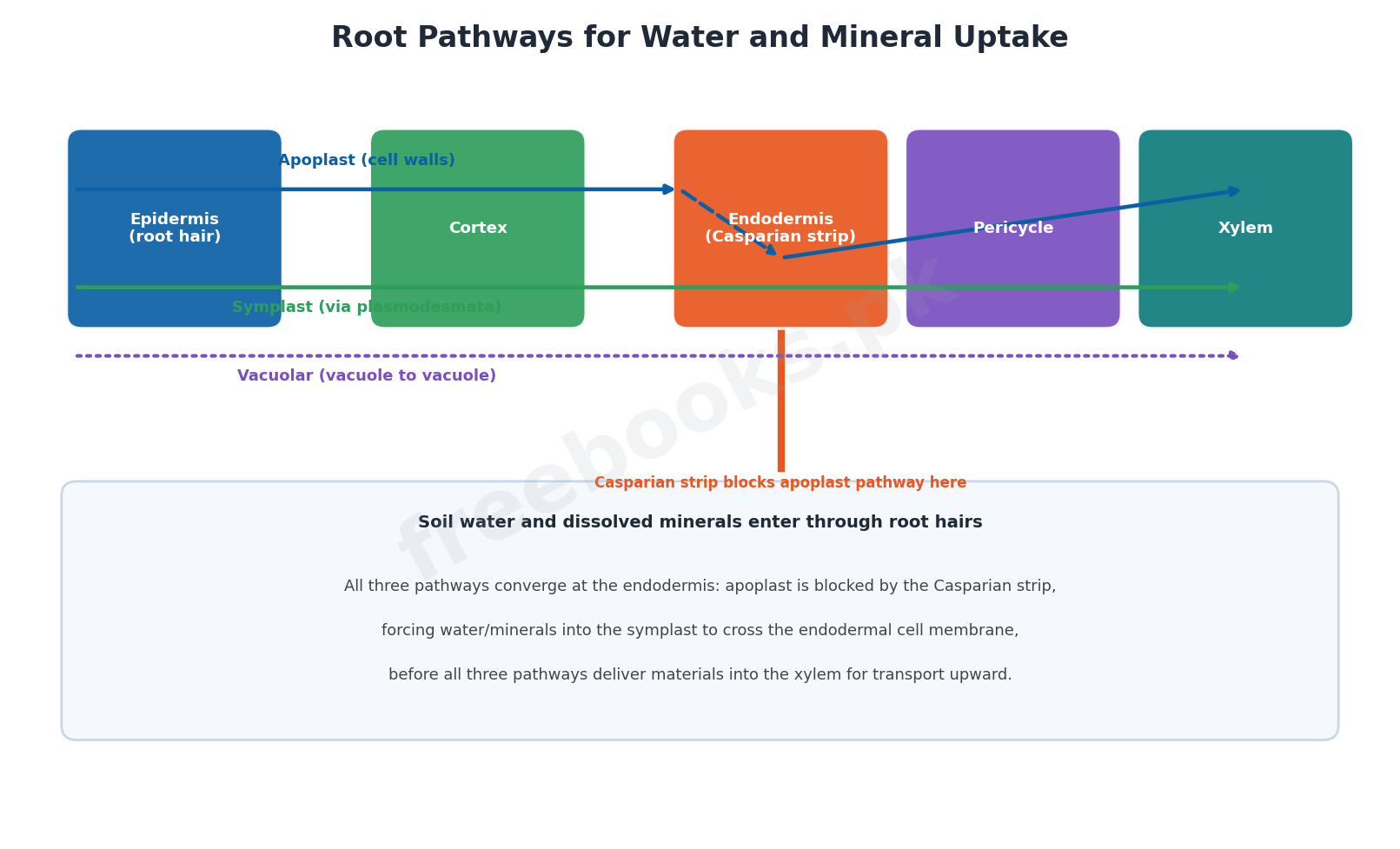
Water and minerals reach the xylem by three pathways. In the apoplast pathway, they move through the continuous system of adjacent cell walls, but this pathway becomes discontinuous at the endodermis because of the waxy Casparian strips, forcing materials to cross into the symplast there. In the symplast pathway, materials move through the interconnected cytoplasm of cells, linked by plasmodesmata. In the vacuolar pathway, materials move from vacuole to vacuole across cell membranes by osmosis. Osmosis is the movement of water molecules from a region of higher concentration to a region of lower concentration through a partially permeable membrane; water entering a cell is endosmosis, and water leaving a cell is exosmosis.
Water Potential, Osmosis and Plasmolysis
Water potential (symbol Ψw) is a measure of the tendency of water molecules to move from one region to another, and water always moves from higher to lower water potential. Pure water has the maximum water potential, defined as zero; all solutions therefore have a negative water potential. Water potential has two components: solute (osmotic) potential (Ψs), which is always negative and becomes more negative as more solute is present, and pressure potential (Ψp), the pressure that builds up inside a cell as water enters and inflates it. The total water potential is the sum of the two: Ψw = Ψs + Ψp.
When a living cell is placed in a solution of lower water potential than its own contents, water leaves the cell by exosmosis and the protoplast shrinks away from the cell wall — a process called plasmolysis (the point where this is about to begin is incipient plasmolysis). If the plasmolysed cell is then placed in distilled water (the highest possible water potential), water re-enters by endosmosis and the cell becomes deplasmolysed; continued entry of water increases the pressure potential until the cell becomes fully turgid. Because animal cells lack a rigid cell wall, they cannot withstand high pressure potential and would burst in a very dilute solution, so animals instead rely on osmoregulation to keep internal water and salt levels constant.
Ascent of Sap: Cohesion-Tension Theory, Root Pressure and Imbibition
The upward movement of water and dissolved minerals from roots to leaves through the xylem is called the ascent of sap, explained mainly by the cohesion-tension theory proposed by Dixon. Cohesion is the mutual attraction between water molecules (via hydrogen bonds), which holds them together as a continuous, chain-like column inside the narrow xylem tubes; tension is the pulling force applied to this water column, generated by transpiration at the leaf surface; adhesion is the attraction of water molecules to the cellulose-rich walls of the xylem, which keeps the water column from breaking; and the xylem walls themselves must be mechanically strong (reinforced by lignin and cellulose) to resist collapsing inward under this tension. Together these forces can pull water upward through tall trees to heights of up to 200 metres, at speeds of up to 8 metres per hour.
Root pressure is a secondary force: active secretion of salts into the xylem sap lowers its water potential, so water enters the xylem by osmosis and builds up hydrostatic pressure that pushes sap upward — though this pressure (typically 100 to 200 kPa) is usually too weak to raise water to the full height of most plants, and is most noticeable at night when transpiration is low, sometimes appearing as guttation (droplets of water exuded from hydathodes at leaf tips). Imbibition is the uptake of water by dry cell-wall components (cellulose, pectin, lignin) without dissolving, causing them to swell; it is especially important in the germination of seeds, whose dry cell walls can increase up to 200 times in volume as they imbibe water, rupturing the seed coat.
Transpiration and the Opening and Closing of Stomata
Transpiration, the loss of water vapour from aerial plant parts, occurs by three routes: cuticular transpiration through the leaf cuticle (about 5-7% of total loss), lenticular transpiration through lenticels in the bark of stems (about 1-2%), and stomatal transpiration through stomatal pores, which accounts for roughly 90% of total water loss. Although transpiration can be a 'necessary evil' — risking wilting and even death under drought — it drives the ascent of sap, distributes dissolved minerals, cools the plant through evaporation, and keeps cell surfaces wet for gaseous exchange. Its rate is affected by light, temperature (roughly doubling for every 10 degrees Celsius rise, until extreme heat forces stomatal closure), carbon dioxide concentration, humidity, wind, and the availability of soil water.
Two hypotheses explain the opening and closing of stomata. The older starch-sugar hypothesis proposed that sugars produced by photosynthesis in guard cells during the day lower their water potential, causing them to take up water and become turgid, opening the pore; at night, sugars are converted to starch or used in respiration, so guard cells become flaccid and close. The now widely accepted potassium ion hypothesis holds that stomata open when potassium ions (K+) are actively pumped into guard cells (lowering their osmotic potential so water follows by osmosis, making them turgid), controlled by light and low internal carbon dioxide levels, and close when potassium diffuses back out; under water stress, the hormone abscisic acid overrides these signals and forces stomatal closure to prevent excessive water loss.
Translocation of Organic Solutes: Phloem and the Pressure-Flow Theory
Organic solutes, chiefly sucrose, are transported through the phloem by sieve elements, which are joined end to end into sieve tubes and are closely associated with companion cells that supply them with ATP and proteins via plasmodesmata. Transport occurs from source regions (a mature photosynthesizing leaf, or a storage organ during its exporting phase) to sink regions (roots, tubers, developing fruits, immature leaves, or growing shoot and root tips); studies using phloem-feeding aphids, whose stylets tap directly into sieve tubes, showed that phloem sap is mostly sucrose in solution.
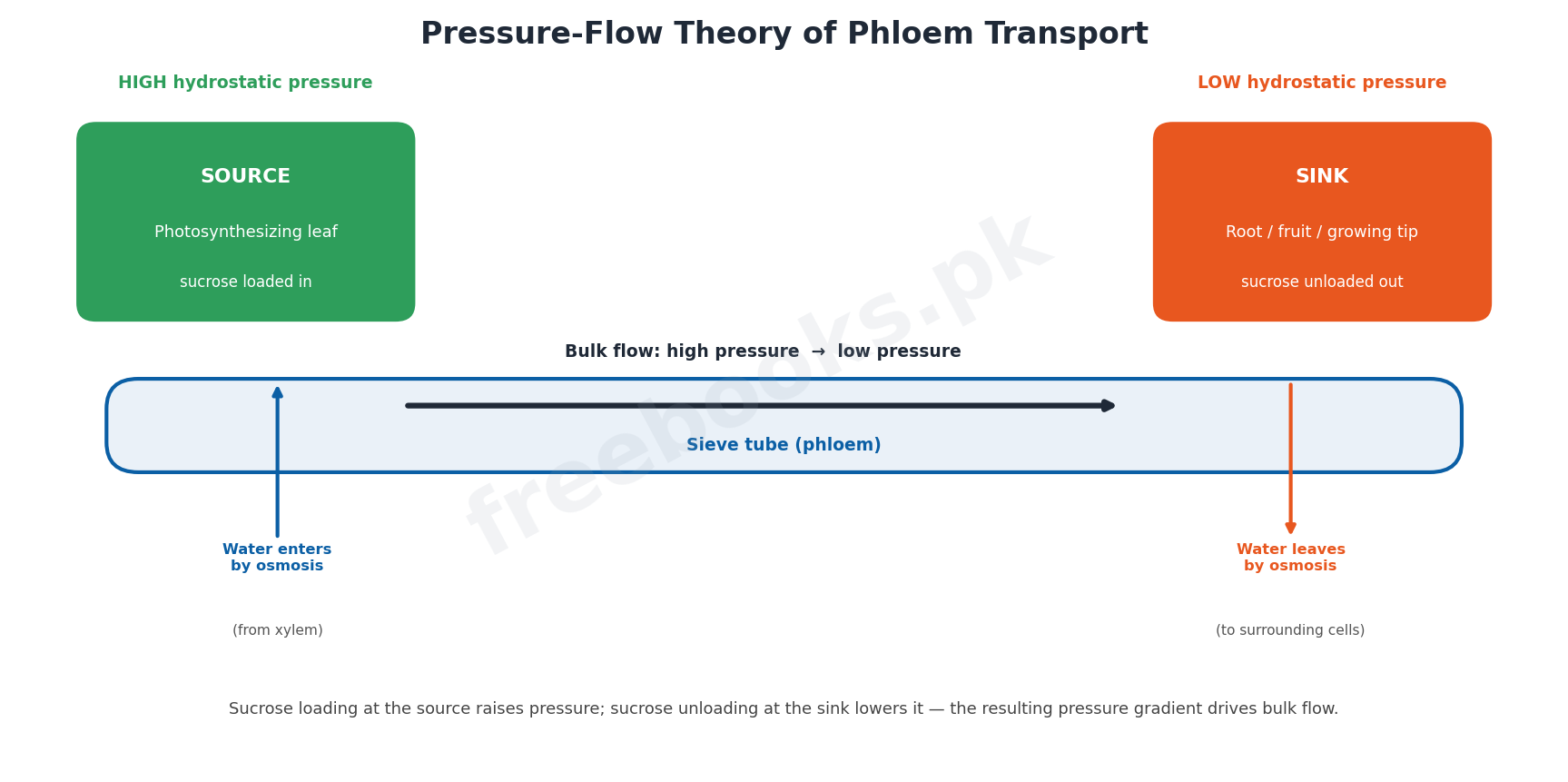
The pressure-flow theory (proposed by Ernst Munch) explains phloem transport as movement driven by an osmotically generated pressure gradient between source and sink, and has replaced earlier 'active' theories for lack of supporting evidence. At the source, sucrose is actively loaded into the sieve tube, and water then follows by osmosis from the nearby xylem, raising the hydrostatic pressure at that end. At the sink, sucrose is unloaded and used or stored, and water correspondingly leaves the sieve tube by osmosis, lowering the pressure there. This pressure difference physically pushes the sieve-tube contents in bulk flow from source to sink, much like water flowing through a hose — far faster than diffusion alone could account for (sugar movement in phloem is about 1 metre per hour, versus roughly 1 metre per eight years by simple diffusion).
Transport in Animals: Open and Closed Circulatory Systems and Evolution of the Vertebrate Heart
Unicellular and simple aquatic multicellular animals (such as Hydra and Planaria) rely entirely on diffusion, osmosis and active transport for material exchange and have no circulatory system, aided by a large surface-area-to-volume ratio. Larger, more complex animals, with far less exposed surface area relative to volume, need a circulatory system with three essential components: a circulating fluid (blood), a contractile pump (a modified vessel or heart), and vessels to carry the fluid. In an open circulatory system (found in arthropods such as the cockroach, and molluscs), blood — called haemolymph — leaves the vessels and directly bathes the tissues in body cavities called sinuses; in a closed circulatory system (found in annelids such as the earthworm, cephalopod molluscs, and vertebrates), blood always remains within an interconnected network of arteries, capillaries and veins, allowing more efficient maintenance of blood pressure and more economical use of blood volume.
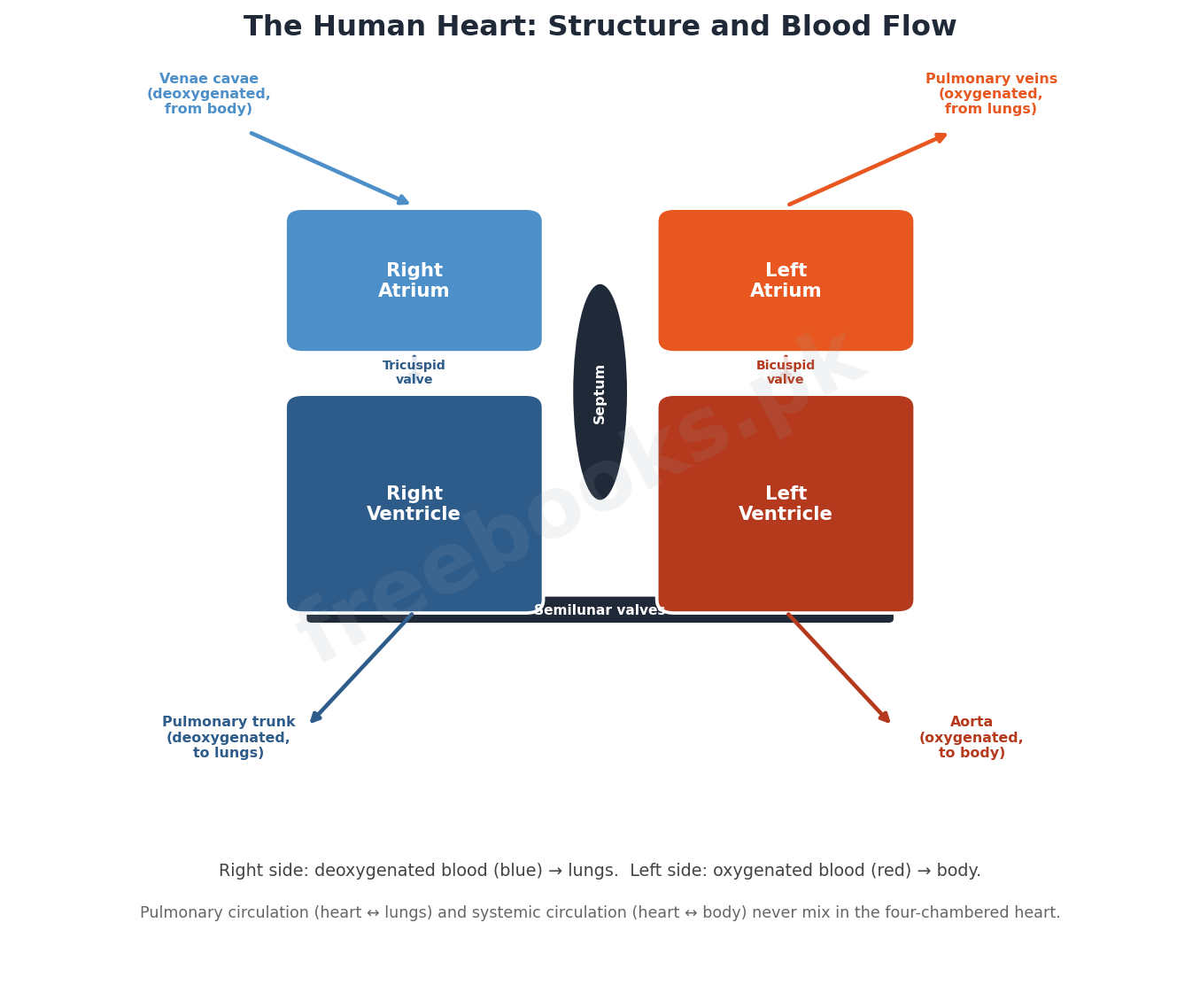
The vertebrate heart shows a clear evolutionary progression. In fish, the heart is effectively two-chambered (with an additional sinus venosus and conus/bulbus arteriosus) and works as a single-circuit pump, receiving and pumping only deoxygenated blood to the gills. In amphibians, the heart has two atria and one ventricle, so oxygenated and deoxygenated blood mix in the single ventricle before being pumped out. In reptiles, the ventricle is only partially divided (except in crocodiles, where it is complete), reducing but not eliminating mixing. In birds and mammals, the heart is completely four-chambered, so oxygenated and deoxygenated blood never mix, and the heart functions as a true double-circuit pump with separate pulmonary circulation (heart to lungs and back) and systemic circulation (heart to body and back).
Human Blood and the Heart: Composition, Cardiac Cycle and Blood Vessels
Human blood, about one-twelfth of body weight, consists of plasma (about 55% by volume — mostly water, with dissolved proteins, salts, nutrients, hormones, wastes and gases) and cells or cell-like bodies (about 45% by volume): red blood cells (erythrocytes, biconcave and without a nucleus, carrying oxygen bound to haemoglobin), white blood cells (leucocytes — granulocytes such as neutrophils, eosinophils and basophils, and agranulocytes such as monocytes and lymphocytes — involved in body defence), and platelets (cell fragments from megakaryocytes that trigger blood clotting by converting fibrinogen to fibrin). Blood transports nutrients, gases, hormones and wastes, helps regulate pH, temperature and water/salt balance, and defends the body through phagocytosis and immunity.
The human heart, enclosed in the protective pericardium, has four chambers — two thin-walled atria and two thick-walled ventricles — with the tricuspid valve between the right atrium and ventricle and the bicuspid (mitral) valve between the left atrium and ventricle, plus semilunar valves at the bases of the pulmonary trunk and aorta, all ensuring one-way blood flow. The cardiac cycle has three phases: diastole (chambers relaxed and filling), atrial systole (atria contract, pushing blood into the ventricles), and ventricular systole (ventricles contract, pushing blood into the pulmonary trunk and aorta, producing the 'lubb-dubb' heart sounds); the whole cycle takes about 0.8 seconds and is initiated by the sino-atrial node (the pacemaker). Blood leaves the heart through elastic, thick-walled arteries (carrying blood at high pressure, e.g. 120 mm Hg systolic), passes through microscopic, single-cell-thick capillaries where exchange with tissues occurs, and returns through valved veins at low pressure; disorders include atherosclerosis, hypertension, thrombus formation, heart attack and stroke.
Lymphatic System and Immunity
The lymphatic system returns fluid from body tissues to the blood: lymph capillaries end blindly in tissues, collecting excess interstitial fluid (then called lymph), which passes through progressively larger lymph vessels, lymph nodes (masses of lymphoid tissue containing lymphocytes that filter and defend), and ultimately drains via the thoracic duct into a subclavian vein; in the intestine, lymph capillaries called lacteals absorb digested fats. The lymphatic system returns about 3 litres of fluid and dissolved proteins to the blood each day, and, together with the spleen (which filters blood) and other lymphoid masses (tonsils, adenoids, thymus), helps defend the body against foreign invaders.
Immunity is the body's capacity to recognize foreign material and mobilize cells and antibodies to remove it. T-lymphocytes (matured under the influence of the thymus) mount a cell-mediated response, directly combating microorganisms or foreign tissue, while B-lymphocytes mount a humoral response, forming plasma cells that secrete antibodies (immunoglobulins) that bind and neutralize specific antigens. Active immunity develops when the body itself produces antibodies, either naturally (after infection) or artificially (through vaccination), and tends to be long-lasting; passive immunity results from injecting ready-made antibodies (antisera, as used against tetanus, rabies or snake venom), giving immediate but short-lived protection. AIDS is a viral disease that destroys the immune system, leaving the body unable to fight infections or certain cancers.
Important Definitions
Water potential
The tendency of water molecules in a system to move to another system, measured relative to pure water (Ψw = 0); water moves from higher to lower water potential.
Osmosis
The movement of water molecules from a region of higher water potential to a region of lower water potential through a partially permeable membrane.
Plasmolysis
The shrinkage of a plant cell's protoplast away from its cell wall due to exosmosis of water in a solution of lower water potential than the cell.
Transpiration
The loss of water vapour from the aerial parts of a plant, mainly through stomata, and also through the cuticle and lenticels.
Translocation
The transport of organic solutes, chiefly sucrose, through the phloem from source regions to sink regions.
Open circulatory system
A circulatory system (e.g. in cockroach) in which blood leaves the vessels and directly bathes body tissues in sinuses.
Closed circulatory system
A circulatory system (e.g. in earthworm and vertebrates) in which blood remains confined within a network of arteries, capillaries and veins.
Immunity
The capacity of the body to recognize foreign material and mobilize cells and antibodies to remove it effectively.
Key Facts
| Item | Fact |
|---|---|
| Root hair surface contribution | Root hairs provide about 67% of a root's total absorptive surface area. |
| Water potential equation | Total water potential = solute potential + pressure potential (Psi w = Psi s + Psi p). |
| Xylem tension pulling height | Cohesion-tension can pull water up to about 200 metres; flow speeds up to 8 m/hour in tall trees. |
| Transpiration route split | Stomatal ~90%, cuticular ~5-7%, lenticular ~1-2% of total transpiration. |
| Phloem vs diffusion speed | Sugar movement in phloem ~1 metre/hour, versus ~1 metre/8 years by simple diffusion. |
| Blood composition | Plasma ~55% and cells/platelets ~45% by volume; plasma is about 90% water. |
| Blood cell counts | RBCs ~5-5.5 million/mm3 (male), ~4.5 million/mm3 (female); WBCs 7,000-8,000/mm3; platelets ~250,000/mm3. |
| Cardiac cycle and pressure | One heartbeat (systole + diastole) takes about 0.8 seconds; normal blood pressure is about 120/80 mm Hg. |
Diagrams & Illustrations
Root Pathways for Water and Mineral Uptake: a cross-sectional diagram of a root showing the apoplast, symplast and vacuolar pathways carrying water and minerals from the soil, across the epidermis, cortex and endodermis (with Casparian strips), into the xylem.
Pressure-Flow Theory of Phloem Transport: a diagram showing sucrose being loaded into the sieve tube at a source leaf (raising pressure as water enters by osmosis) and unloaded at a sink such as a root or fruit (lowering pressure as water leaves), driving bulk flow from source to sink.
The Human Heart: Structure and Blood Flow: a labelled diagram of the human heart showing the four chambers (right/left atria and ventricles), the tricuspid, bicuspid and semilunar valves, and the pulmonary and systemic circulation pathways.
Short Questions & Answers
What is the Casparian strip, and why is it important?
The Casparian strip is a waxy, water-impermeable band in the radial and transverse walls of endodermal cells; it blocks the apoplast pathway at the endodermis, forcing water and minerals to cross into the symplast through the cell membrane, allowing the plant to control which substances reach the xylem.
Differentiate active and passive immunity.
Active immunity develops when the body itself produces antibodies in response to an antigen (naturally through infection or artificially through vaccination) and is long-lasting, whereas passive immunity results from injecting ready-made antibodies (antisera), giving immediate but short-lived protection since the body does not produce its own antibodies.
Why is diffusion too slow to explain sugar movement in phloem?
Sugar movement in phloem averages about 1 metre per hour, while simple diffusion would move sugar only about 1 metre in eight years, so diffusion alone cannot account for the observed speed; the pressure-flow (bulk flow) mechanism is needed instead.
What is guttation, and what causes it?
Guttation is the loss of liquid water as droplets from hydathodes at leaf tips or margins; it is caused by root pressure, the positive hydrostatic pressure built up in the xylem by active secretion of solutes into root xylem sap, and is most noticeable at night when transpiration is low and humidity is high.
Differentiate open and closed circulatory systems with one example each.
In an open circulatory system (e.g. cockroach), blood leaves the vessels and directly bathes body tissues in sinuses; in a closed circulatory system (e.g. earthworm), blood remains confined within a network of arteries, capillaries and veins and never directly contacts tissues.
What is the function of the sino-atrial node?
The sino-atrial node, located in the wall of the right atrium, acts as the heart's natural pacemaker, generating the electrical impulses that initiate each heartbeat and cause the atria to contract.
Long Questions & Answers
Describe how water and minerals are taken up by plant roots, including the apoplast, symplast and vacuolar pathways.
Roots absorb water and dissolved minerals mainly through root hairs, thin tubular extensions of epidermal cells that dramatically increase the root's absorptive surface area (contributing roughly two-thirds of it). Minerals dissolved in soil water enter root hair or epidermal cells partly passively, by diffusion or facilitated diffusion through membrane carrier proteins, and partly by active transport, which requires ATP and allows the plant to accumulate minerals against their concentration gradient; symbiotic partners such as mycorrhizal fungi and nitrogen-fixing bacteria further assist mineral uptake. Once inside the root, water and minerals travel toward the xylem by three interconnected pathways. In the apoplast pathway, movement occurs through the continuous, non-living network of adjacent cell walls, requiring no membrane crossings; however, this pathway is blocked at the endodermis by the Casparian strip, a band of waterproof material embedded in the radial and transverse walls of endodermal cells, forcing water and solutes to cross into the symplast by passing through a cell membrane at this point – allowing the plant selective control over what reaches the xylem. In the symplast pathway, water and minerals move through the living cytoplasm of a chain of interconnected cells, passing from one cell to the next through plasmodesmata, cytoplasmic channels that cross adjacent cell walls. In the vacuolar pathway, materials move from vacuole to vacuole across successive cell membranes by osmosis, crossing both symplast and apoplast in the process. All three pathways ultimately deliver water and minerals to the dead, hollow xylem cells, from which they are pulled upward toward the shoot.
Explain the concept of water potential and describe the cohesion-tension theory of the ascent of sap.
Water potential (Ψw) is a measure of the tendency of water molecules in a system to move to another system, and water always moves from a region of higher water potential to one of lower water potential. Pure water has the maximum possible water potential, arbitrarily defined as zero; because dissolving any solute lowers water potential, all solutions have a negative water potential. Water potential has two components: the solute (osmotic) potential (Ψs), which becomes more negative as solute concentration increases, and the pressure potential (Ψp), the physical pressure that builds up as water enters and inflates a walled plant cell, making it turgid; the total water potential is their sum, Ψw = Ψs + Ψp. This concept explains osmosis (the movement of water through a partially permeable membrane from higher to lower water potential) and underlies the ascent of sap, the upward movement of water and dissolved minerals from roots to leaves through the xylem, chiefly explained by the cohesion-tension theory proposed by Dixon. According to this theory, water molecules within the narrow xylem tubes are held together in a continuous, unbroken column by cohesion – mutual attraction through hydrogen bonding. As water evaporates from mesophyll cells during transpiration, it lowers their water potential, causing water to move out of the adjacent xylem by osmosis; because the remaining water molecules in the xylem are cohesively bonded to one another, this creates tension, a pulling force transmitted all the way down the water column to the roots, drawing more water in from the soil. Adhesion, the attraction between water molecules and the cellulose walls of the xylem vessels, prevents the water column from pulling away from the vessel walls and breaking, while the mechanical strength of lignified xylem walls prevents them from collapsing inward under this tension. Together, these forces are strong enough to pull water upward through the tallest trees, to heights approaching 200 metres.
Describe the process of transpiration and explain the mechanism of opening and closing of stomata.
Transpiration is the evaporative loss of water vapour from the aerial parts of a plant and occurs through three routes: cuticular transpiration, through the waxy cuticle covering leaf surfaces (accounting for roughly 5 to 7 percent of total water loss); lenticular transpiration, through lenticels, small pores in the bark of woody stems (roughly 1 to 2 percent); and stomatal transpiration, through the microscopic pores called stomata on leaf surfaces, which accounts for about 90 percent of total transpiration and is therefore the most significant and most tightly regulated route. The rate of transpiration is influenced by several environmental factors: light (which triggers stomatal opening), temperature (higher temperatures increase evaporation but extreme heat forces stomatal closure to prevent excessive water loss), carbon dioxide concentration (low internal CO2 favours stomatal opening), humidity (drier air increases the rate of water loss), wind (which removes humid air from around the leaf surface, increasing the diffusion gradient), and the availability of soil water. The opening and closing of stomata is controlled by a pair of guard cells surrounding each pore. According to the widely accepted potassium ion hypothesis, stomata open when potassium ions are actively pumped into the guard cells from surrounding epidermal cells; this lowers the osmotic potential inside the guard cells, so water follows by osmosis, making the guard cells turgid and causing them to bow apart, opening the pore between them. This active transport of potassium is promoted by light and by low internal carbon dioxide concentrations. At night, or when carbon dioxide levels rise, potassium ions diffuse back out of the guard cells, water follows by osmosis, the guard cells become flaccid, and the stoma closes. Under conditions of water stress, the plant hormone abscisic acid is released and overrides these normal signals, forcing potassium efflux and stomatal closure to conserve water even during daylight.
Explain how the pressure-flow theory accounts for the movement of sugars through the phloem.
Organic solutes manufactured during photosynthesis, chiefly the sugar sucrose, are transported throughout the plant body via the phloem, specifically through living but enucleate sieve tube cells joined end to end at sieve plates, each closely associated with one or more companion cells that supply it with ATP and proteins through plasmodesmata. Transport occurs from source regions – typically mature, actively photosynthesizing leaves, or storage organs during their exporting phase – to sink regions, which include roots, developing fruits, immature leaves, and growing shoot or root tips, wherever sugars are being actively used or stored. The most widely accepted explanation for how this movement occurs is the pressure-flow theory, first proposed by Ernst Munch, which describes translocation as bulk flow driven by an osmotically generated pressure gradient between source and sink. At the source, sucrose produced by photosynthesis is actively transported (using energy) through the bundle sheath and companion cells into the sieve tube elements, sharply raising the sucrose concentration there; this lowers the water potential inside the sieve tube, so water moves in from the adjacent xylem by osmosis, substantially raising the hydrostatic pressure at the source end of the sieve tube. At the sink end, sucrose is unloaded from the sieve tube – actively or passively, depending on the tissue – and used in respiration or converted to storage compounds, lowering the sucrose concentration and raising the water potential inside the sieve tube at that end; water therefore leaves the sieve tube by osmosis into surrounding cells, lowering the hydrostatic pressure at the sink. Because of this stark difference in hydrostatic pressure between the high-pressure source end and the low-pressure sink end, the entire fluid content of the sieve tube – water together with its dissolved sucrose and other solutes – is physically pushed along the tube from source to sink by bulk flow, much as water is pushed through a garden hose under pressure; sieve plates along the way increase resistance and help maintain this pressure gradient. This passive, pressure-driven mechanism, requiring energy only at the loading and unloading steps rather than along the transport pathway itself, comfortably accounts for the observed speed of sugar movement in phloem (about one metre per hour), which is far too fast to be explained by diffusion alone.
Describe the composition of human blood and the structure and working of the human heart, including the cardiac cycle.
Human blood, making up about one-twelfth of body weight, consists of two main components: plasma, which forms about 55 percent of blood volume and is roughly 90 percent water carrying dissolved plasma proteins, inorganic ions, organic nutrients, nitrogenous wastes, hormones and dissolved gases; and formed elements, about 45 percent of blood volume, comprising red blood cells (erythrocytes), white blood cells (leucocytes) and platelets. Red blood cells, the most numerous blood cells, are biconcave discs that lose their nucleus before entering circulation and are about 95 percent haemoglobin by cytoplasmic content, the pigment responsible for carrying oxygen; they are produced in red bone marrow and survive for about four months before being broken down in the liver and spleen. White blood cells, far less numerous but larger, are divided into granulocytes (neutrophils, eosinophils and basophils, produced in bone marrow) and agranulocytes (monocytes and lymphocytes, produced in lymphoid tissue), and are chiefly responsible for defending the body against infection through phagocytosis and immune responses. Platelets are cell fragments, not complete cells, released from megakaryocytes in bone marrow, and are essential for blood clotting, converting the soluble plasma protein fibrinogen into insoluble fibrin threads that trap blood cells and seal wounds. The human heart, a muscular double pump enclosed within the protective, fluid-filled pericardium, has four chambers: two thin-walled atria that receive blood, and two thick-walled ventricles that pump it out. The right atrium receives deoxygenated blood from the body via the venae cavae and passes it through the tricuspid valve into the right ventricle, which pumps it via the pulmonary trunk to the lungs; oxygenated blood returns via the pulmonary veins to the left atrium, passes through the bicuspid (mitral) valve into the left ventricle, and is pumped via the aorta to the rest of the body – with semilunar valves at the bases of both the pulmonary trunk and the aorta preventing backflow. This entire sequence, one cardiac cycle, consists of three phases: diastole, when all heart chambers are relaxed and filling with blood; atrial systole, when both atria contract together, forcing blood through the tricuspid and bicuspid valves into the relaxed ventricles; and ventricular systole, when both ventricles contract together, forcing blood out through the pulmonary trunk and aorta while the atrioventricular valves snap shut (producing the 'lubb' sound) followed shortly by closure of the semilunar valves (the 'dubb' sound). One complete cardiac cycle takes about 0.8 seconds and is triggered by electrical impulses originating in the sino-atrial node, the heart's natural pacemaker, located in the wall of the right atrium.
MCQs with Answers
The waxy band in endodermal cell walls that blocks the apoplast pathway is the: (a) cuticle (b) Casparian strip (c) sieve plate (d) tonoplast
Correct Answer: (b) Casparian strip. The Casparian strip, embedded in endodermal cell walls, blocks the apoplast pathway and forces water/minerals into the symplast.
Pure water has a water potential of: (a) +100 kPa (b) zero (c) always negative (d) equal to solute potential only
Correct Answer: (b) zero. Pure water has the maximum water potential, defined as zero; all solutions have negative water potential.
The cohesion-tension theory of ascent of sap was proposed by: (a) Munch (b) Sacks (c) Dixon (d) Van Mohl
Correct Answer: (c) Dixon. The cohesion-tension theory, explaining the ascent of sap, was proposed by Dixon.
Which route accounts for the largest share of total plant transpiration? (a) Cuticular (b) Lenticular (c) Stomatal (d) Root surface
Correct Answer: (c) Stomatal. Stomatal transpiration accounts for about 90% of total water loss from a plant.
According to the potassium ion hypothesis, stomata open when: (a) potassium diffuses out of guard cells (b) potassium is actively pumped into guard cells, and water follows by osmosis (c) starch is converted to sugar only (d) abscisic acid is released
Correct Answer: (b) potassium is actively pumped into guard cells, and water follows by osmosis. Active pumping of potassium into guard cells lowers their osmotic potential, water follows by osmosis, and the turgid guard cells open the stoma.
The pressure-flow theory of phloem transport was proposed by: (a) Dixon (b) Ernst Munch (c) Sacks (d) Van Mohl
Correct Answer: (b) Ernst Munch. Ernst Munch proposed the pressure-flow theory to explain translocation in phloem.
An open circulatory system, in which blood directly bathes tissues, is found in: (a) earthworm (b) cockroach (c) human (d) octopus
Correct Answer: (b) cockroach. The cockroach (phylum Arthropoda) has an open circulatory system where haemolymph directly bathes tissues in sinuses.
In birds and mammals, the heart functions as a: (a) single-circuit pump with mixing of blood (b) double-circuit pump with no mixing of oxygenated and deoxygenated blood (c) two-chambered pump (d) pump without valves
Correct Answer: (b) double-circuit pump with no mixing of oxygenated and deoxygenated blood. The four-chambered heart of birds and mammals is a double-circuit pump with complete separation of oxygenated and deoxygenated blood.
Blood clotting mainly depends on the conversion of fibrinogen to fibrin, a process triggered by: (a) red blood cells (b) platelets (c) eosinophils (d) plasma water
Correct Answer: (b) platelets. Platelets help convert the soluble plasma protein fibrinogen into insoluble fibrin threads, forming a blood clot.
Passive immunity, such as that given by antivenom serum, provides protection that is: (a) long-lasting because antibodies are produced by the body (b) immediate but short-lived, since ready-made antibodies are injected (c) the same as active immunity (d) only effective against viruses
Correct Answer: (b) immediate but short-lived, since ready-made antibodies are injected. Passive immunity involves injecting ready-made antibodies, giving immediate but short-lived protection since the body does not produce its own.
Quick Revision Summary
- Water/mineral uptake: root hairs (~67% of absorptive surface) -> apoplast (cell walls, blocked at endodermis by Casparian strips), symplast (via plasmodesmata), vacuolar (vacuole to vacuole) pathways -> xylem. Minerals via diffusion, facilitated diffusion, and active transport (ATP).
- Water potential: Psi w = Psi s (solute potential, always negative) + Psi p (pressure potential). Osmosis = water movement, high to low Psi w. Plasmolysis = protoplast shrinkage in low-Psi w solution; deplasmolysis in distilled water.
- Ascent of sap = Cohesion-Tension Theory (Dixon): cohesion (H-bonds in water column) + tension (from transpiration pull) + adhesion (to xylem walls) + strong xylem walls -> pulls water up to 200m. Also: root pressure (minor, causes guttation) and imbibition (important in seed germination).
- Transpiration: cuticular (~5-7%), lenticular (~1-2%), stomatal (~90%). Factors: light, temperature, CO2, humidity, wind, soil water. Stomata open/close via K+ ion pumping into/out of guard cells (water follows by osmosis); abscisic acid closes stomata under water stress.
- Translocation: phloem sieve tubes + companion cells carry sucrose. Pressure-Flow Theory (Munch): sucrose loaded at source -> water enters by osmosis -> high pressure; sucrose unloaded at sink -> water leaves -> low pressure; pressure gradient drives bulk flow source to sink.
- Animal transport: no system in Hydra/Planaria (diffusion only). Open circulatory system (cockroach, haemolymph bathes tissues) vs Closed (earthworm, vertebrates, blood stays in vessels). Vertebrate heart evolution: fish (2-chamber, single circuit) -> amphibians (3-chamber, some mixing) -> reptiles (partial ventricle division) -> birds/mammals (4-chamber, double circuit, no mixing).
- Human blood: plasma (55%, mostly water) + RBCs (O2 via haemoglobin), WBCs (defense), platelets (clotting – fibrinogen to fibrin). Heart: 4 chambers, tricuspid/bicuspid/semilunar valves, SA node = pacemaker. Cardiac cycle (diastole, atrial systole, ventricular systole) ~0.8 sec. Lymphatic system returns fluid to blood via lymph nodes/thoracic duct. Immunity: T-cells (cell-mediated), B-cells (humoral/antibodies); active (long-lasting) vs passive (immediate, short-lived) immunity. Notes by freebooks.pk.
Exam Tips
- Learn the three root uptake pathways (apoplast, symplast, vacuolar) and exactly where/why the Casparian strip forces a pathway switch – a very common diagram-based question.
- Master the water potential equation (Psi w = Psi s + Psi p) and be ready to apply it to simple 'which way will water move' problems between two cells or solutions.
- Learn cohesion-tension theory as four linked ideas: cohesion, tension, adhesion, and strong xylem walls – examiners often ask you to name and explain each separately.
- Be clear on the difference between the starch-sugar hypothesis and the (now preferred) potassium ion hypothesis for stomatal movement, and the added role of abscisic acid.
- Walk through the pressure-flow theory as a numbered sequence (loading at source -> water entry -> high pressure -> bulk flow -> unloading at sink -> water exit -> low pressure) – this step-by-step structure matches how it's usually marked.
- Compare open vs closed circulatory systems and the 2/3/4-chambered hearts of fish/amphibians/reptiles vs birds-mammals side by side; know exactly why mixing does or doesn't occur in each.
- Memorise the cardiac cycle sequence (diastole -> atrial systole -> ventricular systole) with valve names and heart sounds, and know that the SA node is the pacemaker.