This chapter covers Nutrition from the 1st Year (FSc Part-I) Biology syllabus of the Punjab Curriculum and Textbook Board (PTB/PCTB). Nutrition is the sum total of all processes involved in taking in and using nutrients (food or substances supplying elements necessary for metabolism) for growth, repair and the maintenance of life activities; organisms are broadly autotrophic (manufacturing their own organic compounds) or heterotrophic (obtaining organic molecules from the environment). These notes are prepared by freebooks.pk.
The chapter covers mineral nutrition and its deficiencies in plants, special modes of plant nutrition (saprophytic, parasitic, symbiotic and insectivorous), the diverse feeding methods of animals (detritivores, herbivores, carnivores, omnivores, filter/fluid/macrophagous feeders) and parasitic nutrition in animals, the general processes of holozoic nutrition (ingestion, digestion, absorption, assimilation, egestion) illustrated in Amoeba, Hydra, Planaria and cockroach, and a detailed account of human digestion, absorption and common nutrition-related diseases.
Learning Objectives
- Define nutrition and differentiate autotrophic and heterotrophic nutrition.
- Describe mineral nutrition in plants and the effects of common mineral deficiencies.
- Describe saprophytic, parasitic, symbiotic and insectivorous modes of plant nutrition.
- Classify animals by feeding method and describe parasitic nutrition in animals.
- Describe the five processes of holozoic nutrition and digestion in Amoeba, Hydra, Planaria and cockroach.
- Describe digestion in the human oral cavity, stomach and small intestine, and the process of absorption.
- Describe common diseases related to nutrition and digestion.
Key Concepts
Nutrition: Autotrophic, Heterotrophic and Mineral Nutrition in Plants
A nutrient is any food or substance that supplies the body with elements necessary for metabolism; some nutrients (carbohydrates, fats, proteins) provide energy while others (water, electrolytes, minerals, vitamins) are essential to metabolic processes. Nutrition is the sum total of all processes by which organisms take in and use these elements for growth, repair and maintenance. Organisms are divided into autotrophs, which manufacture their own organic compounds from inorganic raw materials (CO2, water, nitrates) and can exist in a purely inorganic environment, and heterotrophs, which cannot manufacture organic compounds from simple inorganic nutrients and must obtain organic molecules as food from the environment.
Photosynthetic (autotrophic) organisms obtain carbon, oxygen and hydrogen from CO2 and water, but need other elements too: nitrogen (for proteins), phosphorus (for ATP and nucleic acids), magnesium (for chlorophyll) and iron (for cytochromes), obtained mainly from the soil; farmers replenish these through manure, sewage sludge or fertilizers (e.g. urea, super phosphates, ammonium nitrate). Deficiencies of specific minerals cause characteristic disorders: nitrogen deficiency causes stunted growth and chlorosis (loss of chlorophyll, especially in older leaves), phosphorus deficiency causes stunted root growth, potassium deficiency causes yellow-brown leaf margins and premature death, and magnesium deficiency also causes chlorosis.
Special Modes of Plant Nutrition
Saprophytic nutrition is feeding on dead and decaying matter (e.g. dead leaves, rotting wood); saprophytes secrete extracellular enzymes to digest this matter and absorb the soluble products, and some bacteria break down dead proteins to release nitrates for plant roots, contributing to the nitrogen cycle. Parasitic nutrition is feeding by living in or on another living organism (the host) of a different species; for example, Puccinia is a parasitic fungus destroying wheat, and Cuscuta (dodder) is a leafless twining parasitic plant that penetrates the host's conducting tissue with suckers.
Symbiotic nutrition is mutual nutrition between two different species living in association, such as lichens (fungus + alga, where the alga photosynthesizes food and the fungus supplies water, minerals and protection), mycorrhizae (fungus + plant roots, improving nutrient/water uptake) and root nodules of leguminous plants (containing nitrogen-fixing bacteria that convert atmospheric nitrogen into nitrates the plant can use). Some plants (insectivorous plants) supplement inorganic nutrition by trapping and digesting insects for nitrogenous compounds while remaining true autotrophs: the pitcher plant (Sarracenia) traps insects in a fluid-filled leaf modified into a pitcher; the Venus flytrap (Dionaea muscipula) has a bilobed leaf that snaps shut on sensitive-hair contact; and the sundew (Drosera) traps insects on sticky, glandular tentacle-like hairs, digesting them with secreted enzymes in all three cases.
Methods of Animal Nutrition and Parasitic Nutrition
Animals show far greater dietary variety than plants and can be classified by feeding method: detritivores feed on organic debris (e.g. earthworms ingesting decaying vegetation); herbivores feed on plants (e.g. rodents and ungulates, with grinding premolars/molars and no canines); carnivores feed on other animals (large canine teeth for catching/tearing prey, e.g. cats, dogs, lions — the predator-prey relationship helps stabilize ecosystems, as shown when rabbits introduced to Australia without natural predators multiplied disastrously); and omnivores eat both plant and animal food (e.g. crows, bears, humans), with intermediate tooth structure. Filter feeders extract food particles from water using structures like cilia-covered gills (e.g. mussels, some whales); fluid feeders ingest liquid food (e.g. aphids sucking phloem sap, mosquitoes sucking blood); and macrophagous feeders take in large food pieces via tentacular feeding (Hydra), scraping with a radula (garden snail Helix), or seizing/swallowing prey (dogfish).
A parasite lives upon (ectoparasite, e.g. fleas, lice, ticks, leeches) or within (endoparasite, e.g. Entamoeba histolytica, tapeworm, roundworms) a host organism to obtain food; obligate parasites can only live parasitically, while facultative parasites can also live independently. Endoparasites are commonly found in the vertebrate intestine, absorbing the host's digested food, and may weaken the host directly or via toxic excretory products.
Holozoic Nutrition: General Processes and Digestion in Amoeba and Hydra
Since most required nutrients (except water and oxygen) occur naturally as complex proteins, starches, fats and other molecules unusable until broken down, holozoic nutrition (typical of most animals) involves five characteristic processes: ingestion (taking in complex food), digestion (enzymatic breakdown of complex compounds into simpler, diffusible molecules — intracellular, within cells, or extracellular, in a gut cavity/lumen), absorption (uptake of digested molecules across membranes into cells or blood), assimilation (using absorbed products for energy or building cellular material), and egestion (elimination of undigested waste).
In Amoeba proteus, digestion is entirely intracellular: pseudopodia surround a food particle to form a food vacuole, into which lysosomal hydrolytic enzymes are secreted, first killing/softening the food in an acidic environment (~pH 5.6) and then completing digestion in an alkaline environment (~pH 7.3); digested products pass into the cytoplasm via fine canals, and undigested matter is egested at any point on the body surface. In Hydra, a diploblastic cnidarian, food is captured using stinging nematocyst-bearing tentacles (which paralyze prey like Daphnia) and pushed through the single mouth opening into the gastrovascular cavity (coelenteron); glandular gastrodermal cells secrete enzymes for extracellular digestion, after which gastrodermal cells phagocytose food particles to complete digestion intracellularly in digestive vacuoles, with indigestible matter expelled back out through the same mouth (a sac-like digestive system with one opening for both ingestion and egestion).
Digestion in Planaria and Cockroach
In Planaria (a free-living flatworm), a single mouth on the ventral surface leads through a muscular, eversible pharynx into a much-branched intestine (anterior and two lateral branches with many blind-ending caecae); the pharynx is protruded to engulf prey, extracellular digestion begins via gland-cell secretions in the intestine, and small particles are then phagocytosed and digested intracellularly, with the branched intestine also aiding diffusion of nutrients to body cells; undigested food is egested back out through the mouth.
The cockroach has a tubular digestive system divided into foregut (mouth cavity, pharynx, crop, gizzard — receiving saliva from salivary glands that begins starch digestion), midgut (mesenteron, with finger-like hepatic caecae secreting digestive enzymes that complete food breakdown), and hindgut (a long coiled tube ending in the rectum, which opens via the anus). Food is cut by mandibles, mixed with saliva, temporarily stored in the crop, ground in the gizzard, then enzymatically digested in the midgut, with indigestible matter stored briefly in the rectum before egestion — a more efficient tubular system than a sac-like one, since separate mouth and anus openings and specialized regions allow more efficient, one-directional digestion and absorption.
Digestion in Man: Oral Cavity, Swallowing and the Stomach
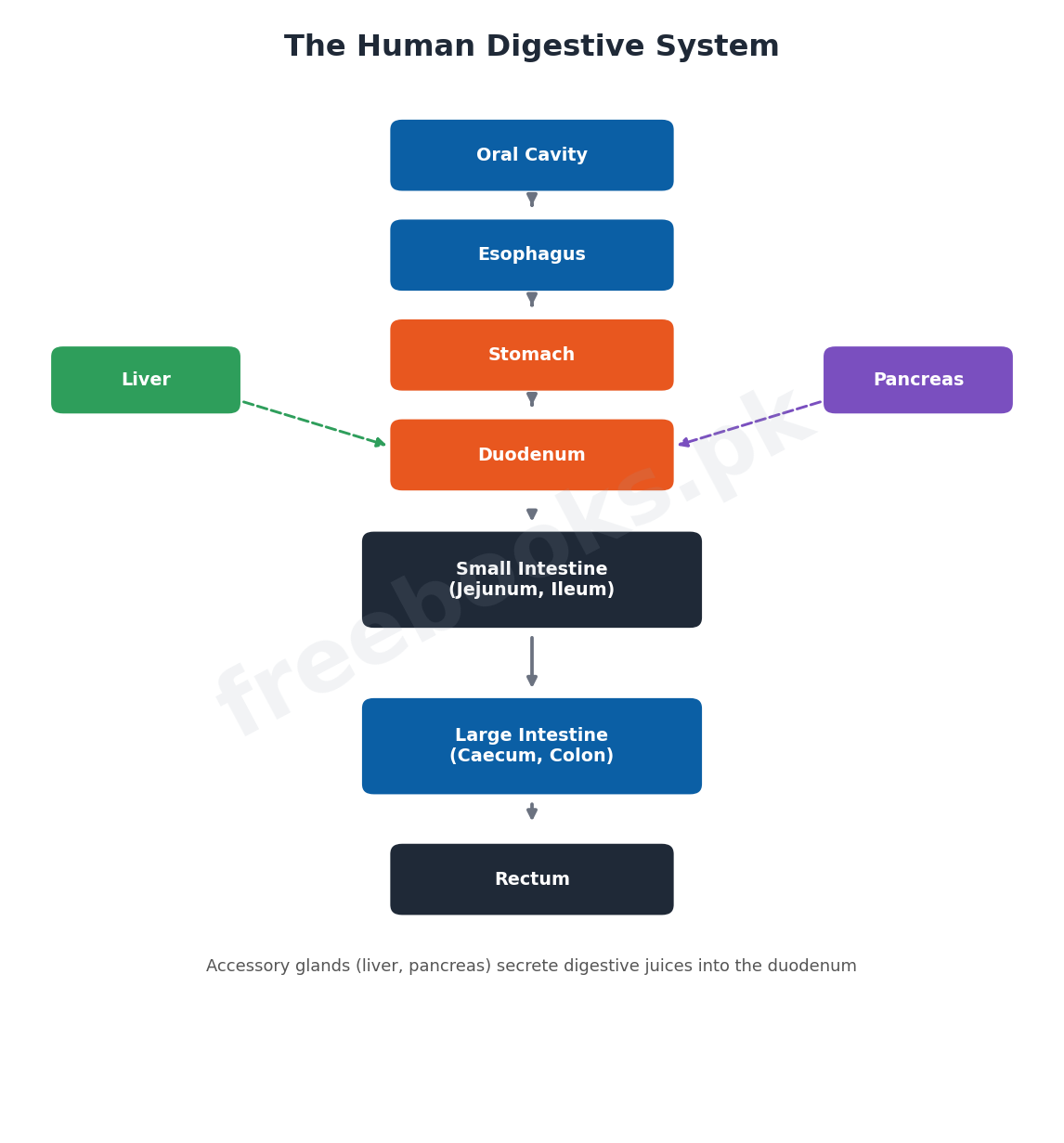
The human digestive system is a long coiled tube from mouth to anus (oral cavity, esophagus, stomach, small intestine [duodenum, jejunum, ileum], large intestine [caecum, colon, rectum]), with associated glands (salivary glands, liver, pancreas); there are three sites of digestion: the oral cavity, the stomach, and the small intestine. In the oral cavity, food is selected (by taste, smell and sight), masticated by molar teeth (increasing surface area for enzymes and enabling swallowing), and lubricated and partly digested by saliva, secreted by three pairs of glands (sublingual, submaxillary, parotid); saliva contains water and mucus (lubrication), sodium bicarbonate and salts (pH stabilization) and the enzyme ptyalin (salivary amylase), which digests starch and glycogen into maltose. Swallowing forms the masticated food into a bolus, which the tongue and pharyngeal muscles push backward while the soft palate closes the nasal passage and the epiglottis covers the windpipe (glottis), directing the bolus safely into the esophagus, down which it travels by peristalsis (coordinated waves of circular and longitudinal muscle contraction and relaxation); reversed peristalsis (antiperistalsis) causes vomiting.
At the stomach entrance, the cardiac sphincter controls food entry; the elastic, muscular stomach stores food (allowing discontinuous feeding) and partly digests it, its wall having an outer connective tissue layer, a middle muscular layer (longitudinal and circular muscles for churning), and an inner mucosa with tubular gastric glands containing mucous cells (secreting protective mucus), parietal/oxyntic cells (secreting hydrochloric acid, adjusting pH to 2-3 for pepsin activity and killing microorganisms) and zymogen cells (secreting inactive pepsinogen, activated to pepsin by acid, which hydrolyzes proteins to peptones and polypeptides); gastric juice secretion is stimulated by the hormone gastrin (released in response to protein-rich food). Churning converts food into a semi-solid mass called chyme, which is gradually released into the duodenum through the relaxing pyloric sphincter.
Digestion in the Small Intestine and Absorption
In the small intestine (duodenum, jejunum, ileum), the acidity of arriving chyme stimulates the hormone secretin (produced by duodenal mucosa), which travels via blood to the pancreas, stimulating pancreatic juice secretion and inhibiting further gastric secretion. Pancreatic juice contains pancreatic amylase/amylopsin (digesting starch to maltose), lipase (hydrolyzing some fats into fatty acids and glycerol), and trypsinogen (activated to trypsin by the duodenal enzyme enterokinase, then splitting proteins into peptones/polypeptides), plus sodium bicarbonate, which neutralizes stomach acid since pancreatic enzymes require a less acidic environment. Bile, produced by the liver and stored in the gall bladder, contains no enzymes but its bile salts emulsify fats (breaking them into small globules for lipase to act on more efficiently); its green colour comes from pigments formed by haemoglobin breakdown (blocked bile flow causes jaundice, and precipitated cholesterol can form gallstones). In the jejunum and ileum, intestinal enzymes (amino peptidase, dipeptidase, lipase, maltase, lactase) complete digestion of any remaining food.
Nearly all absorption occurs in the ileum, whose internal surface bears finger-like villi (each supplied with blood capillaries and a lymphatic lacteal, covered by epithelial cells bearing microvilli), which vastly increase the absorptive surface area; simple sugars and amino acids are absorbed (by diffusion or active transport) into blood capillaries, while most fatty acids and glycerol are absorbed into epithelial cells, recombined into fats, and enter the lacteals as lipoprotein droplets, eventually reaching the bloodstream via the thoracic lymphatic duct. Undigested residue passes through the ileocolic sphincter into the large intestine (caecum with the appendix, colon, rectum), which absorbs water and salts, houses beneficial bacteria that synthesize vitamin K, and stores/expels the remaining feces via the rectum and anus.
Common Diseases Related to Nutrition and Digestion
Dyspepsia is incomplete/imperfect digestion, symptomatic of other disorders, causing abdominal discomfort, flatulence, heartburn, nausea and vomiting. Food poisoning results from eating food contaminated with bacterial toxins (e.g. Salmonella, Campylobacter, from undercooked or contaminated meat/milk/eggs), causing diarrhoea, vomiting and abdominal pain; a severe form, botulism (caused by Clostridium botulinum toxin from improperly preserved food), can cause cardiac and respiratory paralysis. Obesity results from storing excess food intake as fat in adipose tissue, increasing risk of high blood pressure, heart disease and diabetes; anorexia nervosa (loss of appetite from fear of obesity, mainly in adolescent females) and bulimia nervosa (binge eating followed by self-induced vomiting or purging, in slightly older girls) are serious eating disorders requiring psychiatric treatment.
Piles (haemorrhoids) are dilated, tortuous anorectal veins that may bleed, aggravated by constipation, treated with dietary fibre/laxatives or surgery in severe cases. An ulcer forms when the protective mucus lining of the stomach or duodenum breaks down, allowing digestive enzymes to erode the underlying wall (a severe ulcer can perforate the digestive tract, causing dangerous infection); excessive gastric acid secretion is a key factor, and smoking, spicy food, alcohol, caffeine and stress should be avoided by ulcer patients.
Important Definitions
Nutrition
The sum total of processes by which organisms take in and use nutrients for growth, repair and maintenance of life activities.
Autotroph / Heterotroph
An autotroph manufactures its own organic compounds from inorganic raw materials; a heterotroph must obtain organic molecules as food from the environment.
Saprophyte
An organism that feeds on dead and decaying organic matter by secreting extracellular enzymes and absorbing the digested products.
Symbiosis
A mutually beneficial nutritional association between two organisms of different species (e.g. lichens, mycorrhizae, root nodules).
Ingestion
The taking in of complex food into the body, the first step of holozoic nutrition.
Digestion
The enzymatic breakdown of complex food molecules into simpler, diffusible molecules that can cross cell membranes.
Peristalsis
Coordinated waves of muscular contraction and relaxation in the digestive tract that move food along the canal.
Villi
Finger-like projections of the ileum's internal lining that greatly increase surface area for absorption of digested food.
Key Facts
| Item | Fact |
|---|---|
| Two nutrition types | Autotrophic (self-manufactured organic compounds) and heterotrophic (obtained as food). |
| 3 sites of human digestion | Oral cavity, stomach, and small intestine. |
| Saliva enzyme | Ptyalin (salivary amylase) – digests starch/glycogen into maltose. |
| Gastric juice components | Mucus (protection), HCl (pH 2-3, kills microbes), pepsinogen -> pepsin (protein digestion). |
| Pancreatic juice enzymes | Amylopsin (starch->maltose), lipase (fats->fatty acids+glycerol), trypsinogen->trypsin (proteins->peptides). |
| Bile (liver) | No enzymes; bile salts emulsify fats; pigments from haemoglobin breakdown; stored in gall bladder. |
| Main site of absorption | Ileum – via villi and microvilli, into blood capillaries and lacteals. |
| Botulism cause | Toxin of Clostridium botulinum bacteria – causes cardiac and respiratory paralysis. |
Diagrams & Illustrations
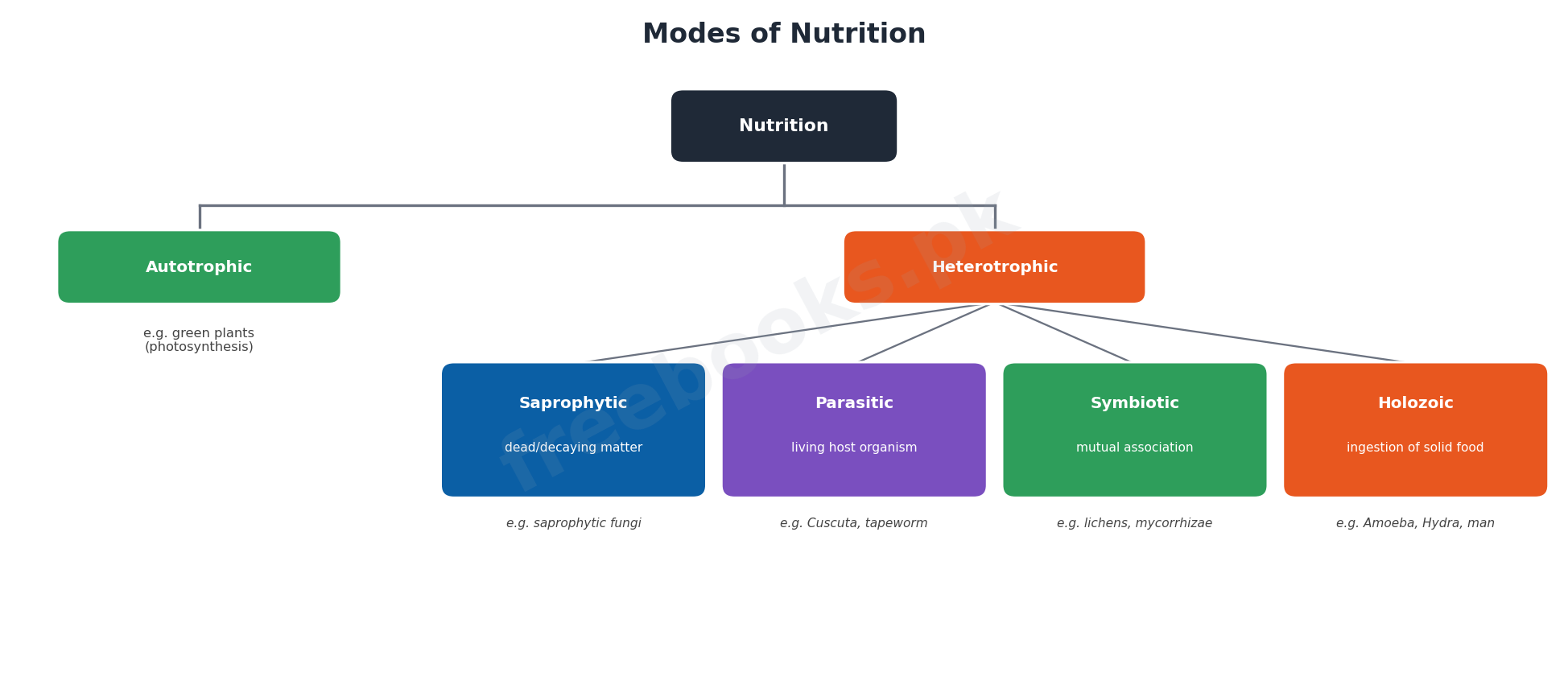
Modes of Nutrition: a classification chart of nutrition types – autotrophic and heterotrophic – with heterotrophic subtypes: saprophytic, parasitic, symbiotic and holozoic nutrition, each with an example.
The Human Digestive System: a labelled diagram of the human digestive system showing the oral cavity, esophagus, stomach, small intestine (duodenum, jejunum, ileum), large intestine (caecum, colon, rectum), liver and pancreas.
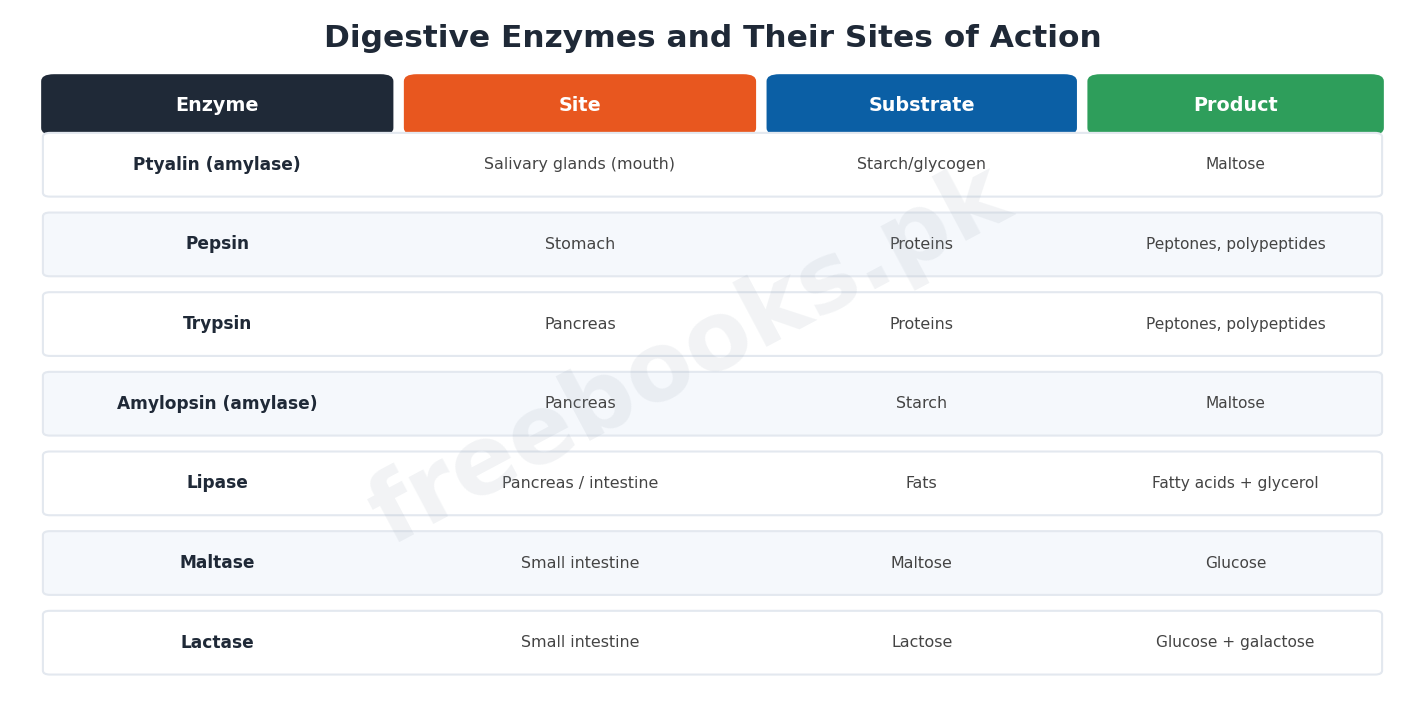
Digestive Enzymes and Their Sites of Action: a summary chart of the major human digestive enzymes (ptyalin, pepsin, trypsin, amylopsin, lipase, maltase, lactase) with their site of secretion and the substrate/product of each.
Short Questions & Answers
What is the advantage of a digestive tract (tube-within-a-tube) compared with a digestive cavity?
A tubular digestive system with separate mouth and anus allows one-way, continuous movement of food, permitting different regions to specialize for specific digestive functions, making digestion and absorption more efficient than a sac-like cavity with only one opening for both ingestion and egestion.
What are the functions of the human liver?
The liver secretes bile (containing bile salts that emulsify fats and pigments from haemoglobin breakdown), stores bile in the gall bladder, helps regulate blood glucose, and is involved in detoxification and metabolism of nutrients absorbed from the intestine.
Differentiate saprophytic and parasitic nutrition.
Saprophytic nutrition involves feeding on dead and decaying organic matter by secreting extracellular enzymes and absorbing the products, whereas parasitic nutrition involves feeding on or within a living host organism of a different species, often causing harm to the host.
What is holozoic nutrition? Name its five processes.
Holozoic nutrition is the mode of nutrition typical of most animals, in which complex food is taken in and processed through five characteristic stages: ingestion, digestion, absorption, assimilation and egestion.
Differentiate ectoparasite and endoparasite.
An ectoparasite lives on the outer surface of its host (e.g. fleas, lice, ticks), while an endoparasite lives within the body of its host (e.g. Entamoeba histolytica, tapeworm, roundworms).
What prevents the stomach wall from being digested by its own enzymes?
A thick layer of mucus, secreted by mucous cells of the gastric glands, coats the inner stomach wall and protects it from being digested by hydrochloric acid and pepsin.
Long Questions & Answers
Define nutrition. Describe the role of different mineral elements in plant nutrition.
Nutrition is the sum total of all processes by which organisms take in and utilize nutrients – substances that supply elements necessary for metabolism – for growth, repair and maintenance of their vital activities. While autotrophic (photosynthetic) plants derive their basic carbon, hydrogen and oxygen from carbon dioxide and water, they require several other mineral elements from the soil for healthy growth. Nitrogen is essential for building proteins, and its deficiency causes stunted growth and chlorosis (yellowing), particularly in older leaves. Phosphorus is a component of ATP and nucleic acids, and its deficiency causes stunted root growth. Potassium deficiency causes yellow-brown leaf margins and premature plant death. Magnesium is a central component of the chlorophyll molecule, so its deficiency also causes chlorosis, while iron is required for cytochromes involved in cellular respiration. Since soil nutrients are depleted by repeated cropping, farmers must replenish them using animal manure, sewage sludge or chemical fertilizers such as urea, super phosphates and ammonium nitrate, ensuring plants receive an adequate mineral supply for normal metabolism and growth.
What is holozoic nutrition? Describe the characteristic processes involved in holozoic nutrition, giving the example of Amoeba.
Holozoic nutrition is the mode of nutrition characteristic of most animals, in which solid, complex food is taken into the body and processed through five defined stages. Ingestion is the taking in of complex food into the organism's body. Digestion is the enzymatic breakdown of complex organic molecules (such as proteins, starches and fats) into simpler, diffusible molecules (such as amino acids, simple sugars and fatty acids); this may occur intracellularly (within cells) or extracellularly (in a gut cavity or lumen, with enzymes secreted into it). Absorption is the uptake of these diffusible digested molecules across a membrane into the cell or bloodstream. Assimilation is the use of these absorbed products to release energy or build new cellular material. Egestion is the elimination of any undigested matter from the body. In Amoeba proteus, digestion is entirely intracellular: when the organism contacts a food particle, its pseudopodia flow around and fuse over it, enclosing it within a food vacuole; lysosomes then fuse with this vacuole and release hydrolytic enzymes, first killing and softening the food in an acidic environment (about pH 5.6), after which the medium becomes alkaline (about pH 7.3) and digestion is completed; the digested products then pass through fine cytoplasmic canals into the surrounding cytoplasm for use in metabolism, while any undigested residue is egested at any point on the cell surface into the surrounding water.
Describe digestion in the oral cavity and stomach of man.
In the oral cavity, food undergoes selection (via taste, smell and sight, rejecting unpleasant or harmful items), mastication (grinding by the molar teeth into smaller pieces, easing swallowing and increasing surface area for enzyme action), and lubrication and initial digestion by saliva, secreted by three pairs of glands (parotid, submaxillary and sublingual). Saliva contains water and mucus (lubricating and moistening food), sodium bicarbonate and salts (stabilizing pH), and the enzyme ptyalin (salivary amylase), which begins digesting starch and glycogen into maltose. During swallowing, the tongue forces the food bolus to the back of the mouth, the soft palate rises to close the nasal passage, and the epiglottis folds down to cover the windpipe (glottis), safely directing the bolus into the esophagus, down which it is propelled by peristaltic waves of muscular contraction. At the junction with the stomach, the cardiac sphincter relaxes to admit food and then closes to prevent regurgitation. In the stomach, an elastic, muscular organ that stores and partly digests food, the mucosal lining's gastric glands contain mucous cells (secreting protective mucus), parietal cells (secreting hydrochloric acid, lowering pH to 2-3, activating pepsin and killing ingested microorganisms) and zymogen cells (secreting inactive pepsinogen, converted to active pepsin by the acidic environment, which hydrolyzes proteins into peptones and polypeptides); muscular contractions of the stomach wall churn this mixture into a semi-solid mass called chyme, which is gradually released through the relaxing pyloric sphincter into the duodenum.
Describe digestion in the small intestine, and describe how absorption of digested food occurs.
When acidic chyme enters the duodenum from the stomach, it stimulates the intestinal mucosa to release the hormone secretin, which travels via the blood to the pancreas and stimulates the release of pancreatic juice while also inhibiting further gastric secretion. Pancreatic juice contains pancreatic amylase (amylopsin), which digests starch into maltose; lipase, which hydrolyzes fats into fatty acids and glycerol; and trypsinogen, which is converted into active trypsin by the enzyme enterokinase (secreted by the duodenal lining) and then splits proteins into peptones and polypeptides; pancreatic juice also contains sodium bicarbonate, neutralizing stomach acid so that pancreatic enzymes, which require a less acidic environment, can function effectively. The liver secretes bile, stored in the gall bladder and released into the duodenum; although bile contains no digestive enzymes, its bile salts emulsify fats into smaller globules, greatly increasing the surface area available for lipase action. In the jejunum and ileum, intestinal enzymes such as aminopeptidase, dipeptidase, maltase and lactase complete the breakdown of any remaining polypeptides and disaccharides into amino acids and simple sugars. Nearly all absorption of digested nutrients occurs in the ileum, whose inner lining is thrown into folds bearing numerous finger-like villi, each covered with epithelial cells bearing even smaller microvilli, and richly supplied with blood capillaries and a lymphatic lacteal; this arrangement dramatically increases the surface area for absorption. Simple sugars and amino acids are absorbed by diffusion or active transport directly into the blood capillaries, while most fatty acids and glycerol are absorbed into the villus epithelial cells, recombined into fats, and transported via the lacteals and thoracic lymphatic duct into the bloodstream.
Describe common diseases related to nutrition and digestion.
Several disorders affect the digestive system and overall nutrition. Dyspepsia is incomplete or imperfect digestion, a symptom rather than a distinct disease, producing abdominal discomfort, flatulence, heartburn, nausea and vomiting, often due to excessive stomach acidity or faulty stomach/intestinal function. Food poisoning results from eating food contaminated with bacterial toxins, most commonly from Salmonella or Campylobacter present in undercooked meat, eggs or unpasteurized milk, causing diarrhoea, vomiting and abdominal pain within 12-24 hours; a much more severe form, botulism, is caused by toxins from Clostridium botulinum in improperly preserved food, which can cause potentially fatal cardiac and respiratory paralysis. Obesity results when excess food intake is stored as fat in adipose tissue, raising the risk of high blood pressure, heart disease, diabetes mellitus and stomach disorders. Anorexia nervosa is a serious loss of appetite driven by fear of obesity, mainly affecting adolescent girls, requiring psychiatric treatment and sometimes non-oral feeding in severe cases, while bulimia nervosa involves cycles of overeating followed by self-induced vomiting or purging, risking electrolyte imbalance and requiring prolonged, supervised treatment. Piles (haemorrhoids) are dilated, tortuous anorectal veins that may bleed and are aggravated by constipation, generally managed with dietary fibre, stool softeners or, in severe cases, surgery. Finally, an ulcer develops when the protective mucus lining of the stomach or duodenum breaks down, allowing digestive enzymes to erode the underlying tissue; excessive gastric acid secretion is a key contributing factor, and patients are advised to avoid smoking, spicy food, alcohol, caffeine and stress.
MCQs with Answers
Organisms that manufacture their own organic compounds from inorganic raw materials are called: (a) heterotrophs (b) autotrophs (c) saprophytes (d) parasites
Correct Answer: (b) autotrophs. Autotrophs manufacture their own organic compounds from inorganic materials like CO2, water and nitrates.
Chlorosis (yellowing of leaves) is most commonly caused by a deficiency of: (a) potassium (b) nitrogen or magnesium (c) phosphorus (d) sulphur
Correct Answer: (b) nitrogen or magnesium. Chlorosis is typically caused by nitrogen or magnesium deficiency, both linked to chlorophyll formation.
Cuscuta (dodder) is an example of a plant showing: (a) saprophytic nutrition (b) symbiotic nutrition (c) parasitic nutrition (d) insectivorous nutrition
Correct Answer: (c) parasitic nutrition. Cuscuta (dodder) is a leafless twining plant that lives as a parasite on its host.
The Venus flytrap and pitcher plant are examples of plants with: (a) parasitic nutrition (b) saprophytic nutrition (c) insectivorous nutrition (d) symbiotic nutrition
Correct Answer: (c) insectivorous nutrition. Both are insectivorous plants that trap and digest insects to supplement their nutrient supply while remaining true autotrophs.
Earthworms, which feed on organic debris, are classified as: (a) herbivores (b) carnivores (c) detritivores (d) filter feeders
Correct Answer: (c) detritivores. Earthworms feed on decaying organic matter (detritus) and are classified as detritivores.
The enzyme in human saliva that digests starch is: (a) pepsin (b) trypsin (c) ptyalin (salivary amylase) (d) lipase
Correct Answer: (c) ptyalin (salivary amylase). Ptyalin (salivary amylase) digests starch and glycogen into maltose in the mouth.
Hydrochloric acid in the stomach performs all of the following EXCEPT: (a) activating pepsinogen to pepsin (b) killing ingested microorganisms (c) emulsifying fats (d) adjusting stomach pH to 2-3
Correct Answer: (c) emulsifying fats. Emulsifying fats is the function of bile salts, not hydrochloric acid.
Bile, secreted by the liver, functions mainly to: (a) digest proteins directly (b) emulsify fats for lipase action (c) neutralize stomach acid (d) absorb amino acids
Correct Answer: (b) emulsify fats for lipase action. Bile contains no digestive enzymes; its bile salts emulsify fats, aiding lipase action.
Almost all absorption of digested food in humans occurs in the: (a) stomach (b) duodenum (c) ileum (d) large intestine
Correct Answer: (c) ileum. The ileum, with its villi and microvilli, is the main site of absorption of digested nutrients.
Botulism, a severe form of food poisoning, is caused by toxins from: (a) Salmonella (b) Clostridium botulinum (c) Campylobacter (d) Escherichia coli
Correct Answer: (b) Clostridium botulinum. Botulism is caused by the powerful toxin of Clostridium botulinum, affecting the central nervous system.
Quick Revision Summary
- Nutrition = taking in + using nutrients. Autotrophic (self-made food) vs Heterotrophic (food from environment). Mineral deficiencies: N/Mg -> chlorosis, P -> stunted roots, K -> leaf margin yellowing.
- Special plant nutrition: Saprophytic (dead matter), Parasitic (living host, e.g. Cuscuta), Symbiotic (lichens, mycorrhizae, root nodules), Insectivorous (pitcher plant, Venus flytrap, sundew – true autotrophs supplementing N supply).
- Animal feeding types: Detritivores, Herbivores, Carnivores, Omnivores, Filter feeders, Fluid feeders, Macrophagous feeders. Parasites: ectoparasite (on host) vs endoparasite (within host); obligate vs facultative.
- Holozoic nutrition = Ingestion -> Digestion (intracellular/extracellular) -> Absorption -> Assimilation -> Egestion. Amoeba: intracellular digestion in food vacuole. Hydra: sac-like gastrovascular cavity, one opening. Planaria: branched intestine, extra+intracellular digestion. Cockroach: tubular gut (fore/mid/hind).
- Human digestion sites: Oral cavity (ptyalin – starch->maltose), Stomach (HCl + pepsin – proteins->peptones, pH 2-3), Small intestine (pancreatic amylopsin/lipase/trypsin + bile emulsifying fats + intestinal enzymes).
- Absorption mainly in ileum via villi + microvilli: sugars/amino acids -> blood capillaries; fatty acids/glycerol -> lacteals (as lipoproteins) -> thoracic duct -> blood. Large intestine: absorbs water/salts, vitamin K synthesis by bacteria.
- Diseases: Dyspepsia, Food poisoning (Salmonella/Campylobacter, Botulism-Clostridium botulinum), Obesity, Anorexia nervosa, Bulimia nervosa, Piles (haemorrhoids), Ulcer (mucus breakdown, gastric acid). Notes by freebooks.pk.
Exam Tips
- Learn the 5 processes of holozoic nutrition in order (ingestion, digestion, absorption, assimilation, egestion) with the Amoeba example.
- Compare digestive systems across organisms: sac-like (Hydra) vs branched sac (Planaria) vs tubular (cockroach, man) — a common "differentiate" theme.
- Memorise the enzyme table: ptyalin (mouth), pepsin (stomach), trypsin/amylopsin/lipase (pancreas), maltase/lactase/peptidases (intestine) — with substrate and product for each.
- Be ready to explain why the stomach doesn't digest itself (mucus layer) and why pancreatic enzymes need bicarbonate neutralization.
- Know the structure of a villus (capillaries + lacteal + microvilli) and which nutrients are absorbed into which vessel.
- Revise the nutrition-related disease list (dyspepsia, food poisoning, botulism, obesity, anorexia/bulimia, piles, ulcer) with one key cause/feature each.