This chapter covers Growth and Development from the 2nd Year (FSc Part-II) Biology syllabus of the Punjab Curriculum and Textbook Board (PTB/PCTB). In the course of its life cycle, an organism changes from a fertilized egg into an adult, and this progressive sequence of changes that occurs before it acquires its adult form constitutes embryonic development; growth itself is the permanent, irreversible increase in size that occurs as an organism matures. These notes are prepared by freebooks.pk.
The chapter covers growth and development in plants (meristems, phases of growth, external and internal growth conditions, differentiation, and growth correlations such as apical dominance), growth and development in animals using the chick as a model system (fertilization, cleavage, blastula, gastrulation, notochord and mesoderm formation, neurulation), the underlying mechanisms of development (the roles of nucleus and cytoplasm, embryonic induction), and finally aging, regeneration and abnormal development.
Learning Objectives
- Differentiate growth and development, and describe the concept of open growth in plants.
- Describe the types of plant meristems (apical, intercalary, lateral) and the four phases of plant growth.
- Describe the external and internal factors that influence plant growth, and explain growth correlation and apical dominance.
- Describe the early stages of chick development: fertilization, cleavage, morula, blastula and gastrulation.
- Describe notochord and mesoderm formation and neurulation in the chick embryo.
- Explain the roles of the nucleus and cytoplasm in development using classic experiments (Dietrich, Spemann, Haemmerling).
- Define embryonic induction and describe Spemann and Mangold's primary organizer experiment.
- Describe the processes of aging, regeneration, and the causes of abnormal development.
Key Concepts
Growth and Development in Plants: Meristems and Phases of Growth
In plants, growth and development involve cell division, elongation, and differentiation of cells into tissues and then organs; growth is an irreversible increase in size, while development is a programmed series of stages from a simpler to a more complex form, accompanied by cellular differentiation of structure and function. Plants show a growth pattern called open growth: throughout life, a plant continues adding new organs such as branches, leaves and roots, enlarging from the tips of roots and shoots, though the rate of growth is not uniform, starting slow, becoming rapid, reaching a maximum, and then gradually slowing. In vascular plants, growth occurs through the activity of meristems, young tissues or groups of cells that retain the potential to divide; in lower plants the entire plant body can grow, but in higher plants growth is limited to specific growing points. There are three types of meristem: apical meristems, found at the tips of roots and shoots, are perpetual growth zones primarily responsible for primary growth (increase in length); intercalary meristems are parts of apical meristem separated from the apex by permanent tissue, situated at the bases of internodes, playing an important but temporary role in leaf and flower production; and lateral meristems, cylinders of dividing cells present in dicots and gymnosperms (vascular and cork cambium), are responsible for secondary growth (increase in diameter), with some structures being determinate (grow to a certain size and stop, e.g. leaves, flowers, fruits) and others indeterminate (continually replenished, remaining youthful, e.g. vegetative roots and stems).
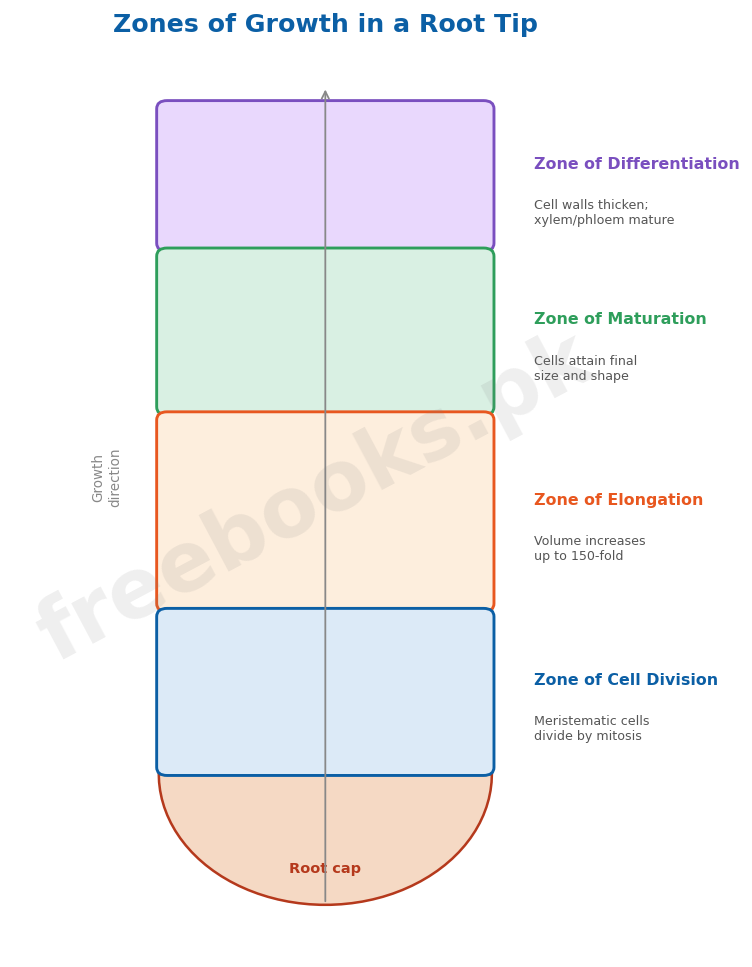
The growth of a multicellular plant is divided into four phases. During cell division, the number of cells increases by mitosis at the tips of root and shoot, where cells are small with centrally located spherical nuclei in non-vacuolated cytoplasm. A short distance from the apex lies the zone of elongation, only a few millimetres long, where cell volume increases up to 150-fold due to water uptake as cell wall plasticity increases and wall pressure decreases. During maturation, cells attain their final size: some, like pith and cortex cells, do not elongate further, while others, like fibres and tracheids, elongate lengthwise more than in other directions. Once cell enlargement ceases, differentiation begins: cell walls thicken and become pitted, xylem vessel walls develop thickenings, and cells of various tissues acquire distinct spatial dimensions and structural features; differentiation itself proceeds through five recognisable stages, from formation of the embryo, through recognition of shoot and root apical meristems and of the cambium, to production of leaf and root primordia, and finally the formation of fully differentiated tissues including xylem, phloem, leaves, shoots and roots.
Conditions for Plant Growth and Growth Correlations
Plant growth rate is influenced by both external and internal factors. Among external factors, temperature influences growth rate within a range of 0-35 degrees Celsius, with an optimum of 25-30 degrees Celsius, minimal growth at 5-10 degrees Celsius, and growth stopping (potentially fatally) above 35-40 degrees Celsius; light influences growth through its intensity (more intensity increases cell division), quality (red light favours cell elongation, blue light enhances division but retards enlargement, and ultraviolet light retards elongation), and duration (affecting vegetative and reproductive structures and flowering, a phenomenon called photoperiodism); oxygen is necessary for the metabolic activity underlying growth, though excess oxygen inhibits growth; carbon dioxide is essential for photosynthesis but retards growth at very high concentrations; water enables cell elongation by absorption, with growth ceasing entirely in its absence; and nutrition supplies energy for growth, with growth increasing as nutrition increases and slowing as it decreases. Among internal factors, hormones such as indole-3-acetic acid (IAA, an auxin) cause cell elongation, while vitamins, organic compounds synthesised within the plant in the presence of light, are essential for continued growth, since plants grown in the dark develop vitamin deficiencies that halt growth.
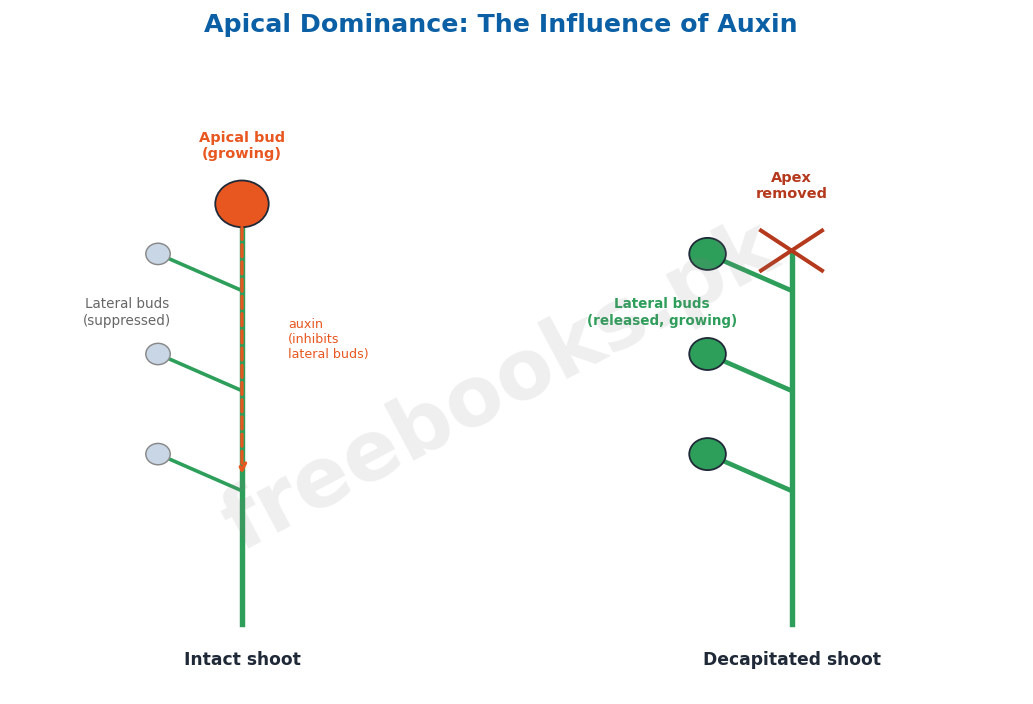
The development of a plant is usually correlated with its growth, with different organs growing at different rates and in different directions in a reciprocal relationship known as correlation. One of the most important correlative effects is apical dominance, in which only the apical bud grows actively while growth in the lower axillary buds is suppressed; when the apical bud is experimentally removed, growth in the lower buds is released from inhibition, showing that the active shoot apex controls lateral bud development. Thimann and Skoog demonstrated in 1934 that apical dominance is caused by auxin diffusing from the apical bud and inhibiting lateral shoot growth (the inhibitory effect), while removal of the apex releases the lateral buds from this inhibition (the compensatory effect); later research showed that cytokinins also play a role, since applying cytokinin directly to an inhibited bud can release it from apical dominance, and plants with dense lateral branching typically show very little apical dominance. Practically, apical dominance is important in tap root development and is exploited commercially by applying synthetic auxin to potato tubers to inhibit sprouting of the eyes, extending storage time from one to three years.
Development of the Chick: Fertilization, Cleavage and Blastula Formation
Embryology is the study of the growth and differentiation an organism undergoes in developing from a single fertilized egg into a complex, independent living being resembling its parents; development is an ordered sequence of irreversible steps, each setting up the conditions for the next, and because all animals are related through evolution, their early development shows broad similarities, commonly studied using the chick as a basic model applicable to all vertebrates. In the chick, fertilization is internal, occurring just as the ovum enters the oviduct, and the shell is secreted as the egg passes through the shell gland (uterus); development ceases once the egg is laid unless its temperature is kept near the mother's body temperature, and artificial incubators are typically regulated at 36-38 degrees Celsius, at which the chick completes development and hatches on the twenty-first day.
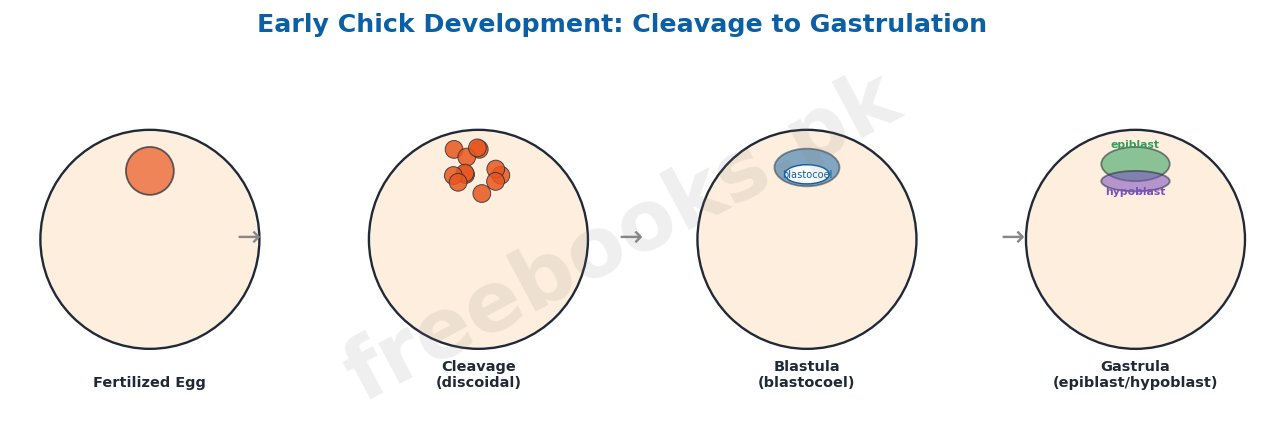
Immediately after fertilization, the egg undergoes a series of mitotic divisions called cleavage; in the bird's egg, this cell division is confined to a small disc of protoplasm on the surface of the yolk at the animal pole, a pattern called discoidal cleavage, with the first two cleavage planes vertical and the third running horizontally, separating the dividing cytoplasm from the underlying yolk, after which successive cleavages become increasingly irregular. Cleavage produces the morula, a rounded, closely packed mass of blastomeres forming a disc-shaped blastoderm two or more layers thick, with smaller, well-defined cells at the centre and flattened, larger cells at the periphery; this short-lived stage soon transitions into the blastula, characterised by a fluid-filled segmentation cavity called the blastocoel beneath the discoidal blastoderm, with the marginal zone where cells remain attached to the yolk called the zone of junction. Gastrulation follows, characterised by extensive cell movement and rearrangement: the blastoderm splits into an upper epiblast layer (presumptive ectoderm and mesoderm) and a lower hypoblast layer (presumptive endoderm, which grows outward and then downward around the yolk to form the endodermal lining of the yolk sac), and the central region of the blastoderm separates from the yolk with a pool of fluid developing beneath it, producing a translucent area called the area pellucida, in contrast to the peripheral area opaca, where cells remain attached to the yolk.
Notochord and Mesoderm Formation, and Neurulation
In the chick, mesodermal cells migrate medially and caudally from both sides of the blastoderm, creating a midline thickening called the primitive streak, which grows rapidly in length as more presumptive mesodermal cells aggregate, changing the blastoderm's shape from circular to pear-shaped. The anterior end of the primitive streak is occupied by an aggregation of primitive node (notochordal) cells, while the rest consists of mesodermal cells, so the primitive streak effectively represents the dorsal and both lateral lips of the blastopore; continuous cell migration between the epiblast and hypoblast forms a groove along the length of the primitive streak (the primitive groove), flanked by thickened primitive ridges, with a special local thickening at the cephalic end called Hensen's node marking the site of a specialised type of invagination. Shortly after the primitive streak forms and the endoderm is established, cells migrate inward from Hensen's node to form the rod-like notochord in the midline beneath the ectoderm; from Hensen's node, dorsal mesoderm is also organised into somites (seen in 25-26 hour embryos as compact cell masses lateral to the neural folds), while the lateral plate mesoderm splits into somatic and splanchnic mesoderm layers separated by the coelom.
Neurulation begins on the dorsal surface of the gastrula, over the notochord, where a band of presumptive neural ectoderm thickens to form the neural plate as the gastrula elongates; by 21-22 hours, longitudinal folding establishes the neural groove in the mid-dorsal line, flanked by neural folds, and by 24 hours this folding is clearly visible, with the embryo now termed a neurula. The anterior end of the neural groove, the widest part, forms the future brain, while the rest becomes the future spinal cord; the neural plate sinks as the neural folds grow toward one another, meet in the mid-dorsal line, fuse, and convert the neural groove into the neural tube (with small anterior and posterior neuropore openings at each end that close later), giving rise to the central nervous system and enclosing a cavity called the neurocoel – this entire process is called neurulation.
Mechanisms of Development: The Roles of Nucleus and Cytoplasm
A single-celled zygote develops into a multicellular individual using the complete genetic information present in its chromosomes, inherited from egg and sperm; during cleavage, every resulting cell receives a full set of chromosomes and complete genetic instructions, yet during differentiation some genes remain active while others switch off. Classic experiments revealed the relative roles of nucleus and cytoplasm in this process. In 1892, Hans Driesch separated a two-celled sea urchin embryo into two individual cells, and both halves developed into normal larvae, showing that each cell contained all the genetic information of the original zygote. Spemann divided a salamander zygote with a fine hair ligature into two halves, one containing the nucleus and one without; cleavage proceeded normally only in the nucleated half until, at the 16-cell stage, one nucleus crossed the narrow cytoplasmic bridge into the anucleate half, which then immediately began dividing too, showing that a nucleus was essential for cleavage to begin in any cytoplasm. In a further experiment, Spemann separated two nucleated halves of an embryo and found both developed into complete embryos (even a single cell from a 16-cell embryo could form a complete embryo), but occasionally a nucleated half developed only into an unorganised mass, and this was traced to the presence or absence of the grey crescent, a pigment-free area appearing at fertilization; halves lacking the grey crescent failed to develop further, from which Spemann concluded that all cells contain identical nuclear information, but the cytoplasm of the grey crescent region contains information essential for development.
Because all cells share the same nuclear information, differentiation must depend on how cells become committed to different developmental fates, which occurs through cytoplasmic segregation of determinants during cleavage and through induction, or interaction with neighbouring cells. The role of cytoplasm was demonstrated in the ascidian egg, whose cytoplasm of five different colours segregates into different blastomeres during cleavage, with clear cytoplasm producing larval epidermis, yellow cytoplasm producing muscle cells, grey vegetal cytoplasm producing gut, and grey equatorial cytoplasm producing notochord and neural tube. The role of the nucleus itself was shown in the multicellular alga Acetabularia, which has a single nucleus in its rhizoid, a long stalk, and an umbrella-shaped cap whose shape differs between species (A. mediterranea has a regular cap, A. crenulata an irregular one); Haemmerling grafted a rhizome (containing the nucleus) of one species onto the stalk of another, and found that the regenerated cap always matched the species of the nucleus, not the cytoplasm/stalk, proving that the nucleus determines cap structure regardless of which species' cytoplasm surrounds it. Together, these experiments established that the nucleus contains all the genes determining an individual's characteristics, while the cytoplasm plays the role of selectively activating specific genes.
Concept of Differentiation and Embryonic Induction
A fertilized egg contains cytoplasmic components unequally distributed within it, believed to carry morphogenetic determinants controlling the function of specific cell types, a process now called differentiation; although the zygote contains complete information for developing an individual, understanding exactly how cells differentiate required further experimentation. Spemann investigated this using amphibian embryos: when he removed a piece of ectoderm from a frog embryo and grew it separately, the embryo it came from developed a defective nervous system while the isolated ectoderm piece developed no structures at all, despite remaining healthy; in a further experiment, separating the mesoderm underlying the ectoderm and then folding the ectoderm flap back onto its original position also resulted in no nervous system forming, proving that the underlying mesoderm has a specific inductive effect on the overlying ectoderm, stimulating it to form nervous tissue.
The capacity of some cells to evoke a specific developmental response in others is a widespread phenomenon called embryonic induction, first reported by Hans Spemann and Hilde Mangold in 1924. They removed a piece of dorsal blastopore lip from one salamander gastrula and transplanted it into the ventral or lateral position of a second gastrula; this transplanted tissue invaginated and developed into a notochord and somites, and remarkably also induced the surrounding host tissue to form a complete second neural tube and nervous system at the graft site, so that the resulting embryo carried both a normal and an induced (secondary) nervous system. Because only cells from the dorsal blastopore lip (corresponding to the presumptive notochord, somites, and prechordal plate) were capable of this effect, Spemann designated this region the primary organizer, and the phenomenon itself became known as primary induction.
Aging
Aging is an inevitable, ongoing process, defined as the negative physiological changes that accumulate in the body over time; signs of old age, not all of which need be present in any individual, include loss of hair pigment, development of small pigmented skin areas on the face and arms, dryness and wrinkling of skin, loss of agility, weight gain due to fat, poor vision, forgetfulness, general weakness and decreased immunity, alongside degeneration of specific organs and tissues, such as cartilage degeneration causing arthritis in joints, or degeneration of elastic tissue in blood vessel walls causing arteriosclerosis and coronary blood clotting. The exact mechanism of aging remains unknown, but several contributing factors are recognised: cells have only a finite number of possible mitotic divisions, so tissues such as the nervous system show fewer cells and declining mental activity and memory in old age once this limit is approached; intracellular substances change with age, such as collagen developing increased cross-linkages and elastic tissue losing elasticity, causing hardening and loss of resilience in connective tissue and cartilage; and spontaneous mutations may cause progressive cell loss and tissue degeneration.
The process of aging can be slowed through better nutrition and living conditions, such as regular meals, regular exercise, adequate sleep, avoiding smoking, and maintaining an ideal weight, which together can prolong life by an average of 11 years. Gerontology, the study of aging, has become an area of great interest as the number of older individuals rises: the human lifespan is judged to have a maximum of about 120-125 years, and the present goal of gerontology is not necessarily to increase overall lifespan but to increase health span, the period of life spent in good health.
Regeneration and Abnormal Development
Regeneration is the ability to regain or recover a lost or injured part of the body. Sponges, due to their simple organisation, show great regenerative power, with any piece of the body capable of growing into a complete sponge, though the process is very slow, taking months or years; other examples include a lobster regenerating a lost pincer claw, a starfish's central disc (and sometimes its detached arm pieces) developing into complete new individuals, an earthworm regenerating a removed head, and salamanders readily regenerating limbs throughout life (more rapidly when young), as well as lizards regenerating a discarded tail. Healing of a bone fracture and repair of a skin wound are further, more familiar, examples of regeneration; in plants, regeneration underlies plant propagation, since almost any part or fragment, even a single tissue cell, can develop into a full plant. During regeneration, missing cell types are typically replaced by differentiation of unspecialised reserve cells (such as neoblasts in flatworms and planaria, which migrate to the amputation site and differentiate into needed cell types), while in organisms such as salamanders, specialised cells near the wound instead dedifferentiate (become less specialised) before redifferentiating into the needed cell types.
Abnormal development, studied by the branch of biology called teratology, occurs when normal developmental processes are disturbed by inherited abnormalities, chromosomal or genetic defects, environmental factors, or metabolic defects. Inherited abnormalities arise from defective genes, including genes on sex chromosomes (as in haemophilia, which affects mainly males), depending on whether the gene is dominant or recessive and homozygous or heterozygous; chromosomal abnormalities arise when a sex chromosome is missing or extra, producing syndromes such as Klinefelter's syndrome (XXY, a trisomy) or Turner's syndrome (XO, a monosomy), or the XYY condition, associated with tallness, aggressiveness, and antisocial behaviour. Environmental factors causing abnormal development are called teratogens, including ionizing radiation (such as X-rays, which damage or mutate genes in developing gametes), nutritional deficiencies (of vitamins or trace elements), and toxins or drugs ingested by the mother, all of which can affect foetal tissue differentiation and, in severe cases, cause foetal death; metabolic defects during organogenesis can cause an organ or body part to be missing, duplicated, or malformed, producing conditions such as microcephaly (an abnormally small skull) or cleft palate/harelip.
Important Definitions
Growth
The permanent and irreversible increase in size that occurs as an organism matures.
Meristem
A young tissue or group of cells, located at growing points such as root and shoot tips, that retains the capacity for continued cell division.
Apical dominance
The phenomenon in which the actively growing apical bud, through auxin, suppresses the growth of lower axillary (lateral) buds.
Gastrulation
The stage of early embryonic development characterised by extensive movement and rearrangement of cells to form the germ layers.
Neurulation
The process by which the neural plate folds and fuses to form the neural tube, giving rise to the central nervous system.
Embryonic induction
The capacity of one group of cells (the organizer) to evoke a specific developmental response in an adjacent group of cells.
Aging
The inevitable, progressive accumulation of negative physiological changes in the body over time.
Regeneration
The ability of an organism to regain or recover a lost or injured part of its body.
Key Facts
| Item | Fact |
|---|---|
| Optimum growth temperature | Optimum temperature for maximum plant growth is 25-30°C; growth is minimal at 5-10°C and stops (may be fatal) above 35-40°C. |
| Cell elongation increase | During elongation, cell volume can increase up to 150-fold due to water uptake. |
| Chick incubation temperature and hatching | Artificial incubators are regulated at 36-38°C; the chick hatches on the 21st day of incubation. |
| Somite appearance in chick | Somites are seen in chick embryos at 25-26 hours of development. |
| Neurula stage timing | The neural groove is established by 21-22 hours; folding is clearly visible by 24 hours (the embryo is then called a neurula). |
| Effect of healthy habits on lifespan | Regular meals, exercise, adequate sleep, no smoking and ideal weight can prolong life by an average of 11 years. |
| Human lifespan limit | The human lifespan is judged to have a maximum of about 120-125 years. |
| Klinefelter's and Turner's syndromes | Klinefelter's syndrome = XXY (trisomy); Turner's syndrome = XO (monosomy of a sex chromosome). |
Diagrams & Illustrations
Zones of Growth in a Root Tip: a labelled longitudinal diagram of a root tip showing the root cap and the four zones of growth: cell division, elongation, maturation and differentiation.
Early Chick Development: Cleavage to Gastrulation: a simplified schematic showing the progression of early chick development from the fertilized egg through cleavage, morula, blastula (with blastocoel) to the gastrula stage (epiblast and hypoblast layers).
Apical Dominance: The Influence of Auxin: a diagram comparing an intact shoot (apical bud growing, lateral buds suppressed by auxin diffusing downward) with a decapitated shoot (apex removed, lateral buds released and growing).
Short Questions & Answers
Differentiate apical, intercalary and lateral meristems.
Apical meristems occur at root and shoot tips and drive primary growth (length); intercalary meristems are temporary, separated portions of apical meristem at the base of internodes, involved in leaf and flower production; lateral meristems (vascular and cork cambium) are cylinders of dividing cells in dicots/gymnosperms responsible for secondary growth (increase in diameter).
What is apical dominance, and how did Thimann and Skoog explain it?
Apical dominance is the suppression of lateral (axillary) bud growth by the actively growing apical bud; Thimann and Skoog (1934) showed it is caused by auxin diffusing down from the apical bud, inhibiting lateral buds (inhibitory effect), while removing the apex releases lateral buds from this inhibition (compensatory effect).
Differentiate the epiblast and hypoblast layers formed during chick gastrulation.
The epiblast is the upper layer of the blastoderm, mainly presumptive ectoderm and mesoderm; the hypoblast is the lower layer, mainly presumptive endoderm, which grows outward and downward over the yolk to form the endodermal lining of the yolk sac.
What did Hans Driesch's sea urchin experiment demonstrate about the nucleus?
Driesch separated a two-celled sea urchin embryo into individual cells and found both developed into normal larvae, demonstrating that each cell contained a complete, identical set of genetic information from the original zygote.
What is embryonic induction, and who first demonstrated it?
Embryonic induction is the capacity of one group of cells to evoke a specific developmental response in adjacent cells; it was first demonstrated by Hans Spemann and Hilde Mangold (1924), who showed that a transplanted dorsal blastopore lip could induce formation of a second nervous system in a host salamander embryo.
Differentiate Klinefelter's syndrome and Turner's syndrome.
Klinefelter's syndrome (XXY) is a trisomy of the sex chromosomes, occurring in males with an extra X chromosome; Turner's syndrome (XO) occurs in females missing one of their two X chromosomes (monosomy).
Long Questions & Answers
Describe the four phases of plant growth and the external factors that influence plant growth rate.
The growth of a multicellular plant proceeds through four distinct, sequential phases, each with characteristic cellular activity. The first phase, cell division, occurs at the very tips of the root and shoot, where cells are small, contain centrally positioned spherical nuclei, and have non-vacuolated cytoplasm; here the number of cells increases through repeated mitosis, and each daughter cell begins synthesising new cytoplasm and cell wall material in preparation for the next phase. A short distance back from the apex, typically only a few millimetres, lies the second phase, the zone of elongation, where cells dramatically increase in volume, by as much as 150-fold, largely due to the uptake of water; this rapid expansion is made possible by an increase in the plasticity of the cell wall and a corresponding decrease in wall pressure, while synthesis of new cytoplasm and wall material continues throughout. In the third phase, maturation, cells attain their final size appropriate to their eventual tissue type: cells destined to become pith, cortex, or similar tissues cease elongating along the plant's axis, while other cell types, notably fibres and tracheids, continue to elongate lengthwise considerably more than in other directions, establishing their characteristic elongated shape. Finally, once cell enlargement has ceased entirely, the fourth phase, differentiation, begins: cell walls thicken and in many cases become pitted, distinctive thickening patterns appear on the walls of xylem vessels, and cells belonging to different tissues increasingly diverge in their spatial dimensions and develop the specific new structural features required for their final specialised function. This entire four-phase sequence is, in turn, strongly influenced by a range of external environmental factors. Temperature affects growth rate across a working range of roughly 0 to 35 degrees Celsius, with growth rate generally rising as temperature increases and falling as it decreases, reaching an optimum at 25 to 30 degrees Celsius, becoming minimal at 5 to 10 degrees Celsius, and ceasing altogether (potentially fatally to the plant) at very high temperatures of 35 to 40 degrees Celsius. Light influences growth through three distinct properties: its intensity (with greater light intensity increasing the rate of cell division), its quality or wavelength (red light specifically favours cell elongation, blue light enhances cell division while simultaneously retarding cell enlargement, and ultraviolet light retards elongation), and its duration, which affects the growth of both vegetative and reproductive structures and plays a central role in inducing or suppressing flowering, a phenomenon known as photoperiodism. Beyond light and temperature, a regular supply of oxygen is essential, since no metabolic activity and hence no growth is possible without it, although an excessively high oxygen supply can actually inhibit growth; carbon dioxide is likewise essential for the photosynthesis that ultimately powers growth, yet becomes growth-retarding at very high concentrations; water enables the cell elongation central to the growth process by allowing cells to take up water and expand, with growth ceasing entirely in its absence; and adequate nutrition supplies the energy required for continued growth, so that increasing nutrient availability increases growth while decreasing it causes growth retardation.
Describe Spemann and Mangold's primary organizer experiment and explain its significance for understanding embryonic induction.
Embryonic induction refers to the widespread developmental phenomenon in which certain cells possess the capacity to evoke a specific developmental response in neighbouring cells, and this phenomenon was first rigorously demonstrated through a landmark experiment reported by Hans Spemann and Hilde Mangold in 1924, using salamander embryos at the gastrula stage of development. Working with two separate salamander gastrula embryos, they carefully excised a small piece of tissue from the dorsal lip of the blastopore of the first embryo, a region known to correspond to the presumptive fate map area destined to form the notochord, the somites, and the prechordal plate, and then surgically transplanted this excised piece of dorsal blastopore lip tissue into a distinctly different location, the ventral or lateral position, of a second, separate host salamander gastrula. Once transplanted into its new position, the grafted tissue behaved remarkably in two related ways simultaneously: first, true to its own original developmental fate, it invaginated into the host embryo exactly as it would have in its original location, and proceeded to differentiate autonomously into a proper notochord and associated somites, exactly as programmed by its cell-autonomous determinants. Second, and far more strikingly, this same grafted tissue additionally induced the surrounding host tissue, tissue that under normal circumstances would never have contributed to forming any part of a nervous system, to itself organise and form an entirely new, complete neural tube, effectively assembling a second, fully formed nervous system at the ectopic site of the graft. The resulting experimental embryo was therefore left possessing both its own original, normal nervous system in its usual anatomical position, together with this entirely separate, secondary induced nervous system that had formed specifically around and in response to the transplanted graft tissue, combining both the directly grafted donor tissue and the newly induced host tissue into one composite structure. Through further careful experimentation, Spemann and Mangold established that this remarkable inductive capacity was not a general property shared by tissue from just anywhere in the donor embryo, but was instead a highly specific property belonging exclusively to cells originating from the dorsal lip of the blastopore, corresponding precisely to the presumptive areas of the notochord, the somites, and the prechordal plate. On the basis of this specificity, Spemann designated this uniquely powerful dorsal lip region the primary organizer, recognising it as the only tissue in the entire embryo capable of inducing the development of a complete secondary embryonic axis when transplanted into a host, and the overall phenomenon this experiment revealed became known more broadly as primary induction. The experiment's significance for developmental biology was profound: it provided the first clear, direct experimental proof that embryonic development is not simply a matter of each cell autonomously executing its own predetermined genetic programme in isolation, but instead depends critically on ongoing inductive signalling and interaction between different groups of cells within the developing embryo, establishing embryonic induction as one of the central organising principles underlying how complex, correctly patterned multicellular organisms are able to reliably assemble themselves from a single fertilized egg.
MCQs with Answers
Meristems responsible primarily for increase in length (primary growth) are located at the: (a) base of internodes (b) root and shoot tips (apical) (c) vascular cambium only (d) cork cambium only
Correct Answer: (b) root and shoot tips (apical). Apical meristems, found at root and shoot tips, are primarily responsible for primary growth (increase in length).
During which phase of plant growth does cell volume increase up to 150-fold due to water uptake? (a) cell division (b) elongation (c) maturation (d) differentiation
Correct Answer: (b) elongation. During the elongation phase, cell volume increases up to 150-fold as water is taken up and wall plasticity increases.
Apical dominance, in which the apical bud suppresses lateral bud growth, is primarily caused by: (a) gibberellin (b) auxin diffusing from the apical bud (c) cytokinin alone (d) ethylene
Correct Answer: (b) auxin diffusing from the apical bud. Thimann and Skoog (1934) showed apical dominance is caused mainly by auxin diffusing down from the apical bud, inhibiting lateral bud growth.
In chick development, the type of cleavage confined to a small disc of protoplasm on the yolk surface is called: (a) holoblastic cleavage (b) discoidal cleavage (c) radial cleavage (d) spiral cleavage
Correct Answer: (b) discoidal cleavage. Bird eggs undergo discoidal cleavage, confined to the disc of protoplasm (blastoderm) at the animal pole, rather than dividing the whole yolk.
The fluid-filled cavity characteristic of the blastula stage in the chick is called the: (a) neurocoel (b) coelom (c) blastocoel (d) archenteron
Correct Answer: (c) blastocoel. The blastula is characterized by the blastocoel, a segmentation cavity beneath the discoidal blastoderm.
Hans Driesch's sea urchin experiment (1892), in which a two-celled embryo was separated into individual cells, demonstrated that: (a) only one cell contains genetic information (b) each cell contains all the genetic information of the zygote (c) cytoplasm alone controls development (d) cleavage cannot occur without both cells together
Correct Answer: (b) each cell contains all the genetic information of the zygote. Both separated cells developed into normal larvae, showing each contained the complete genetic information of the original zygote.
In Haemmerling's Acetabularia grafting experiment, the shape of the regenerated cap was determined by the: (a) cytoplasm/stalk species (b) nucleus (rhizome) species (c) amount of light received (d) age of the alga
Correct Answer: (b) nucleus (rhizome) species. The regenerated cap always matched the species of the grafted nucleus-containing rhizome, proving the nucleus determines cap structure.
The tissue Spemann designated the 'primary organizer', capable of inducing a secondary nervous system when transplanted, is the: (a) ventral ectoderm (b) dorsal blastopore lip (c) yolk sac endoderm (d) notochord of the host only
Correct Answer: (b) dorsal blastopore lip. Spemann and Mangold identified the dorsal blastopore lip as the primary organizer, uniquely capable of inducing formation of a secondary embryonic axis.
Klinefelter's syndrome, a trisomy of the sex chromosomes, has the genotype: (a) XO (b) XYY (c) XXY (d) XXX
Correct Answer: (c) XXY. Klinefelter's syndrome is XXY, a trisomy condition affecting males with an extra X chromosome.
The branch of biology that studies abnormal development and its causes is called: (a) gerontology (b) embryology (c) teratology (d) cytology
Correct Answer: (c) teratology. Teratology is the branch of biology dealing with abnormal development and its causes (teratogens).
Quick Revision Summary
- Plant growth: Open growth (continuous, non-uniform rate). Meristems: Apical (tips, primary growth/length) | Intercalary (internode base, temporary, leaves/flowers) | Lateral (vascular/cork cambium, secondary growth/width). 4 growth phases: cell division -> elongation (up to 150x volume) -> maturation -> differentiation.
- Growth conditions: External (temperature 25-30°C optimum, light intensity/quality/duration, O2, CO2, water, nutrition) + Internal (hormones e.g. IAA, vitamins). Growth correlation: Apical dominance = auxin from apical bud inhibits lateral buds (Thimann & Skoog 1934); cytokinin can release inhibition. Commercial use: auxin on potato eyes prevents sprouting (storage 1->3 years).
- Chick development sequence: Fertilization (internal, in oviduct) -> Cleavage (discoidal, 21 days to hatch @ 36-38°C) -> Morula -> Blastula (blastocoel, blastoderm) -> Gastrulation (epiblast=ectoderm+mesoderm; hypoblast=endoderm; area pellucida vs area opaca) -> Primitive streak/Hensen's node -> Notochord + somites (25-26h) -> Neurulation (neural plate -> neural groove -> neural tube, 21-24h) = CNS forms.
- Nucleus vs cytoplasm experiments: Driesch (1892, sea urchin, 2-cell separation) = each cell has full genetic info. Spemann (salamander hair ligature) = nucleus needed to start cleavage; grey crescent cytoplasm essential for development. Ascidian egg = 5 cytoplasm colors -> different tissues (cytoplasmic determinants). Haemmerling (Acetabularia graft) = nucleus determines structure, not cytoplasm/stalk species.
- Differentiation: unequal cytoplasmic determinants + induction (neighboring cell interaction). Embryonic induction: Spemann & Mangold 1924, dorsal blastopore lip transplant -> induces 2nd nervous system = 'primary organizer' / 'primary induction'.
- Aging: irreversible negative physiological changes (finite mitotic divisions, collagen cross-linking, mutations). Slowed by good nutrition/exercise/sleep/no smoking (+11 yrs avg). Max human lifespan ~120-125 yrs. Gerontology = study of aging; goal = increase health span.
- Regeneration: sponges (slow, whole body), lobster claw, starfish arm/disc, earthworm head, salamander limb (best when young), lizard tail. Mechanism: neoblasts (planaria) or dedifferentiation (salamander). Abnormal development (teratology): inherited genes, chromosomal (Klinefelter's XXY, Turner's XO, XYY), teratogens (radiation, nutrition deficiency, drugs), metabolic defects (microcephaly, cleft palate). Notes by freebooks.pk.
Exam Tips
- Build a simple 3-row table for meristem types (apical/intercalary/lateral) with location + growth type (primary vs secondary) – this comparison is asked almost every year.
- Memorise the four growth phases in strict order (division -> elongation -> maturation -> differentiation) with one key fact per phase (especially the 150-fold volume increase in elongation) since sequence questions are common.
- Learn apical dominance as a cause-effect chain: auxin from apex -> inhibits lateral buds -> remove apex -> auxin gone -> lateral buds grow (compensatory effect). Also remember the potato-tuber commercial application.
- Sequence chick development as a clean numbered list (fertilization -> cleavage -> morula -> blastula -> gastrulation -> primitive streak -> notochord/somites -> neurulation) – long questions often ask to 'describe in detail'.
- Pair each classic development experiment with its one-line conclusion (Driesch = each cell has full genome; Spemann hair ligature = nucleus needed for cleavage + grey crescent essential; Haemmerling = nucleus controls structure) rather than memorising procedural detail alone.
- Keep 'embryonic induction' and 'primary organizer' as one linked fact: dorsal blastopore lip = primary organizer, and its induction of a second nervous system when transplanted = primary induction (Spemann & Mangold, 1924).
- For abnormal development, group causes into exactly four categories (inherited genes, chromosomal, environmental/teratogens, metabolic defects) with one named example condition for each – this structure directly matches how exam questions are framed.