
This chapter covers Homeostasis from the 2nd Year (FSc Part-II) Biology syllabus of the Punjab Curriculum and Textbook Board (PTB/PCTB). Every organism maintains a stable internal environment despite continuous fluctuation in its external surroundings, a property called homeostasis; living control systems achieve this through a receptor that detects change, a control centre that processes the signal, and an effector that responds, usually through negative feedback. These notes are prepared by freebooks.pk.
The chapter covers three major homeostatic processes: osmoregulation (the balance of water and solutes in cells, plants and animals across marine, fresh water and terrestrial habitats), excretion (the elimination of nitrogenous wastes, including the structures used by Hydra, Planaria, earthworm, cockroach and the human excretory system built around the nephron), and thermoregulation (how plants and animals, including humans, regulate body temperature against hot and cold extremes).
Learning Objectives
- Define homeostasis and describe the components of a living control system (receptor, control centre, effector) and negative feedback.
- Differentiate osmoconformers and osmoregulators, and describe osmoregulation in plants (hydrophytes, mesophytes, xerophytes) and animals of marine, fresh water and terrestrial habitats.
- Define excretion and relate the nature of nitrogenous excretory products (ammonia, urea, uric acid) to an animal's habitat and water availability.
- Describe excretory structures in Hydra, Planaria, earthworm and cockroach, and outline the human excretory system.
- Describe the structure of the nephron and explain filtration, reabsorption and secretion in urine formation.
- Describe common kidney disorders and their treatment, including dialysis and kidney transplant.
- Describe temperature-regulating adaptations in plants, and classify animals by their thermoregulatory strategy.
- Explain thermoregulation in humans, including the role of the hypothalamus as a thermostat and the mechanism of fever.
Key Concepts
Concepts in Homeostasis
Every species, over evolutionary history, has become adapted to a specific internal environment suited to its surroundings. Because the external environment fluctuates continuously, organisms must resist and manage these changes by keeping internal fluctuations within a narrow range, protecting the internal environment from the harms of external change; this protective regulation is called homeostasis. Homeostasis does not mean keeping the internal environment perfectly fixed – normal body functions require it to vary within a tolerable range, adapting to lower levels under scarcity and higher levels under abundance while never approaching the extremes that would harm the organism.
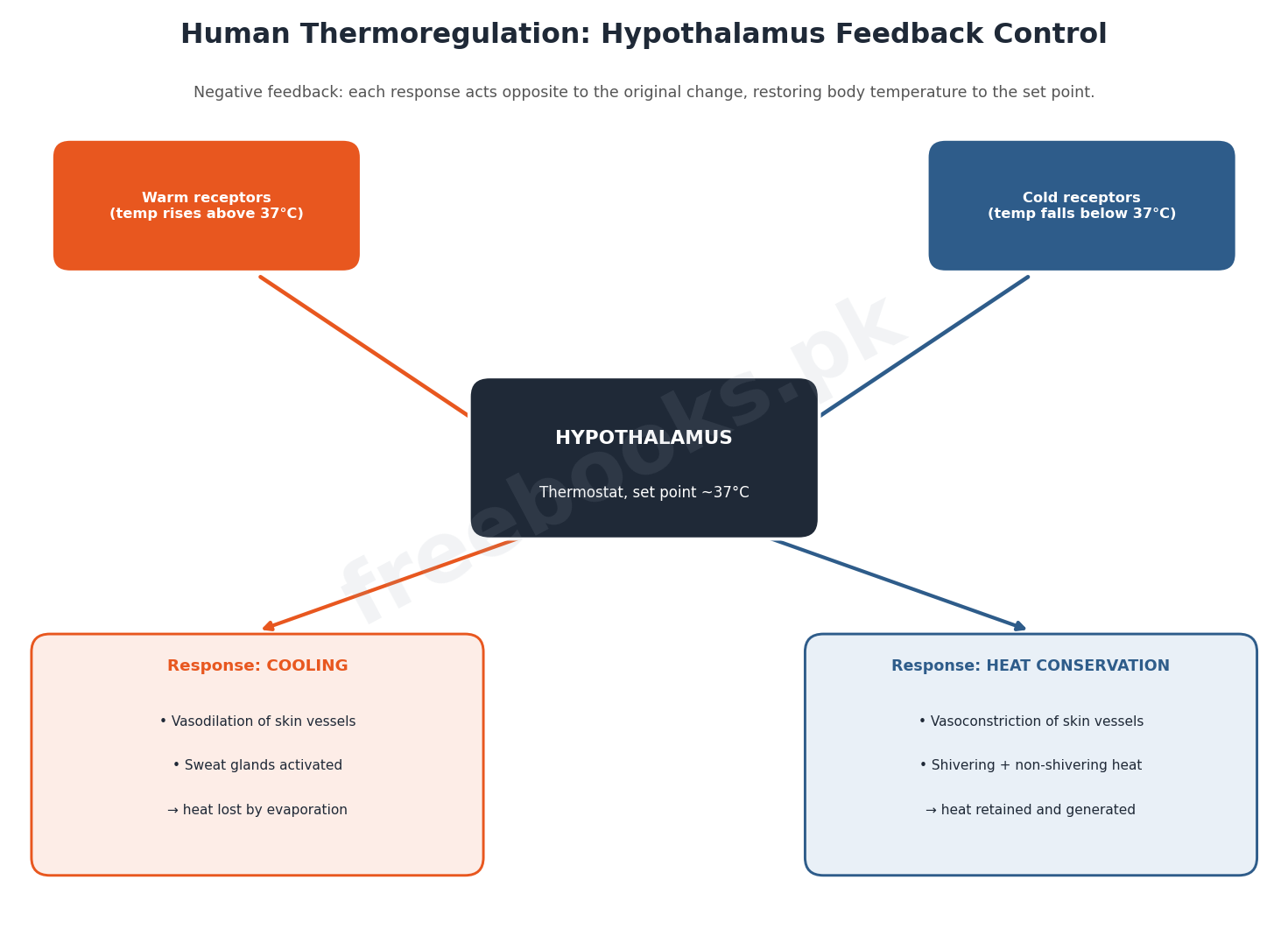
Homeostatic control systems work like a physical control system such as a thermostat: a receptor (sensor) detects a change from a set point and signals a control centre, which triggers an effector to respond and correct the change. In living systems, most homeostatic control is negative feedback, in which the effector's response is opposite to the original change – for example, cooling mechanisms are triggered by a rise in temperature, and heat-conserving mechanisms by a fall. The three components most susceptible to fluctuation, and therefore most tightly regulated, are water and solute balance (osmoregulation and excretion) and internal temperature (thermoregulation).
Osmoregulation: Water Balance in Cells, Plants and Animal Habitats
Every cell is adapted to a defined internal concentration of water relative to solutes. Cells placed in a hypotonic external environment (more dilute than the cell) gain water by osmosis and become turgid, while cells in a hypertonic environment (more concentrated) lose water and shrink; an isotonic environment causes no net change. Plants show distinct water-balance adaptations depending on habitat: hydrophytes (aquatic plants) have large leaf surface area and abundant stomata on the upper leaf surface to promote water loss and prevent flooding of cells; mesophytes, with moderate water availability, open their stomata when water is plentiful and close them when it is scarce; and xerophytes, adapted to dry conditions, have small, thick leaves with a thick waxy cuticle, sunken stomata on the lower surface, and in some cases (such as cacti) shed their leaves and photosynthesise through water-storing stems instead.
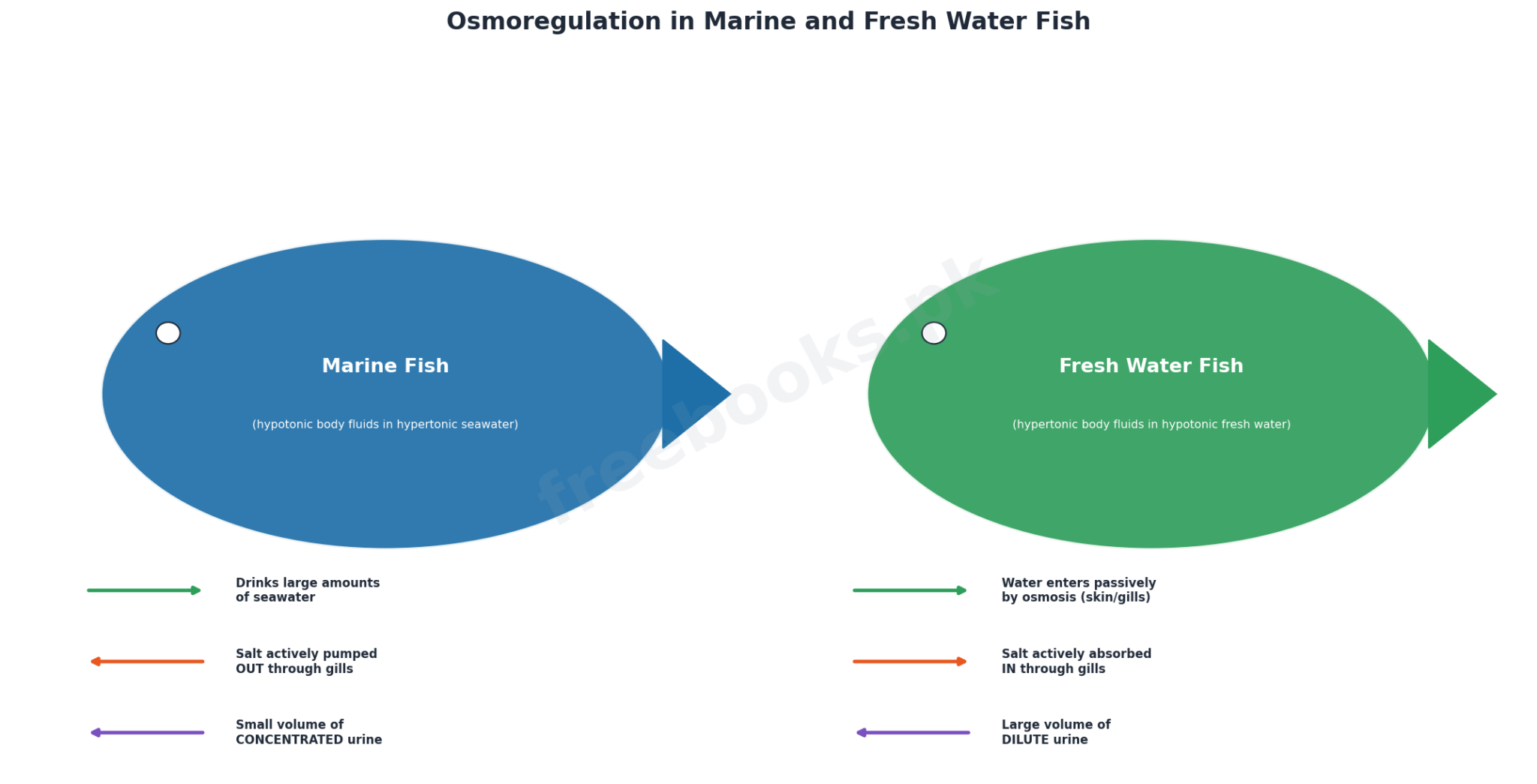
Animal cells require even tighter regulation, since they cannot survive a net gain or loss of water. Some animals, called osmoconformers, keep their body fluids isotonic with the external environment (as in most marine invertebrates) and so do not need to actively regulate osmotic state; others, called osmoregulators, actively maintain an internal concentration that differs from their surroundings, discharging excess water in a hypotonic environment or excreting excess salts in a hypertonic one. Marine bony fish, being hypotonic to seawater, constantly lose water and so drink large amounts of seawater while excreting concentrated urine and actively pumping out excess salt through the gills; fresh water animals face the opposite problem, constantly gaining water and losing salts, so fresh water protozoa such as Amoeba use contractile vacuoles to pump out excess water while fish produce large volumes of dilute urine and actively take up salts through their gills; terrestrial animals face evaporative water loss, so they rely on waterproof body coverings (waxy insect exoskeletons, keratinized vertebrate skin), concentrated urine, and behavioural adaptations such as drinking and eating moist food, with some desert mammals surviving almost entirely on metabolic water from their food.
Excretion and the Nature of Nitrogenous Wastes
Excretion is the elimination of waste metabolites from the body, mainly nitrogenous wastes produced when amino acids are broken down (deamination), releasing an amino group that is toxic if allowed to accumulate. Depending on the animal and its habitat, this nitrogen is excreted mainly as ammonia, urea, or uric acid. Ammonia is highly toxic and requires a large volume of water for safe removal (about 500 ml of water per gram of nitrogen), so it is used by ammonotelic animals living in a hypotonic, water-abundant environment such as fresh water. Urea is far less toxic and requires much less water (about 50 ml per gram of nitrogen), formed from ammonia in the liver via the urea cycle, and is excreted by ureotelic animals such as terrestrial mammals that have a restricted water supply. Uric acid is the least toxic and can be excreted almost solid, needing only about 1 ml of water per gram of nitrogen, making it the excretory product of uricotelic animals such as reptiles and birds living in arid environments where water conservation is critical.
Plants excrete very differently from animals: their main metabolic waste products are carbon dioxide and water, along with various organic and inorganic compounds that are stored rather than immediately released. Large plant cell vacuoles store these wastes, sometimes as crystals, and whole organs such as leaves may act as excretophores – leaves accumulate wastes and toxic materials such as heavy metals over the growing season and are then shed, as in the case of autumn leaf fall. Some trees deposit waste chemicals in old, disused xylem tissue (as in the black heartwood of ebony), and some plants actively secrete waste compounds into the soil, occasionally using them as chemical weapons against competing plants.
Excretory Structures in Invertebrates and the Human Excretory Organs
Different animal groups show a clear evolutionary progression in excretory structures. Hydra, a simple cnidarian, has no specialised excretory organs at all – wastes simply diffuse out into its isosmotic aquatic surroundings. Planaria (a flatworm) has a tubular protonephridium, a network of closed tubules capped by ciliated flame cells whose beating cilia (resembling a flickering flame) draw interstitial fluid into the tubule system, which drains to the exterior through nephridiopores. The earthworm has a more advanced tubular system, the metanephridium, one pair per body segment, with an internal ciliated funnel (the nephrostome) that collects coelomic fluid; as the fluid passes along the tubule, useful salts are reabsorbed into surrounding blood capillaries, and the remaining fluid is expelled as urine. The cockroach and other insects use Malpighian tubules, which extract nitrogenous waste directly from the haemolymph and empty it into the hind gut, where the rectum reabsorbs most of the water and salts, leaving nitrogenous waste to be excreted as solid uric acid crystals mixed with faeces – the only case among animals of a direct link between excretory and digestive systems.
In humans, the liver and kidneys are the primary excretory organs. The liver, the body's central metabolic clearing house, converts toxic ammonia into urea via the urea cycle (in which two molecules of ammonia and one of carbon dioxide combine with the amino acid ornithine, forming citrulline and then arginine, which is split by the enzyme arginase to release urea and regenerate ornithine for the next cycle); the liver also detoxifies many other harmful chemicals and performs numerous other homeostatic functions of synthesis, storage, conversion and recycling. The kidneys, in turn, filter urea and other nitrogenous wastes from the blood: a pair of human kidneys contains millions of nephrons, and although the kidneys make up less than one percent of body weight, they receive about twenty percent of the blood pumped with every heartbeat, reflecting their critical role in maintaining blood composition.
The Nephron and Urine Formation
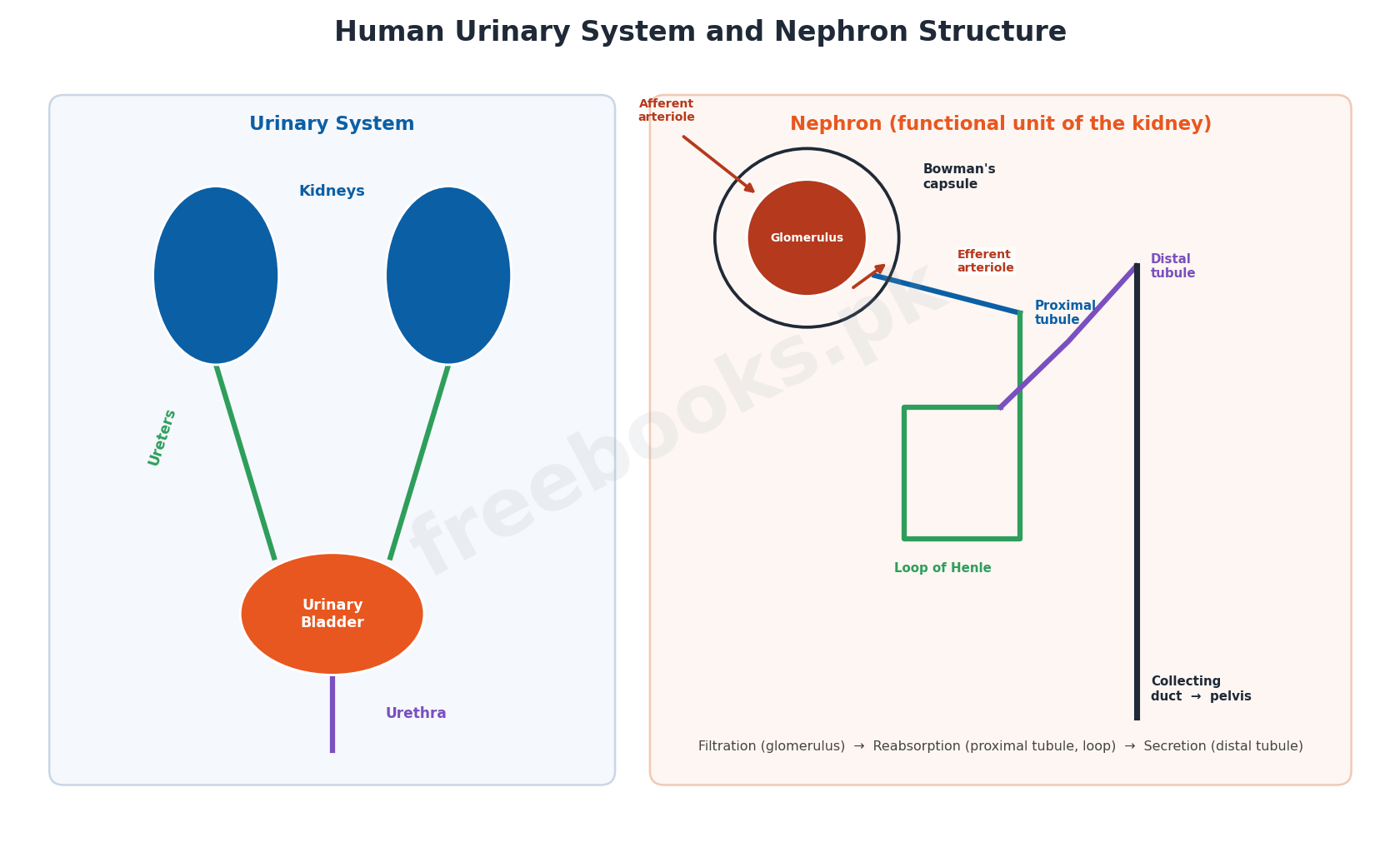
The nephron is the functional unit of the kidney, arranged along two regions: an outer cortex and an inner medulla. Cortical nephrons lie mostly in the cortex, while juxtamedullary nephrons have long loops that dip deep into the medulla and are specifically responsible for producing concentrated urine. Each nephron begins with a cup-shaped Bowman's capsule surrounding a knot of capillaries called the glomerulus, which receives blood via an afferent arteriole and drains it via an efferent arteriole into a further network of peritubular capillaries (and, in juxtamedullary nephrons, the vasa recta). The capsule continues as a long, highly convoluted tube consisting of the proximal tubule, the loop of Henle, and the distal tubule, which drains into a collecting tubule that eventually empties into the renal pelvis.
Urine formation involves three processes. Filtration occurs only at the glomerulus, where high blood pressure forces plasma (minus large proteins and blood cells) through the porous capillary walls into Bowman's capsule as glomerular filtrate. Reabsorption occurs mainly in the proximal tubule, where nearly all useful substances – glucose, amino acids, most salts and about 99.5 percent of filtered water – are reclaimed back into the blood, so that fluid leaving the proximal tubule is mostly nitrogenous waste. Secretion adds further substances, mainly hydrogen ions, from the blood directly into the tubule fluid to help regulate blood pH. The final concentration of urine is fine-tuned by a counter-current multiplier mechanism in the loop of Henle, which builds up a high solute concentration in the medulla, and by hormones: aldosterone (from the adrenal cortex) promotes active sodium reabsorption in the ascending loop of Henle, while antidiuretic hormone, ADH (from the posterior pituitary), increases water reabsorption in the distal tubule and collecting duct, allowing the kidney to produce urine of varying concentration depending on the body's water status.
Kidney Disorders and Their Treatment
Several disorders can impair kidney function. Kidney stones form when substances such as calcium oxalate (about 70 percent of all stones, linked to hypercalcemia and hyperoxaluria), calcium phosphate, or uric acid precipitate out during urine formation and accumulate in the renal pelvis, causing obstruction and often infection; the non-surgical treatment lithotripsy uses focused shock waves (commonly extracorporeal shock wave lithotripsy) directed from outside the body to break stones into small fragments or sand that can be passed in the urine. Renal failure occurs when pathological or chemical damage progressively destroys nephrons, particularly the glomeruli, causing a dangerous rise in blood urea and other nitrogenous wastes along with complications such as high blood pressure and anaemia.
When the kidneys can no longer clear nitrogenous waste, dialysis is used to clean the blood artificially. In hemodialysis, blood is passed through an external machine called a dialyzer (artificial kidney), where it flows on one side of a thin membrane while dialysis fluid flows on the other, allowing wastes and excess water to diffuse out of the blood into the fluid. In peritoneal dialysis, dialysis fluid is introduced directly into the patient's peritoneal cavity through a catheter, and wastes diffuse across the peritoneum (the lining of the abdominal cavity) into the fluid, which is later drained and replaced. Dialysis can only be used as a temporary or repeated measure; in severe, end-stage renal failure (uremia), a kidney transplant from a matching donor is the only permanent treatment.
Thermoregulation in Plants and Animal Temperature Classification
Plants cope with temperature stress in different ways. High temperature denatures enzymes and damages metabolism, so plants rely on evaporative cooling through transpiration, though hot, dry conditions that force stomatal closure to conserve water reduce this cooling and cause heat stress; many plants respond by synthesising heat-shock proteins that protect enzymes and other proteins from denaturation. Low temperature reduces membrane fluidity and can lock membrane lipids into rigid crystalline arrangements; plants adapted to cold increase the proportion of unsaturated fatty acids in their membranes to resist this, and some cold-region plants alter their cytosol's solute composition so that it can super-cool without forming damaging ice crystals inside the cell, even though ice may form harmlessly in the cell walls.
Animals are classified by their thermoregulatory strategy in two overlapping ways. By whether body temperature fluctuates with the environment, animals are poikilotherms (body temperature varies with ambient temperature – most invertebrates, fish, amphibians and reptiles) or homeotherms (body temperature is kept relatively constant – birds and mammals), though this scheme has exceptions, such as some deep-sea fish that keep a constant temperature and some lizards that behaviourally regulate theirs. A more precise classification is based on the source of body heat: endotherms generate their own body heat as a by-product of metabolism (most birds, mammals, some fish and flying insects), ectotherms produce little metabolic heat and instead rely mainly on absorbing heat from the environment (most invertebrates, fish, amphibians and reptiles), and heterotherms can vary their degree of endothermic heat production but do not keep body temperature within as narrow a range as typical endotherms (such as bats and hummingbirds). Animals regulate heat exchange through structural adaptations (insulating fur, fat and pelage, sweat glands, panting), physiological adaptations (adjusting metabolic rate, vasodilation and vasoconstriction), and behavioural adaptations (moving to a more favourable microhabitat, basking, or adjusting body posture to change exposed surface area).
Thermoregulation in Humans and Fever
Mammals, including humans, are endotherms that maintain body temperature within a narrow range of about 36 to 38 degrees Celsius, giving them a high, stable metabolic rate and the ability to remain active in a wide range of environments. Heat production is increased through shivering thermogenesis (increased muscle contraction) and non-shivering thermogenesis (hormonally triggered, including through specialised brown fat in some mammals); excess heat is lost through increased blood flow to the skin and evaporative cooling (sweating in humans, panting in dogs). In cold conditions, mammals reduce heat loss through vasoconstriction of skin blood vessels, raising fur to trap insulating air, or relying on a layer of subcutaneous fat (or, in marine mammals such as whales and seals, a thick layer of blubber); in warm conditions, vasodilation increases blood flow to the skin for heat loss, and evaporative cooling through sweating or panting becomes the main cooling strategy.
In humans, body temperature is regulated by a homeostatic thermostat in the hypothalamus, set at about 37 degrees Celsius. When temperature rises above this set point, warm-sensitive thermoreceptors in the skin, hypothalamus and elsewhere trigger increased blood flow to the skin and activation of sweat glands, cooling the body through evaporation. When temperature falls below the set point, cold receptors trigger constriction of superficial blood vessels and both shivering and non-shivering heat-production mechanisms, conserving and generating heat. During bacterial or viral infection, white blood cells and pathogens release chemicals called pyrogens, which raise the hypothalamic set point above 37 degrees Celsius, producing fever (pyrexia); this elevated temperature is believed to help stimulate the body's protective immune mechanisms against the infection.
Important Definitions
Homeostasis
The maintenance of a stable internal environment within a narrow, tolerable range despite continuous fluctuation in the external environment.
Osmoregulation
The regulation of solute concentration and the gain or loss of water in an organism, keeping internal water and salt balance within a tolerable range.
Osmoconformer
An animal that keeps its body fluids isotonic with its external environment and so does not need to actively regulate its internal osmotic state.
Excretion
The elimination of waste metabolites from the body, mainly nitrogenous wastes such as ammonia, urea and uric acid.
Deamination
The removal of the amino group from an amino acid during its catabolism, releasing ammonia that must be excreted or converted to a less toxic form.
Nephron
The structural and functional unit of the kidney, consisting of Bowman's capsule, the glomerulus, and a tubular system that filters blood and forms urine.
Dialysis
The artificial removal of nitrogenous wastes and excess water from the blood of a patient with kidney failure, by hemodialysis or peritoneal dialysis.
Ectotherm
An animal that produces little metabolic heat and relies mainly on absorbing heat from its external environment to regulate its body temperature.
Key Facts
| Item | Fact |
|---|---|
| Human body temperature set point | The hypothalamic thermostat is set at about 37 degrees Celsius; normal range is about 36-38 degrees Celsius. |
| Water needed to excrete ammonia | About 500 ml of water is required to excrete 1 gram of nitrogen as ammonia. |
| Water needed to excrete urea | About 50 ml of water is required to excrete 1 gram of nitrogen as urea. |
| Water needed to excrete uric acid | About 1 ml of water is required to excrete 1 gram of nitrogen as uric acid. |
| Glomerular filtrate reabsorption | Mammalian kidneys, including human, reabsorb over 99.5% of glomerular filtrate. |
| Kidney blood supply | Kidneys are under 1% of body weight but receive about 20% of blood pumped with each heartbeat. |
| Calcium oxalate stone share | Calcium oxalate stones make up about 70% of all kidney stones; calcium phosphate about 15%, uric acid about 10%. |
| Cardiac cycle reference | One heartbeat cycle used as a homeostatic reference for blood/kidney flow takes about 0.8 seconds. |
Diagrams & Illustrations
Human Urinary System and Nephron Structure: a labelled diagram of the human urinary system (kidney, ureter, urinary bladder, urethra) alongside a detailed nephron showing Bowman's capsule, glomerulus, proximal tubule, loop of Henle, distal tubule and collecting duct.
Osmoregulation in Marine and Fresh Water Fish: a comparison diagram showing a marine bony fish (drinking seawater, excreting salt through gills, producing concentrated urine) and a fresh water fish (not drinking, absorbing salt through gills, producing large volumes of dilute urine).
Human Thermoregulation: Feedback Control by the Hypothalamus: a diagram showing the hypothalamic thermostat receiving input from warm and cold receptors and controlling effectors (sweat glands, skin blood vessels, shivering muscles) through negative feedback to maintain body temperature near 37 degrees Celsius.
Short Questions & Answers
Differentiate osmoconformers and osmoregulators.
Osmoconformers keep their body fluids isotonic with the external environment and so do not need to actively regulate their internal osmotic state (most marine invertebrates); osmoregulators actively maintain an internal solute concentration different from their surroundings, expending energy to discharge excess water or excrete excess salts as needed.
Why are reptiles and birds in arid habitats uricotelic?
Uric acid can be excreted as a semi-solid paste using only about 1 ml of water per gram of nitrogen, far less than ammonia or urea require; this allows reptiles and birds living in water-scarce, arid environments to eliminate nitrogenous waste while conserving water.
Why does filtration occur only at the glomerulus and nowhere else in the nephron?
Only the glomerular capillary walls are porous enough to allow blood plasma to be forced out under blood pressure, and only there does the incoming afferent arteriole create the necessary filtration pressure; the rest of the nephron tubule is not exposed to this filtration pressure and instead carries out reabsorption and secretion.
What are the two main types of dialysis?
Hemodialysis, in which blood is passed through an external machine (dialyzer) containing a membrane that separates blood from dialysis fluid so wastes diffuse out; and peritoneal dialysis, in which dialysis fluid is introduced into the patient's peritoneal cavity and wastes diffuse across the peritoneum into the fluid.
Differentiate poikilotherms and homeotherms.
Poikilotherms are animals whose body temperature fluctuates with the ambient temperature of their environment (most invertebrates, fish, amphibians, reptiles); homeotherms maintain a relatively constant body temperature despite changes in ambient temperature (birds and mammals).
What causes fever (pyrexia)?
During bacterial or viral infection, increased white blood cells and the pathogens themselves release chemicals called pyrogens, which raise the hypothalamic thermostat's set point above the normal 37 degrees Celsius, producing fever, which is thought to help stimulate the body's protective mechanisms against infection.
Long Questions & Answers
Explain the concept of homeostasis and describe how a living control system operates using negative feedback.
Homeostasis is the maintenance of a stable internal environment within a narrow, tolerable range despite continuous change in the external environment. Every species has, through evolutionary history, become adapted to a specific set of internal conditions suited to its way of life, and because external conditions such as temperature, water availability and solute concentration fluctuate constantly, organisms must actively resist and manage these changes rather than simply being overwhelmed by them. Importantly, homeostasis does not mean holding the internal environment perfectly fixed; rather, the internal environment is allowed to vary within a physiologically tolerable range, shifting toward the lower end under conditions of scarcity and the higher end under conditions of abundance, while control systems prevent it from reaching genuinely harmful extremes in either direction. This regulation operates at both the level of the whole organism and at the level of individual cells, where the intracellular environment is kept comparatively stable relative to a more variable extracellular environment. The living control systems that achieve this regulation work on the same basic logic as any physical control system, such as a household thermostat: a receptor (sensor) continuously monitors some internal condition and detects any deviation from a genetically determined set point; when a deviation is detected, the receptor signals a control centre, which processes this information and activates an effector, a structure that carries out a response to correct the deviation and restore the condition toward its set point. In the overwhelming majority of homeostatic mechanisms, this correction takes the form of negative feedback, meaning the effector's response acts in the opposite direction to the original disturbance – for example, a rise in body temperature above the set point triggers cooling responses such as sweating and increased blood flow to the skin, while a fall in temperature triggers heat-conserving and heat-generating responses such as vasoconstriction and shivering. This feedback loop of detection, signalling and corrective response operates continuously and automatically, allowing organisms to buffer their internal environment against the much larger fluctuations that occur outside their bodies.
Discuss the nature of nitrogenous excretory products and explain how they relate to an animal's habitat and water availability.
The catabolism of amino acids and nucleoproteins in animals releases nitrogenous waste, primarily in the form of an amino group removed during deamination; because this waste, especially in the form of ammonia, is highly toxic if it accumulates in the body, it must be continuously eliminated, and the chemical form in which it is excreted is closely tied to how much water an animal's habitat makes available. Ammonia is the most toxic of the three main nitrogenous wastes and must be kept in very low concentration in body fluids, which requires large volumes of water for its safe removal – roughly 500 ml of water per gram of nitrogen excreted as ammonia. Because of this heavy water cost, ammonia is used as the primary excretory product only by animals with abundant access to water, chiefly aquatic animals living in fresh water, which are termed ammonotelic; these animals can rapidly dilute and flush ammonia from their bodies without risking dehydration. Animals living where water supply is more restricted, such as terrestrial mammals, cannot afford this water expenditure, so their liver converts ammonia into the far less toxic compound urea through the metabolic pathway called the urea cycle; urea requires only about 50 ml of water per gram of nitrogen for excretion, a tenfold saving compared to ammonia, and these animals are termed ureotelic. Animals living in habitats with acute water shortage, most notably reptiles and birds inhabiting arid regions, take water conservation a step further by excreting nitrogen as uric acid, a compound so insoluble that it can be voided as a semi-solid paste using only about 1 ml of water per gram of nitrogen; these animals are termed uricotelic. In this way, the evolutionary shift from ammonotely to ureotely to uricotely represents a clear adaptive progression toward greater water conservation, precisely matching the water constraints of the habitats these different animal groups occupy, from water-abundant fresh water environments to increasingly water-scarce terrestrial and arid environments.
Describe the structure of the human nephron and explain how urine is formed by filtration, reabsorption and secretion.
The nephron is the basic structural and functional unit of the human kidney, and each kidney contains millions of them arranged along two regions, an outer cortex and an inner medulla. Nephrons whose tubules lie mostly within the cortex are called cortical nephrons, while juxtamedullary nephrons have unusually long loops that dip deep into the medulla and are specifically responsible for the kidney's ability to produce highly concentrated urine. Each nephron begins with a cup-shaped structure called Bowman's capsule, which encloses a dense knot of capillaries known as the glomerulus; blood enters the glomerulus through an afferent arteriole and leaves through a narrower efferent arteriole, and this difference in vessel diameter helps maintain a high blood pressure within the glomerular capillaries. Blood leaving the glomerulus flows into a further network of peritubular capillaries that closely wrap around the rest of the nephron tubule, and in juxtamedullary nephrons these extend further as the vasa recta running alongside the loop of Henle. Bowman's capsule continues as a long, highly coiled tube consisting of, in sequence, the proximal convoluted tubule, the loop of Henle (with descending and ascending limbs), and the distal convoluted tubule, which finally drains into a collecting tubule; many collecting tubules merge and eventually open into the renal pelvis, from which urine passes into the ureter. Urine formation proceeds through three distinct processes occurring at different points along this pathway. Filtration takes place exclusively at the glomerulus, where the unusually porous capillary walls, combined with the pressure generated by blood entering through the wider afferent arteriole, force plasma – water, salts, glucose, amino acids and other small molecules, but not blood cells or large proteins – out into Bowman's capsule as glomerular filtrate; nowhere else in the nephron does this kind of bulk filtration occur. Reabsorption occurs mainly, though not exclusively, in the proximal convoluted tubule, where essentially all of the filtrate's useful components – all of the glucose and amino acids, most salts, and typically well over 99 percent of the filtered water – are actively and passively reclaimed back into the surrounding peritubular capillaries, so that fluid leaving the proximal tubule is left overwhelmingly enriched in nitrogenous wastes destined for excretion. Secretion is the third process, in which the tubular epithelium, mainly along the distal parts of the nephron, actively adds selected substances from the blood directly into the tubular fluid; this is a highly selective process, principally involving the secretion of hydrogen ions, which helps the kidney fine-tune and regulate the pH of the blood. Together, filtration, reabsorption and secretion allow the nephron to process an enormous volume of blood each day while conserving nearly all useful substances and precisely regulating the final volume, concentration and composition of urine, a process further fine-tuned by the counter-current multiplier mechanism in the loop of Henle and by hormones such as aldosterone and antidiuretic hormone.
Describe the classification of animals based on thermoregulatory strategy and explain thermoregulation in humans, including the role of the hypothalamus.
Animals can be classified by their thermoregulatory strategy in two related but distinct ways. The older classification is based on whether body temperature fluctuates with the environment: poikilotherms are animals whose body temperature tends to rise and fall along with the ambient air or water temperature, a category that includes most invertebrates along with fish, amphibians and reptiles, while homeotherms are animals that keep their body temperature relatively constant despite changes in ambient temperature, a category comprising birds and mammals. This scheme, however, runs into difficulties in several cases – some deep-sea fish maintain remarkably constant body temperature simply because their environment itself is thermally stable, some lizards behaviourally regulate their temperature quite precisely by basking and seeking shade, and numerous birds and mammals allow their body temperature to vary more than the classical definition would suggest. Because of these complications, biologists more often use a second, more mechanistically precise classification based on the actual source of body heat. Endotherms generate the bulk of their body heat internally as a by-product of their own metabolism, a category that includes birds, mammals, and additionally some fast-swimming fish and actively flying insects that generate substantial metabolic heat during flight. Ectotherms, in contrast, produce comparatively little metabolic heat of their own and instead rely mainly on absorbing heat directly from their external surroundings, a category comprising most invertebrates, fish, amphibians and reptiles. A third, intermediate category, heterotherms, includes animals such as bats and hummingbirds that are capable of substantial endothermic heat production at times but do not maintain their body temperature within as narrow and constant a range as typical endotherms, often allowing body temperature to drop considerably during rest or torpor to conserve energy. In humans, as in other mammals, thermoregulation is centred on a homeostatic thermostat located in the hypothalamus, a region of the brain, which is set at approximately 37 degrees Celsius and continuously compares the body's actual temperature against this set point using input from both central receptors in the hypothalamus itself and peripheral thermoreceptors in the skin. When body temperature rises above the set point, warm-sensitive receptors trigger a coordinated response: blood flow to the skin increases through vasodilation of superficial blood vessels, carrying heat to the body surface where it can be lost, while sweat glands are activated to increase evaporative cooling as sweat evaporates from the skin surface. When body temperature falls below the set point, cold receptors instead trigger heat-conserving and heat-generating responses: superficial blood vessels constrict, reducing blood flow to the skin and minimizing heat loss, while shivering thermogenesis (rapid, involuntary muscle contraction) and non-shivering thermogenesis (hormonally triggered metabolic heat production) both increase the rate of internal heat production. This continuous negative feedback loop, coordinated entirely through the hypothalamic thermostat, allows humans to maintain body temperature within the narrow range of about 36 to 38 degrees Celsius across a very wide range of external conditions, and the same thermostat mechanism, when its set point is deliberately raised above 37 degrees Celsius by pyrogens released during infection, produces the elevated body temperature known as fever.
Discuss common kidney disorders, their causes, and the medical treatments used to manage them.
The kidneys are vulnerable to a range of disorders that can seriously disrupt their filtering and regulatory functions. Kidney stones are one of the most common problems, forming when certain dissolved substances in the urine precipitate out of solution during urine formation and gradually accumulate into hard deposits, most often lodging in the renal pelvis where they can cause painful urinary obstruction and are frequently complicated by secondary infections. The chemical composition of kidney stones varies: calcium oxalate stones are by far the most common, accounting for roughly 70 percent of all cases, and are strongly associated with hypercalcemia (abnormally high circulating blood calcium, often resulting from other underlying diseases) and hyperoxaluria (abnormally high blood levels of oxalates, which are naturally present in foods such as green vegetables and tomatoes); calcium phosphate stones account for roughly 15 percent of cases, and uric acid stones for roughly 10 percent. Historically, kidney stones were removed only through invasive surgery, but the modern non-surgical treatment of choice is lithotripsy, most commonly performed as extracorporeal shock wave lithotripsy, in which focused shock waves of high-intensity ultrasound or X-ray energy are generated by a machine positioned outside the patient's body and directed precisely at the stone, fragmenting it into tiny pieces or sand-like particles that can then be passed out of the body naturally in the urine, avoiding the need for surgical incision. A more severe category of kidney disorder is renal failure, in which various pathological processes or chemical insults progressively destroy functioning nephrons, especially damaging their glomeruli, so that the kidney's filtering capacity steadily declines; as this progresses, nitrogenous wastes such as urea build up to dangerous levels in the blood plasma, and this rising urea concentration is associated with serious complications including elevated blood pressure and anaemia. When renal failure becomes severe enough that the kidneys can no longer adequately clear nitrogenous wastes from the blood on their own, dialysis becomes necessary as an artificial substitute for kidney function; this can be delivered as hemodialysis, in which the patient's blood is circulated through an external machine containing a dialyzer (an artificial kidney) with a thin semi-permeable membrane separating flowing blood on one side from a dialysis fluid on the other, allowing wastes and excess water to diffuse out of the blood and into the fluid to be discarded, or as peritoneal dialysis, in which dialysis fluid is instead introduced directly into the patient's own abdominal peritoneal cavity through a surgically implanted catheter, allowing wastes to diffuse across the patient's peritoneal membrane into the fluid, which is later drained and replaced, with this cycle repeated multiple times each day. Dialysis, howeverformed, is fundamentally a temporary or ongoing supportive measure rather than a cure, and in the most severe, end-stage form of renal failure, sometimes called uremia, the only remaining permanent treatment option is surgical kidney transplantation, in which a healthy kidney from a matching donor is transplanted into the patient to permanently restore normal excretory and osmoregulatory function.
MCQs with Answers
The protective regulation of a stable internal environment despite external fluctuation is called: (a) excretion (b) homeostasis (c) osmoregulation (d) thermoregulation
Correct Answer: (b) homeostasis. Homeostasis is the maintenance of a stable internal environment within a tolerable range despite continuous external change.
An animal whose body fluids remain isotonic with its external environment, requiring no active osmotic regulation, is called a/an: (a) osmoregulator (b) osmoconformer (c) ammonotelic animal (d) ectotherm
Correct Answer: (b) osmoconformer. Osmoconformers keep their body fluids isotonic with the external environment and do not need to actively regulate their internal osmotic state.
Excreting nitrogen as uric acid, which requires only about 1 ml of water per gram of nitrogen, is an adaptation typical of: (a) fresh water fish (b) terrestrial mammals (c) reptiles and birds in arid habitats (d) marine invertebrates
Correct Answer: (c) reptiles and birds in arid habitats. Uric acid excretion (uricotely) conserves water and is typical of reptiles and birds living in water-scarce, arid environments.
The excretory structures found in the earthworm, one pair per body segment, are called: (a) protonephridia (b) Malpighian tubules (c) metanephridia (d) flame cells
Correct Answer: (c) metanephridia. Each segment of the earthworm has a pair of metanephridia, tubular excretory structures with an internal ciliated nephrostome.
In insects such as the cockroach, nitrogenous waste is collected from the haemolymph by: (a) Malpighian tubules (b) metanephridia (c) protonephridia (d) nephrons
Correct Answer: (a) Malpighian tubules. Malpighian tubules remove nitrogenous waste from the haemolymph and empty it into the hind gut for excretion as uric acid with the feces.
Filtration of blood in the nephron occurs only at the: (a) proximal tubule (b) loop of Henle (c) glomerulus (d) collecting duct
Correct Answer: (c) glomerulus. Filtration occurs only at the glomerulus, where porous capillary walls and blood pressure force plasma into Bowman's capsule.
The hormone that promotes water reabsorption in the distal tubule and collecting duct is: (a) aldosterone (b) antidiuretic hormone (ADH) (c) insulin (d) arginase
Correct Answer: (b) antidiuretic hormone (ADH). ADH, released from the posterior pituitary, increases water reabsorption in the distal tubule and collecting duct.
About 70% of kidney stones are composed mainly of: (a) uric acid (b) calcium phosphate (c) calcium oxalate (d) cystine
Correct Answer: (c) calcium oxalate. Calcium oxalate stones, associated with hypercalcemia and hyperoxaluria, make up about 70% of all kidney stones.
Animals that generate the bulk of their body heat internally as a metabolic by-product are called: (a) ectotherms (b) endotherms (c) poikilotherms only (d) osmoconformers
Correct Answer: (b) endotherms. Endotherms (e.g. birds and mammals) generate their own body heat mainly as a by-product of metabolism.
In humans, the homeostatic thermostat that controls body temperature is located in the: (a) medulla oblongata (b) hypothalamus (c) cerebellum (d) adrenal cortex
Correct Answer: (b) hypothalamus. The hypothalamus contains the homeostatic thermostat, set at about 37 degrees Celsius, that regulates human body temperature.
Quick Revision Summary
- Homeostasis = stable internal environment within a tolerable range despite external change. Control system = receptor -> control centre -> effector, mostly by negative feedback (response opposite to the change).
- Osmoregulation: hypotonic/hypertonic/isotonic environments. Plants: hydrophytes (large leaf area, open stomata), mesophytes (moderate), xerophytes (small thick leaves, sunken stomata, thick cuticle). Animals: osmoconformers (isotonic, no active regulation) vs osmoregulators (marine, fresh water, terrestrial adaptations).
- Excretion = elimination of nitrogenous wastes after deamination. Ammonia (needs ~500ml water/g N, ammonotelic, fresh water) -> Urea (~50ml/g N, ureotelic, terrestrial mammals, via urea cycle in liver) -> Uric acid (~1ml/g N, uricotelic, reptiles/birds in arid habitats).
- Excretory structures: Hydra (diffusion only) -> Planaria (protonephridia + flame cells) -> earthworm (metanephridia, 1 pair/segment) -> cockroach (Malpighian tubules, linked to hindgut) -> vertebrates/human (kidneys with nephrons; liver makes urea via urea cycle).
- Nephron: Bowman's capsule + glomerulus (afferent/efferent arteriole) -> proximal tubule -> loop of Henle -> distal tubule -> collecting duct -> pelvis. Filtration (glomerulus only) -> Reabsorption (mainly proximal tubule, >99.5% water) -> Secretion (H+ ions, mainly distal). Hormones: aldosterone (Na+ reabsorption), ADH (water reabsorption).
- Kidney disorders: stones (70% calcium oxalate) treated by lithotripsy (shock waves, non-surgical); renal failure treated by dialysis (hemodialysis via external dialyzer, or peritoneal dialysis via abdominal catheter) or, in end-stage disease, kidney transplant.
- Thermoregulation: plants use heat-shock proteins (heat) and unsaturated fatty acids/solute changes (cold). Animals: poikilotherm/homeotherm (temperature stability) and ectotherm/endotherm/heterotherm (heat source) classifications. Humans: hypothalamic thermostat (~37C), vasodilation+sweating (warm), vasoconstriction+shivering (cold), fever = pyrogens raise the set point. Notes by freebooks.pk.
Exam Tips
- Learn the receptor -> control centre -> effector -> negative feedback loop as a single labelled flow diagram; examiners often ask you to apply it to a new example, not just define it.
- Build a clear water-cost table for ammonia/urea/uric acid (500 ml, 50 ml, 1 ml per gram of nitrogen) and link each directly to a habitat (fresh water, terrestrial, arid) and animal group – this is a very common short question.
- Memorise the excretory-structure progression Hydra -> Planaria (flame cells) -> earthworm (metanephridia) -> cockroach (Malpighian tubules) with one labelled feature for each; diagram questions often ask you to identify the structure from a description.
- Practice labelling a full nephron diagram from memory (Bowman's capsule, glomerulus, afferent/efferent arteriole, proximal tubule, loop of Henle, distal tubule, collecting duct) and be ready to state exactly where filtration, reabsorption and secretion each occur.
- Separate the two thermoregulation classification schemes clearly in your notes: poikilotherm/homeotherm (temperature stability) is not the same axis as ectotherm/endotherm/heterotherm (heat source) – many students confuse these.
- Know both types of dialysis (hemodialysis vs peritoneal dialysis) with one distinguishing feature each, and be able to explain why dialysis is temporary while a transplant is the permanent option.
- For the human thermoregulation long question, structure your answer around the hypothalamus as the thermostat, then split your response into 'response to rise in temperature' and 'response to fall in temperature' as two clearly separate halves.