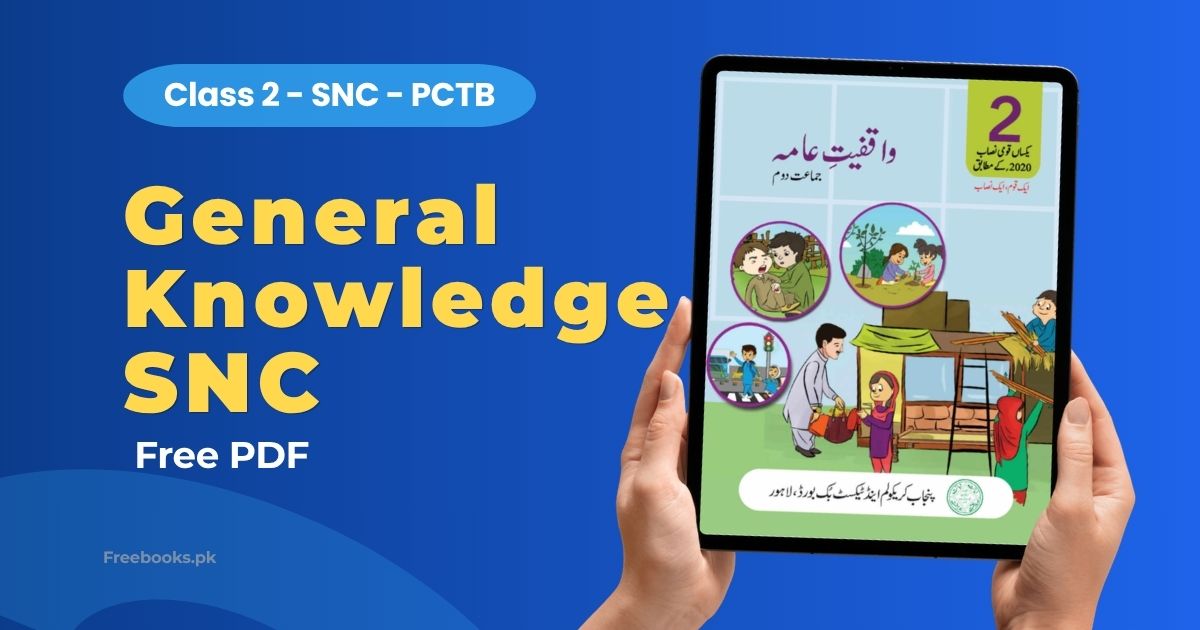
Islamiat for Class 2 is part of the official Punjab Curriculum and Textbook Board (PCTB) syllabus, based on the Single National Curriculum (SNC) 2020. This page covers all 5 chapters of the book, from memorising short Surahs and duas to beliefs and worship, the blessed life of the Prophet ﷺ, everyday manners, and a first look at earlier prophets.
For Class 2 students, this book builds early faith and good habits through short verses, hadith, and simple activities rather than long explanations. Each chapter summary and its important questions on this page make revision quicker before class tests, so parents and teachers can go over the key ideas with young learners without re-reading the whole chapter.
Book Overview
| Class | 2 |
| Subject | Islamiat |
| Board | Punjab Curriculum and Textbook Board (PCTB) |
| Curriculum | Single National Curriculum (SNC) 2020 |
| Total Chapters | 5 (+ Farhang Glossary) |
| Total Pages | 48 |
| Medium | Urdu |
| Format | PDF (Free Download) |
Chapter List
Chapter 1: Quran Majeed o Hadees-e-Nabvi (قرآن مجید و حدیثِ نبوی)
This chapter builds early memorisation skills around short, essential parts of the Quran and Sunnah. Students memorise Surah Al-Falaq and Surah An-Nas with correct pronunciation, along with their meaning and virtue, then learn short phrases used daily: Ta’awwuz (seeking refuge before reciting Quran), Tasmiyah (Bismillah before starting good work), Durood Sharif, and Alhamdulillah as a way of thanking Allah. Two short Hadith teach that good character is itself a form of goodness and that sending durood upon the Prophet ﷺ brings Allah’s mercy tenfold. The chapter closes with a Quranic dua for parents, taught for daily use at home.
Important Questions:
- Which two Surahs does this chapter ask students to memorise? Answer: Surah Al-Falaq and Surah An-Nas.
- What should be said before starting any good work, according to this chapter? Answer: Tasmiyah — “Bismillah ir-Rahman ir-Raheem.”
- According to the Hadith in this chapter, what does sending one durood upon the Prophet ﷺ bring? Answer: Allah sends ten mercies (rahmat) upon the person in return.
- What dua does this chapter teach for parents, taken from the Quran? Answer: “Rabbi irhamhuma kama rabbayani sagheera” — “My Lord, have mercy on them as they raised me when I was small.”
Chapter 2: Imaniyat o Ibadaat (ایمانیات و عبادات)
This chapter is split into beliefs and worship. On beliefs, it names the four heavenly books and the prophets who received them (Torah to Musa AS, Zaboor to Dawood AS, Injeel to Isa AS, and the Quran, the final book, to Prophet Muhammad ﷺ), introduces the four major angels and their duties, and explains belief in the Hereafter, when all deeds are presented before Allah. On worship, it covers fasting (Roza) as a pillar of Islam observed throughout Ramadan, and the two Eids: Eid-ul-Fitr after Ramadan, and Eid-ul-Azha on the 10th of Zil-Hajj, marking Hazrat Ibrahim’s (AS) sacrifice, when the sacrificial meat is divided into three shares.
Important Questions:
- What are the names of the four heavenly books mentioned in this chapter, and which prophet received each? Answer: Torah (Musa AS), Zaboor (Dawood AS), Injeel (Isa AS), and the Quran (Prophet Muhammad ﷺ, the final book).
- Who is the leader of all the angels, according to this chapter? Answer: Hazrat Jibrael (AS).
- Which angel is responsible for arranging provisions and rain? Answer: Hazrat Mikaeel (AS).
- On which date is Eid-ul-Azha celebrated, and what does it commemorate? Answer: The 10th of Zil-Hajj, commemorating the sacrifice of Hazrat Ibrahim (AS).
Chapter 3: Seerat-e-Tayyaba (سیرتِ طیبہ)
This chapter teaches why loving and obeying Prophet Muhammad ﷺ is central to faith, quoting the Quranic verse that whoever obeys the Messenger has obeyed Allah, and the Hadith promising Paradise to whoever obeys him. It explains that true love means following his example in every part of life. The second lesson describes the Prophet’s ﷺ excellent character (akhlaq-e-hasana), citing the Quranic verse that calls him a person of great moral character. Known for mercy, he forgave people’s mistakes, treated even his enemies kindly, was sent as a mercy for all the worlds, and always kept his promises.
Important Questions:
- According to the Quranic verse quoted in this chapter, what happens when someone obeys the Messenger ﷺ? Answer: They have obeyed Allah.
- What did the Prophet ﷺ say happens to whoever obeys him, according to the Hadith in this chapter? Answer: They will enter Jannah (Paradise).
- Which Quranic verse describes the Prophet’s ﷺ character as excellent? Answer: “And indeed, you are of a great moral character” (Surah Al-Qalam).
- According to the Hadith in this chapter, what does a person without promise-keeping lack? Answer: They are said to have no deen (religion).
Chapter 4: Akhlaq o Adaab (اخلاق و آداب)
This chapter covers three areas of daily conduct. It first sets out eating etiquette — washing hands, saying Bismillah before and Alhamdulillah after, eating with the right hand — and speaking etiquette, including not interrupting others and speaking respectfully to elders, backed by a Quranic verse against using bad nicknames. It then teaches respect for elders, quoting a Hadith that says a person is not truly one of us if they show no mercy to the young or no respect to elders, with habits like greeting first and not walking ahead of them. The final lesson teaches kindness to animals, citing a Hadith forbidding cruelty, illustrated by the story of a sick, overburdened camel the Prophet ﷺ showed mercy to.
Important Questions:
- What should be said before starting to eat, and after finishing, according to this chapter? Answer: Bismillah before eating, and Alhamdulillah after finishing.
- According to the Hadith in this chapter, who is “not one of us”? Answer: Someone who shows no mercy to the young and no respect to elders.
- What does this chapter say we should do when greeting elders? Answer: Greet them with salam first, before they greet us.
- What example does this chapter give of the Prophet’s ﷺ mercy toward animals? Answer: He told the owner of a sick, overburdened camel to have mercy on it and stop overworking it.
Chapter 5: Hidayat Ke Sarchashme Aur Mashaheer-e-Islam (ہدایت کے سرچشمے اور مشاہیرِ اسلام)
This chapter gives a brief introduction to six earlier prophets recognised in Islam. Hazrat Adam (AS) is the first human and prophet, the father of mankind; Hazrat Nooh (AS) preached Tawheed to his people for nearly 950 years; Hazrat Ibrahim (AS) built the Khana Kaaba together with his son Hazrat Ismail (AS); Hazrat Musa (AS), born in Egypt, freed his people from Pharaoh’s cruelty and received the Torah; Hazrat Dawood (AS), born in Palestine, was given a great kingdom, received the Zaboor, and had such a beautiful voice that even birds would stop to listen; and Hazrat Isa (AS), whose prayers healed the sick, received the Injeel.
Important Questions:
- Why is Hazrat Adam (AS) called the father of mankind in this chapter? Answer: Because he was the first human being, and all humans are his descendants.
- For how many years did Hazrat Nooh (AS) preach Tawheed to his people, according to this chapter? Answer: About 950 years (sadhe nau sau saal).
- Which two prophets built the Khana Kaaba together, according to this chapter? Answer: Hazrat Ibrahim (AS) and his son Hazrat Ismail (AS).
- Which prophet is described in this chapter as having such a beautiful voice that birds would stop to listen? Answer: Hazrat Dawood (AS).
Download Islamiat Class 2 SNC PDF
Click the button below to download the free PDF of Islamiat Class 2 SNC for Punjab Board (PCTB).
Who Should Read This
This book is meant for Class 2 students studying under the Punjab Board (PCTB) SNC syllabus. Parents and teachers introducing young children to basic Islamic beliefs, worship, and manners will also find the chapter summaries and important questions useful for quick revision.
Applicable Boards
This book is designed for the Punjab Curriculum and Textbook Board (PCTB). Since it follows the Single National Curriculum (SNC) 2020, students from other boards that have also adopted the SNC syllabus for Class 2 Islamiat can use this book too.
FAQs
Is this Islamiat book for Class 2 students only?
Yes, this book is designed for Class 2 students under the Punjab Board SNC 2020 syllabus.
Can other students use this book?
Yes, students from other boards following the SNC syllabus for Class 2 Islamiat can also use it.
Is this the latest edition?
Yes, this is the latest SNC 2020 edition approved by the Punjab Curriculum and Textbook Board.
Does the PDF include all 5 chapters?
Yes, the PDF covers all 5 chapters of the book, plus the glossary.
Is the download free?
Yes, the PDF download is completely free.
Does this book include exercises and questions?
Yes, each chapter includes exercises, and this page also lists important questions with short answers for quick revision.
What topics does this Class 2 Islamiat book cover?
It covers memorising short Surahs and duas, basic beliefs (Iman) and worship, the Prophet’s ﷺ blessed life and character, everyday Islamic manners, and a first introduction to earlier prophets.
Related Books
- Ethics (Ikhlaqiat) Class 2 PDF Download – Punjab Board (PCTB)
- Islamiat Class 3 SNC PDF Download – Punjab Board (PCTB)
- Islamiat Class 4 SNC PDF Download – Punjab Board (PCTB)
- Islamiat Class 5 SNC PDF Download – Punjab Board (PCTB)
Related Books
© Copyright Policy
Freebooks.pk is an educational resource for students in Pakistan. Textbooks and other books belong to their respective boards, authors and publishers, and all rights remain with them. If you are the copyright holder of any material on this page and want it changed or removed, please contact us or file a request under our DMCA policy. We review every request and remove reported content promptly.