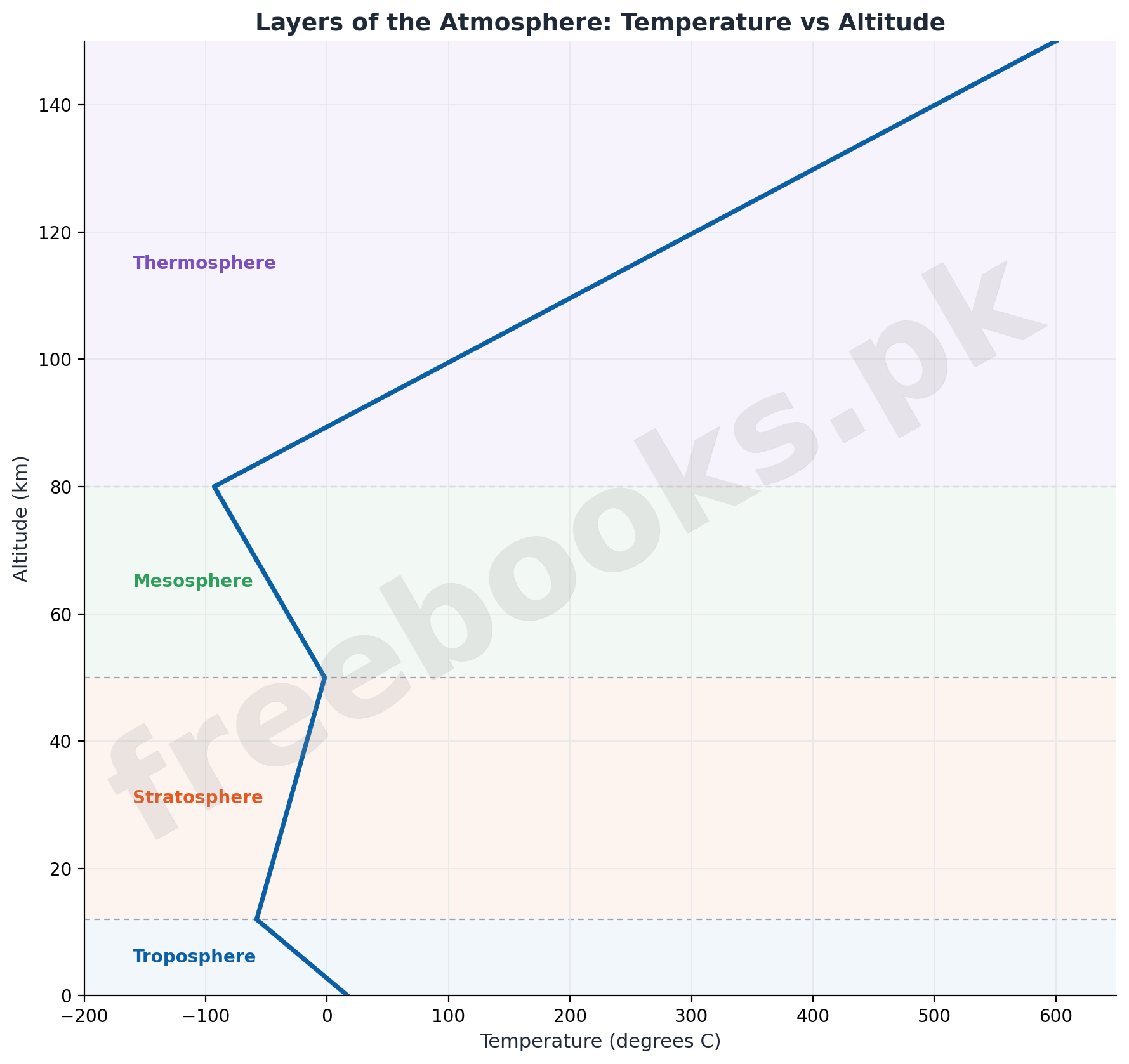
The atmosphere is a sphere of gases surrounding the earth, made up of major components nitrogen (78.00%) and oxygen (21.01%), minor components argon (0.93%) and carbon dioxide (0.04%), and trace components such as methane, hydrogen, neon, helium, krypton, and xenon. It is organized into four distinct layers, defined by how temperature changes with altitude: the troposphere (0-12 km, where weather occurs and temperature falls steadily), the stratosphere (12-50 km, home to the protective ozone layer), the mesosphere (50-80 km, the coldest layer), and the thermosphere (80-600 km, where temperature rises sharply due to absorption of UV and X-rays).
Human and natural activity release a wide range of air pollutants into this system, including oxides of carbon, nitrogen, and sulfur, hydrocarbons, low-altitude ozone, chlorofluorocarbons (CFCs), polycyclic aromatic hydrocarbons (PAHs), persistent organic pollutants (POPs), volatile organic compounds (VOCs), particulate matter, and heavy metals. These pollutants drive chemical processes such as smog formation, acid rain, stratospheric ozone depletion, and the greenhouse effect, each with measurable impacts on air quality (tracked via the Air Quality Index, AQI) and human health, and each addressed through specific pollution-control technologies, laws, and regulations.
Learning Objectives
- Identify the properties, composition, and four layers of the atmosphere
- Describe the sources and effects of natural and human-made air pollution
- Describe the impact of human activities, including burning fossil fuels and deforestation, on the atmosphere
- Identify chemical reactions and processes occurring in the atmosphere, including smog and acid rain formation
- Identify global-scale air pollution problems such as global warming and the greenhouse effect
- Describe the factors that affect air quality and explain the link between air quality and human health
- Evaluate the potential health risks associated with air pollution
- Familiarize with methods and techniques used to measure and monitor air quality
- Explain technologies and strategies used to reduce air pollution and improve air quality
- Identify laws, regulations, and the economic, social, and political issues related to air quality management
Key Concepts
14.1 Composition and Layers of the Atmosphere
The atmosphere's components divide into major components, nitrogen (78.00%) and oxygen (21.01%); minor components, argon (0.93%) and carbon dioxide (0.04%); and trace components, including methane, hydrogen, neon, helium, krypton, and xenon. The atmosphere has four distinct layers, determined by how temperature changes with increasing altitude.
The troposphere is the lowest, densest layer, extending up to 12 km and containing all the major atmospheric gases; temperature falls steadily from 17 degC to -58 degC, and it is the layer in which rain, lightning, and hurricanes occur. Above it, the stratosphere (12-50 km) sees temperature rise from -58 degC to -2 degC and hosts the ozone layer: in the upper stratosphere, ozone absorbs high-energy UV radiation and breaks down (O3 –UV–> O2 + O), while in the middle stratosphere, monatomic and diatomic oxygen recombine exothermically to reform ozone (O2 + O -> O3); the lower stratosphere receives very little UV, so little monatomic oxygen or ozone forms there.
The mesosphere (50-80 km) is the coldest layer, with temperature falling from -2 degC to -93 degC. The thermosphere (80-600 km) is where temperature rises sharply with altitude, from around 500 degC to 2000 degC or higher, due to absorption of energetic UV and X-ray radiation.
14.2 Air Pollutants and Their Sources
Pollutants are harmful substances (gases, liquids, or solids) classified as primary pollutants, directly emitted (e.g., volcanic ash, vehicle exhaust CO), or secondary pollutants, formed from chemical reactions of primary pollutants. The most important pollutants are oxides of carbon (CO, CO2), oxides of nitrogen (NOx), oxides of sulfur (SOx), hydrocarbons, low-altitude ozone, CFCs, PAHs, POPs, VOCs, particulate matter (PM), and heavy metals (Pb, Hg, Cd).
Air pollution has two broad sources. Natural sources include windblown dust and biological debris, volcanic eruptions (releasing large quantities of gases and PM), thunderbolts (producing NOx), ocean algae (releasing H2S), and humid zones such as swamps and peat bogs (producing methane). Human-made sources are classified as mobile (cars, trucks, planes, marine engines) or point sources (factories, power plants); burning fossil fuels in vehicles, factories, and power plants produces CO2, CO, and hydrocarbons, while burning wood domestically and coal in brick kilns add further pollutants.
14.3 Oxides of Carbon, Nitrogen, and Sulfur; Hydrocarbons; Low-Altitude Ozone
Carbon monoxide (CO) forms mainly from incomplete combustion of fossil fuels (2C + O2 -> 2CO); it is highly poisonous, binding haemoglobin more strongly than oxygen and excluding oxygen from respiration, though CO poisoning can be reversed with high-pressure oxygen. Carbon dioxide (CO2) forms from complete combustion (C + O2 -> CO2) and is the key greenhouse gas emitted by human activity, trapping heat and driving global warming.
Oxides of nitrogen (NOx = NO and NO2) form from N2 + O2 –high T–> 2NO, followed by 2NO + O2 -> 2NO2; natural sources include soil and ocean microbial processes, while human sources include synthetic fertilizers and fossil fuel combustion. NOx depletes the ozone layer and contributes to climate change and reduced air quality. Oxides of sulfur (SOx = SO2, SO3) are emitted mainly by burning coal and oil; when they combine with water vapour they cause acid rain, with SO2 the major source of acid deposition.
Hydrocarbons arise naturally (vegetation, wildfires, volcanoes, seeps) and anthropogenically (incomplete fossil fuel combustion, oil spills, industrial and vehicular emissions), with automobiles the major source and methane the most common hydrocarbon pollutant. Low-altitude ozone (O3) is a powerful oxidizing agent, non-toxic at small concentrations but toxic above 100 ppm, harming humans, plants, rubber, and fabric dyes.
14.4 CFCs, PAHs, POPs, VOCs, Particulate Matter, and Heavy Metals
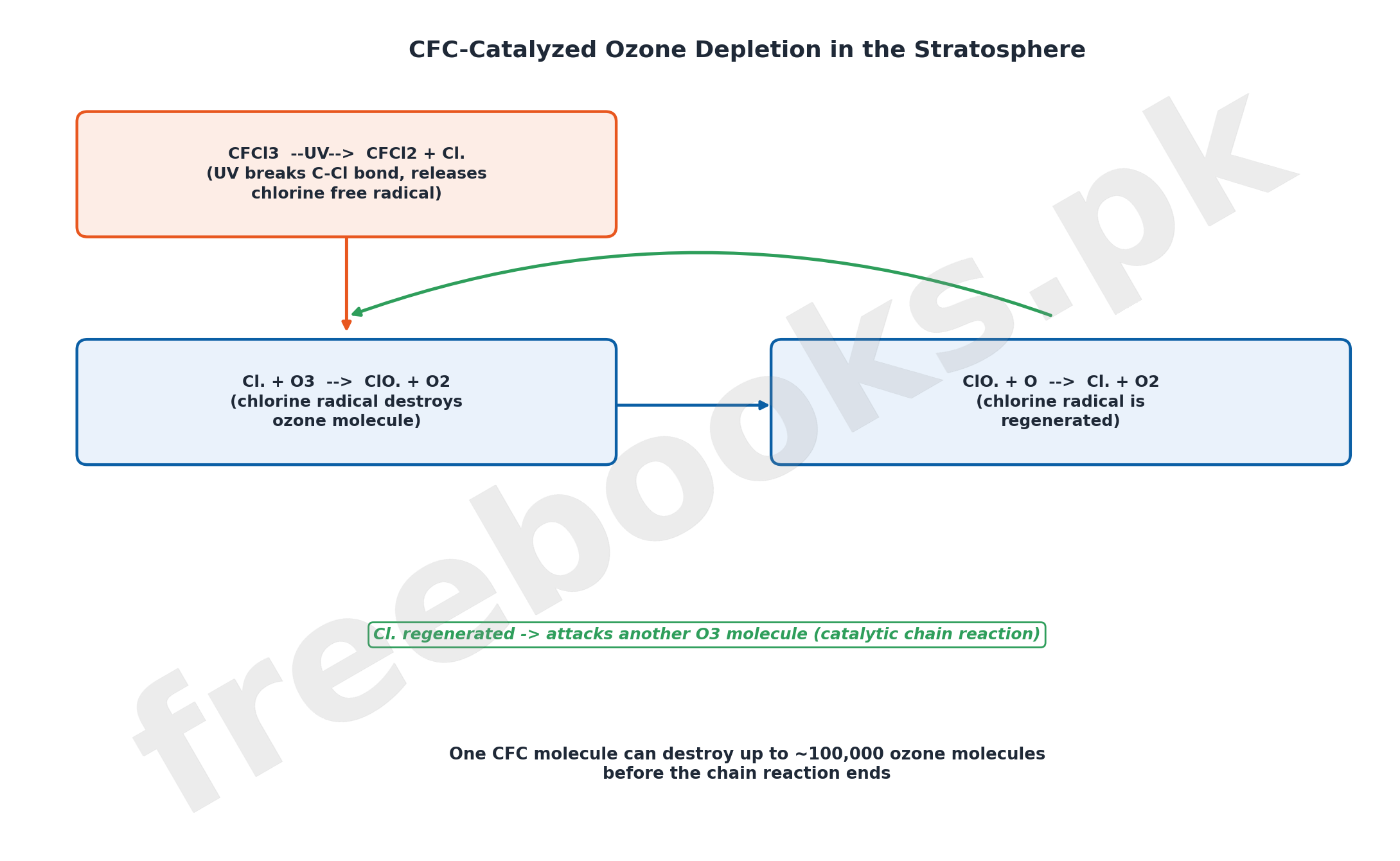
Chlorofluorocarbons (CFCs), used as aerosol propellants and refrigerants, diffuse into the stratosphere where UV radiation breaks them down into chlorine free radicals that destroy ozone in a catalytic chain: CFCl3 –UV–> CFCl2 + Cl. ; Cl. + O3 -> ClO. + O2 ; ClO. + O -> Cl. + O2, regenerating the chlorine radical so it can destroy further O3 molecules. One CFC molecule can destroy up to 100,000 ozone molecules, and CFCs are about 100,000 times more effective than CO2 at trapping heat.
Polycyclic aromatic hydrocarbons (PAHs; e.g., naphthalene, anthracene, phenanthrene) form from incomplete combustion of fossil fuels and even grilled foods, and are toxic and carcinogenic. Persistent organic pollutants (POPs), such as PCBs (used in electrical equipment, coatings, adhesives) and DDT (an insecticide), resist chemical, biological, and photolytic degradation, travel long distances via wind and water, and accumulate in the environment.
Volatile organic compounds (VOCs) evaporate easily at room temperature from vehicle exhaust and burning liquid fuels, wood, and garbage; short-term exposure causes eye, nose, and throat irritation, headache, and nausea, while long-term exposure damages the liver, kidney, and nervous system (common VOCs: benzene, xylene, toluene, ethanol, formaldehyde, acetone). Particulate matter (PM) is tiny suspended solid or liquid particles from both natural sources (volcanoes, fires, dust storms, sea salt) and human sources (combustion, vehicle emissions, tobacco smoke). Heavy metals (lead, mercury, cadmium) enter the air mainly from metallurgy, battery waste, and incineration.
14.5 Impact of Human Activities on the Atmosphere
Human activities affect the atmosphere primarily through burning fossil fuels and deforestation, driving climate change, air pollution, and poor air quality; in urban areas, most pollution comes from human-made mobile and point sources. Burning fossil fuels is the primary cause of current climate change, releasing greenhouse gases, air pollutants, and VOCs that alter the earth system and harm human health.
Deforestation, the purposeful clearing or thinning of forests, removes trees that would otherwise absorb greenhouse gases like CO2 and clean the air; it is one of the largest contributors to global climate change and causes loss of biodiversity, soil degradation, and disruption of the water cycle in addition to its direct effect on atmospheric CO2 levels.
14.6 Formation of Smog and Acid Rain
Smog is thick, hazy air pollution common in urban areas, containing fine dust or soot, condensed water vapour, poisonous gases (SO2, NOx, O3, CO, CO2), and secondary pollutants (O3, unburned hydrocarbons, VOCs, PM of 2.5-10 microns). Industrial or classical smog (London smog) results from high quantities of sulfur oxides being released into the air. Photochemical smog (Los Angeles smog) forms when primary pollutants like NOx, VOCs, and unburned hydrocarbons undergo photochemical reactions in sunlight, producing secondary pollutants like ozone and peroxyacetyl nitrates (PAN); it is considered more dangerous, able to cause heart palpitations, pneumonia, and even lung cancer.
Acid rain is precipitation with pH below 5.6. Burning fossil fuels releases SOx and NOx, which mix with atmospheric moisture to form acids that wind can carry long distances before they fall as acid rain, hail, snow, or fog. Key reactions: 2SO2 + O2 -> 2SO3, then SO3 + H2O -> H2SO4 (sulfuric acid); and 2NO + O2 -> 2NO2, then 3NO2 + H2O -> 2HNO3 + NO (nitric acid). Acid rain looks, feels, and tastes like clean rain but is highly corrosive to the environment.
14.7 Greenhouse Effect and Global Warming
Global warming is the long-term rise in Earth's average surface temperature, driven mainly by human emission of greenhouse gases (GHGs) from burning fossil fuels. The greenhouse effect is the progressive warming of the earth's surface caused by the blanketing effect of these gases in the atmosphere. CO2 and water vapour transmit short-wavelength solar radiation but reflect back the longer-wavelength heat radiation from the warmed earth's surface.
By day, infrared heat from the sun passes through the atmosphere and warms the earth; at night, the earth radiates heat back to space, but greenhouse gases trap some of this heat, preventing its full loss. The higher the concentration of CO2 and other greenhouse gases, the greater the absorption of thermal radiation and the greater the rise in global temperature.
14.8 Air Quality, the AQI, and Human Health
Air quality is measured using the Air Quality Index (AQI), which reflects pollutant concentrations at a location; good air quality is clear with few solid particles or chemical pollutants, while poor air quality is hazy and dangerous. An AQI under 50 is considered good and safe for outdoor activity; an AQI over 300 is hazardous. Children under 18, adults over 65, people with chronic heart or lung disease, and outdoor workers with prolonged exposure face the highest risk.
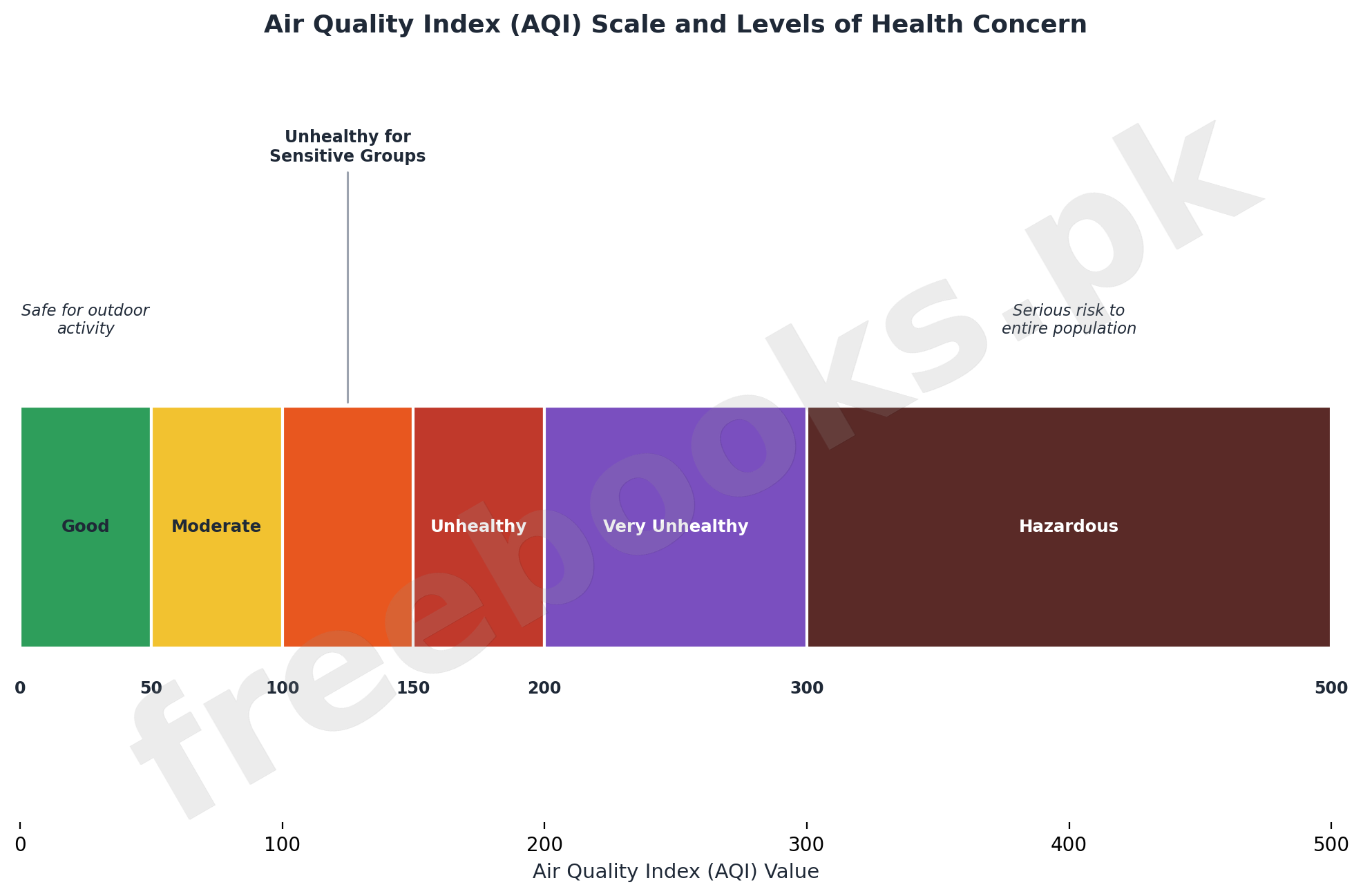
Air quality is influenced by emission sources (wood/fossil fuel burning, factories, vehicles releasing SOx, NOx, CO, PM, VOCs), meteorological conditions (wind, temperature, and humidity affect pollutant dispersion; warm air layers can trap pollutants near the ground), natural events (wildfires, dust storms), and seasonal changes (heating/cooling emissions, seasonal pollen). The AQI scale runs: 0-50 Good (green), 51-100 Moderate (yellow), 101-150 Unhealthy for Sensitive Groups (orange), 151-200 Unhealthy (red), 201-300 Very Unhealthy (purple), 301-500 Hazardous (maroon).
Poor air quality has immediate and long-term health impacts. Particulate matter (PM, 2.5-10 micrometers in diameter) causes airway inflammation and irritation, leading to asthma and bronchitis. Short-term exposure to NO2 and SO2 irritates the respiratory system; long-term exposure raises the risk of respiratory infection, asthma, and bronchitis. Broader health risks include respiratory diseases (triggered by ozone, PM, NO2), cardiovascular disease (inflammation, blood vessel damage, high blood pressure, heart attack or stroke), cancer (especially from PM and carcinogens like benzene), and reproductive/developmental effects (reduced fertility, premature birth, developmental problems).
14.9 Measuring, Monitoring, and Analyzing Air Quality
Measuring and monitoring air quality tracks concentrations of PM, NO2, SO2, CO, O3, and VOCs. The nephelometer (also called a photometer) is used to monitor PM such as dust, smoke, mist, and fumes by measuring the light they scatter. Direct measurement methods include continuous emission monitoring systems (CEMS) at industrial sites, fixed air quality monitoring stations (AQMS) with real-time sensors in urban and industrial areas, and remote sensing via satellites for regional and global data.
Testing hypotheses about air quality follows a scientific process: forming a hypothesis (e.g., that PM2.5 and NO2 are higher during peak traffic hours), designing the experiment (choosing sites such as busy roads and residential areas, planning variables and data-collection methods), collecting data (comparing rush-hour versus non-rush-hour measurements with reliable instruments), and finally analyzing and interpreting the data to confirm or reject the hypothesis and identify trends over time, informing strategies to improve air quality.
14.10 Strategies, Laws, and Economic, Social, and Political Issues
Technologies to reduce vehicle and industrial emissions include the catalytic converter (oxidizes CO to CO2, reduces NOx to N2, converts unburnt hydrocarbons to CO2 and H2O), the diesel particulate filter (DPF, captures and stores soot particles from diesel exhaust), selective catalytic reduction (SCR, reduces NOx to N2 and oxidizes CO and hydrocarbons using catalysts like TiO2 or zeolites), and scrubbers (use liquids such as water to remove PM, SO2, HCl, NH3, and VOCs).
Pakistan's air quality laws and regulations include the Pakistan Environmental Protection Act (PEPA 1997), the National Environmental Quality Standards (NEQS), and the Punjab Environmental Protection (Amendment) Act 2012. Control measures include vehicle emission standards and cleaner fuels (CNG, LPG), industrial emission control and cleaner production techniques, public awareness campaigns (public transport, carpooling, cycling, walking), urban planning and green infrastructure, smog control measures (restricting crop-residue burning, smog towers), and prohibiting open burning of waste.
Air pollution carries economic costs (reduced worker productivity, damaged crops and lower agricultural yield, higher food prices, acid rain damage), social costs (disproportionate impact on children, the elderly, and low-income communities; reduced quality of life; forced migration and social displacement), and political challenges (pollution crosses borders, requiring international cooperation and strict governance to balance socio-economic and technological considerations).
Important Definitions
What determines the boundaries of the atmosphere's four layers?
The change in temperature observed with increasing altitude; each layer (troposphere, stratosphere, mesosphere, thermosphere) is defined by a distinct temperature trend as altitude increases.
What is the difference between primary and secondary air pollutants?
Primary pollutants are substances directly emitted into the air, such as volcanic ash or vehicle exhaust CO, while secondary pollutants form from chemical reactions of primary pollutants, such as ozone and PAN in photochemical smog.
What is depletion of ozone, and what causes it?
Depletion of ozone is the decrease in ozone concentration in the stratosphere, caused mainly by chlorofluorocarbons (CFCs), which diffuse into the stratosphere and are broken down by UV radiation into chlorine free radicals that destroy ozone molecules.
What are persistent organic pollutants (POPs)?
Organic compounds that resist degradation through chemical, biological, and photolytic processes, allowing them to travel via wind and water, accumulate in the environment, and adversely affect human health and wildlife far from where they were released.
What is smog, and what are its two main types?
Smog is a thick, hazy form of air pollution common in urban areas; its two main types are industrial or classical smog (London smog, caused by high sulfur oxide levels) and photochemical smog (Los Angeles smog, formed by sunlight-driven reactions of NOx and VOCs).
What is acid rain?
Precipitation (rain, snow, hail, or fog) with a pH below 5.6, formed when SOx and NOx released from burning fossil fuels mix with atmospheric moisture to form sulfuric and nitric acids.
What is the greenhouse effect?
The progressive warming of the earth's surface caused by the blanketing effect of greenhouse gases in the atmosphere, which transmit incoming short-wavelength solar radiation but trap outgoing longer-wavelength heat radiation from the earth's surface.
What is the Air Quality Index (AQI)?
A measure of the concentration of pollutants present in the air at a particular location, used to communicate how clean or polluted the air is and what associated health effects might be a concern, on a scale from 0 (best) to 500 (worst).
What instrument is used to measure particulate matter in the air, and how does it work?
A nephelometer (also called a photometer) is used; it detects particles such as dust, smoke, mist, and fumes by measuring the total amount of light they scatter.
What is a catalytic converter, and what does it do?
A device fitted to most vehicle exhaust systems that converts harmful pollutants to harmless substances: it oxidizes CO to CO2, reduces NOx to N2, and converts unburnt hydrocarbons to CO2 and H2O.
Key Facts and Relations
| Topic | Key Fact / Relation |
|---|---|
| Major atmospheric components | N2 = 78.00%, O2 = 21.01% (minor: Ar 0.93%, CO2 0.04%) |
| Atmospheric layers (altitude, temperature trend) | Troposphere 0-12 km (17 to -58 degC); Stratosphere 12-50 km (-58 to -2 degC); Mesosphere 50-80 km (-2 to -93 degC); Thermosphere 80-600 km (rises sharply) |
| Stratospheric ozone formation/depletion | O3 –UV–> O2 + O ; O2 + O -> O3 (exothermic) |
| CFC ozone-depletion chain | CFCl3 –UV–> CFCl2 + Cl. ; Cl. + O3 -> ClO. + O2 ; ClO. + O -> Cl. + O2 |
| Acid rain formation (sulfuric acid) | 2SO2 + O2 -> 2SO3 ; SO3 + H2O -> H2SO4 |
| Acid rain formation (nitric acid) | 2NO + O2 -> 2NO2 ; 3NO2 + H2O -> 2HNO3 + NO |
| Carbon oxide formation | 2C + O2 -> 2CO (incomplete combustion) ; C + O2 -> CO2 (complete combustion) |
| NOx formation | N2 + O2 –high T–> 2NO ; 2NO + O2 -> 2NO2 |
| AQI scale and health concern levels | 0-50 Good; 51-100 Moderate; 101-150 Unhealthy for Sensitive Groups; 151-200 Unhealthy; 201-300 Very Unhealthy; 301-500 Hazardous |
| Acid rain threshold | Rainwater pH below 5.6 is classified as acid rain |
Diagrams
Layers of the Atmosphere: Temperature vs Altitude: A line plot showing how temperature changes with altitude across all four atmospheric layers — troposphere, stratosphere, mesosphere, and thermosphere — highlighting the alternating cooling and warming trends that define each layer's boundary
CFC-Catalyzed Ozone Depletion Mechanism: A flow diagram showing the three-step catalytic chain reaction by which a chlorine free radical from CFC photolysis destroys ozone and is continuously regenerated to destroy further ozone molecules
Air Quality Index (AQI) Scale and Levels of Health Concern: A colour-coded horizontal scale showing the six AQI bands from Good to Hazardous, their numeric ranges, and the associated level of health concern
Short Questions & Answers
Why does temperature decrease in the troposphere but increase in the stratosphere?
In the troposphere, the earth's surface absorbs solar radiation and re-radiates heat, so air closer to the ground is warmer, and temperature drops steadily as altitude (and distance from this heat source) increases; in the stratosphere, ozone in the upper layer directly absorbs high-energy ultraviolet radiation from the sun, releasing heat as it does so, which causes temperature to rise with altitude despite the layer being far from the earth's surface.
Why is carbon monoxide dangerous even though it is not directly explosive or corrosive?
Carbon monoxide binds to haemoglobin in the blood more strongly than oxygen does, so even a small concentration of CO in inhaled air can occupy a large share of the body's oxygen-carrying capacity; this excludes oxygen from normal respiration and causes suffocation at the cellular level, which is why CO poisoning is treated by administering high-pressure oxygen to help displace it from haemoglobin.
Why are CFCs considered catalysts in ozone depletion rather than simple reactants?
A true reactant is consumed in a reaction, but the chlorine free radical released by CFC photolysis is regenerated at the end of the ozone-destroying cycle (ClO. + O -> Cl. + O2), meaning the same chlorine atom can go on to destroy many more ozone molecules; because it speeds up ozone destruction without being permanently consumed, it behaves as a catalyst, which is why a single CFC molecule can destroy up to 100,000 ozone molecules.
Why is photochemical smog considered more dangerous than industrial (classical) smog?
Industrial smog mainly involves sulfur oxides and is associated with cooler, damper climates, while photochemical smog forms when nitrogen oxides and VOCs react in strong sunlight to produce ozone and peroxyacetyl nitrates (PAN), both of which are aggressive respiratory irritants; because photochemical smog's secondary pollutants can trigger heart palpitations, pneumonia, and even lung cancer, it is generally regarded as more harmful to human health than classical smog.
How do sulfur oxides and nitrogen oxides both lead to acid rain through similar chemical pathways?
Both pollutant families undergo a two-step oxidation-then-hydration pathway: SO2 is oxidized to SO3, which reacts with water to form sulfuric acid (H2SO4), while NO is oxidized to NO2, which reacts with water to form nitric acid (HNO3) alongside more NO; in both cases, the oxide combines with atmospheric moisture to form a strong acid that lowers rainwater pH below the 5.6 threshold that defines acid rain.
Why does an increase in atmospheric CO2 concentration lead to an increase in global temperature?
CO2 and water vapour let short-wavelength solar radiation pass through to warm the earth's surface, but they absorb and re-radiate the longer-wavelength infrared heat radiation that the warmed surface emits back toward space; the higher the concentration of CO2, the more of this outgoing heat radiation is absorbed and trapped within the atmosphere rather than escaping, so global temperature rises as CO2 concentration increases.
Why are outdoor workers, children, and the elderly considered high-risk groups for poor air quality?
Outdoor workers face prolonged, continuous exposure to ambient pollutant levels rather than brief exposure, increasing their cumulative dose; children under 18 have developing respiratory and immune systems that are more vulnerable to damage, while adults over 65 and people with existing chronic heart or lung disease have reduced physiological reserve to cope with the added stress that pollutants place on the cardiovascular and respiratory systems.
Why is PM2.5 generally considered more harmful to health than PM10?
PM2.5 particles are small enough (2.5 micrometers or less) to penetrate deep into the lungs and even enter the bloodstream, causing inflammation, cardiovascular strain, and long-term organ damage, whereas the larger PM10 particles are more often trapped by the nose and upper airways before reaching the deep lung tissue; because PM2.5 reaches further into the body and is harder for the respiratory system to filter out, it poses a greater health risk at the same mass concentration.
How does a catalytic converter reduce three different types of vehicle pollutants at once?
A catalytic converter uses catalysts to drive three separate reactions simultaneously inside a single unit: it oxidizes carbon monoxide (CO) to carbon dioxide (CO2), reduces nitrogen oxides (NOx) back to harmless nitrogen gas (N2), and oxidizes unburnt hydrocarbons to carbon dioxide and water vapour, converting three classes of harmful exhaust pollutants into far less harmful products before they leave the tailpipe.
Why does effective air pollution control require international cooperation rather than only national laws?
Air pollutants such as CFCs, greenhouse gases, and windblown particulate matter do not stay confined within the borders of the country that released them; they can travel via wind and water currents to affect people, wildlife, and climate far from their source, so a country acting alone cannot fully protect its own air quality, making coordinated international agreements and governance necessary alongside domestic laws and regulations.
Long Questions & Answers
Explain how chlorofluorocarbons (CFCs) cause depletion of the ozone layer, and describe the wider role of the atmosphere's temperature-defined layers in this process.
What are CFCs, and how do they reach the stratosphere where ozone depletion occurs?
CFCs are organic compounds containing chlorine and fluorine that exist as gases or low-boiling liquids at room temperature and were widely used as aerosol propellants and refrigerants; being chemically stable and long-lived in the lower atmosphere, they gradually diffuse upward through the troposphere and stratosphere until UV radiation in the stratosphere is intense enough to break them apart.
What is the first step of the ozone-depletion mechanism, and what species does it produce?
UV radiation breaks a C-Cl bond in the CFC molecule, shown as CFCl3 –UV–> CFCl2 + Cl. ; this photolysis step releases a highly reactive chlorine free radical (Cl.) into the stratosphere, which is the species directly responsible for attacking ozone molecules in the following steps.
How does the chlorine free radical destroy ozone, and how is it regenerated afterward?
The chlorine radical reacts with ozone, Cl. + O3 -> ClO. + O2, converting one ozone molecule into ordinary oxygen and a chlorine monoxide radical; this ClO. radical then reacts with a free oxygen atom, ClO. + O -> Cl. + O2, which regenerates the original chlorine radical and releases another O2 molecule, completing a self-sustaining catalytic cycle.
Why can a single CFC molecule destroy up to 100,000 ozone molecules?
Because the chlorine radical is regenerated rather than consumed at the end of the two-step ozone-destroying cycle, it can immediately react with another ozone molecule and repeat the same two steps many thousands of times before it is eventually removed from the stratosphere by other reactions, meaning its destructive effect is not limited to a single reaction event.
How does the stratosphere's own structure make it especially vulnerable to this process?
The stratosphere is defined by rising temperature with altitude because its upper region absorbs high-energy UV radiation to form ozone, while its middle region sees ozone reform exothermically from monatomic and diatomic oxygen; because this entire protective ozone layer depends on a delicate balance between ozone formation and natural breakdown, introducing an efficient catalytic destroyer like the chlorine radical shifts that balance toward net ozone loss, thinning the very layer that shields the earth's surface from harmful UV radiation.
Explain how burning fossil fuels contributes to both acid rain and the greenhouse effect, and describe how air quality is measured and communicated to the public.
What pollutants does burning fossil fuels release that lead to acid rain, and how do they form acids?
Burning fossil fuels releases sulfur oxides (SOx) and nitrogen oxides (NOx) into the atmosphere; SO2 is oxidized to SO3 which reacts with water vapour to form sulfuric acid (H2SO4), while NO is oxidized to NO2 which reacts with water to form nitric acid (HNO3) alongside further NO, and both acids can be carried long distances by wind before falling back to earth as acid rain, hail, snow, or fog.
Why does acid rain remain a serious environmental concern even though it looks and feels like ordinary rain?
Acid rain has a pH below 5.6 and is visually indistinguishable from clean rain, giving no obvious warning of its corrosive potential; despite this unremarkable appearance, its acidity causes widespread damage to soils, water bodies, forests, and man-made structures over time, which is precisely what makes it a serious, easily underestimated environmental hazard.
How does burning fossil fuels separately contribute to the greenhouse effect and global warming?
Fossil fuel combustion releases large quantities of carbon dioxide, a primary greenhouse gas that transmits incoming short-wavelength solar radiation but absorbs and re-radiates the longer-wavelength heat radiation emitted by the warmed earth's surface; as atmospheric CO2 concentration rises from continued fossil fuel use, more of this outgoing heat is trapped rather than lost to space, driving the long-term rise in global average surface temperature known as global warming.
What is the Air Quality Index (AQI), and what do its different bands communicate to the public?
The AQI is a numeric measure of pollutant concentration at a given location, running from 0 to 500 and divided into six colour-coded bands of increasing health concern: Good (0-50, green), Moderate (51-100, yellow), Unhealthy for Sensitive Groups (101-150, orange), Unhealthy (151-200, red), Very Unhealthy (201-300, purple), and Hazardous (301-500, maroon), letting the public quickly judge whether it is safe to spend time outdoors.
What methods do environmental engineers use to actually measure the pollutant concentrations behind the AQI?
Direct measurement methods include continuous emission monitoring systems (CEMS) that track gases like CO, O3, SO2, NO2, VOCs, and PM at industrial sites, fixed air quality monitoring stations (AQMS) equipped with sensors in urban and industrial areas for real-time data, and satellite-based remote sensing techniques that measure atmospheric pollutants over large regional or global areas; instruments such as the nephelometer measure particulate matter specifically by detecting the light that suspended particles scatter.
Multiple Choice Questions (MCQs)
Which gas causes the yellow-brown colour associated with photochemical smog? (A) CO (B) SO3 (C) NO2 (D) SO2
Correct answer: (C) NO2. Nitrogen dioxide (NO2) absorbs visible light in a way that gives photochemical smog its characteristic yellow-brown haze, distinguishing it from the greyish industrial smog caused mainly by sulfur oxides.
The depletion of ozone in the stratosphere is mainly due to the reaction of O3 with which class of compounds? (A) CO2 (B) SO2 (C) O2 (D) CFCs
Correct answer: (D) CFCs. Chlorofluorocarbons (CFCs) diffuse into the stratosphere and are broken down by UV radiation into chlorine free radicals, which catalytically destroy ozone molecules in a repeating chain reaction.
Which particulate matter size is considered most harmful to human health? (A) PM 10.0 (B) PM 5.0 (C) PM 2.5 (D) PM 1.0
Correct answer: (C) PM 2.5. PM2.5 (particles 2.5 micrometers or smaller) can penetrate deep into the lungs and even enter the bloodstream, making it more harmful than the larger, more easily filtered PM10 particles.
Which of the following is a natural factor that can improve air quality? (A) Wildfire (B) Urbanization (C) Rainfall (D) Industrial emission
Correct answer: (C) Rainfall. Rainfall washes particulate matter and soluble pollutants out of the air (a process related to how acid rain forms), naturally improving air quality, whereas wildfires, urbanization, and industrial emissions all add pollutants to the atmosphere.
What is a common human activity that has led to increased levels of carbon monoxide in the atmosphere? (A) Tree planting (B) Gasoline-driven vehicles (C) Using electric appliances (D) Solar panel installation
Correct answer: (B) Gasoline-driven vehicles. Carbon monoxide forms mainly from incomplete combustion of fossil fuels, and gasoline-driven vehicles are a major source of this incomplete combustion, unlike tree planting, electric appliances, or solar panels, which do not directly emit CO.
Chlorofluorocarbons (CFCs) have been primarily used in: (A) Fertilizers (B) Refrigerants and aerosol propellants (C) Pharmaceuticals (D) Pesticides
Correct answer: (B) Refrigerants and aerosol propellants. CFCs exist as gases or low-boiling liquids at room temperature and were widely used as refrigerants and as propellants in aerosol products, which is also how they enter the atmosphere and eventually reach the stratosphere.
What is the primary chemical process that removes carbon dioxide from the atmosphere? (A) Combustion (B) Photosynthesis (C) Respiration (D) Volcanic activity
Correct answer: (B) Photosynthesis. Photosynthesis in plants and other photosynthetic organisms consumes atmospheric CO2 to produce organic matter and oxygen, making it the main natural process that removes CO2 from the atmosphere; combustion, respiration, and volcanic activity all add CO2 instead.
An AQI value between 51 and 100 typically indicates which level of air quality? (A) Good (B) Moderate (C) Unhealthy (D) Fatal
Correct answer: (B) Moderate. On the AQI scale, 0-50 is Good, while 51-100 is classified as Moderate, meaning air quality is acceptable but may pose a slight risk for unusually sensitive individuals.
Acid rain is primarily caused by the release of which of the following gases into the atmosphere? (A) CO2 and CH4 (B) SO2 and NOx (C) CFCs and halons (D) O3 and CO
Correct answer: (B) SO2 and NOx. SO2 and NOx are oxidized in the atmosphere and react with water vapour to form sulfuric acid and nitric acid respectively, which are the acids responsible for lowering rainwater pH below the 5.6 threshold that defines acid rain.
In the presence of sunlight and nitrogen oxides (NOx), VOCs primarily contribute to the formation of: (A) Acid rain (B) Ozone depletion (C) Photochemical smog (D) Greenhouse gases
Correct answer: (C) Photochemical smog. VOCs and NOx undergo photochemical reactions in sunlight to produce secondary pollutants like ozone and peroxyacetyl nitrates (PAN), which together with primary pollutants make up photochemical (Los Angeles-type) smog.
Quick Revision Summary
- Atmosphere composition: N2 78.00%, O2 21.01% (major); Ar 0.93%, CO2 0.04% (minor); CH4, H2, Ne, He, Kr, Xe (trace)
- Four layers by temperature trend: Troposphere 0-12km (17 to -58C, weather occurs), Stratosphere 12-50km (-58 to -2C, ozone layer), Mesosphere 50-80km (-2 to -93C, coldest), Thermosphere 80-600km (rises to 500-2000C+)
- Primary pollutants = directly emitted (e.g. CO from exhaust); secondary pollutants = formed from reactions of primary pollutants (e.g. O3, PAN)
- Major pollutants: CO/CO2, NOx, SOx, hydrocarbons, low-altitude O3, CFCs, PAHs, POPs, VOCs, PM, heavy metals (Pb, Hg, Cd)
- CFC ozone depletion (catalytic chain): CFCl3 -UV-> CFCl2 + Cl. ; Cl. + O3 -> ClO. + O2 ; ClO. + O -> Cl. + O2 (Cl. regenerated, 1 CFC destroys up to 100,000 O3)
- Smog: Industrial/classical (London, high SOx) vs Photochemical (Los Angeles, NOx + VOCs + sunlight -> O3 + PAN, more dangerous)
- Acid rain (pH < 5.6): 2SO2+O2->2SO3, SO3+H2O->H2SO4 ; 2NO+O2->2NO2, 3NO2+H2O->2HNO3+NO
- Greenhouse effect: CO2/H2O let in short-wave solar radiation but trap outgoing long-wave heat radiation -> global warming
- AQI bands: 0-50 Good (green), 51-100 Moderate (yellow), 101-150 Unhealthy for Sensitive Groups (orange), 151-200 Unhealthy (red), 201-300 Very Unhealthy (purple), 301-500 Hazardous (maroon)
- Pollution control tech: catalytic converter (CO->CO2, NOx->N2, hydrocarbons->CO2+H2O), diesel particulate filter, selective catalytic reduction, scrubbers
- Pakistan laws: PEPA 1997, NEQS, Punjab Environmental Protection (Amendment) Act 2012
- Air pollution costs: economic (productivity, crop yield, food prices), social (vulnerable groups, displacement), political (needs international cooperation, crosses borders)
Exam Tips
- Learn the four atmospheric layers as a temperature zig-zag: down (troposphere) – up (stratosphere) – down (mesosphere) – up (thermosphere) — this pattern alone answers many layer-identification questions
- For CFC ozone depletion, remember the chlorine radical is regenerated, not consumed — this catalytic aspect is exactly why one CFC molecule can destroy up to 100,000 ozone molecules, a common exam point
- Don't confuse industrial (classical/London) smog with photochemical (Los Angeles) smog — industrial smog is about SOx, photochemical smog is about NOx + VOCs + sunlight producing O3 and PAN
- For acid rain equations, always show both steps: the oxide first oxidizes further (SO2->SO3, NO->NO2), then that further-oxidized species reacts with water to form the acid
- Memorize the AQI band boundaries (50, 100, 150, 200, 300) together with their colours — questions often ask you to match a numeric AQI value to its health-concern level and colour
- When explaining pollution-control technologies, name the specific pollutant each one targets (catalytic converter: CO, NOx, hydrocarbons; DPF: PM; scrubbers: PM, SO2, HCl, NH3, VOCs) rather than describing them only in general terms