
This chapter covers Gaseous Exchange from the 1st Year (FSc Part-I) Biology syllabus of the Punjab Curriculum and Textbook Board (PTB/PCTB). Respiration occurs at two levels: organismic respiration (breathing/ventilation, the physical exchange of gases with the environment) and cellular respiration (the metabolic process by which cells use oxygen, produce carbon dioxide, and extract energy from food as ATP). Gaseous exchange is the physical process, always by diffusion, that supplies oxygen for cellular respiration and removes carbon dioxide. These notes are prepared by freebooks.pk.
The chapter compares air and water as respiratory media, describes gaseous exchange in plants (stomata, lenticels, photorespiration), surveys respiratory organs and mechanisms across representative animals (Hydra, earthworm, cockroach, fish, frog, birds and man), explains the mechanics of breathing (inspiration and expiration) and the transport of oxygen and carbon dioxide in blood, and covers common respiratory disorders.
Learning Objectives
- Differentiate organismic (breathing) and cellular respiration, and explain why gaseous exchange always occurs by diffusion.
- Compare the advantages and disadvantages of air and water as respiratory media.
- Describe gaseous exchange in plants through stomata and lenticels, and explain photorespiration.
- Describe the properties of respiratory surfaces and respiration in Hydra, earthworm and cockroach.
- Describe respiration in fish, frog and birds, and explain the human air passageways and lungs.
- Explain the mechanics of inspiration and expiration in man.
- Describe the transport of oxygen and carbon dioxide in blood and common respiratory disorders.
Key Concepts
Need of Respiratory Gas Exchange
At all levels of activity, living organisms require an uninterrupted supply of energy, and respiration is one of the most important metabolic activities supplying it. Respiration occurs at two levels: organismic respiration, also called breathing or ventilation, is the physical exchange of gases between an organism and its environment; cellular respiration is the metabolic process directly involved in producing energy, in which cells utilize oxygen, produce carbon dioxide, and extract and conserve energy from food molecules in a biologically useful form such as ATP.
Gaseous exchange during organismic respiration is carried out only by diffusion — respiratory gases move between the body fluid and the outside medium (water or air) simply because there is no active transport mechanism to move respiratory gases across biological membranes.
Advantages and Disadvantages of Gas Exchange in Air and in Water
Air is a better respiratory medium than water for two main reasons. Firstly, the oxygen content of air is much higher than that of an equal volume of water: a litre of water cannot contain even 10 ml of oxygen, whereas fresh air contains about 200 ml of oxygen per litre. Secondly, oxygen diffuses about 8000 times more quickly in air than in water.
Breathing (ventilation) is directly involved in gas exchange, and ventilating water is far more difficult than ventilating air because water is about 8000 times denser than air and, in terms of viscosity, about 50 times more viscous — making gas exchange more difficult in water than in air.
Gaseous Exchange in Plants
Unlike animals, plants have no special organ or system for gaseous exchange — every cell carries out gas exchange according to its own needs, and the vascular tissues (xylem and phloem) play no role in transporting gases. In mesophyll cells specialized for photosynthesis there are large air spaces (comprising up to 40% of leaf volume) which are directly involved in gas exchange. Stomata, present mainly in leaves and young stems, are the main sites of gas exchange in plants (an estimated 12,000 stomata per square centimetre of leaf surface in tobacco); in older stems, dead cork tissue has special pores called lenticels for gas exchange. Land plant roots obtain oxygen from air in soil spaces, while aquatic plants obtain oxygen by diffusion from oxygen dissolved in water.
Photorespiration is a light-dependent respiratory process occurring in plants during daytime, in which oxygen is absorbed and carbon dioxide is released, but the oxygen absorbed is not used to produce ATP. It occurs because rubisco (ribulose bisphosphate carboxylase/oxygenase, the most abundant protein in chloroplasts) can act as an oxygenase as well as a carboxylase: when it adds oxygen instead of carbon dioxide to RuBP, a two-carbon compound (glycolate) is produced, which is converted through the peroxisomes and mitochondria (via glycine and serine) with the release of carbon dioxide — the reverse of the Calvin cycle. Photorespiration reduces carbon fixation into carbohydrates by about 25% in most plants; it becomes more pronounced on hot, dry days when closed stomata (preventing water loss) cause oxygen to build up and carbon dioxide to fall inside the leaf.
Respiratory Organs in Hydra, Earthworm and Cockroach
Respiratory surfaces in animals share common features: a large, moist surface area; a thin epithelium (often just two cells thick) minimizing diffusion distance; ventilation to maintain a steep diffusion gradient; and an extensive capillary network to keep blood flowing and maintain the gradient. Hydra has no specialized respiratory organs — gas exchange occurs over its entire general body surface and the lining of its digestive cavity (enteron), both in contact with water. The earthworm, though more complex, also lacks specialized respiratory organs; gas exchange occurs through its moist, capillary-rich skin (kept moist by mucous gland secretions and coelomic fluid), with oxygen combining with haemoglobin in the blood to form oxyhaemoglobin.
The cockroach has a specialized tracheal respiratory system: branching, chitin-lined air tubules called tracheae communicate with the exterior through 10 pairs of spiracles (2 pairs in the thorax, 8 in the abdomen); tracheae divide into fine, fluid-filled tracheoles that directly supply oxygen to tissues by diffusion, bypassing the blood entirely. Abdominal muscle contraction and expansion pump air through the spiracles (anterior spiracles open on expansion, posterior ones on contraction), producing inhalation and exhalation.
Respiration in Fish, Frog and Birds
Fish respire through gills, paired and highly modified structures near the junction of head and trunk, present in four to five pairs and constantly ventilated by a one-way flow of water entering through the mouth and passing out through the gill openings; the heart pumps deoxygenated blood to the gills in a single circuit. In frogs, gas exchange occurs through the lungs (pulmonary respiration), the skin (cutaneous respiration), and the buccal chamber, all richly supplied with blood vessels; air is drawn in through the nostrils and pushed into the simple, sac-like lungs by raising the floor of the buccal cavity (buccal/positive-pressure breathing).
Birds have the most efficient respiratory system among animals, needed for their high metabolic rate. Instead of alveoli, bird lungs contain tiny, thin-walled parabronchi, open at both ends, through which air flows in one direction and is constantly renewed; blood flow in the lung runs opposite to airflow (counter-current exchange), maximizing oxygen uptake. Nine air sacs extend throughout the body, acting as bellows that push air through the parabronchi, so no stale air remains.
Respiration in Man: Air Passageways and Lungs
In man, air passes through nostrils, nasal cavities (lined with ciliated mucous epithelium that warms, moistens and filters air), pharynx, larynx, trachea, bronchi, bronchioles and alveolar ducts into the alveolar sacs. The larynx (voice box) contains the epiglottis, a hinged cartilage flap that covers the glottis (opening of the larynx) during swallowing to prevent food or liquid from entering the airway; the glottis is lined by two vocal cords used in voice production.
The trachea (windpipe) is held open by C-shaped cartilage rings and divides into right and left bronchi, which subdivide progressively into smaller bronchi and then bronchioles (diameter 1 mm or less, lacking cartilage, composed mainly of smooth muscle). Bronchioles finally open into air-sacs, the functional unit of the lung, each made of microscopic alveoli surrounded by a rich capillary network — the actual site of gas exchange. The lungs are spongy, enclosed in the chest cavity (bounded by ribs and the muscular diaphragm floor) and covered by a double-layered membrane called the pleura.
Mechanics of Breathing: Inspiration and Expiration
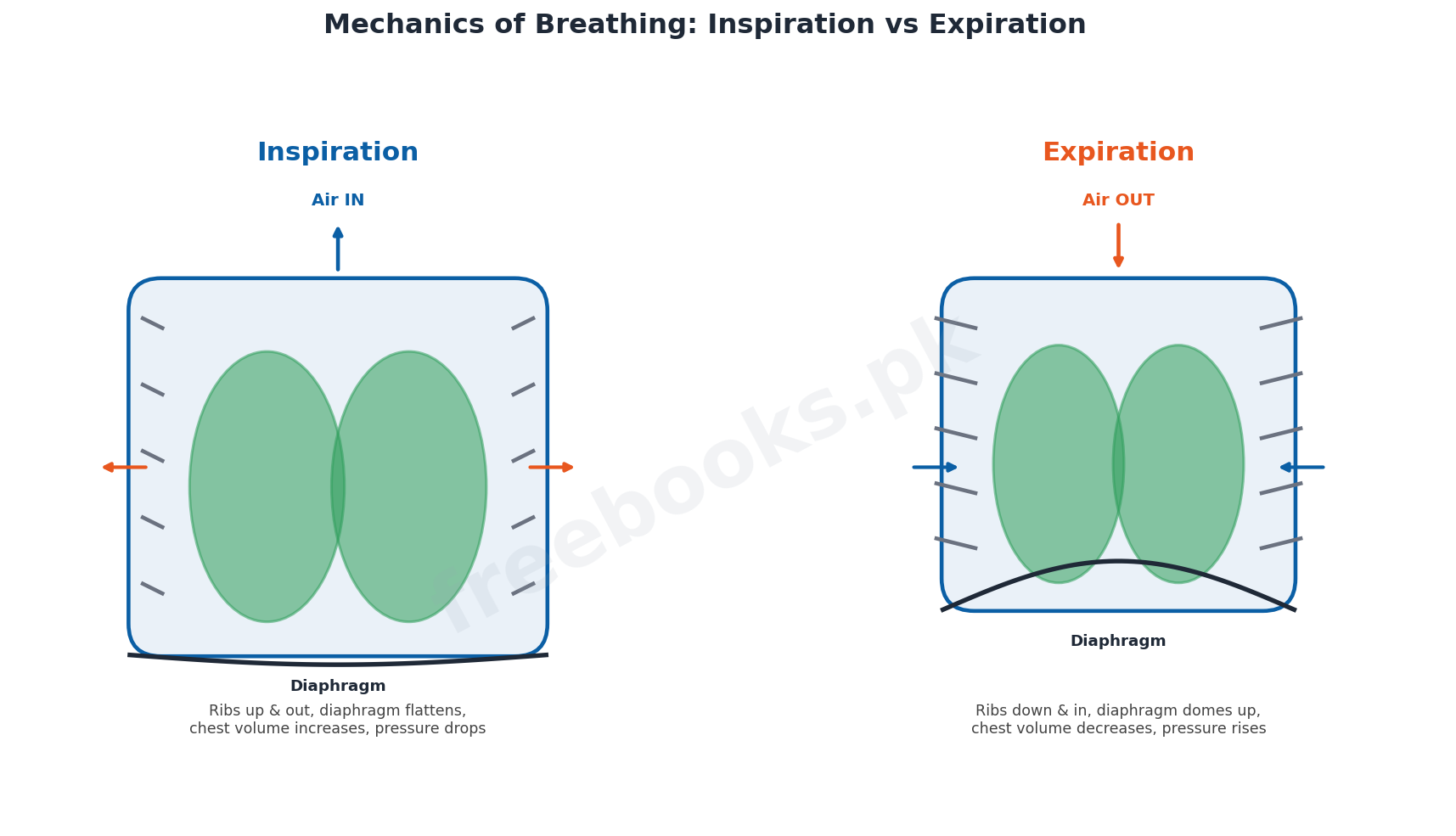
Breathing is a purely mechanical process with two phases. The lungs themselves are passive — they neither pull air in nor push it out; the diaphragm becomes less dome-like when its muscles contract and more dome-like when relaxed; and when the intercostal muscles between the ribs contract, the ribs are elevated, while relaxation lets them settle down. During inspiration, contraction of the rib muscles elevates the ribs upward and outward while the diaphragm contracts and flattens, together increasing the chest cavity's volume and reducing pressure on the lungs; the lungs expand, creating a partial vacuum into which air rushes from the higher-pressure atmosphere.
During expiration, the rib muscles relax (ribs move down and inward) and the diaphragm relaxes (becomes more dome-like), reducing chest cavity volume and exerting pressure on the lungs, forcing air out. Premature infants (less than about 7 months gestation) often lack enough surfactant — a lipoprotein mixture that reduces surface tension in the alveoli — leading to respiratory distress syndrome as the lungs tend to collapse.
Transport of Respiratory Gases
In humans, oxygen is carried mainly by the pigment haemoglobin in red blood cells, which combines reversibly with oxygen to form bright red oxyhaemoglobin (Hb + O2 <-> HbO2); a small amount of oxygen also dissolves directly in plasma. At sea level, fully oxygenated blood carries about 20 ml of oxygen per 100 ml of blood; at an oxygen pressure around 100 mm Hg (as in the lungs) haemoglobin is nearly fully saturated, but below about 60 mm Hg (as in tissues) oxygen saturation drops sharply, releasing oxygen where it is needed. Rising carbon dioxide, rising temperature, and falling pH (rising acidity) all decrease haemoglobin's affinity for oxygen, favouring oxygen release into actively respiring tissues.
Carbon dioxide, far more soluble than oxygen, is transported in blood in several forms: about 70% as bicarbonate ions (via carbonic acid formed with the help of carbonic anhydrase, CO2 + H2O <-> H2CO3 <-> H+ + HCO3-), about 20% bound to haemoglobin as carbaminohaemoglobin, about 5% carried by other plasma proteins, and a small amount carried combined with potassium in corpuscles; in the lungs these reactions reverse and carbon dioxide diffuses out into the alveoli. Common respiratory disorders include lung cancer (strongly linked to smoking, which causes about 90% of cases), tuberculosis (caused by Mycobacterium tuberculosis, associated with malnutrition and poor living conditions), asthma (an allergic, inflammatory narrowing of the bronchioles), and emphysema (breakdown of alveolar walls, mainly in smokers, reducing the surface area available for gas exchange).
Important Definitions
Respiration
The sum of processes (organismic/breathing and cellular) by which organisms obtain oxygen, release carbon dioxide, and extract usable energy (ATP) from food.
Gaseous exchange
The diffusion-driven exchange of oxygen and carbon dioxide between an organism's body fluids and the surrounding air or water.
Photorespiration
A light-dependent process in which rubisco fixes oxygen instead of carbon dioxide, releasing CO2 and reducing the rate of carbon fixation and plant growth.
Stomata
Small pores, mainly on leaves and young stems, that are the main sites of gaseous exchange in plants.
Tracheole
A fine, fluid-filled branch of the insect tracheal system that delivers oxygen directly to tissue cells by diffusion.
Alveolus
A microscopic, thin-walled air sac in the lung, surrounded by capillaries, where gaseous exchange with the blood occurs.
Haemoglobin
The iron-containing respiratory pigment in red blood cells that reversibly binds oxygen to form oxyhaemoglobin.
Emphysema
A respiratory disorder, common among smokers, in which alveolar walls break down and combine, reducing the surface area for gas exchange.
Key Facts
| Item | Fact |
|---|---|
| Oxygen content: air vs water | Fresh air has about 200 ml O2 per litre; water holds less than 10 ml O2 per litre. |
| O2 diffusion rate | Oxygen diffuses about 8000 times faster in air than in water. |
| Stomatal density | About 12,000 stomata per square centimetre of leaf surface in tobacco. |
| Air space in leaf | Mesophyll air spaces may comprise up to 40% of total leaf volume. |
| Cockroach spiracles | 10 pairs total – 2 pairs thoracic, 8 pairs abdominal, opening into the tracheal system. |
| Max O2 carried by blood | About 20 ml of oxygen per 100 ml of fully oxygenated blood at sea level. |
| CO2 transport in blood | About 70% as bicarbonate ions, about 20% as carbaminohaemoglobin, about 5% by plasma proteins. |
| Normal breathing rate | 15-20 breaths per minute at rest in humans; total lung capacity about 5 litres. |
Diagrams & Illustrations
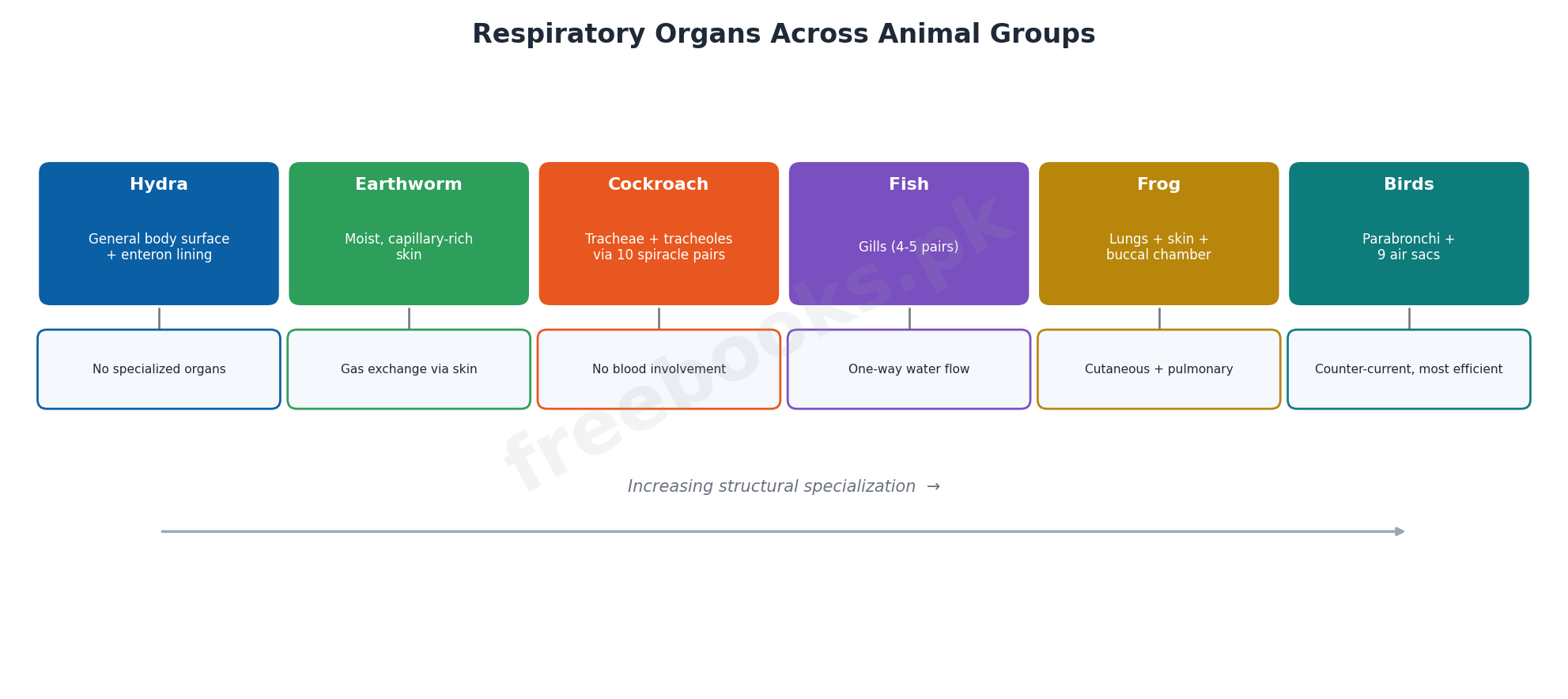
Respiratory Organs Across Animal Groups: a comparison chart of respiratory structures in different animals – the general body/enteron surface of Hydra, the moist skin of earthworm, the tracheal system of cockroach, the gills of fish, and the lungs/parabronchi and air sacs of frog and birds.
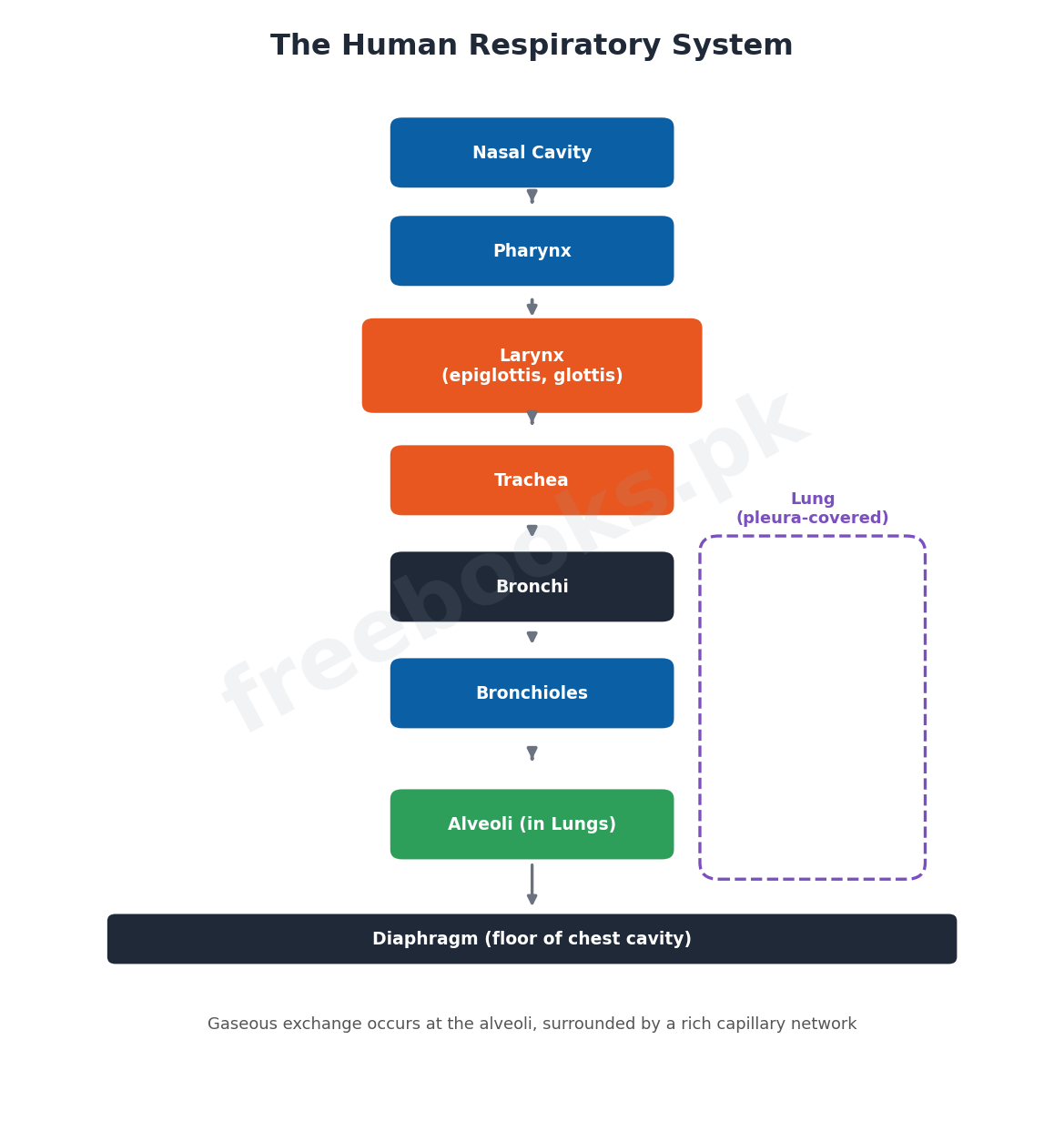
The Human Respiratory System: a labelled diagram of the human respiratory system showing the nasal cavity, pharynx, larynx, trachea, bronchi, bronchioles, alveoli/lungs and diaphragm.
Mechanics of Breathing: Inspiration and Expiration: a diagram comparing the position of the ribs and diaphragm during inspiration (ribs up and out, diaphragm flattened, chest volume increased) and expiration (ribs down and in, diaphragm domed, chest volume decreased).
Short Questions & Answers
Why is air a better respiratory medium than water?
Air contains far more oxygen per unit volume than water (about 200 ml/L versus less than 10 ml/L) and oxygen diffuses about 8000 times faster in air than in water, so gas exchange is much easier and faster in air.
What are stomata and lenticels?
Stomata are small pores, mainly on leaves and young stems, through which plants exchange gases; lenticels are pores in the dead cork tissue of older stems that serve the same purpose once stomata are no longer present.
What is photorespiration?
Photorespiration is a light-dependent process in which the enzyme rubisco fixes oxygen instead of carbon dioxide onto RuBP, releasing carbon dioxide instead of fixing it, which lowers the overall rate of carbon dioxide fixation and plant growth.
How does the cockroach's tracheal system deliver oxygen without using blood?
Air enters through spiracles into tracheae, which branch into fine fluid-filled tracheoles that directly surround tissues and cells, so oxygen diffuses straight from the tracheoles into the cells without needing to be carried by blood.
What is counter-current exchange in bird lungs, and why is it efficient?
In bird lungs, blood flows through the parabronchi in the opposite direction to airflow, which maintains a diffusion gradient along the full length of the parabronchus and allows more oxygen to be extracted from the air than in a system with unidirectional flow.
What is the function of the epiglottis?
The epiglottis is a cartilage flap in the larynx that folds down to cover the glottis (opening of the windpipe) during swallowing, preventing food or liquid from entering the respiratory passage.
Long Questions & Answers
Compare air and water as respiratory media, explaining the advantages and disadvantages of each.
Gaseous exchange in living organisms always occurs by diffusion across a moist respiratory surface, and the medium involved – air or water – strongly affects how easily this happens. Air is the better respiratory medium for two key reasons. First, the oxygen content of air is far higher than that of an equal volume of water: a litre of fresh air contains about 200 ml of oxygen, whereas a litre of water cannot hold even 10 ml of dissolved oxygen. Second, oxygen molecules diffuse roughly 8000 times faster through air than through water, because water molecules are far more tightly packed. Ventilation – the physical movement of the respiratory medium over the respiratory surface – is also much harder in water than in air, since water is about 8000 times denser than air and, in terms of viscosity, about 50 times more viscous; this means aquatic animals must expend considerably more energy moving water over their gills than terrestrial animals expend moving air over their lungs. As a result, aquatic animals such as fish have evolved highly efficient, richly vascularized gills with continuous one-way water flow to compensate for water's poorer properties as a respiratory medium, while air-breathing animals can rely on simpler ventilation mechanisms.
Describe gaseous exchange in plants, and explain the process and significance of photorespiration.
Unlike animals, plants possess no specialized respiratory organs or system; every living cell exchanges gases according to its own metabolic needs, and the vascular tissues (xylem and phloem) play no part in gas transport. In leaves, mesophyll cells specialized for photosynthesis are surrounded by extensive air spaces, which may make up as much as 40% of total leaf volume, and these air spaces connect to the atmosphere mainly through stomata – tiny pores concentrated on leaf surfaces (for example, about 12,000 stomata per square centimetre in tobacco) and, to a lesser extent, through lenticels in the cork tissue of older, woody stems. Roots obtain oxygen from air trapped between soil particles, while submerged aquatic plants absorb dissolved oxygen directly from the surrounding water. Photorespiration is a light-dependent process that occurs alongside photosynthesis: the enzyme rubisco, which normally fixes carbon dioxide onto ribulose bisphosphate (RuBP) during the Calvin cycle, can also act as an oxygenase and add oxygen to RuBP instead, producing a two-carbon compound called glycolate. This glycolate is processed through the peroxisomes and mitochondria (via glycine and serine), ultimately releasing carbon dioxide – effectively reversing the carbon-fixing work of the Calvin cycle and reducing net carbon fixation by up to 25% in many plants. Photorespiration becomes especially pronounced on hot, dry days, when stomata close to conserve water, causing oxygen to accumulate and carbon dioxide to become depleted inside the leaf, favouring rubisco's oxygenase activity over its carboxylase activity.
Describe respiratory organs and mechanisms in Hydra, earthworm, cockroach and fish.
Different animal groups show a progression in the specialization of respiratory structures. Hydra, a simple diploblastic organism, has no respiratory organs at all; gaseous exchange occurs by diffusion across its entire general body surface and across the lining of its digestive cavity (the gastrovascular cavity or enteron), both of which are in direct contact with surrounding water. The earthworm, though structurally more complex, likewise lacks specialized respiratory organs; instead, gas exchange takes place across its thin, richly capillarized skin, which is kept moist by secretions from epidermal mucous glands and by coelomic fluid exuded through dorsal pores, allowing oxygen to dissolve and diffuse into the underlying blood, where it combines with haemoglobin. The cockroach possesses a fully specialized tracheal respiratory system independent of the blood: air enters through 10 pairs of spiracles (openings on the body wall) into branching, chitin-lined tracheae, which divide further into extremely fine, fluid-filled tracheoles that penetrate directly among and within tissues, delivering oxygen straight to cells by diffusion; rhythmic contraction and expansion of the abdominal muscles pumps air in and out through the spiracles. Fish, being fully aquatic, respire through gills – highly vascularized, feathery structures arranged in four to five pairs near the head, over which water flows continuously and unidirectionally, entering through the mouth and exiting through gill openings or slits; the fish heart pumps deoxygenated blood in a single circuit directly to the gills, where it becomes oxygenated before being distributed to the rest of the body.
Explain the human air passageways from the nostrils to the alveoli, and describe the structure of the lungs.
Air entering the human respiratory system first passes through the nostrils into the nasal cavities, which are lined with ciliated mucous epithelium; here, larger dust particles are trapped by nasal hairs and mucus while the air itself is warmed, moistened and filtered of smaller particles. From the nasal cavities, air passes into the pharynx, a muscular, mucous-membrane-lined passage shared with the digestive tract, and then into the larynx (voice box), a cartilaginous structure whose epiglottis folds down during swallowing to cover the glottis (the opening of the larynx) and prevent food or liquid from entering the airway; the glottis itself is lined by two fibrous vocal cords involved in sound production. Below the larynx, the trachea (windpipe) – held permanently open by a series of C-shaped cartilage rings that prevent it from collapsing – descends into the thorax, where it divides into a right and a left bronchus, each entering a lung. Within the lungs, the bronchi divide and subdivide repeatedly into progressively smaller bronchi and then into bronchioles (tubes of 1 mm diameter or less), which lack cartilage and are composed mainly of smooth muscle. The bronchioles finally open into large numbers of air-sacs, the functional unit of the lung, each composed of many microscopic, single-layered alveoli; a dense network of blood capillaries overlies each alveolus, creating the actual site of gaseous exchange. The lungs themselves are spongy, elastic sacs housed within the chest cavity – bounded at the sides by the ribs and intercostal muscles and at the base by the diaphragm, a sheet of skeletal muscle – and each lung is enclosed by a double-layered membranous sac called the pleura.
Describe the mechanics of breathing in man, and explain how oxygen and carbon dioxide are transported in the blood.
Breathing in man is a purely mechanical process consisting of two alternating phases, inspiration and expiration, occurring rhythmically about 15 to 20 times per minute at rest. The lungs themselves are passive, elastic structures that cannot actively pull air in or push it out; movement of air depends instead on changes in the volume of the chest cavity, brought about by the diaphragm (a domed sheet of muscle at the floor of the chest, which flattens on contraction and domes upward on relaxation) and by the intercostal muscles between the ribs (which elevate the ribs on contraction and allow them to settle on relaxation). During inspiration, the rib muscles contract, lifting the ribs upward and outward, while the diaphragm simultaneously contracts and flattens; together these actions enlarge the chest cavity and lower the pressure around the lungs, causing the elastic lungs to expand and drawing air in from the higher-pressure atmosphere. During expiration, both sets of muscles relax – the ribs move downward and inward and the diaphragm resumes its domed shape – reducing the volume of the chest cavity, compressing the lungs, and forcing air back out. Once inhaled, oxygen diffuses across the thin alveolar and capillary walls into the blood, where it is carried mainly bound to haemoglobin in red blood cells as oxyhaemoglobin (Hb + O2 reversibly forming HbO2); at the high oxygen pressure found in the lungs haemoglobin becomes almost fully saturated, while at the lower oxygen pressures found in respiring tissues oxyhaemoglobin readily releases its oxygen, a process further favoured by rising carbon dioxide levels, higher temperature and lower pH in active tissues. Carbon dioxide produced by tissues is transported back to the lungs mostly (about 70%) as bicarbonate ions formed via carbonic acid with the help of the enzyme carbonic anhydrase, with smaller amounts carried bound to haemoglobin as carbaminohaemoglobin (about 20%) and dissolved in plasma proteins (about 5%); in the lungs, these reactions run in reverse, releasing carbon dioxide to diffuse out into the alveoli and be exhaled.
MCQs with Answers
The physical exchange of gases between an organism and its environment is called: (a) cellular respiration (b) organismic respiration (c) photorespiration (d) fermentation
Correct Answer: (b) organismic respiration. Organismic respiration (breathing/ventilation) is the physical exchange of gases with the environment, distinct from cellular respiration.
Oxygen diffuses fastest through: (a) water (b) air (c) soil (d) blood plasma alone
Correct Answer: (b) air. Oxygen diffuses about 8000 times faster in air than in water.
The main sites of gaseous exchange in leaves are the: (a) lenticels (b) stomata (c) root hairs (d) vascular bundles
Correct Answer: (b) stomata. Stomata, mainly on leaves and young stems, are the main sites of gaseous exchange in plants.
Photorespiration occurs when rubisco acts as a(n): (a) carboxylase only (b) oxygenase, adding O2 to RuBP (c) protease (d) kinase
Correct Answer: (b) oxygenase, adding O2 to RuBP. Photorespiration occurs when rubisco's oxygenase activity adds oxygen instead of carbon dioxide to RuBP.
In the cockroach, oxygen is delivered directly to tissues by: (a) haemoglobin in blood (b) tracheoles (c) gills (d) skin diffusion only
Correct Answer: (b) tracheoles. Fine, fluid-filled tracheoles deliver oxygen directly to tissue cells by diffusion, without blood involvement.
Counter-current exchange in bird lungs refers to: (a) blood and air flowing in the same direction (b) blood flowing opposite to airflow in the parabronchi (c) two-way air movement in alveoli (d) blood bypassing the lungs
Correct Answer: (b) blood flowing opposite to airflow in the parabronchi. Blood flow in bird lungs is opposite to the direction of airflow through the parabronchi, maximizing oxygen extraction.
The cartilage flap that covers the glottis during swallowing is the: (a) larynx (b) epiglottis (c) trachea (d) pharynx
Correct Answer: (b) epiglottis. The epiglottis folds down to cover the glottis during swallowing, preventing food or liquid from entering the airway.
During inspiration, the diaphragm: (a) relaxes and becomes more dome-like (b) contracts and becomes flatter (c) stays completely still (d) moves upward only
Correct Answer: (b) contracts and becomes flatter. During inspiration the diaphragm contracts and flattens, helping to increase chest cavity volume.
Most carbon dioxide is transported in blood as: (a) dissolved gas in plasma (b) carbaminohaemoglobin (c) bicarbonate ions (d) carbonic anhydrase
Correct Answer: (c) bicarbonate ions. About 70% of blood carbon dioxide is transported as bicarbonate ions.
Emphysema is a respiratory disorder involving: (a) excess mucus production only (b) breakdown of alveolar walls, reducing surface area (c) narrowing of the trachea (d) paralysis of the diaphragm
Correct Answer: (b) breakdown of alveolar walls, reducing surface area. Emphysema involves breakdown of alveolar walls, which combine into fewer, larger alveoli with reduced total surface area for gas exchange.
Quick Revision Summary
- Respiration = organismic (breathing/ventilation) + cellular (ATP production). Gas exchange always by diffusion, no active transport across respiratory membranes.
- Air > water as respiratory medium: ~200 ml O2/L in air vs <10 ml/L in water; O2 diffuses ~8000x faster in air; water is ~8000x denser and ~50x more viscous, harder to ventilate.
- Plants: no special respiratory organs; gas exchange via stomata (leaves/young stems, ~12,000/cm^2 in tobacco) and lenticels (older stems). Photorespiration: rubisco adds O2 to RuBP -> glycolate -> CO2 released, reduces carbon fixation ~25%.
- Animal respiratory organs: Hydra – general/enteron surface; Earthworm – moist skin; Cockroach – tracheae/tracheoles via spiracles (10 pairs), no blood involvement; Fish – gills, one-way water flow; Frog – lungs+skin+buccal chamber; Birds – parabronchi + air sacs, counter-current exchange, most efficient system.
- Man: nostrils -> nasal cavity -> pharynx -> larynx (epiglottis, glottis, vocal cords) -> trachea (cartilage rings) -> bronchi -> bronchioles -> alveoli (gas exchange site). Lungs in pleura, sit above diaphragm.
- Breathing mechanics: Inspiration = rib muscles + diaphragm contract -> chest volume up -> lungs expand -> air in. Expiration = both relax -> chest volume down -> air out.
- Gas transport: O2 via haemoglobin (Hb+O2<->HbO2, ~20ml O2/100ml blood at sea level); CO2 mainly (~70%) as bicarbonate, ~20% carbaminohaemoglobin, ~5% plasma proteins. Disorders: lung cancer (smoking), TB (Mycobacterium tuberculosis), asthma, emphysema. Notes by freebooks.pk.
Exam Tips
- Be clear on the difference between organismic respiration (breathing) and cellular respiration (ATP production) – a classic definition/differentiate question.
- Learn the two reasons air beats water as a respiratory medium: oxygen content and diffusion rate, plus density/viscosity for ventilation.
- Trace the animal respiratory organ progression: no organs (Hydra) -> skin (earthworm) -> tracheae (cockroach) -> gills (fish) -> lungs+skin (frog) -> parabronchi+air sacs (birds, most efficient).
- Memorise the human air passageway sequence in order: nostrils -> nasal cavity -> pharynx -> larynx -> trachea -> bronchi -> bronchioles -> alveoli.
- Understand inspiration vs expiration mechanics in terms of rib muscles, diaphragm shape, chest volume and pressure change – a very common long question.
- Know the CO2 transport percentages (bicarbonate ~70%, carbaminohaemoglobin ~20%, plasma proteins ~5%) and the factors (CO2, temperature, pH) that affect haemoglobin-oxygen binding.