
This chapter covers Fungi, the Kingdom of Recyclers, from the 1st Year (FSc Part-I) Biology syllabus of the Punjab Curriculum and Textbook Board (PTB/PCTB). Around 100,000 species of fungi are known, ranging from disastrous plant pathogens (rusts, smuts, molds) to prized delicacies (mushrooms, truffles, morels) and organisms of enormous commercial value such as Penicillium and yeasts. These notes are prepared by freebooks.pk.
The chapter explains why fungi occupy their own kingdom, separate from plants and animals, and works through the structure of the fungal body (mycelium and hyphae), fungal nutrition (saprotrophic, parasitic and predatory), the two key mutualistic associations of fungi (lichens and mycorrhizae), asexual and sexual reproduction, the classification of fungi into four major phyla, their adaptations to terrestrial life, and their far-reaching ecological and commercial importance.
Learning Objectives
- Discuss the taxonomic status of fungi and explain why they form a separate kingdom.
- Describe the fungal body plan: mycelium, hyphae, septate and coenocytic hyphae.
- Describe the modes of nutrition in fungi: saprotrophic, parasitic and predatory.
- Describe lichens and mycorrhizae as key mutualistic associations of fungi.
- Describe asexual reproduction (spores, conidia, fragmentation, budding) and sexual reproduction in fungi.
- Classify fungi into Zygomycota, Ascomycota, Basidiomycota and Deuteromycota with examples.
- Describe the land adaptations of fungi and their ecological and commercial importance.
Key Concepts
Taxonomic Status and Body Plan of Fungi
Approximately 100,000 species of fungi are known, and many more are estimated to exist; the group includes notorious pathogens such as rusts, smuts and molds, prized delicacies such as mushrooms, truffles and morels, and organisms of great commercial value such as Penicillium (source of the antibiotic penicillin) and yeasts (used in bakeries and breweries). The taxonomic status of fungi has changed from being treated as a group within the plant kingdom to forming their own separate kingdom, Fungi. Fungi resemble plants in having a cell wall, lacking centrioles, and being non-motile, but resemble animals more closely in being heterotrophic; unlike plants, fungi lack cellulose in their cell wall and instead contain chitin, the same chemical found in the external skeleton of arthropods, leading some mycologists to suspect fungi and animals share a common ancestor. However, fungi differ from animals too, being absorptive heterotrophs, non-motile, and possessing a cell wall; their DNA studies confirm they are distinct from plants, animals and protists, and they show a characteristic form of mitosis called nuclear mitosis, in which the nuclear envelope does not break down but instead the mitotic spindle forms within the nucleus and the nuclear membrane constricts between the two clusters of daughter chromosomes.
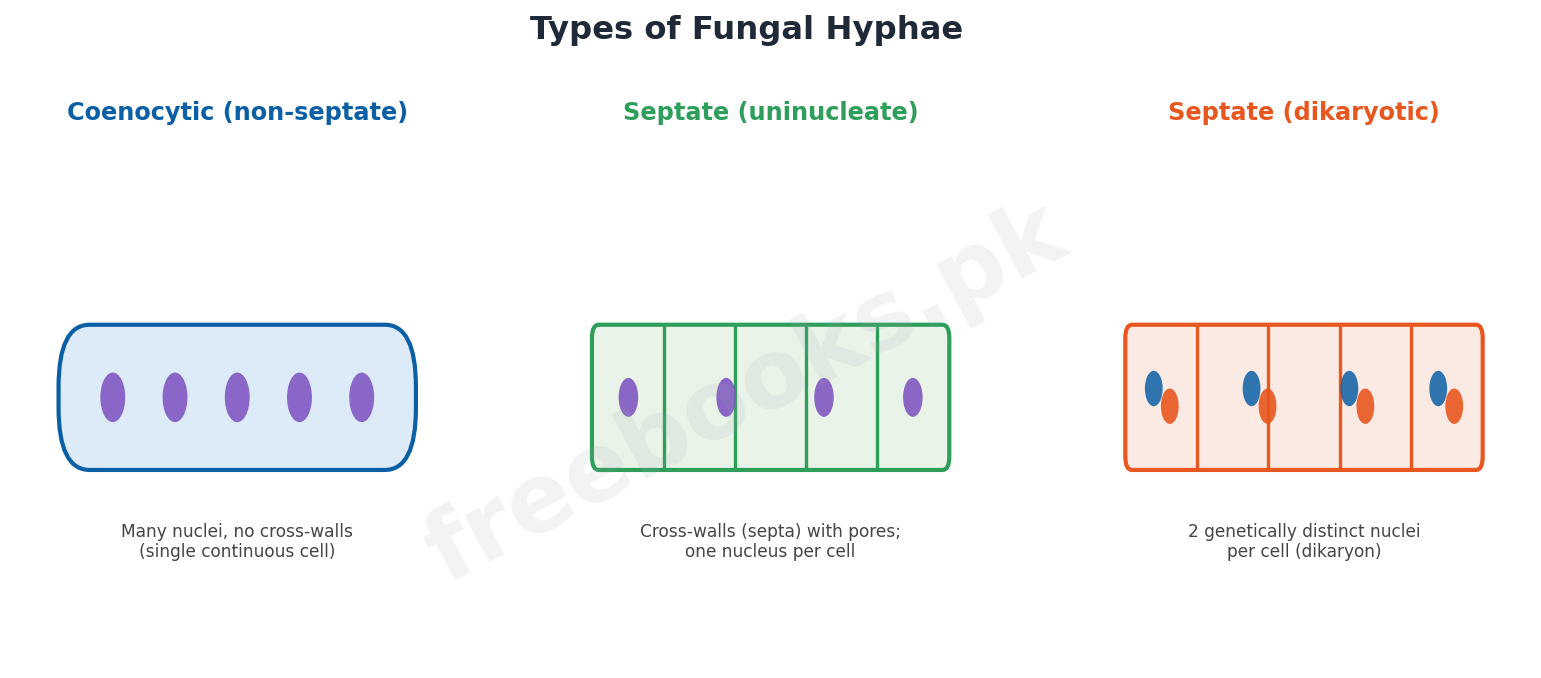
The body of a fungus, called the mycelium, consists of long, slender, branched, thread-like filaments called hyphae (singular hypha), which spread extensively over the substratum's surface; their chitin walls resist decay better than the cellulose and lignin of plant cell walls. Hyphae may be septate, divided into individual cells by cross-walls called septa (which often have pores allowing cytoplasm to flow between cells), or non-septate (coenocytic), forming a single, elongated, multinucleated cell in which cytoplasm flows freely, distributing materials throughout. All parts of a growing fungus are metabolically active, and its extensive hyphal network provides an enormous surface area for absorption; hyphae may organize into complex reproductive structures such as mushrooms, puffballs and morels. Yeasts are unusual, non-hyphal, unicellular fungi. Fungal nuclei are haploid except for the transient diploid zygote formed during sexual reproduction; a single mycelium can produce up to a kilometre of new hyphae in a single day, and a circular clone of the pathogenic fungus Armillaria has been measured covering up to 15 hectares, making it a contender for the world's largest organism.
Nutrition in Fungi: Saprotrophs, Parasites and Predators
All fungi lack chlorophyll and are heterotrophs, obtaining food by direct absorption from their environment — hence they are called absorptive heterotrophs. Most fungi are saprotrophs (saprobes), decomposers that obtain food directly from dead organic matter by secreting digestive enzymes that break it down externally, after which the resulting organic molecules are absorbed back into the fungus; saprobic fungi anchor to the substrate using modified hyphae called rhizoids. Fungi are the principal decomposers of cellulose and lignin, the main components of plant cell walls, which most bacteria cannot break down, making saprobic fungi (alongside bacteria) major decomposers in the biosphere and central to nutrient recycling.
Some fungi are parasites, obtaining nutrients directly from a living host's cytoplasm using specialized hyphal tips called haustoria; these may be obligate parasites (which can grow only on a living host, such as most mildews and rusts) or facultative parasites (which can also grow on artificial culture media). Some fungi are active predators: the oyster mushroom (Pleurotus ostreatus) paralyses and digests nematodes to obtain nitrogen while also breaking down wood for glucose, and species of Arthrobotrys trap soil nematodes using constricting hyphal rings before invading and digesting them.
Mutualistic Associations: Lichens and Mycorrhizae
Fungi form two key mutualistic symbiotic associations of benefit to both partners: lichens and mycorrhizae. Lichens are mutualistic associations between certain fungi (mostly Ascomycetes and imperfect fungi, with a few Basidiomycetes) and photoautotrophic partners — green algae, cyanobacteria, or sometimes both. Most of the visible lichen body is fungal tissue, with the algal partner living within the hyphae; the fungus protects the alga from strong light and desiccation, while the fungus obtains food from the alga's photosynthesis. Lichens can colonize harsh places, such as bare rocks, where neither partner could survive alone, and are ecologically important as bioindicators of air pollution because of their high sensitivity to it.
Mycorrhizae are mutualistic associations between certain fungi and the roots of vascular plants, present in about 95% of all vascular plant species. Fungal hyphae dramatically increase the root's soil contact and absorptive surface area, helping the plant absorb phosphorus, zinc, copper and other nutrients, while the plant supplies organic carbon to the fungus; plants with this association typically grow better than those without it. There are two main types: endomycorrhizae, in which fungal hyphae penetrate the outer root cells, forming coils, swellings and minute branches while also extending into the surrounding soil, and ectomycorrhizae, in which hyphae surround and extend between root cells without penetrating their walls, commonly found in association with pines and firs.
Asexual Reproduction in Fungi
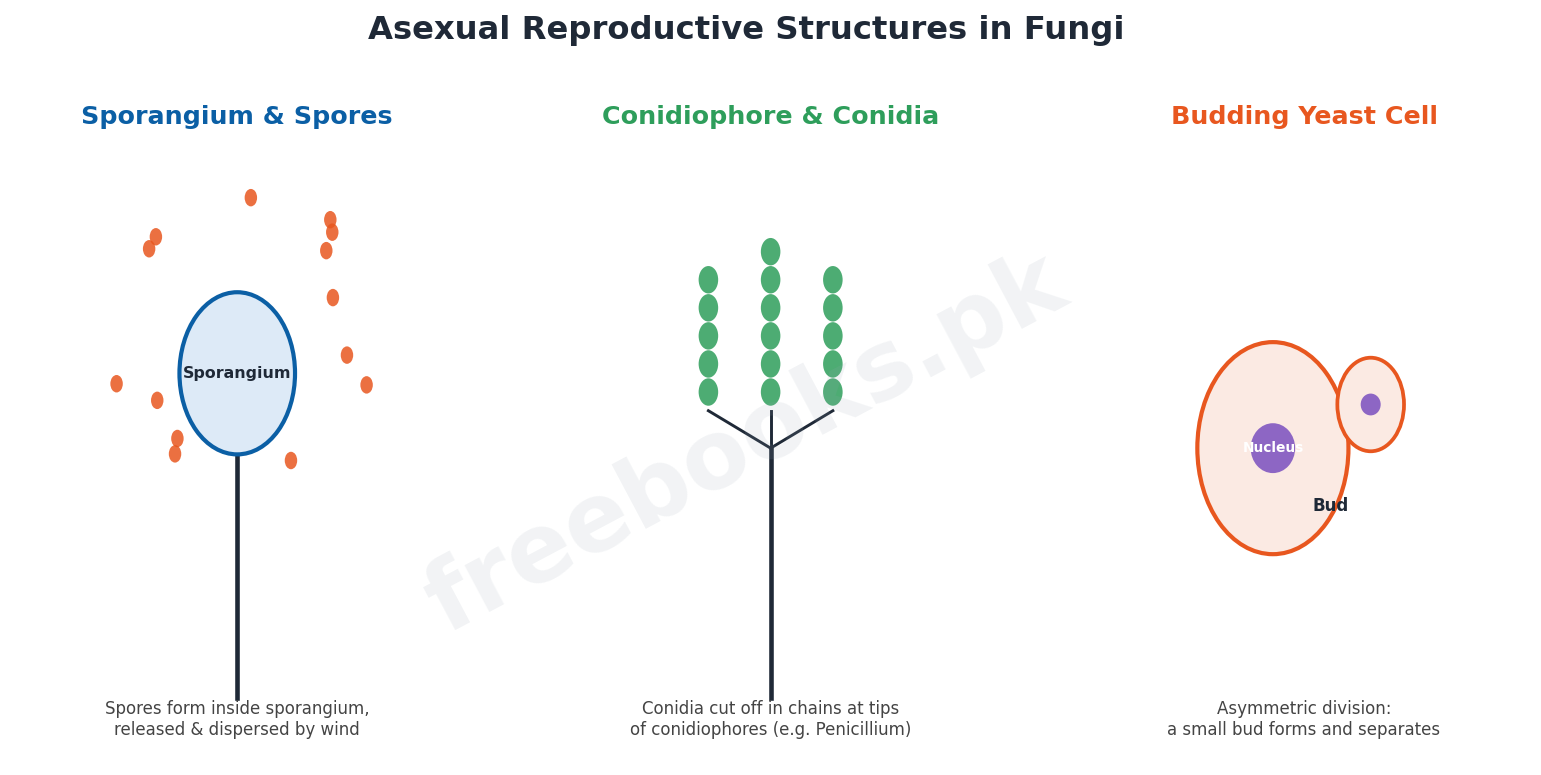
Most fungi (except imperfect fungi, in which sexual reproduction has never been observed) reproduce both asexually and sexually. Asexual reproduction occurs by spores, conidia, fragmentation, and budding. Spores are produced inside reproductive structures called sporangia, cut off from the hyphae by complete septa; they are haploid, non-motile, do not require water for dispersal, and are produced in enormous numbers, allowing wide dispersal by wind and causing the wide distribution of many fungi, including plant pathogens — when spores land in a suitable location, they germinate into new fungal hyphae. Conidia (singular conidium) are non-motile asexual spores cut off at the ends of modified hyphae called conidiophores, rather than inside sporangia, typically in chains or clusters; they may be produced in huge numbers, survive for weeks, and rapidly colonize new food sources.
Fragmentation is the simple breaking of a hyphal fungus's mycelium, with each fragment able to grow into a new mycelium. Unicellular yeasts reproduce asexually by budding, an asymmetric division producing a small outgrowth (bud) that may separate and grow into a new cell, or by simple, roughly equal cell division.
Sexual Reproduction in Fungi
Details of sexual reproduction vary among fungal groups, but the fusion of haploid nuclei followed by meiosis is common to all. During sexual reproduction, hyphae of two genetically different but compatible mating types come together, their cytoplasm fuses (plasmogamy), and this is eventually followed by fusion of the nuclei (karyogamy). In two of the three main sexually reproducing groups (Basidiomycetes and Ascomycetes), karyogamy does not occur immediately after plasmogamy; instead, the two genetically distinct haploid nuclei may coexist and divide together within the same hyphae for most of the fungus's life, producing a dikaryotic (or heterokaryotic) hypha or cell containing two nuclei of different genetic types.
Different fungal groups produce distinctive types of haploid sexual spores, such as basidiospores and ascospores, following meiosis in the zygote; these spores are typically produced within or upon characteristic fruiting bodies or structures, such as basidia/basidiocarps and asci/ascocarps.
Classification of Fungi: Four Major Phyla
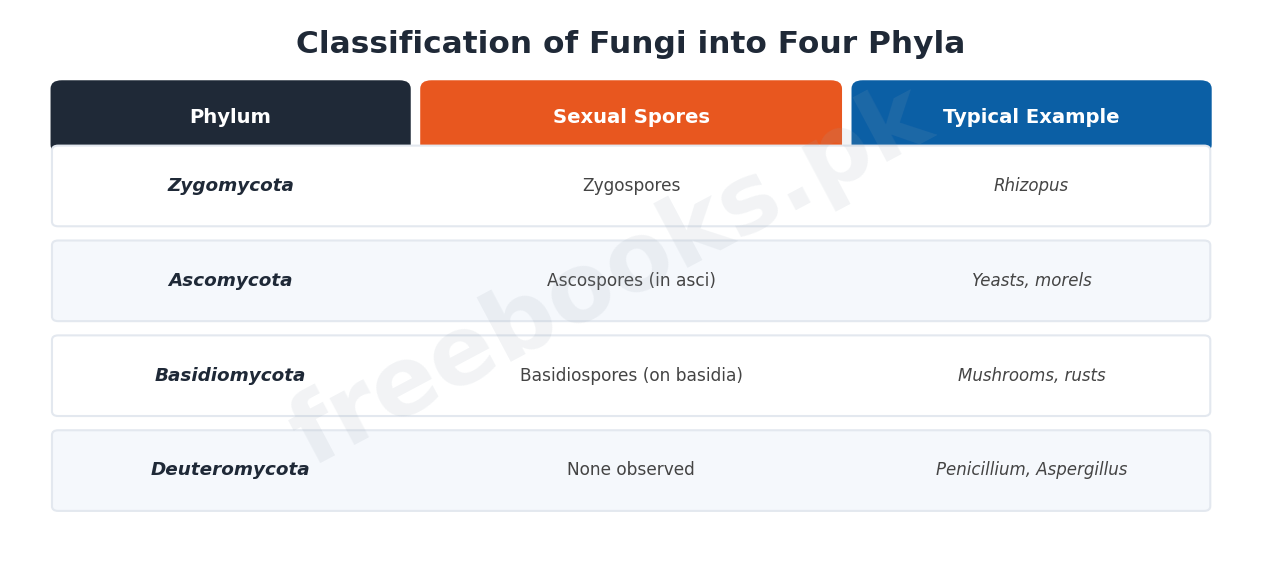
Fungi are classified into four main phyla, based primarily on their sexual reproductive structures and methods of reproduction, though hyphal type and other characters also differ between the groups. In Zygomycota (Zygomycetes, or conjugating fungi), such as Rhizopus (black bread mold), the fusion of hyphae directly forms a temporary, dormant, thick-walled resistant zygospore; meiosis occurs on germination, producing haploid spores, and hyphae are coenocytic. Ascomycota (Ascomycetes or sac fungi) is the largest group, with over 60,000 species including yeasts, morels, truffles and powdery mildews; they produce haploid ascospores by meiosis inside sac-like structures called asci (typically 8 ascospores per ascus), often within macroscopic fruiting bodies called ascocarps, have septate hyphae with a lengthy dikaryotic phase, and reproduce asexually via wind-dispersed conidia. Yeasts, mostly Ascomycetes, are unicellular fungi that mainly reproduce asexually by budding but can also reproduce sexually; they ferment glucose to ethanol and carbon dioxide, giving them major economic importance, with Saccharomyces cerevisiae the most widely exploited species.
Basidiomycota (Basidiomycetes or club fungi) includes edible mushrooms, plant-pathogenic rusts and smuts, puffballs, and bracket fungi; they are named for their club-shaped sexual structure, the basidium, where nuclear fusion is followed by meiosis, producing four haploid basidiospores borne externally on each basidium. Their hyphae are septate, uninucleate during part of the life cycle and dikaryotic for the remaining, lengthy phase, with visible mushrooms formed entirely of dikaryotic mycelium; Puccinia species are common rust fungi (named for rusty, orange-red disease spots) and Ustilago species are common smut fungi (named for their black, sooty spore masses that replace grain kernels in crops like wheat). Deuteromycota (Deuteromycetes or imperfect fungi) is a heterogeneous group in which no sexual phase has ever been observed; most are related to Ascomycetes, though some resemble Zygomycota or Basidiomycota, and if sexual structures are later discovered in an imperfect fungus, it is reassigned to the appropriate phylum. Important genera include Penicillium (blue/green molds, reproducing via conidia in chains on branched conidiophores) and Aspergillus; despite lacking sexual reproduction, imperfect fungi can still exchange genetic material through a process called parasexuality.
Land Adaptations of Fungi
Although fungi grow best in moist habitats, they are found wherever organic matter is present, making them a highly successful group of land organisms. Their extensive, fast-spreading hyphal system penetrates the substrate and dramatically increases contact area for absorption, with cytoplasmic flow throughout the hyphae driving rapid growth and spread; their chitin-reinforced hyphal walls resist decay better than the cellulose and lignin of plant walls, and fungi can even break down lignin to obtain nutrients. Rhizoids anchor saprobic fungi to the substrate while also digesting and absorbing food.
Fungi are well adapted to land life due to their lack of flagellated cells, their efficient wind dispersal of non-motile spores and conidia, and thick-walled zygotes and other resistant structures; some hyphae are modified to allow reproduction without dependence on external water. Many fungi tolerate hyperosmotic conditions (such as concentrated salt or sugar solutions in jams and jellies) and a wide pH and temperature range (roughly 2-9 pH; from below freezing to 50 degrees Celsius or more) better than bacteria — which is why molds such as Penicillium can grow on refrigerated oranges and jelly while bacteria generally cannot.
Importance of Fungi: Ecological and Commercial
Ecologically, fungi are vital decomposers and symbionts: alongside saprobic bacteria, they recycle inorganic nutrients through the ecosystem, without which essential nutrients would remain locked in dead organic matter and life would cease. Mycorrhizal fungi improve plant growth in about 95% of vascular plant species, lichens growing on rocks help break them down, contributing to ecological succession, lichens serve as sensitive bioindicators of air quality, and some fungi are used for bioremediation of environmental pollutants.
Commercially, fungi provide major economic gains: edible fungi include roughly 200 species of mushrooms, morels and truffles (though poisonous toadstools such as Amanita and jack-o'-lantern mushrooms must be avoided); yeasts are used in baking and brewing due to their fermenting ability, while Penicillium and Aspergillus species flavour cheeses and ferment soy products; fungi are also a source of drugs, including penicillin (discovered by Alexander Fleming in 1928 from Penicillium notatum), lovastatin, cyclosporine, and ergotine; and yeasts are heavily used in genetic research (the first eukaryote to have its genome fully sequenced, in 1996, was Saccharomyces cerevisiae). However, fungi also cause serious economic losses: plant diseases such as rusts, smuts, powdery mildews and root rots destroy crops; animal and human diseases such as ringworm, athlete's foot, candidiasis, histoplasmosis and aspergillosis are caused by various fungi; and saprobic fungi damage stored food, wood, fibre and leather, with 15-50% of the world's fruit lost annually to fungal attack, while some Aspergillus strains produce highly carcinogenic aflatoxins in improperly stored grain.
Important Definitions
Mycelium
The body of a fungus, made up of a network of long, branched, thread-like filaments called hyphae.
Hypha
A single thread-like filament of fungal tissue; many hyphae together form the mycelium.
Septum
A cross-wall dividing a fungal hypha into individual cells; septa often have pores allowing cytoplasm to flow between cells.
Coenocytic hyphae
Non-septate hyphae forming a single, elongated, multinucleated cell without internal cross-walls.
Rhizoid
A modified, root-like hypha that anchors a saprobic fungus to its substrate and helps absorb digested food.
Dikaryotic (cell/hypha)
A fungal cell or hypha containing two genetically different haploid nuclei that coexist without immediately fusing.
Mycorrhizae
Mutualistic associations between certain fungi and the roots of vascular plants that aid nutrient and water absorption.
Ascus
A sac-like reproductive structure in Ascomycetes in which meiosis produces (typically 8) haploid ascospores.
Key Facts
| Item | Fact |
|---|---|
| Known fungal species | Approximately 100,000 species described; many more estimated to exist. |
| Fungal cell wall | Chitin (not cellulose); shows nuclear mitosis (nuclear envelope does not fully break down). |
| Penicillin discovery | Alexander Fleming, 1928, from Penicillium notatum. |
| Four fungal phyla | Zygomycota, Ascomycota, Basidiomycota, Deuteromycota (Imperfect Fungi). |
| Ascomycota | Largest fungal group, 60,000+ species; ~8 ascospores per ascus. |
| Basidiomycota | 4 basidiospores borne externally on each club-shaped basidium. |
| Mycorrhizae prevalence | Found in about 95% of all kinds of vascular plants. |
| Yeast genome milestone | Saccharomyces cerevisiae – first eukaryote with a fully sequenced genome (1996). |
Diagrams & Illustrations
Types of Fungal Hyphae: a comparison of the three main hyphal types found in fungi – coenocytic (non-septate, multinucleate), septate uninucleate, and septate dikaryotic (with two genetically distinct nuclei per cell).
Asexual Reproductive Structures in Fungi: a labelled comparison of three asexual reproduction structures in fungi – a sporangium releasing spores, a conidiophore bearing chains of conidia, and a budding yeast cell.
Classification of Fungi into Four Phyla: a summary chart of the four fungal phyla – Zygomycota, Ascomycota, Basidiomycota and Deuteromycota – with their sexual spore type and a typical example.
Short Questions & Answers
What is a hypha? What is the advantage of having incomplete (porous) septa?
A hypha is a single, thread-like filament of fungal tissue that makes up the mycelium. Incomplete (porous) septa allow cytoplasm and nutrients to flow freely from cell to cell along the hypha, enabling rapid growth toward food and water when conditions are favourable.
What is the composition of the fungal cell wall, and how is this advantageous to fungi?
The fungal cell wall is composed mainly of chitin, the same tough polysaccharide found in the exoskeleton of arthropods; chitin is more resistant to decay than the cellulose and lignin of plant cell walls, helping protect fungal hyphae as they grow through and digest organic substrates.
To which phylum do yeasts mostly belong? How do they differ from other fungi?
Most yeasts belong to Ascomycota, though yeasts are also found among Basidiomycota. Unlike most fungi, yeasts are unicellular and non-hyphal, and they typically reproduce asexually by budding rather than forming an extensive mycelium.
What are mycorrhizae?
Mycorrhizae are mutualistic associations between certain fungi and the roots of vascular plants, in which the fungus improves the plant's absorption of water and nutrients like phosphorus and zinc, while the plant supplies the fungus with organic carbon; about 95% of vascular plants form this association.
Differentiate ascus and basidium.
An ascus is a sac-like structure in Ascomycetes in which meiosis produces haploid ascospores (typically 8) enclosed within it, whereas a basidium is a club-shaped structure in Basidiomycetes on which four haploid basidiospores are borne externally, not enclosed.
Why is green mold more likely to contaminate a refrigerated orange than bacteria are?
Fungi such as Penicillium tolerate a wider range of temperature (including cold, refrigerator-level temperatures) and higher osmotic pressure than most bacteria, allowing molds to grow on refrigerated food where bacterial growth is inhibited.
Long Questions & Answers
Discuss the taxonomic status of fungi.
Fungi were once classified as a group within the plant kingdom because, like plants, they possess a cell wall, lack centrioles, and are non-motile. However, unlike plants, fungi are heterotrophic, lack chlorophyll, and their cell walls are made of chitin rather than cellulose, a compound also found in the exoskeletons of arthropods; this chitin composition, along with certain similarities in metabolism, has led some mycologists to hypothesize that fungi and animals may share a common ancestor. Yet fungi also differ clearly from animals: they possess a cell wall, are absorptive rather than ingestive heterotrophs, and are non-motile throughout their life cycle. Molecular (DNA) studies further confirm that fungi are genetically distinct from plants, animals and protists. Fungi additionally exhibit a unique form of cell division called nuclear mitosis, in which the nuclear envelope does not break down as it does in typical eukaryotic mitosis; instead, the mitotic spindle forms inside the nucleus, and the nuclear membrane constricts between the separating groups of chromosomes. Because of this combination of unique structural, biochemical, and genetic characteristics, fungi are now recognized as a wholly separate kingdom, Fungi, distinct from Plantae, Animalia and Protista.
Summarize the differentiating characteristics of the four main groups of fungi, giving two examples of each.
Fungi are classified into four phyla based mainly on their sexual reproductive structures. Zygomycota (Zygomycetes), such as Rhizopus (black bread mold) and Pilobolus, have coenocytic (non-septate) hyphae and reproduce sexually by forming a thick-walled resting zygospore directly from fused hyphae, with asexual non-motile spores formed in sporangia. Ascomycota (Ascomycetes or sac fungi), such as yeasts and morels, have septate hyphae with a lengthy dikaryotic phase, produce haploid ascospores (typically 8 per ascus) inside sac-like asci often within visible ascocarps, and reproduce asexually via conidia cut off from conidiophores. Basidiomycota (Basidiomycetes or club fungi), such as mushrooms and rust or smut fungi (e.g. Puccinia, Ustilago), also have septate hyphae with a long dikaryotic phase, and bear four haploid basidiospores externally on club-shaped basidia following nuclear fusion and meiosis, with asexual reproduction being uncommon in this group. Deuteromycota (Deuteromycetes or imperfect fungi), such as Penicillium and Aspergillus, show no observed sexual phase and reproduce only by conidia; if sexual structures are ever discovered in one of these fungi, it is reclassified into the appropriate phylum, and modern DNA sequencing now allows most imperfect fungi to be classified even without any sexual structures being found.
State the various features of fungi that adapt them to a terrestrial mode of life.
Fungi possess several structural and reproductive features that suit them to life on land. Their extensive, fast-spreading system of hyphae penetrates the substrate and dramatically increases the surface area available for absorption, while continuous cytoplasmic flow through the hyphae supports their rapid growth and spread. Their hyphal walls, reinforced with chitin, resist decay far better than the cellulose and lignin found in plant cell walls, and fungi can even break down lignin itself to obtain nutrients; modified hyphae called rhizoids anchor saprobic fungi to their substrate while simultaneously digesting and absorbing food. Fungi lack flagellated cells at any stage, and instead rely on non-motile spores and conidia that are efficiently dispersed over long distances by wind, along with thick-walled, resistant zygotes and other dormant structures that allow them to survive unfavourable periods; some hyphae are modified so that reproduction does not depend on external water. Fungi are also generally more tolerant than bacteria of hyperosmotic conditions, such as the concentrated sugar or salt found in jams and jellies, and can survive a wide range of temperature, from several degrees below freezing to 50 degrees Celsius or more, which is why molds like Penicillium can grow even on refrigerated food.
Discuss the ecological importance of saprotrophic fungi, lichens and mycorrhizae.
Saprotrophic fungi are, alongside bacteria, the principal decomposers in the biosphere; they break down dead organic matter, including cellulose and lignin that most bacteria cannot digest, recycling carbon, nitrogen, phosphorus and other essential nutrients back into the ecosystem. Without this decomposing activity, nutrients would remain locked up in dead plant and animal material, becoming unavailable to living organisms, and ecosystems would eventually collapse. Lichens, mutualistic associations of fungi with algae or cyanobacteria, are ecologically significant as pioneer organisms: growing on bare rock, they gradually break it down, helping initiate ecological succession in barren habitats; because lichens are extremely sensitive to atmospheric pollutants, they are also widely used as bioindicators of air quality. Mycorrhizae, mutualistic associations between fungi and the roots of about 95% of vascular plant species, dramatically increase the root surface area available for absorbing water and minerals such as phosphorus, zinc and copper from the soil, resulting in markedly improved plant growth compared to plants lacking this association, while the fungus in turn receives organic carbon from its plant partner.
Fungal enzymes are useful on one hand and harmful on the other. Discuss.
Fungi secrete powerful extracellular enzymes capable of breaking down cellulose, lignin, and even cutin, and these enzymes underlie both fungi's great benefits and their significant harms. On the beneficial side, these enzymes allow saprotrophic fungi to decompose dead organic matter, recycling nutrients through ecosystems; fermenting enzymes in yeasts convert glucose to ethanol and carbon dioxide, underpinning the baking and brewing industries, while other fungal enzymes are exploited to flavour cheeses, ferment soy sauce and soy paste, and produce citric acid. Fungal enzymes and metabolic products are also the source of important drugs, including the antibiotic penicillin (from Penicillium notatum), the cholesterol-lowering drug lovastatin, the immunosuppressant cyclosporine, and ergotine used for migraine relief. On the harmful side, the very same class of digestive enzymes allows fungi to attack living plants, breaking down cellulose, lignin and cutin in crop tissues and causing devastating diseases such as rusts, smuts, powdery mildews and root rots, historically contributing to famine and mass displacement of people. Saprotrophic enzymes that are ecologically beneficial in nature become economically damaging when they degrade stored food, timber, fibre and leather, destroying an estimated 15-50% of the world's fruit harvest each year, while some fungal enzymes and metabolic byproducts, such as the aflatoxins produced by certain Aspergillus strains on improperly stored grain, are highly carcinogenic and pose serious health risks.
MCQs with Answers
The fungal cell wall is primarily composed of: (a) cellulose (b) chitin (c) lignin (d) peptidoglycan
Correct Answer: (b) chitin. Fungal cell walls are made mainly of chitin, unlike plant cell walls, which contain cellulose.
The characteristic type of mitosis seen in fungi, in which the nuclear envelope does not fully break down, is called: (a) meiosis (b) amitosis (c) nuclear mitosis (d) binary fission
Correct Answer: (c) nuclear mitosis. Fungi show nuclear mitosis, in which the spindle forms inside the nucleus and the envelope constricts rather than disappearing.
Penicillin was first discovered in 1928 by: (a) Robert Koch (b) Alexander Fleming (c) Louis Pasteur (d) Anton van Leeuwenhoek
Correct Answer: (b) Alexander Fleming. Alexander Fleming discovered penicillin in 1928 from the fungus Penicillium notatum.
Ascospores are produced inside a sac-like structure called the: (a) basidium (b) ascus (c) conidium (d) sporangium
Correct Answer: (b) ascus. Ascospores (usually 8 per structure) are produced by meiosis inside a sac-like ascus in Ascomycetes.
A club-shaped structure that bears basidiospores externally is called a: (a) ascus (b) conidiophore (c) basidium (d) zygospore
Correct Answer: (c) basidium. The basidium is the club-shaped sexual reproductive structure of Basidiomycetes, bearing basidiospores externally.
Rhizopus, the black bread mold, belongs to the phylum: (a) Ascomycota (b) Basidiomycota (c) Zygomycota (d) Deuteromycota
Correct Answer: (c) Zygomycota. Rhizopus is a classic Zygomycete, forming a resistant zygospore from fused hyphae.
Fungi in which no sexual reproductive phase has ever been observed are grouped as: (a) Zygomycota (b) Ascomycota (c) Basidiomycota (d) Deuteromycota
Correct Answer: (d) Deuteromycota. Deuteromycota (imperfect fungi) is a heterogeneous group lacking any observed sexual phase.
Mycorrhizae are mutualistic associations between fungi and: (a) algae (b) cyanobacteria (c) roots of vascular plants (d) arthropod exoskeletons
Correct Answer: (c) roots of vascular plants. Mycorrhizae form between certain fungi and the roots of about 95% of vascular plant species.
A lichen is a mutualistic association between a fungus and: (a) a green alga and/or cyanobacterium (b) a vascular plant root (c) an arthropod (d) a protozoan
Correct Answer: (a) a green alga and/or cyanobacterium. Lichens are associations between a fungus and a photoautotroph – a green alga, a cyanobacterium, or both.
Aflatoxins, highly carcinogenic mycotoxins found in improperly stored grain, are produced by: (a) Penicillium (b) Aspergillus (c) Rhizopus (d) Saccharomyces
Correct Answer: (b) Aspergillus. Certain strains of Aspergillus produce aflatoxins, among the most carcinogenic mycotoxins known.
Quick Revision Summary
- Fungi = separate kingdom: heterotrophic, chitin cell wall, non-motile, nuclear mitosis; ~100,000 known species.
- Body = mycelium (network of hyphae); hyphae may be septate (with pores) or coenocytic (non-septate, multinucleate); dikaryotic cells have 2 genetically distinct nuclei.
- Nutrition: saprotrophic (decomposers, rhizoids), parasitic (obligate/facultative, haustoria), predatory (e.g. Arthrobotrys traps nematodes).
- Mutualisms: Lichens (fungus + alga/cyanobacterium, bioindicators) and Mycorrhizae (fungus + plant roots, ~95% of vascular plants; endo- vs ecto-mycorrhizae).
- Reproduction: Asexual (spores in sporangia, conidia on conidiophores, fragmentation, budding); Sexual (plasmogamy -> [dikaryotic stage] -> karyogamy -> meiosis -> ascospores/basidiospores).
- 4 Phyla: Zygomycota (zygospores, coenocytic, e.g. Rhizopus), Ascomycota (ascospores in asci, e.g. yeasts, morels), Basidiomycota (basidiospores on basidia, e.g. mushrooms, rusts, smuts), Deuteromycota (no sexual phase, e.g. Penicillium, Aspergillus).
- Importance: decomposers & nutrient recycling, mycorrhizae improve plant growth, source of food/antibiotics/drugs (penicillin, lovastatin, cyclosporine); also cause plant/animal diseases and food/wood spoilage. Notes by freebooks.pk.
Exam Tips
- Learn why fungi are neither plants nor animals — list the plant-like and animal-like traits separately, then the traits unique to fungi (chitin wall, nuclear mitosis, absorptive heterotrophy).
- Be ready to differentiate: septate vs coenocytic hyphae; ascus vs basidium; endomycorrhizae vs ectomycorrhizae; obligate vs facultative parasite; plasmogamy vs karyogamy.
- Memorise the 4 phyla with 1 key example + spore type each — a very common table-style exam question.
- Know the Penicillin discovery story (Fleming, 1928, Penicillium notatum) and other named drugs (lovastatin, cyclosporine, ergotine).
- Practise the terrestrial adaptation list (chitin wall, wind-dispersed spores, no flagellated cells, tolerance of extreme pH/temperature/osmotic pressure).
- Revise both sides of fungal importance — economic gains (food, drugs, industry) vs economic losses (plant/animal disease, food spoilage, aflatoxins) — as this is a favourite "discuss" question.