
This chapter covers Kingdom Prokaryotae (Monera) from the 1st Year (FSc Part-I) Biology syllabus of the Punjab Curriculum and Textbook Board (PTB/PCTB). It traces the discovery of bacteria from Leeuwenhoek's first "animalcules" through Pasteur and Koch's germ theory of disease, then works through bacterial size, shape, and every major structural feature, from flagella and pili to the nucleoid, plasmids and endospores. These notes are prepared by freebooks.pk.
The chapter also covers bacterial nutrition, respiration, growth and reproduction, their enormous ecological, economic and medical importance, and the physical, chemical and medical methods used to control them, including antibiotics and their misuse. It closes with cyanobacteria (blue-green algae) and the genus Nostoc, an important photosynthetic prokaryote in its own right.
Learning Objectives
- Describe the discovery of bacteria and state Koch's postulates.
- Describe the size and the three main shapes of bacteria, with their arrangements.
- Describe bacterial cell structure: flagella, pili, capsule, cell wall and the Gram staining difference.
- Describe the nucleoid, plasmids, ribosomes and storage structures of a bacterial cell.
- Differentiate autotrophic and heterotrophic nutrition and aerobic and anaerobic respiration in bacteria.
- Describe binary fission and the four phases of the bacterial growth curve.
- Describe the ecological, economic and medical importance of bacteria and the methods used to control them.
- Describe the general characteristics of cyanobacteria, with reference to Nostoc.
Key Concepts
Discovery and Occurrence of Bacteria
Kingdom Prokaryotae consists of organisms with prokaryotic cells (Greek pro, "before", and karyon, "nucleus"), divided by microbiologists into eubacteria ("true bacteria") and the much smaller group of archaeobacteria ("ancient bacteria"). Bacteria could only be discovered once the microscope was invented; the Dutch scientist Antonie van Leeuwenhoek (1673) was the first to observe and accurately describe bacteria and protozoa, which he called "animalcules", first in rainwater and later in saliva and other substances. Louis Pasteur later confirmed the importance of these tiny organisms, developing vaccines for anthrax, fowl cholera and rabies, pioneering the pasteurization process, and proving that microorganisms can cause disease. Robert Koch formulated the germ theory of disease through four postulates still used to establish whether an organism causes a specific disease: it must always be found with the disease; it can be isolated and grown in pure culture; the pure culture must reproduce the disease in a susceptible animal; and the organism must be recoverable in pure culture from that experimentally infected animal.
Bacteria are found almost everywhere — in air, soil, water, food, decaying matter, and in and on plants, animals and humans — with some contributing to the normal (natural) flora of an environment and others restricted to extreme habitats such as hot springs or highly saline or acidic environments.
Size and Shape of Bacteria
Bacteria range enormously in size, from about 0.1 to 600 micrometres in a single dimension. The smallest, such as some Mycoplasma species, are only about 0.1-0.2 micrometres across, similar to the largest viruses, while Escherichia coli, an average-sized bacillus, measures about 1.1-1.5 by 2.0-6.0 micrometres; some spirochetes reach 500 micrometres, and the recently discovered Epulopiscium fishelsoni can grow to 600 by 80 micrometres, larger than many eukaryotic cells.
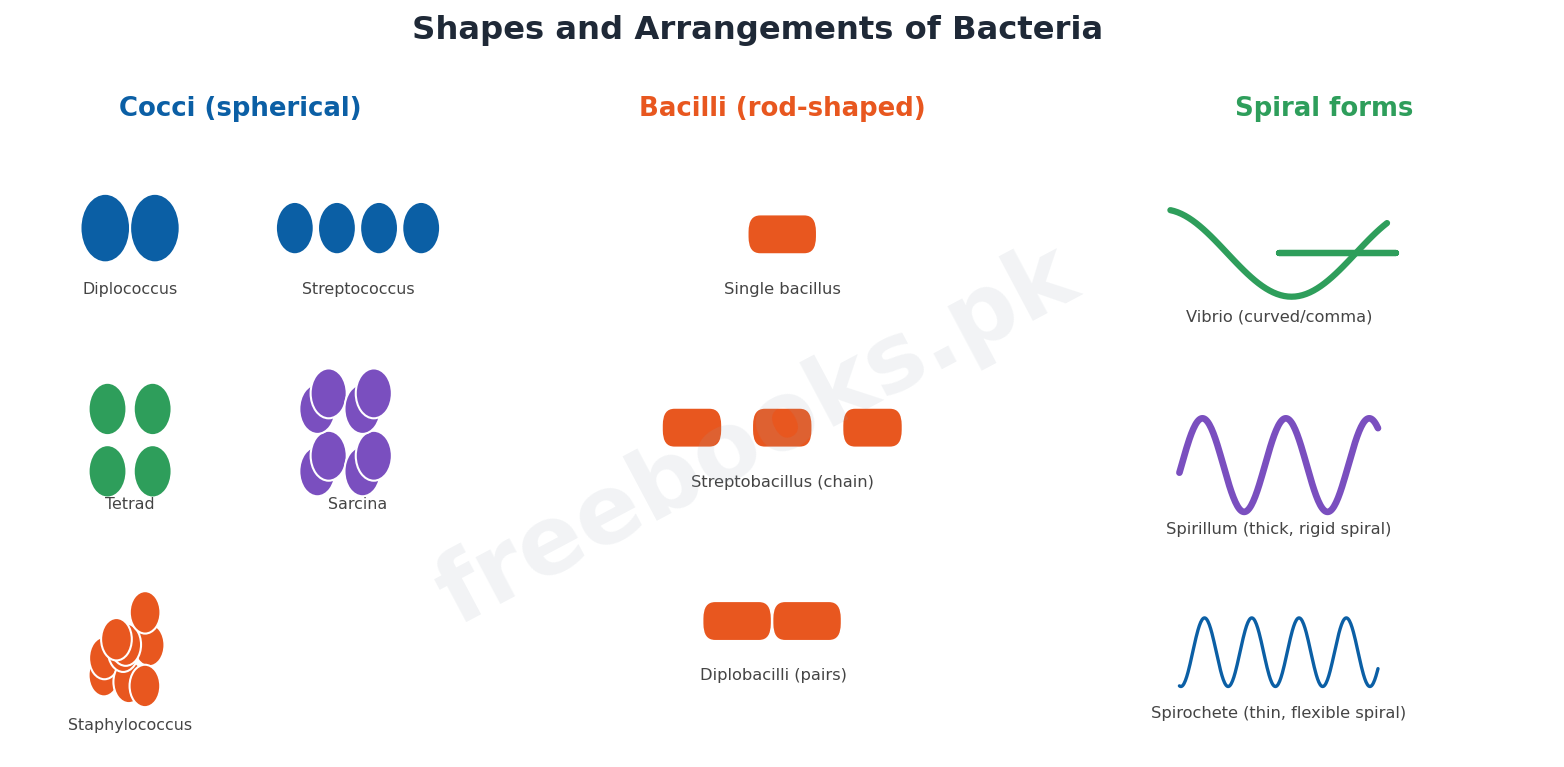
Bacteria are classified by general shape into three main categories: cocci (spherical or oval), bacilli (rod-shaped), and spiral forms, though some bacteria are pleomorphic and can take a variety of shapes. Cocci form different arrangements depending on their plane(s) of division: division in one plane gives a diplococcus (pairs) or streptococcus (chains) arrangement, division in two planes gives a tetrad (a square of 4 cocci), division in three planes gives a sarcina (a cube of 8 cocci), and division in random planes gives a staphylococcus (irregular, grape-like clusters, as in Staphylococcus aureus). Bacilli divide in one plane only, giving a single bacillus, a chain (streptobacillus), or pairs (diplobacilli), as seen in Escherichia coli. Spiral bacteria occur as a vibrio (curved, comma-shaped), a spirillum (thick, rigid spiral) or a spirochete (thin, flexible spiral).
Bacterial Cell Structure: Appendages and Cell Envelope
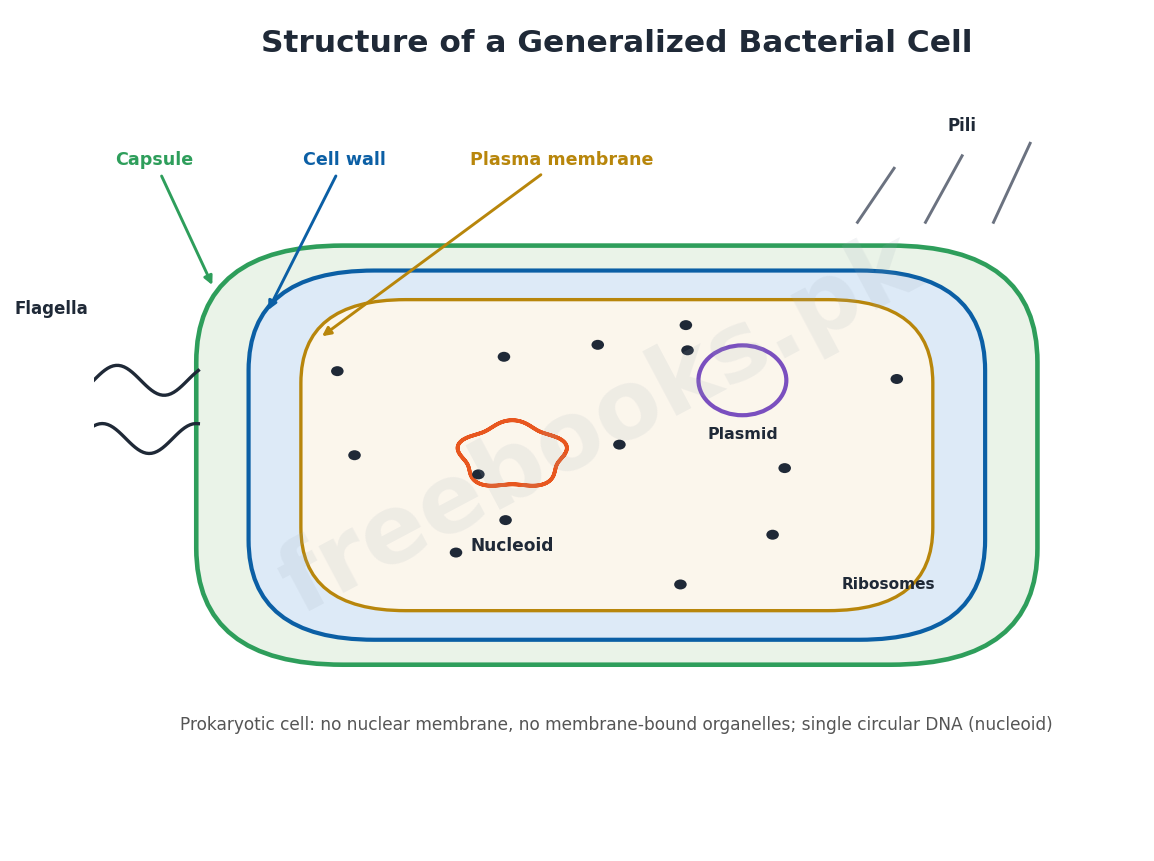
Flagella are thin, hair-like appendages made of the protein flagellin, anchored in a basal body beneath the cell membrane; bacteria are classified by their flagellar arrangement as atrichous (no flagella), monotrichous (one polar flagellum), lophotrichous (a tuft at one pole), amphitrichous (a tuft at each pole) or peritrichous (flagella all over the cell). Flagella provide motility and allow chemotaxis, movement toward or away from chemical signals. Pili are smaller, hollow, non-helical appendages made of the protein pilin, found mainly on Gram-negative bacteria; unlike flagella they are not used for movement but instead help bacteria attach to surfaces or, in the case of specialized sex pili, transfer genetic material during conjugation.
The layers external to the cell protoplasm together form the cell envelope: the capsule (a thick, gummy, tightly bound layer of polysaccharide and/or protein that increases pathogenicity), slime (a looser, soluble layer that also increases pathogenicity and resists phagocytosis), and the rigid cell wall, which determines the cell's shape and protects it from osmotic lysis (absent only in mycoplasmas). Using the Gram stain technique developed by Christian Gram, bacteria are classified as Gram-positive (retain the purple primary dye, thicker single-layer wall rich in peptidoglycan, about 20-80 nm thick) or Gram-negative (retain the pink secondary dye, thinner wall with an additional outer membrane of lipopolysaccharides and lipoproteins, about 8-11 nm thick, and much less peptidoglycan). Archaeobacteria cell walls differ from both, lacking peptidoglycan altogether and being made instead of proteins, glycoproteins and polysaccharides.
Internal Structure: Nucleoid, Plasmids and Storage Structures
Beneath the cell wall lies the delicate plasma membrane, which regulates transport and carries respiratory enzymes; unlike eukaryotic membranes, bacterial membranes lack sterols such as cholesterol. The cytoplasmic matrix is a gel-like substance lacking membrane-bound organelles or a cytoskeleton, within which the nucleoid (also called the chromatin body or nuclear region) is found: a single, circular, double-stranded DNA molecule tightly folded near the centre of the cell, making bacteria haploid (they lack the discrete chromosomes and nuclear membrane of eukaryotes). Many bacteria also carry plasmids, smaller circular DNA molecules that are self-replicating and not essential for normal growth but often carry genes for drug resistance; plasmids are important vectors in genetic engineering.
Bacterial ribosomes, smaller than eukaryotic ribosomes, are the site of protein synthesis and may be free or loosely attached to the plasma membrane. Mesosomes are membrane invaginations involved in DNA replication, cell division and enzyme export. Bacteria store surplus nutrients such as glycogen, sulphur, fat or phosphate as granules when conditions allow. Under adverse conditions, certain bacteria form spores (dormant, resistant bodies, either exospores or endospores) or cysts (dormant, thick-walled but not heat-resistant forms), both of which can germinate into normal vegetative cells once favourable conditions return.
Nutrition and Respiration in Bacteria
Most bacteria are heterotrophic, unable to make their own organic compounds and living either as saprophytes (obtaining food from dead organic matter such as humus in soil) or as parasites (fully dependent on a host). Some bacteria are autotrophic, synthesizing their own organic compounds from inorganic substances, and are divided into photosynthetic autotrophs (which contain a form of chlorophyll dispersed in the cytoplasm rather than in chloroplasts, and use hydrogen sulphide instead of water as a hydrogen source, releasing sulphur instead of oxygen) and chemosynthetic autotrophs (such as nitrifying bacteria, which oxidize inorganic compounds like ammonia, nitrate or sulphur to release energy).
Respiration in bacteria may be aerobic (requiring free oxygen), anaerobic (not requiring oxygen), facultative (able to grow with or without oxygen), or microaerophilic (requiring only a low oxygen concentration).
Growth, Reproduction and Importance of Bacteria
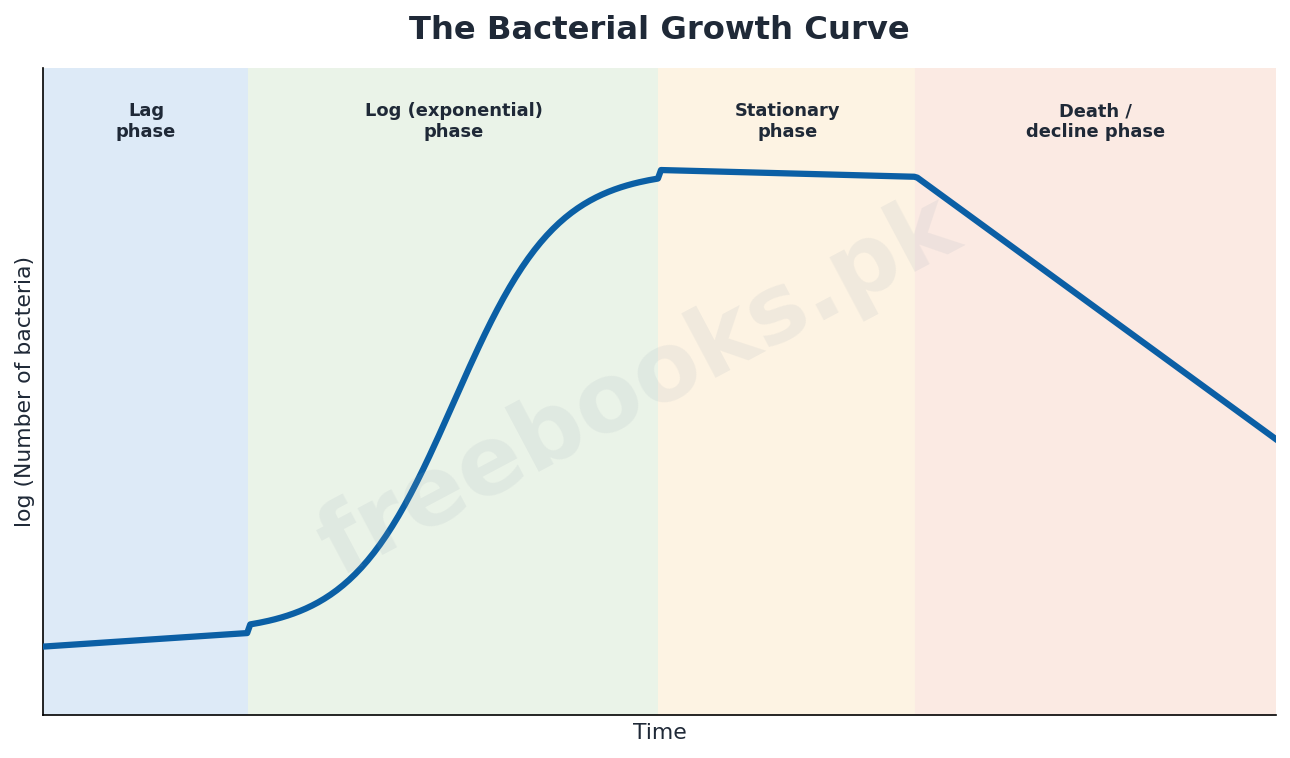
Bacteria reproduce asexually by binary fission: the parent cell enlarges, its single chromosome duplicates, the plasma membrane pinches inward, and the cell wall grows inward to split the cell into two daughter cells; the time between successive divisions is called the generation time. Population growth follows a characteristic bacterial growth curve with four phases: the lag phase (little growth, cells preparing to divide), the log phase (rapid, exponential division), the stationary phase (death rate equals reproduction rate) and the death or decline phase (death rate exceeds reproduction rate). Although bacteria lack true sexual reproduction and mitosis, some exchange genetic material between a donor and recipient cell through conjugation, often using specialized sex pili, producing new genetic combinations that can help bacteria survive changing conditions.
Bacteria are ecologically vital, decomposing organic matter and driving the nitrogen, phosphorus, sulphur and carbon cycles; economically important in food, drug (antibiotics, vaccines) and biotechnology industries, while also causing spoilage of food and crop losses; and medically significant, with roughly 200 species known to cause human disease, alongside many others that normally inhabit the human body harmlessly.
Control of Bacteria: Physical and Chemical Methods, Immunization
Controlling microorganisms is essential in the home, industry and medicine. Physical methods of sterilization (destruction of all life forms) use steam, dry heat, gas, filtration or radiation; moist heat kills microbes by coagulating their proteins, dry heat by oxidizing their chemical constituents, and heat-sensitive materials such as antibiotics can instead be sterilized by membrane filtration. Chemical methods use antiseptics (chemicals applied to living tissue to inhibit microbial growth), disinfectants (oxidizing or reducing agents such as halogens, phenols or alcohol, used on non-living surfaces), and chemotherapeutic agents and antibiotics (such as sulfonamides, tetracycline and penicillin), which destroy or inhibit microbes within living tissue.
Immunization and vaccination are key preventive measures. Pasteur discovered, while working with chicken cholera, that bacteria left to grow old in culture become attenuated (less virulent) yet can still stimulate a host to produce protective antibodies; he named the attenuated culture a vaccine (from the Latin vacca, "cow") and the process vaccination, honouring Edward Jenner, who had successfully vaccinated a boy against smallpox in 1796 using material from cowpox lesions. Antibiotics (Greek anti, "against", and bios, "life") are chemotherapeutic substances, naturally produced by certain bacteria, actinomycetes and fungi (and now also synthesized in the laboratory), used to treat infectious disease; however, their widespread and improper use has led to increasing drug resistance in microorganisms, and misuse can cause serious side effects, such as allergic reactions to penicillin, hearing loss from streptomycin, and permanent tooth discoloration in children from tetracycline.
Cyanobacteria and Nostoc
Cyanobacteria, formerly called blue-green algae, are the largest and most diverse group of photosynthetic bacteria and are true prokaryotes, 1-10 micrometres across, occurring as single cells, colonies, or filaments (trichomes) surrounded by a mucilaginous sheath; they have a Gram-negative type cell wall, lack flagella, and often move using gas vesicles or gliding motility. Their photosynthetic system closely resembles that of eukaryotes, using chlorophyll a and photosystem II to carry out oxygenic photosynthesis (releasing oxygen, using water as an electron donor), assisted by the accessory pigment phycocyanin housed in structures called phycobilisomes; they store food as glycogen and reproduce by binary fission or fragmentation. Cyanobacteria are ecologically valuable: they help reclaim alkaline soils, fix atmospheric nitrogen using specialized cells called heterocysts, release oxygen through photosynthesis, serve as pollution indicators, form symbiotic partnerships with fungi (as the photosynthetic partner in most lichens) and with nitrogen-fixing associations in some flowering plants, though some species also form toxic, foul-smelling water blooms.
Nostoc is a common terrestrial cyanobacterium, widely distributed on alkaline soils and moist rocks, forming a jelly-like mass of unbranched, beaded trichomes of mostly spherical cells. At intervals along the trichome, larger, thick-walled heterocysts occur, and the trichome tends to break near these heterocysts to form hormogonia (fragments that grow into new filaments), the main means of asexual reproduction; Nostoc also forms akinetes, thick-walled resting cells that store food and germinate into new vegetative cells when conditions become favourable again.
Important Definitions
Prokaryote
An organism, such as a bacterium, whose cell lacks a nuclear membrane, so its DNA lies free in the cytoplasm.
Cocci
Spherical or oval bacteria, which may occur singly or in arrangements such as diplococcus, streptococcus, tetrad, sarcina or staphylococcus.
Plasmid
A small, circular, self-replicating DNA molecule in bacteria, separate from the main chromosome, often carrying drug-resistance genes.
Nucleoid
The irregular, dense region of a bacterial cell where its single circular DNA molecule is concentrated, without a surrounding membrane.
Binary fission
The asexual method of bacterial reproduction in which a cell enlarges, duplicates its chromosome, and divides into two identical daughter cells.
Vaccine
A preparation of attenuated or killed pathogens (or their components) used to stimulate immunity without causing disease.
Antibiotic
A chemical substance, produced by microorganisms or synthetically, that inhibits or destroys other microorganisms.
Heterocyst
A specialized, thick-walled cell in certain cyanobacteria (e.g. Nostoc) responsible for fixing atmospheric nitrogen.
Key Facts
| Item | Fact |
|---|---|
| Bacteria discovered / named | Antonie van Leeuwenhoek, 1673 – called them "animalcules". |
| Koch's postulates | 4 rules linking a specific microorganism to a specific disease. |
| Bacterial size range | About 0.1 to 600 micrometres; E. coli approx. 1.1-1.5 x 2.0-6.0 micrometres. |
| Gram-positive cell wall | ~50% peptidoglycan (dry weight), 20-80 nm thick, no outer membrane. |
| Gram-negative cell wall | ~10% peptidoglycan, 8-11 nm thick, has an outer membrane (lipopolysaccharides/lipoproteins). |
| Bacterial growth curve | Lag -> Log (exponential) -> Stationary -> Death/Decline phase. |
| Vaccination history | Edward Jenner, 1796 (smallpox/cowpox); term "vaccine" coined by Pasteur from Latin vacca (cow). |
| Cyanobacteria pigment | Chlorophyll a + phycocyanin (blue accessory pigment); oxygenic photosynthesis; store glycogen. |
Diagrams & Illustrations
Shapes and Arrangements of Bacteria: a chart of the three main bacterial shapes – cocci (with diplococcus, streptococcus, tetrad, sarcina, staphylococcus arrangements), bacilli (single, diplobacilli, streptobacillus) and spiral forms (vibrio, spirillum, spirochete).
Structure of a Generalized Bacterial Cell: a labelled diagram of a generalized bacterial cell showing the cell wall, plasma membrane, nucleoid, plasmid, ribosomes, flagella, pili and capsule.
The Bacterial Growth Curve: a graph of bacterial population against time, showing the four phases of growth: lag phase, log (exponential) phase, stationary phase and death/decline phase.
Short Questions & Answers
State Koch's postulates.
Koch's four postulates state that a specific organism must always be found with a given disease, can be isolated and grown in pure culture, will reproduce the disease when inoculated into a susceptible animal, and can be recovered in pure culture from that experimentally infected animal.
Differentiate Gram-positive and Gram-negative bacteria.
Gram-positive bacteria have a thick, single-layer cell wall rich in peptidoglycan and retain the purple primary stain, while Gram-negative bacteria have a thinner wall with much less peptidoglycan plus an additional outer membrane, and retain the pink secondary stain.
What is a plasmid? State one practical use.
A plasmid is a small, circular, self-replicating DNA molecule separate from the bacterial chromosome, often carrying drug-resistance genes; plasmids are widely used as vectors in genetic engineering.
Differentiate flagella and pili.
Flagella are longer appendages made of flagellin used for motility (and chemotaxis), while pili are shorter, hollow appendages made of pilin used mainly for attachment to surfaces or, as sex pili, for transferring genetic material during conjugation.
Name the four phases of the bacterial growth curve.
Lag phase (preparing to divide), log phase (rapid exponential growth), stationary phase (death rate equals reproduction rate), and death/decline phase (death rate exceeds reproduction rate).
Differentiate antiseptics and antibiotics.
Antiseptics are chemical substances applied to living tissue to inhibit microbial growth on contact, while antibiotics are chemotherapeutic substances, produced by microorganisms, that are taken to destroy or inhibit microbes from within the body.
Long Questions & Answers
Describe in detail the structure of the bacterial cell wall, emphasizing Gram-positive and Gram-negative properties.
The bacterial cell wall lies beneath the capsule or slime layer and external to the plasma membrane, giving the cell its shape and protecting it from osmotic lysis; it is absent only in mycoplasmas. Most bacterial cell walls contain a unique macromolecule, peptidoglycan, made of long glycan chains cross-linked by peptide fragments, along with other components such as teichoic acid, lipoproteins and lipopolysaccharides. Using the Gram stain technique developed by Christian Gram, bacteria are divided into two groups based on differences in this wall structure. Gram-positive bacteria have a single, comparatively thick wall layer (about 20-80 nm) made mostly of peptidoglycan (up to 50% of dry weight in some species) along with teichoic and lipoteichoic acids, no outer membrane, and are more permeable; they retain the purple crystal-violet-iodine complex during staining. Gram-negative bacteria, by contrast, have a thinner wall (about 8-11 nm) containing far less peptidoglycan (about 10% of dry weight), but possess an additional outer membrane built of lipopolysaccharides and lipoproteins, a periplasmic space present in all cells of this group, and are generally less permeable; they lose the purple stain and instead retain the pink counterstain. These structural differences are the fundamental reason the two groups respond differently to Gram staining, and they also explain differences in antibiotic sensitivity and pathogenicity between the two groups.
Describe the shapes and arrangements of bacteria with examples.
Bacteria are classified by their general shape into three main categories, though some species are pleomorphic and can vary in shape. Cocci are spherical or oval cells whose arrangement depends on the plane(s) of division: division in a single plane produces either a diplococcus arrangement (pairs, as in Diplococcus pneumoniae) or a streptococcus arrangement (long chains); division in two planes produces a tetrad (a square of four cocci); division in three planes produces a sarcina (a cube of eight cocci); and division in random planes produces a staphylococcus arrangement (irregular, grape-like clusters, as in Staphylococcus aureus). Bacilli are rod-shaped bacteria that divide in only one plane, appearing as a single bacillus, a chain (streptobacillus), or in pairs (diplobacilli), as in Escherichia coli and Bacillus subtilis. Spiral bacteria are spirally coiled and occur in three forms: the vibrio, a curved or comma-shaped rod; the spirillum, a thick, rigid spiral; and the spirochete, a thin, flexible spiral, as seen in genera such as Vibrio and Hyphomicrobium. A few bacteria fall outside these three categories altogether, forming trichomes, sheaths, stalks, squares, stars, spindles, lobes or filaments.
Describe the growth and reproduction of bacteria.
Bacteria reproduce asexually through binary fission: the parent cell first enlarges and duplicates its single circular chromosome, the plasma membrane then pinches inward at the centre of the cell once the nuclear material has been evenly distributed to each half, and finally the cell wall grows inward to complete the separation into two genetically identical daughter cells. The time taken between one division and the next is called the generation time. As a bacterial population grows in a given environment, it passes through four recognizable phases, together called the bacterial growth curve: the lag phase, in which cells show little increase in number as they prepare for division; the log (exponential) phase, in which cells divide rapidly and population size increases exponentially; the stationary phase, in which the rate of new cell formation equals the rate of cell death, keeping the population roughly constant; and the death or decline phase, in which the death rate exceeds the reproduction rate and the population falls. Although bacteria lack true sexual reproduction and mitosis, genetic material can still be exchanged between a donor and a recipient cell through conjugation, sometimes using specialized sex pili; this process creates new genetic combinations that can help bacteria adapt to a wider range of environmental conditions.
Discuss the methods used to control bacteria, and the problems that can arise from the misuse of antibiotics.
Controlling microorganisms is important in homes, industry and medicine, both to prevent disease and to stop spoilage of food and other products. Physical methods achieve sterilization, the destruction of all life forms, using steam, dry heat, gas, filtration or radiation; moist heat kills microbes by coagulating their proteins, dry heat by oxidizing their cell components, certain electromagnetic radiations below 300 nm (such as gamma rays) are used for sterilization, and heat-sensitive substances like antibiotics and hormones are instead sterilized using membrane filters. Chemical methods include antiseptics (applied to living tissue to inhibit microbial growth), disinfectants such as halogens, phenols, hydrogen peroxide, potassium permanganate, alcohol and formaldehyde (used on non-living surfaces to inhibit vegetative cells), and chemotherapeutic agents and antibiotics such as sulfonamides, tetracycline and penicillin, which act within living tissue to destroy or inhibit microorganisms. Immunization and vaccination provide preventive protection, a principle discovered through Pasteur's chicken cholera experiments and Jenner's earlier smallpox vaccination, alongside broader public health measures such as water purification and sewage disposal. However, the massive and often careless use of antibiotics has led to widespread antibiotic resistance in microorganisms, making some infections harder to treat, and misuse can directly harm patients: penicillin misuse can trigger allergic reactions, streptomycin can damage the auditory nerve and cause deafness, and tetracycline can permanently discolour the teeth of young children — which is why antibiotics should always be taken exactly as prescribed, at regular intervals, for the full course advised by a physician.
Describe the general characteristics of cyanobacteria, with special reference to Nostoc.
Cyanobacteria, formerly known as blue-green algae, are true prokaryotes and the largest, most diverse group of photosynthetic bacteria, ranging from about 1 to 10 micrometres in diameter and occurring as single cells, colonies, or filaments (trichomes) wrapped in a mucilaginous sheath. They have a Gram-negative type cell wall, lack flagella, and move using gas vesicles or, in filamentous species, gliding motility. Their photosynthetic apparatus closely resembles that of eukaryotes, using chlorophyll a and photosystem II to carry out oxygenic photosynthesis (using water as the electron donor and releasing oxygen), assisted by the blue accessory pigment phycocyanin held in structures called phycobilisomes, with carbon dioxide fixed via the Calvin cycle and glycogen stored as reserve food; reproduction occurs by binary fission or fragmentation. Ecologically, cyanobacteria help reclaim alkaline soils, fix atmospheric nitrogen through specialized cells called heterocysts, enrich the environment with oxygen, serve as pollution indicators, and form symbiotic relationships, notably as the photosynthetic partner in most lichens. Nostoc is a widely distributed terrestrial and sub-aerial cyanobacterium, forming jelly-like masses on alkaline soils and moist rocks that contain numerous unbranched, beaded trichomes of mostly spherical cells. At intervals, larger, thick-walled heterocysts occur along each trichome; the trichome tends to break near these heterocysts, producing hormogonia (fragments that develop into new filaments) as the main means of asexual reproduction, while some cells also develop into thick-walled, food-storing akinetes that can survive unfavourable conditions and later germinate into new vegetative filaments.
MCQs with Answers
Bacteria were first observed and described (as "animalcules") by: (a) Robert Koch (b) Antonie van Leeuwenhoek (c) Louis Pasteur (d) Christian Gram
Correct Answer: (b) Antonie van Leeuwenhoek. Leeuwenhoek first observed bacteria and protozoa in 1673, calling them animalcules.
Koch's postulates are used to: (a) classify bacteria by shape (b) prove an organism causes a specific disease (c) stain Gram-positive bacteria (d) measure bacterial growth rate
Correct Answer: (b) prove an organism causes a specific disease. Koch's four postulates establish whether a microorganism is the causal agent of a disease.
An arrangement of cocci forming a cube of eight cells is called: (a) tetrad (b) sarcina (c) staphylococcus (d) diplococcus
Correct Answer: (b) sarcina. Sarcina describes cocci arranged in a cube of eight cells, from division in three planes.
Gram-positive bacteria, when Gram-stained, appear: (a) pink (b) purple (c) colourless (d) yellow
Correct Answer: (b) purple. Gram-positive bacteria retain the purple crystal violet-iodine complex.
A small, circular, self-replicating DNA molecule separate from the main bacterial chromosome is a: (a) nucleoid (b) mesosome (c) plasmid (d) ribosome
Correct Answer: (c) plasmid. A plasmid is a separate, self-replicating circular DNA molecule, often carrying drug-resistance genes.
The asexual method of bacterial reproduction is called: (a) conjugation (b) binary fission (c) budding (d) sporulation
Correct Answer: (b) binary fission. Bacteria reproduce asexually by binary fission, splitting one cell into two.
In the bacterial growth curve, rapid exponential division occurs during the: (a) lag phase (b) log phase (c) stationary phase (d) death phase
Correct Answer: (b) log phase. The log (exponential) phase is when bacteria divide most rapidly.
The term "vaccine" comes from the Latin word for: (a) poison (b) cow (c) disease (d) life
Correct Answer: (b) cow. Vaccine is derived from Latin vacca, meaning cow, referencing Jenner's cowpox-based smallpox vaccination.
Cyanobacteria carry out oxygenic photosynthesis using chlorophyll a and the accessory pigment: (a) carotene (b) phycocyanin (c) xanthophyll (d) chlorophyll b
Correct Answer: (b) phycocyanin. Phycocyanin is the main accessory pigment in cyanobacteria, held in phycobilisomes.
The specialized cyanobacterial cell responsible for fixing atmospheric nitrogen is the: (a) akinete (b) hormogonium (c) heterocyst (d) trichome
Correct Answer: (c) heterocyst. Heterocysts are the specialized cells where nitrogen fixation occurs in cyanobacteria like Nostoc.
Quick Revision Summary
- Bacteria discovered by Leeuwenhoek (1673, "animalcules"); Koch's 4 postulates prove an organism causes a disease; Pasteur developed vaccines, pasteurization, disproved spontaneous generation.
- Bacterial shapes: cocci (diplococcus, streptococcus, tetrad, sarcina, staphylococcus), bacilli (single, diplobacilli, streptobacillus), spiral (vibrio, spirillum, spirochete).
- Cell structure: flagella (motility, flagellin) and pili (attachment/conjugation, pilin) as appendages; capsule/slime + cell wall (Gram+ thick peptidoglycan, no outer membrane; Gram- thin peptidoglycan + outer membrane) as the envelope.
- Nucleoid = single circular DNA (haploid); plasmids = extra DNA, drug resistance, genetic engineering vectors; mesosomes, ribosomes, granules, spores/cysts for storage/survival.
- Nutrition: heterotrophic (saprophytic/parasitic) or autotrophic (photosynthetic/chemosynthetic). Respiration: aerobic, anaerobic, facultative, microaerophilic.
- Reproduction: binary fission; growth curve = lag -> log -> stationary -> death. Control: physical (heat, radiation, filtration) + chemical (antiseptics, disinfectants, antibiotics) + immunization/vaccination.
- Cyanobacteria (blue-green algae): true prokaryotes, chlorophyll a + phycocyanin, oxygenic photosynthesis, glycogen storage, heterocysts fix nitrogen; Nostoc reproduces via hormogonia and akinetes. Notes by freebooks.pk.
Exam Tips
- Learn the 4 Koch's postulates in order — a classic "write a note" and short-question topic.
- Be ready to name all 5 cocci arrangements (diplococcus, streptococcus, tetrad, sarcina, staphylococcus) with the plane of division for each.
- Memorise the Gram-positive vs Gram-negative wall differences as a clear table (peptidoglycan %, thickness, outer membrane, stain colour).
- Practise the 4 phases of the bacterial growth curve and what happens in each.
- Remember the Jenner/Pasteur vaccination story and where the words "vaccine"/"vaccination" come from.
- Know cyanobacteria's key features: chlorophyll a + phycocyanin, oxygenic photosynthesis, glycogen storage, and heterocysts for nitrogen fixation (linked to Nostoc).