Biochemistry is the study of the chemical substances that play a vital role in the processes taking place in living organisms. Carbohydrates, lipids (fats) and proteins are the three classes of food that not only provide energy to the human body but are also responsible for building its structures; lipids provide, on average, about twice as much energy as the same mass of carbohydrates or proteins. Proteins are present in all living organisms, forming skin, hair, muscle, blood and almost every organ, and playing central roles throughout life’s processes.
This chapter surveys the main biomolecules — carbohydrates, proteins, lipids, vitamins and nucleic acids — their sources, structures and the daily intake a young adult needs, and closes with the many practical applications of biochemistry in modern medicine and genetics, from ordinary blood tests to genetic engineering, gene therapy and cloning.
Learning Objectives
- Explain the importance and basics of nutrition and healthy eating.
- Recognise the main biomolecules — carbohydrates, proteins, lipids and nucleic acids — their sources, and the required daily intake for young adults.
- Identify carbohydrates as a source of energy, and describe proteins as natural polyamides formed from amino acid monomers.
- Explain the sources, uses and structure of proteins, lipids and carbohydrates, and describe the importance of nucleic acids.
- Explain vitamins, their sources and their importance to health.
- Identify applications of biochemistry in testing (blood tests, pregnancy tests, cancer screening, parental genetic testing), genetic engineering, gene therapy and cloning.
Key Concepts
25.1 Nutrition and Healthy Eating
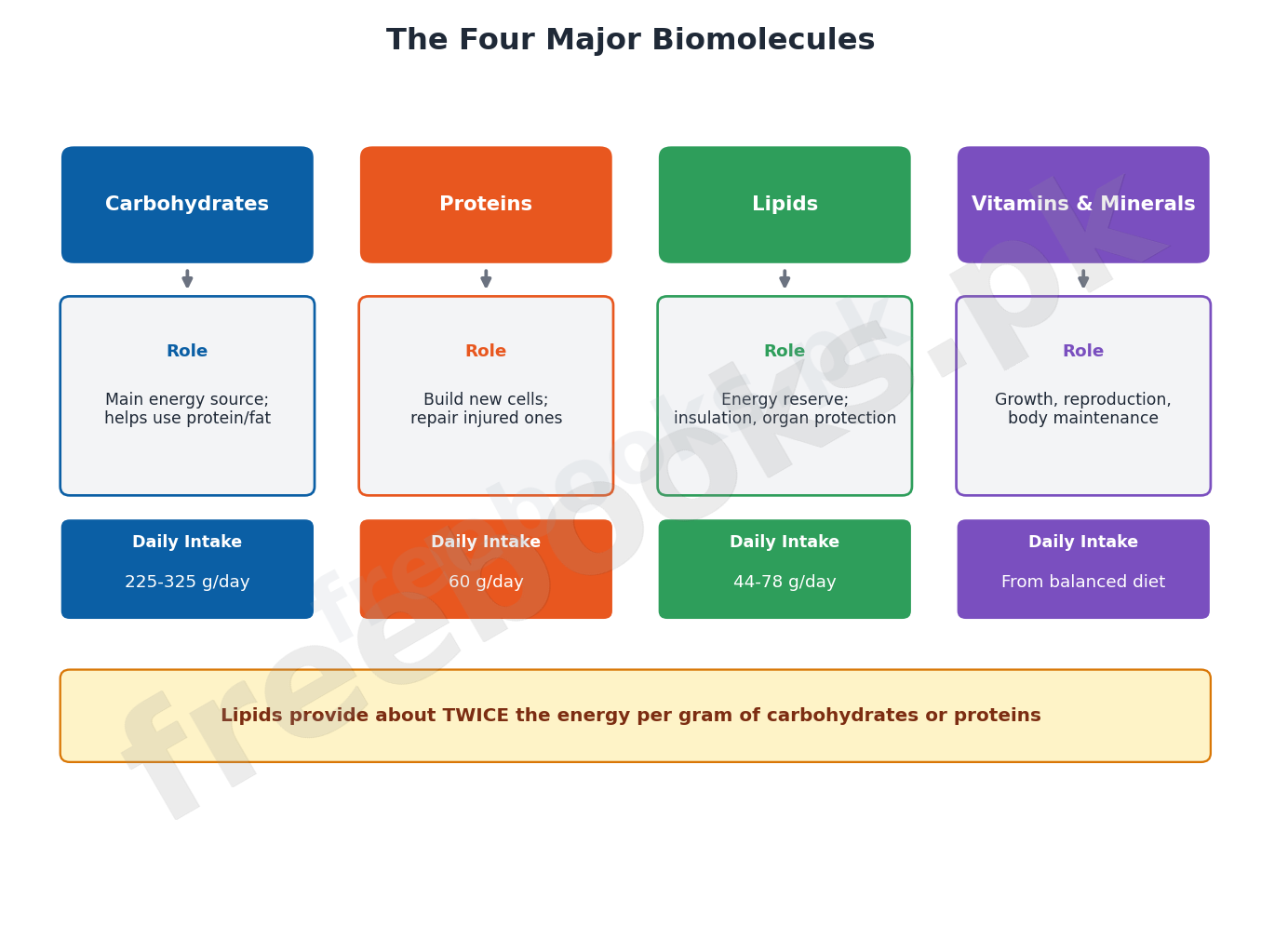
Nutrition is the study of the nutrients present in food and how they maintain a healthy body; nutrients are the components of food needed regularly to maintain health and prevent disease. Carbohydrates are the main source of energy and help the body use protein and fat efficiently — a healthy adult needs about 225 to 325 grams per day on a standard 2000-calorie diet. Lipids act as major energy reserves and provide insulation and protection for vital organs, with a daily intake of roughly 44 to 78 grams. Proteins also supply energy and are needed to build new cells and repair injured ones, with an adult needing about 60 grams per day. Vitamins and minerals help growth, reproduction, and the operation and maintenance of the body, and a diet rich in fruits, vegetables and grains provides most of what is needed daily.
Basic methods of healthy eating include consuming a wide range of nutrient-rich foods (fruits, vegetables, whole grains, lean proteins, healthy fats), eating less while staying hydrated, reducing intake of saturated fats, sugar and sodium, and avoiding processed and poor-quality foods. A healthy, balanced diet prevents diseases such as heart disease, diabetes, some cancers and osteoporosis, fuels healthy growth and development and helps maintain a healthy weight, and positively impacts brain function and the immune system.
25.2 Carbohydrates
Carbohydrates are the most abundant naturally occurring compounds on Earth, containing carbon, hydrogen and oxygen; because some taste sweet, they are commonly called ‘sugars’, and besides hydroxyl groups they also contain aldehyde or ketonic functional groups. They are classified into three groups based on their properties: monosaccharides, oligosaccharides and polysaccharides. Glucose, the most abundant carbohydrate (also called grape sugar or dextrose), occurs in grapes, honey and plant sap, and is the main energy source for animals, present in their blood and urine; fructose, found in sweet fruit juices and honey, shares glucose’s molecular formula C6H12O6.
Sucrose, lactose and maltose all share the molecular formula C12H22O11: sucrose comes from sugar cane and sugar beets, maltose is found in bread and other cereals, and lactose is present in milk. Starch and cellulose are important polymeric carbohydrates sharing the formula (C6H10O5)n — starch occurs in potatoes, rice and grains, while cellulose comes from plant materials like wood and cotton; glycogen serves the same energy-storage function in animals that starch serves in plants.
25.3 Proteins
Proteins are very large molecules containing carbon, hydrogen, oxygen, nitrogen and sulphur atoms, and the human body contains thousands of different types performing a huge range of functions: fibrous proteins form muscles, hair, nails, skin and connective tissue; hormones such as insulin (which controls blood sugar) and enzymes (biological catalysts that speed up the body’s reactions) are also proteins; and haemoglobin, which carries oxygen through the bloodstream, is a protein too. Despite this variety, every protein is built by linking together amino acids, each carrying a carboxyl group (-COOH) and an amino group (-NH2) — the simplest amino acid is glycine.
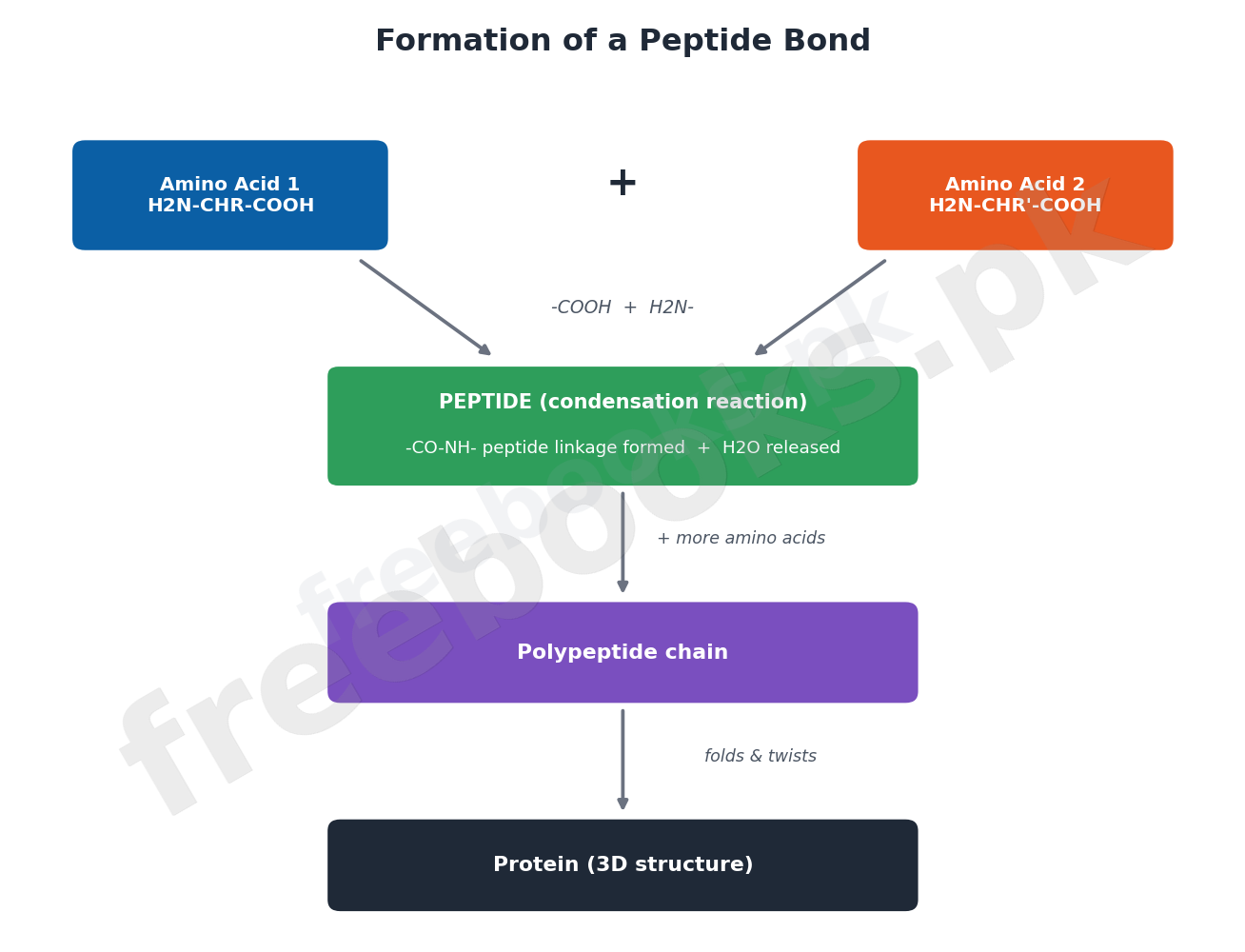
Proteins form when water is eliminated between two amino acid molecules, joining them through a peptide linkage to form a peptide; this can react further with more amino acids to build a long polypeptide chain, which then twists and folds into a three-dimensional structure. Heat, a change in pH, or oxidising and reducing agents can cause complex changes in a protein’s structure called denaturation — frying or boiling an egg, which denatures egg albumin in the egg white, is a familiar example. Children need large amounts of protein for growth, while adults need it to replace what the body’s normal biochemical reactions use up each day.
25.4 Lipids
Most lipids are built from simpler building blocks called fatty acids — long-chain carboxylic acids with 12 to 28 carbon atoms. Examples include lauric acid (from coconut oil), stearic acid (from animal fats), palmitic acid (from palm oil) and oleic acid (from olive oil, and unsaturated because of its C=C double bond). Fatty acids react with the alcohol glycerol to form triesters called fats — for example, stearic acid and glycerol form tristearin; a triester of glycerol is also called a triglyceride.
Animal fats are located particularly in adipose tissue cells, while vegetable oils occur in the seeds and roots of plants; lipids mainly serve as an energy-rich reserve in animals. Soap, known since at least 600 BC, is chemically a mixture of sodium salts of long-chain fatty acids, produced by the hydrolysis of animal fat with alkali.
25.5 Vitamins and Nucleic Acids
Vitamins are organic substances that do not themselves provide energy or build cells the way carbohydrates, lipids and proteins do, but are necessary to maintain normal health and growth, functioning as catalysts for the body’s biological processes; scientists have identified 13 vitamins the human body needs. Vitamin A (milk, egg, fish, liver) prevents night blindness and dry skin; vitamin D (butter, fish liver oils, and made by skin in sunlight) supports teeth and bone development, and its deficiency causes rickets; vitamin C or ascorbic acid (citrus fruits, green pepper, tomatoes) prevents scurvy; and vitamins B1 and B2 (red meat, nuts, leafy vegetables) prevent fatigue/depression and inflammation of the lips/eyes respectively.
Carbohydrates, proteins, fats and water together make up about 99% of most living organisms; the remaining 1% includes the two nucleic acids, DNA (deoxyribonucleic acid) and RNA (ribonucleic acid), which are responsible for the existence, development and reproduction of all life. DNA molecules are much larger than RNA (molecular mass up to 660 Da versus about 340 Da for RNA, with DNA stretching up to 12 cm) and are mostly found in the cell nucleus, while RNA is smaller and mostly found outside it. DNA’s function is to store genetic information and pass it to RNA at the proper time, while RNA reads, decodes and uses that information to make proteins.
25.6 Applications of Biochemistry
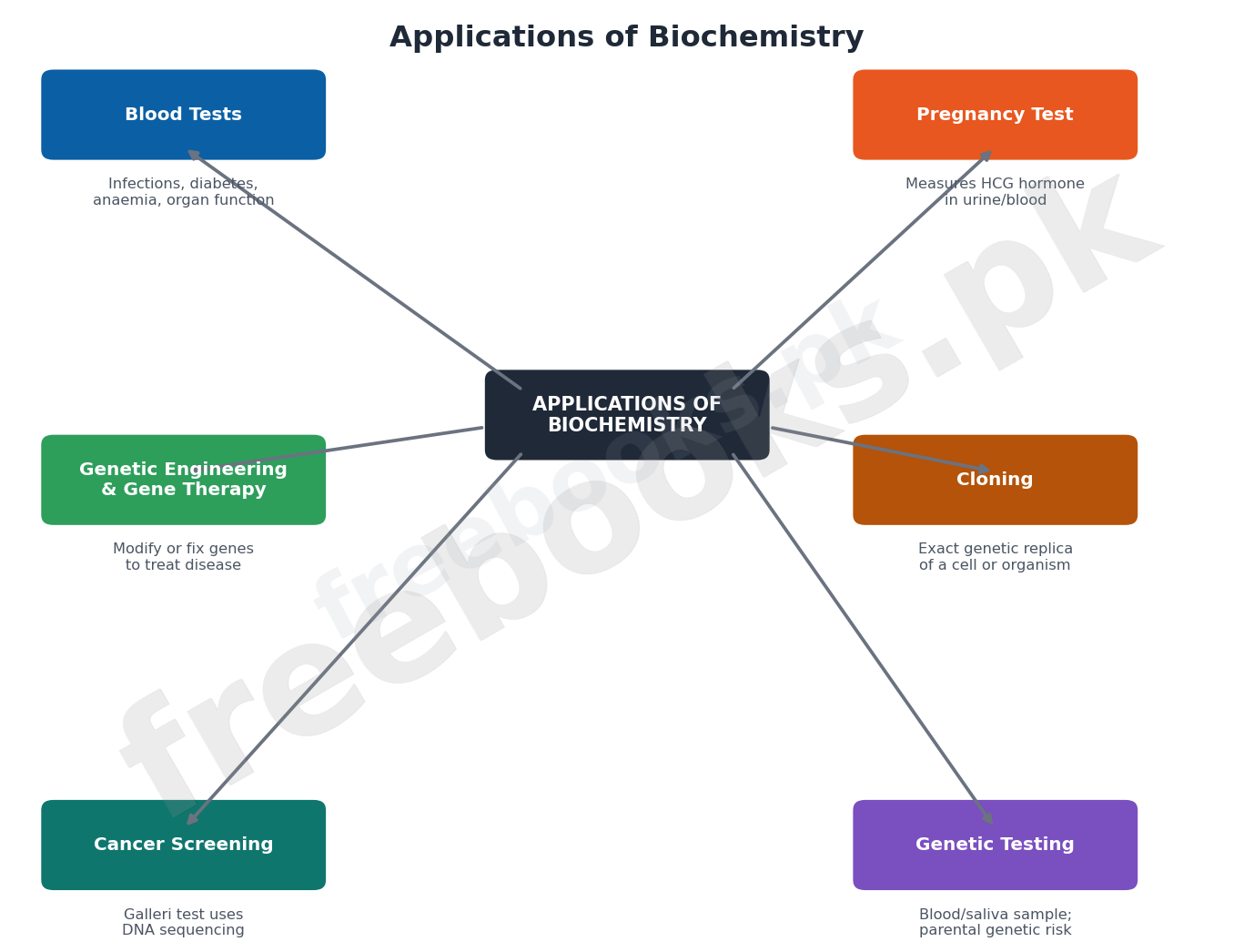
Blood tests let doctors identify conditions such as infections, diabetes, anaemia and organ failure by checking electrolytes, fats, proteins, glucose and enzymes, giving important information on how well the kidneys, liver and other organs are working. A pregnancy test checks urine or blood for HCG, a hormone produced when a woman becomes pregnant; quantitative blood tests can measure exact HCG levels and how far a pregnancy has progressed. The Galleri test is a specific blood test that uses DNA sequencing to detect characteristic patterns for early cancer screening, while parental genetic testing, performed on a blood or saliva sample, tells people whether they carry genetic changes they could pass on to their children.
Genetic engineering changes an organism’s genome — from altering a single DNA base to deleting or inserting whole regions of DNA — to enhance an organism’s capabilities beyond normal, such as engineering plants to resist disease or pollution. Gene therapy fixes a faulty gene or replaces it with a healthy one to cure a disease or help the body fight it better, and may in future help treat diseases such as diabetes, AIDS, cancer and haemophilia. Cloning creates an exact genetic replica — a clone — of a cell, tissue or whole organism, sharing the same genetic characteristics as the original.
Important Definitions
Biochemistry
The study of the chemical substances and processes that occur within living organisms.
Nutrition
The study of the nutrients present in food and how they maintain a healthy body.
Nutrient
A component of food needed regularly by the body to maintain health and prevent disease, such as carbohydrates, lipids, proteins, vitamins and minerals.
Carbohydrate
An organic compound of carbon, hydrogen and oxygen, often sweet-tasting, containing hydroxyl groups plus an aldehyde or ketone group; the body’s main energy source.
Amino acid
The building-block molecule of proteins, carrying both a carboxyl group (-COOH) and an amino group (-NH2); the simplest is glycine.
Peptide bond (linkage)
The bond formed between two amino acids when a water molecule is eliminated, joining them into a peptide.
Polypeptide
A long chain formed by linking many amino acids together through peptide bonds, which folds into a protein’s three-dimensional structure.
Denaturation
A complex structural change in a protein caused by heat, a change in pH, or an oxidising/reducing agent — for example, the change egg albumin undergoes on frying or boiling.
Fatty acid
A long-chain carboxylic acid, typically with 12 to 28 carbon atoms, that serves as the building block of most lipids.
Triglyceride (fat)
A triester formed when three fatty acid molecules react with one glycerol molecule.
Vitamin
An organic substance that does not itself provide energy or build cells but is necessary for normal health, growth and body function, acting as a catalyst for biological processes.
Nucleic acid
A large biomolecule, such as DNA or RNA, responsible for storing and using genetic information for the existence, development and reproduction of life.
Genetic engineering
A method of changing an organism’s genome, from altering a single DNA base to inserting or deleting whole regions of DNA.
Cloning
The set of methods used to create an exact genetic replica — a clone — of a cell, tissue or whole organism.
Key Facts & Relations
| Topic | Relation |
|---|---|
| Glucose and fructose | Same molecular formula: C6H12O6 (glucose = grape sugar/dextrose; fructose = fruit sugar) |
| Sucrose, lactose, maltose | Same molecular formula: C12H22O11 (sucrose = cane/beet sugar; lactose = milk sugar; maltose = malt sugar) |
| Starch and cellulose | Common formula: (C6H10O5)n — polymeric carbohydrates |
| Daily carbohydrate intake (adult) | About 225-325 g/day (2000-calorie diet) |
| Daily lipid intake (adult) | About 44-78 g/day |
| Daily protein intake (adult) | About 60 g/day |
| Amino acid general structure | Carboxyl group (-COOH) + amino group (-NH2) on the same molecule, e.g. glycine: CH2(NH2)-COOH |
| DNA vs RNA | DNA: molecular mass up to 660 Da, up to 12 cm stretched, mostly in nucleus. RNA: molecular mass about 340 Da, mostly outside nucleus |
Diagrams
The Four Major Biomolecules: A comparison chart of carbohydrates, proteins, lipids and vitamins/minerals — their main role and daily recommended intake for an adult.
Formation of a Peptide Bond: A diagram showing two amino acid molecules joining, with the elimination of water, to form a peptide bond, and the resulting polypeptide chain folding into a protein.
Applications of Biochemistry: A hub-and-spoke chart showing the major applications of biochemistry in testing and genetics — blood tests, pregnancy tests, cancer screening, genetic testing, genetic engineering/gene therapy, and cloning.
Short Questions & Answers
Which two functions are performed by proteins?
Proteins supply energy to the body and are needed to build new cells and repair injured ones; many proteins also act as hormones (e.g. insulin) or enzymes that speed up biochemical reactions.
Is milk a fat, a protein, or both?
Milk contains both — it supplies lactose (a carbohydrate) along with proteins and fats; specifically, lactose (a sugar) and butterfat (a lipid) are both present in milk, along with milk proteins.
What is a balanced diet?
A balanced diet is one that includes a wide range of nutrient-rich foods — fruits, vegetables, whole grains, lean proteins and healthy fats — in the right proportions, while limiting saturated fats, sugar, sodium and processed foods, to supply all the nutrients the body needs.
Name any three nutrients.
Three nutrients needed by the body are carbohydrates, proteins and lipids (fats); vitamins and minerals are also essential nutrients.
Name any two sources of starch.
Potatoes and rice are two common sources of starch; grains are another important source.
Are all carbohydrates equally beneficial for our health?
No — simple sugars like glucose, fructose and sucrose provide quick energy but offer little else nutritionally and can be consumed in excess, while complex carbohydrates like starch and cellulose (fibre) support steadier energy release and digestive health, so not all carbohydrates play the same beneficial role.
What are hormones made of?
Hormones such as insulin are proteins, built from chains of amino acids linked by peptide bonds, just like other functional proteins in the body.
What is denaturation of a protein?
Denaturation is a complex structural change a protein undergoes when subjected to heat, a change in pH, or an oxidising/reducing agent, altering its natural three-dimensional shape — as seen when egg albumin denatures on frying or boiling an egg.
What is the role of lipids in our body?
Lipids act as a major energy reserve for the body (providing about twice the energy of the same mass of carbohydrate or protein) and also provide insulation and protection for vital organs.
Which vitamin is present in lemon?
Vitamin C (ascorbic acid) is present in lemons and other citrus fruits, along with green pepper and tomatoes; its deficiency causes scurvy.
Long Questions & Answers
Describe the classification, structure and daily requirement of carbohydrates, proteins and lipids.
How are carbohydrates classified and what are their common sources?
Carbohydrates are classified into monosaccharides (like glucose and fructose, C6H12O6), oligosaccharides (like sucrose, lactose and maltose, C12H22O11), and polysaccharides (like starch and cellulose, (C6H10O5)n); they are the body’s main energy source, and an adult needs about 225-325 g per day.
How are proteins built, and what is a peptide bond?
Proteins are built by linking amino acids — each carrying a carboxyl group and an amino group — through peptide bonds formed by eliminating water between two amino acid molecules; repeating this process builds a long polypeptide chain that folds into a protein’s three-dimensional structure, and an adult needs about 60 g of protein per day.
What are lipids made of, and how much does the body need daily?
Lipids are mostly built from fatty acids, long-chain carboxylic acids that react with glycerol to form triglycerides (fats); lipids serve as a major, energy-dense reserve and provide insulation and organ protection, and an adult needs roughly 44-78 g per day.
Why do these three biomolecules have different daily requirements?
The differing daily requirements reflect each biomolecule’s energy density and role — lipids are needed in the smallest amount because they are the most energy-dense (about twice that of carbohydrate or protein per gram), carbohydrates are needed in the largest amount as the body’s primary, readily used energy source, and protein sits in between, since its main job is building and repairing tissue rather than fuelling the body.
What are DNA, RNA and vitamins, and what are the applications of biochemistry in medicine and genetics?
What are DNA and RNA, and how do they differ?
DNA and RNA are nucleic acids that are chemically similar but play different roles: DNA is much larger (molecular mass up to 660 Da, up to 12 cm when stretched) and stores genetic information mostly in the cell nucleus, while RNA is smaller (about 340 Da), is mostly found outside the nucleus, and reads, decodes and uses DNA’s information to make proteins.
What are vitamins and what happens when the body lacks them?
Vitamins are organic substances that do not provide energy directly but act as catalysts for the body’s biological processes, maintaining normal health and growth; deficiencies cause specific diseases, such as night blindness from lack of vitamin A, rickets from lack of vitamin D, and scurvy from lack of vitamin C.
How are blood tests and pregnancy tests used in medicine?
Blood tests check electrolytes, fats, proteins, glucose and enzymes to identify conditions like infections, diabetes, anaemia and organ failure, while a pregnancy test measures the hormone HCG in urine or blood to confirm pregnancy and track how far it has progressed.
How are genetic engineering, gene therapy and cloning applied?
Genetic engineering changes an organism’s genome (even a single DNA base) to enhance its capabilities, such as making plants disease-resistant; gene therapy fixes or replaces a faulty gene to treat diseases like diabetes or cancer; and cloning creates an exact genetic replica of a cell, tissue or organism, all showing how biochemistry now extends into medicine and genetics.
Multiple Choice Questions (MCQs)
Functional groups present in fructose are: (A) Hydroxyl and aldehyde (B) Hydroxyl and Ketone (C) Hydroxyl and ester (D) Hydroxyl and amide
Correct answer: (B) Hydroxyl and Ketone. Fructose is a ketohexose, meaning it carries hydroxyl groups plus a ketone functional group, unlike glucose, which is an aldohexose carrying hydroxyl groups plus an aldehyde group.
Which functional group is present in a fat? (A) Carboxyl group (B) Ester group (C) Carbonyl group (D) Hydroxyl group
Correct answer: (B) Ester group. Fats (triglycerides) are esters formed when fatty acids react with glycerol, so the ester functional group is what characterises them.
Which function is not performed by proteins in our body? (A) They serve as chemical messengers. (B) They serve as storage of energy-rich fuel. (C) They store genetic information. (D) They serve as catalysts for biochemical reactions.
Correct answer: (C) They store genetic information.. Storing genetic information is the role of nucleic acids (DNA and RNA), not proteins — proteins do act as chemical messengers (hormones), catalysts (enzymes), and can supply energy, but they do not store genetic information.
Which functional groups react to produce a peptide linkage in proteins? (A) Carboxyl group and hydroxyl group (B) Carboxyl group and amino group (C) Hydroxyl group and amino group (D) Ester group and amino group
Correct answer: (B) Carboxyl group and amino group. A peptide linkage forms when the carboxyl group (-COOH) of one amino acid reacts with the amino group (-NH2) of another, eliminating a water molecule.
The test performed to detect cancer in early stages is: (A) Genetic test (B) Urine test (C) Galleri test (D) Electrolyte test
Correct answer: (C) Galleri test. The Galleri test is a specific blood test that uses DNA sequencing to detect characteristic patterns associated with cancer at an early stage.
Fatigue and depression are caused by deficiency of: (A) Vitamin A (B) Vitamin C (C) Vitamin D (D) Vitamin B1
Correct answer: (D) Vitamin B1. A deficiency of vitamin B1 leads to fatigue and depression, while lack of vitamin B2 causes inflammation of the lips and dryness/burning of the eyes.
Which of the following is an unsaturated fatty acid? (A) Lauric acid (B) Stearic acid (C) Palmitic acid (D) Oleic acid
Correct answer: (D) Oleic acid. Oleic acid contains a C=C double bond in its chain (from olive oil), making it unsaturated, unlike lauric, stearic and palmitic acids, which are saturated fatty acids.
Which molecule is mostly found in the nucleus of the cell and stores genetic information? (A) RNA (B) DNA (C) Glycogen (D) A polypeptide
Correct answer: (B) DNA. DNA, which is much larger than RNA and mostly located in the cell nucleus, is the molecule that stores genetic information and passes it to RNA at the proper time.
Quick Revision Summary
- Nutrition: carbohydrates (~225-325 g/day, main energy), lipids (~44-78 g/day, energy reserve/insulation), proteins (~60 g/day, build/repair), plus vitamins and minerals.
- Carbohydrates: monosaccharides (glucose/fructose, C6H12O6), oligosaccharides (sucrose/lactose/maltose, C12H22O11), polysaccharides (starch/cellulose, (C6H10O5)n; glycogen in animals).
- Proteins are built from 20 amino acids linked by peptide bonds (water eliminated between -COOH and -NH2 groups) into polypeptide chains that fold into 3D shapes; heat/pH/oxidising agents cause denaturation.
- Lipids are built from fatty acids (long-chain carboxylic acids) that react with glycerol to form triglycerides (fats); they store about twice the energy of carbs/proteins per gram.
- Vitamins act as catalysts for body processes, not energy sources — deficiencies cause specific diseases (A: night blindness, D: rickets, C: scurvy, B1: fatigue).
- DNA (large, in nucleus, stores information) and RNA (smaller, outside nucleus, reads/uses information to make proteins) are the two nucleic acids.
- Applications of biochemistry: blood tests, pregnancy tests (HCG), Galleri cancer screening, parental genetic testing, genetic engineering, gene therapy, cloning.
Exam Tips
- Remember daily intake order by amount: carbohydrates (most, 225-325 g) > proteins (60 g) > lipids (least by mass, 44-78 g, but most energy-dense per gram).
- Group carbohydrates by size: mono- (simplest sugars) -> oligo- (double sugars, C12H22O11) -> poly- (starch/cellulose/glycogen).
- Peptide bond formation = condensation reaction: -COOH + -NH2 -> peptide bond + H2O — always eliminates water.
- Link each vitamin to its deficiency disease as a pair: A-night blindness, D-rickets, C-scurvy, B1-fatigue/depression, B2-lip/eye inflammation.
- DNA vs RNA — remember ‘DNA is the Director’ (stores info, in the nucleus) while ‘RNA is the Runner’ (carries/uses info, outside the nucleus).
- Group biochemistry applications into two buckets: diagnostic testing (blood, pregnancy, cancer, genetic tests) and genetic intervention (engineering, gene therapy, cloning).