This unit presents 'Women Empowerment through Entrepreneurship', an expository (informative) prose passage written in the third-person narrative that explains what entrepreneurship is, how it empowers women, and how women — from Hazrat Khadija (RA) in early Islamic history to modern-day Pakistani businesswomen — have overcome barriers to build successful ventures.
The passage defines entrepreneurship, presents Hazrat Khadija (RA) as history's earliest and most significant example of a successful woman entrepreneur, surveys the sectors where Pakistani women are active today, lists the obstacles they still face, and explains the wide-ranging benefits their entrepreneurship brings to families, communities, and the national economy.
These notes summarise the passage as given in the textbook and provide comprehension questions, vocabulary, idioms and proverbs, and exam-oriented material for this unit, including the skill-based Reading, Vocabulary/Grammar, Oral Communication, and Writing (biography/autobiography and formal letter) sections that accompany it.
Learning Objectives
- Use rhetorical questions for a range of audiences
- Examine different points of view (e.g., first-person, third-person narrative); determine an author's point of view or purpose in a text; analyse how authors distinguish their position from that of others
- Analyse various types of biographies and autobiographies connected to different fields and professions, determining which details are emphasized in each type
- Comprehend and use contemporary idioms and proverbs in different texts and in speech
- Demonstrate command of the conventions of standard English capitalization, punctuation, and spelling when writing in different varieties of texts
- Write formal letters to people in extended academic and professional environments for various purposes
Key Concepts
What Is Entrepreneurship?
Entrepreneurship refers to the process of starting, managing, and growing a business venture. Entrepreneurs identify opportunities, take calculated risks, and bring innovative ideas to life, creating products or services that meet market demands, solve problems, and contribute to economic growth.
For women specifically, entrepreneurship offers more than financial independence: it empowers them to take control of their future, challenge societal norms, and become leaders in their communities.
Hazrat Khadija (RA): An Early Model of Success
Hazrat Khadija (RA), a prominent businesswoman from Makkah Mukarramah, is presented as one of the earliest and most significant examples of a successful woman entrepreneur — among the wealthiest people of her time, known for her wisdom, integrity, and leadership in managing a thriving trading business.
Her story shows that even in a male-dominated society, women can thrive through hard work, intelligence, and strategic thinking. She carefully expanded her trading ventures across regions and became a symbol of empowerment, inspiring generations of women to pursue entrepreneurial dreams regardless of societal expectations.
Women Entrepreneurs in Modern Pakistan
In modern-day Pakistan, women entrepreneurs are playing an increasingly important role across sectors such as fashion, technology, food, education, and crafts, in both urban centres like Karachi and Lahore and smaller towns and rural areas.
Several initiatives support them: microfinance institutions offer loans to help women start small businesses, mentorship programmes build essential skills, and women's chambers of commerce provide platforms for networking and showcasing products.
Challenges Women Entrepreneurs Face
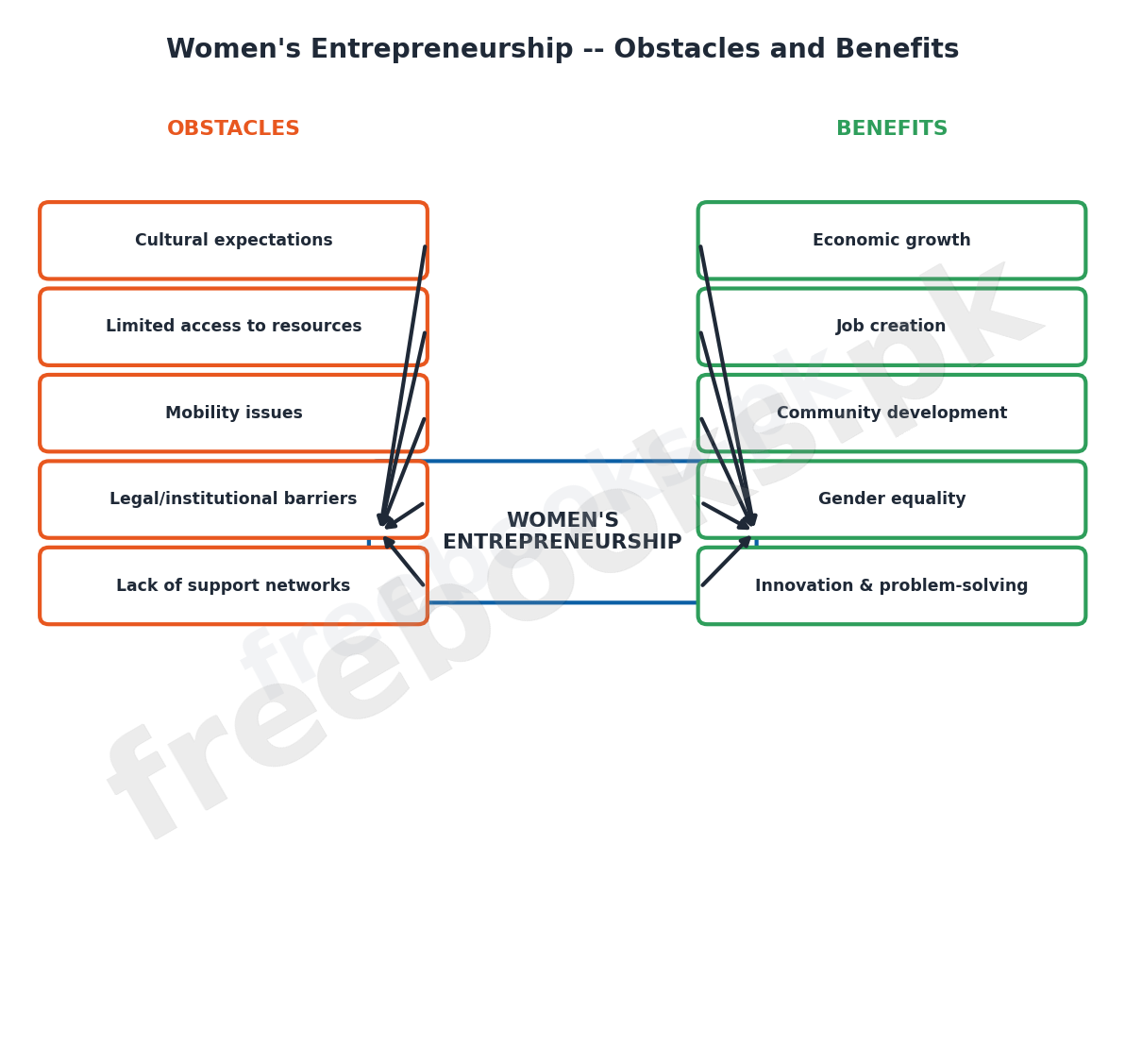
Despite these advances, women face significant obstacles: cultural expectations that prioritise household duties over professional goals; limited access to financial resources, education, and networks; mobility restrictions that limit meeting clients or accessing markets; legal and institutional barriers in registering businesses; and a lack of support networks and mentors compared to male entrepreneurs.
Sectors and Benefits of Women's Entrepreneurship
Women entrepreneurs are active in fashion and textiles, food and catering services, handicrafts and artisanship, education and training centres, and e-commerce and tech startups.
Their entrepreneurship brings wide benefits: economic growth and job creation (especially for other women and youth), empowerment of future generations through role models, community development by addressing local issues like education and healthcare, promoting gender equality by challenging stereotypes, and driving innovation and problem-solving through unique perspectives.
Overcoming Barriers and Looking Forward
Women entrepreneurs are overcoming barriers by building strong support networks and using e-commerce and online platforms for flexibility, bypassing some mobility issues. Government bodies and NGOs also support women entrepreneurs with financial resources, training, and market access.
The passage concludes that entrepreneurship offers women the opportunity to realise their full potential; by supporting women's entrepreneurship and addressing the barriers they face, society can unlock the potential of half its population.
Theme
The theme of the unit is that entrepreneurship empowers women by providing financial independence and breaking traditional gender roles. Women entrepreneurs contribute to their communities by creating jobs, fostering innovation, and promoting gender equality; through examples like Hazrat Khadija (RA) and modern-day Pakistani women, the unit shows that despite societal challenges, women can succeed in business and inspire future generations as leaders and innovators.
Important Definitions (Glossary)
corporation
a large business company
e-commerce
business that is conducted on the internet
entrepreneurship
the activity of making money by starting or running businesses, especially when this involves taking financial risks; the ability to do this
innovative
introducing or using new ideas, ways of doing something, etc.
microfinance
a system of providing services such as lending money and saving for people who are too poor to use banks
norm
a situation or a pattern of behaviour that is usual or expected
societal
connected with society and the way it is organized
stereotype
a fixed idea or image that many people have of a particular type of person or thing, but which is often not true in reality and may cause hurt and offence
strategic
done as part of a plan that is meant to achieve a particular purpose or to gain an advantage
thrive
to become, and continue to be, successful, strong, healthy, etc.
Key Facts
| Item | Detail |
|---|---|
| Text type | Expository (informative) prose, third-person narrative |
| Historical example | Hazrat Khadija (RA), businesswoman of Makkah Mukarramah |
| Key sectors for Pakistani women entrepreneurs | Fashion and textiles, food and catering, handicrafts, education, e-commerce/tech |
| Support mechanisms | Microfinance institutions, mentorship programmes, women's chambers of commerce |
| Main obstacles | Cultural expectations, limited resources, mobility issues, legal barriers, lack of support networks |
| Key benefits of women's entrepreneurship | Economic growth, job creation, community development, gender equality, innovation |
Diagram
Women's Entrepreneurship — Obstacles and Benefits: A purely textual/schematic diagram showing entrepreneurship at the centre, connected on one side to the key obstacles women face (cultural expectations, limited resources, mobility issues, legal barriers, lack of support) and on the other to the key benefits it brings (economic growth, job creation, community development, gender equality, innovation), shown as labelled boxes connected by lines (no illustrated human figures).
Short Questions & Answers
What is entrepreneurship, according to the passage?
Entrepreneurship is the process of starting, managing, and growing a business venture, in which entrepreneurs identify opportunities, take calculated risks, and bring innovative ideas to life.
What does entrepreneurship offer women beyond financial independence?
It empowers women to take control of their future, challenge societal norms, and become leaders in their communities.
Why is Hazrat Khadija (RA) considered a significant example of a successful woman entrepreneur?
She was one of the wealthiest individuals of her time and was known for her wisdom, integrity, and leadership in managing a thriving trading business, even in a male-dominated society.
In which sectors are Pakistani women entrepreneurs commonly active?
They are active in fashion and textiles, food and catering services, handicrafts and artisanship, education and training centres, and e-commerce and tech startups.
What role do microfinance institutions play for women entrepreneurs?
They offer loans to help women start small businesses, supporting them where traditional banks may be hesitant to lend.
What is one major cultural obstacle women entrepreneurs face in Pakistan?
Traditional gender roles often dictate that women should prioritise household duties over professional goals, creating barriers and a lack of support from family and society.
How has e-commerce helped women entrepreneurs overcome challenges?
It has given women more flexibility, allowing them to run businesses from home and bypass some of the mobility issues they face due to cultural norms.
How does women's entrepreneurship contribute to gender equality?
When women participate in the economy as entrepreneurs, they challenge gender stereotypes and encourage society to view women as capable leaders and decision-makers.
What role do the government and NGOs play in supporting women entrepreneurs?
They provide financial resources, training, and access to markets, working to create a more inclusive and supportive environment for female entrepreneurs.
What is the central theme of this unit?
The theme is that entrepreneurship empowers women by providing financial independence and breaking traditional gender roles, allowing them to contribute to their communities and inspire future generations.
Long Questions & Answers
Explain how Hazrat Khadija (RA) and modern Pakistani women demonstrate that women can succeed in entrepreneurship despite societal barriers.
What made Hazrat Khadija (RA) a successful entrepreneur?
She was known for her wisdom, integrity, and leadership in managing a thriving trading business, expanding her ventures across regions even in a male-dominated society.
What legacy did her success leave behind?
She became a symbol of empowerment for other women, showing that gender should not be a barrier to success and inspiring generations of women to pursue entrepreneurial dreams.
In which fields are modern Pakistani women entrepreneurs active?
They are active in fashion and textiles, food and catering, handicrafts, education, and e-commerce and tech startups, across both urban and rural areas.
What support systems help them succeed today?
Microfinance institutions, mentorship programmes, women's chambers of commerce, and government/NGO initiatives all provide resources, training, and market access.
Describe the main challenges faced by women entrepreneurs in Pakistan and the broader benefits their entrepreneurship brings to society.
What cultural and resource-based challenges do women entrepreneurs face?
They face cultural expectations to prioritise household duties, limited access to financial resources and education, and mobility restrictions that limit meeting clients or accessing markets.
What institutional challenges do they face?
They encounter legal and institutional barriers when registering businesses and often lack established support networks or mentors compared to male entrepreneurs.
What economic benefits does women's entrepreneurship bring?
It contributes to economic growth and job creation, generating income and boosting productivity, especially by employing other women and youth.
What social benefits does it bring?
It promotes gender equality, drives community development by addressing local issues like education and healthcare, and inspires future generations as role models.
Multiple Choice Questions (MCQs)
According to the passage, what is entrepreneurship? (A) A government job programme (B) The process of starting, managing, and growing a business venture (C) A type of school curriculum (D) A form of charity work
Correct answer: (B) The process of starting, managing, and growing a business venture. The passage defines entrepreneurship as the process of starting, managing, and growing a business venture.
Who is presented as one of history's earliest successful women entrepreneurs? (A) Hazrat Ayesha (RA) (B) Hazrat Khadija (RA) (C) Hazrat Asma (RA) (D) Hazrat Fatimah (RA)
Correct answer: (B) Hazrat Khadija (RA). Hazrat Khadija (RA), a businesswoman from Makkah Mukarramah, is presented as one of history's earliest and most significant successful women entrepreneurs.
Which of these is NOT listed as a common obstacle for women entrepreneurs in Pakistan? (A) Cultural expectations (B) Limited access to resources (C) Mobility issues (D) Excess of government support
Correct answer: (D) Excess of government support. The passage lists cultural expectations, limited resources, mobility issues, legal barriers, and lack of support networks as obstacles — not excess government support.
What is microfinance, as defined in the glossary? (A) A large business company (B) A system of providing loans and savings services to people too poor to use banks (C) A form of online shopping (D) A university degree in finance
Correct answer: (B) A system of providing loans and savings services to people too poor to use banks. Microfinance is defined as a system of providing services such as lending money and saving for people who are too poor to use banks.
In what narrative style is the passage written? (A) First-person (B) Second-person (C) Third-person (D) Mixed narrative
Correct answer: (C) Third-person. The passage is written in the third-person narrative, providing an objective overview of the entrepreneurs' stories.
Which sector is NOT mentioned as an area where Pakistani women entrepreneurs are active? (A) Fashion and textiles (B) Food and catering (C) Heavy machinery manufacturing (D) E-commerce and tech startups
Correct answer: (C) Heavy machinery manufacturing. Heavy machinery manufacturing is not mentioned; the passage lists fashion, food, handicrafts, education, and e-commerce/tech.
How has e-commerce helped women entrepreneurs, according to the passage? (A) By increasing mobility restrictions (B) By giving them flexibility to run businesses from home (C) By eliminating the need for skills (D) By reducing job creation
Correct answer: (B) By giving them flexibility to run businesses from home. The growth of e-commerce has given women more flexibility, allowing them to run businesses from home and bypass mobility issues.
What does women's entrepreneurship contribute to gender equality? (A) It reinforces traditional gender roles (B) It challenges stereotypes and promotes women as capable leaders (C) It has no effect on gender roles (D) It discourages women from working
Correct answer: (B) It challenges stereotypes and promotes women as capable leaders. Women's entrepreneurship challenges gender stereotypes and encourages society to view women as capable leaders and decision-makers.
Who, besides the government, is mentioned as supporting women entrepreneurs in Pakistan? (A) Foreign embassies (B) Non-governmental organisations (NGOs) (C) Sports federations (D) Religious councils
Correct answer: (B) Non-governmental organisations (NGOs). The passage mentions the government and non-governmental organisations (NGOs) as playing an important role in supporting women entrepreneurs.
What is the central theme of this unit? (A) The history of trade in Makkah (B) How entrepreneurship empowers women and breaks traditional gender roles (C) The rules of starting a corporation (D) The geography of Pakistan
Correct answer: (B) How entrepreneurship empowers women and breaks traditional gender roles. The theme is that entrepreneurship empowers women by providing financial independence and breaking traditional gender roles.
Quick Revision Summary
- Entrepreneurship is the process of starting, managing, and growing a business venture
- Hazrat Khadija (RA) is presented as history's earliest major example of a successful woman entrepreneur
- Pakistani women entrepreneurs are active in fashion, food, handicrafts, education, and e-commerce/tech
- Support systems include microfinance, mentorship programmes, and women's chambers of commerce
- Key obstacles: cultural expectations, limited resources, mobility issues, legal barriers, lack of support networks
- Key benefits: economic growth, job creation, empowerment of future generations, community development, gender equality, innovation
- The passage is written in third-person narrative, giving an objective, holistic view
- Theme: entrepreneurship empowers women with financial independence and breaks traditional gender roles
Exam Tips
- Learn the glossary words with their exact textbook meanings — synonym-in-context and spelling MCQs are drawn directly from unit glossaries
- Memorise the five listed obstacles and five listed benefits of women's entrepreneurship, as these are frequently tested in list-based questions
- Be ready to explain why the passage is written in third-person narrative and how that affects its objectivity
- Review the idioms and proverbs covered in this unit's Vocabulary section (e.g., 'actions speak louder than words', 'slow and steady wins the race'), since idiom-matching questions are common
- Practice punctuation and capitalisation rules from this unit's Grammar section, since MCQ Part D draws from grammar across most units
- When writing the biography/autobiography or formal letter tasks, keep a clear structure, correct point of view, and specific examples drawn from the text