Chapter 8 introduces biotechnology: the use of living cells or organisms to make useful products or carry out useful processes. It ranges from the ancient use of yeast in baking to modern genetic engineering, in which genes are edited or moved between organisms.
These notes cover the meaning and history of biotechnology, the role of yeast in bread and ethanol production, the uses of bacteria, gene editing and gene transfer using plasmids, products made by genetic engineering, applications in food, medicine, environment, marine science and industry, and the possible risks of genetically modified organisms.
Learning Objectives
- Define biotechnology and give examples of its techniques.
- Explain the role of yeast in bread making and ethanol production.
- Explain why bacteria are useful in biotechnology and genetic modification.
- Describe the basic steps of gene transfer using a plasmid.
- Give examples of products and applications of biotechnology.
- Discuss the advantages and possible risks of genetic modification.
Key Concepts
8.1 Introduction to Biotechnology
Biotechnology is the use of living cells or organisms to produce products or processes for specific purposes. It benefits health, agriculture, industry and the environment. The term was first used in 1919 by the Hungarian engineer Karl Ereky.
Through biotechnology, the hereditary characteristics of organisms can be changed, new organisms with desired traits can be developed from a cell or part of an organism, and useful substances can be obtained from modified organisms.
Fermentation is the oldest form of biotechnology, used for thousands of years to make bread, yogurt and other foods. Modern biotechnology grew after the structure of DNA was worked out in 1953 and includes recombinant DNA technology, gene editing, cell and tissue culture and cloning. In 1996 a team led by Ian Wilmut produced Dolly the sheep, the first mammal cloned from an adult body cell (announced in 1997).
8.1 Yeast and Fermentation
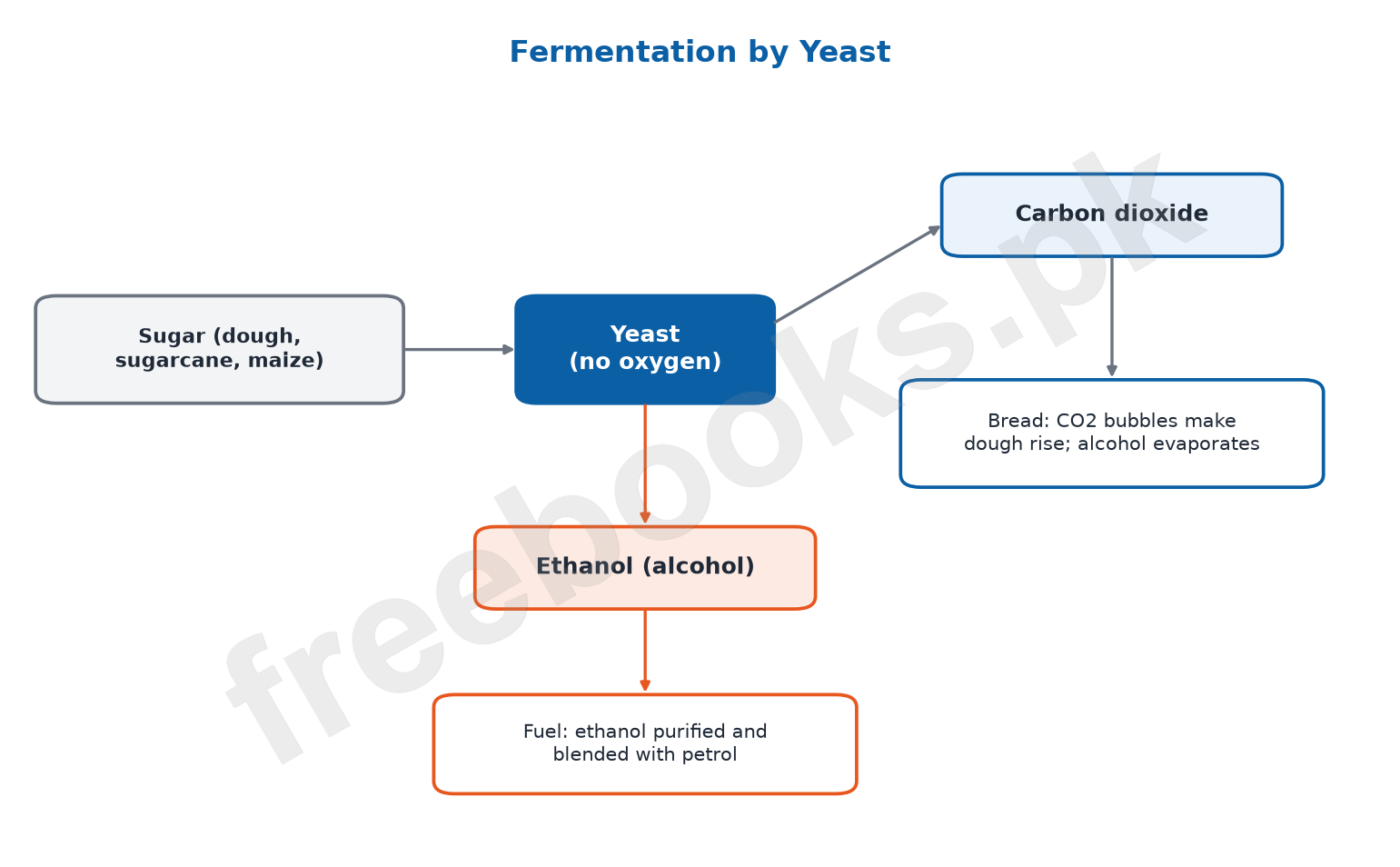
Yeast is a microscopic, single-celled fungus. In fermentation it breaks down sugar without oxygen, producing ethanol (alcohol) and carbon dioxide.
Bread making: yeast ferments sugars in the dough; the carbon dioxide forms bubbles that make the dough rise and the bread soft and light. The small amount of alcohol produced evaporates during baking.
Ethanol production: yeast ferments sugars from crops such as sugarcane and maize to produce ethanol. The ethanol is purified and used as a biofuel (often blended with petrol) and in industry.
8.1 Bacteria in Biotechnology
Bacteria are widely used because they are simple, reproduce very quickly and easily take up new genetic material.
Useful products: some bacteria make antibiotics (Streptomyces makes streptomycin); many make enzymes used in cheese making and detergents; some make vitamins such as vitamin B12; Lactobacillus ferments milk into yogurt and cheese. In bioremediation, bacteria break down oil spills and wastes.
In genetic modification, plasmids (small circular DNA loops in bacteria) carry new genes into bacterial cells, which then make the protein coded by the foreign gene, such as human insulin, human growth hormone or vaccine proteins. Some bacteria are also used to carry new genes into plant cells.
8.2 Genetic Engineering: Gene Editing
Genetic engineering is changing the genes of an organism or transferring genes from one organism to another. Special enzymes cut and join DNA at precise places. The organisms produced are called genetically modified organisms (GMOs).
Gene editing changes the DNA of an organism by adding, removing or replacing specific parts. It is being researched to correct genetic disorders such as sickle cell anaemia and cystic fibrosis, to produce crops that grow faster and resist pests, diseases and drought, and to help make medicines. It must be done carefully because changes to DNA can have unexpected effects.
8.2 Gene Transfer and Cloning
Genes are carried into a new organism by vectors. The commonest vectors for bacteria are plasmids and bacteriophages (viruses that infect bacteria).
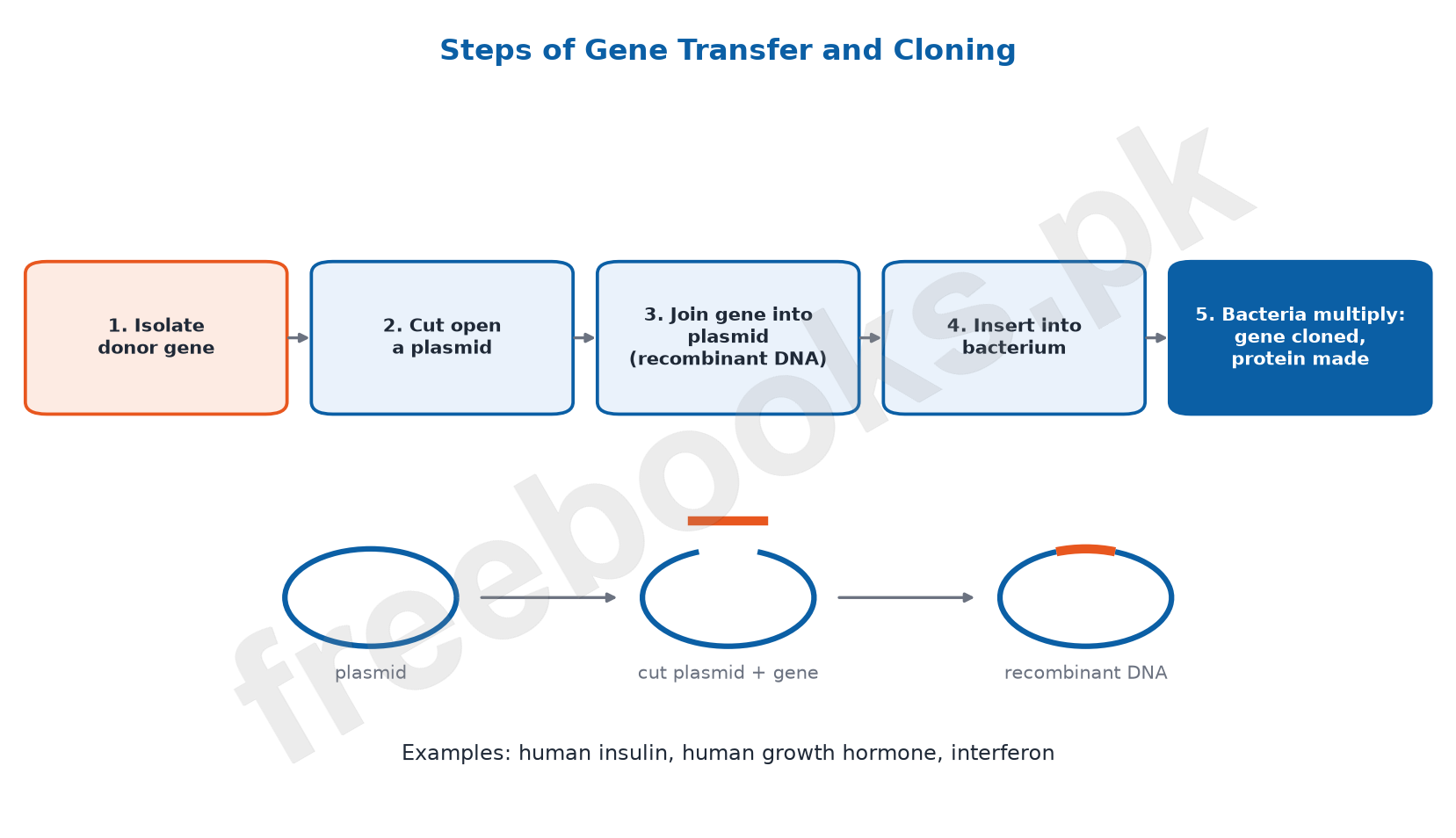
Steps: (1) the desired gene is identified and isolated from the donor’s DNA; (2) a plasmid is taken from a bacterium and cut open, and the donor gene is joined into the gap, forming recombinant DNA; (3) the recombinant plasmid is put into a bacterial cell. As the bacterium multiplies, every cell of the colony carries the gene, giving many copies (gene cloning) and producing the protein.
Examples: human insulin and human growth hormone made by bacteria; interferon (an antiviral protein) from bacteria; a hepatitis B vaccine made in modified yeast; Bt cotton and Bt maize carrying a bacterial gene for an insect-killing toxin that is harmless to humans; Golden Rice, which makes beta-carotene (converted to vitamin A in the body) to help prevent vitamin A deficiency and blindness; gene therapy, which introduces genes into a patient’s cells to treat disorders such as thalassaemia. Some COVID-19 vaccines use mRNA carrying instructions for a harmless virus protein.
8.3 Applications of Biotechnology
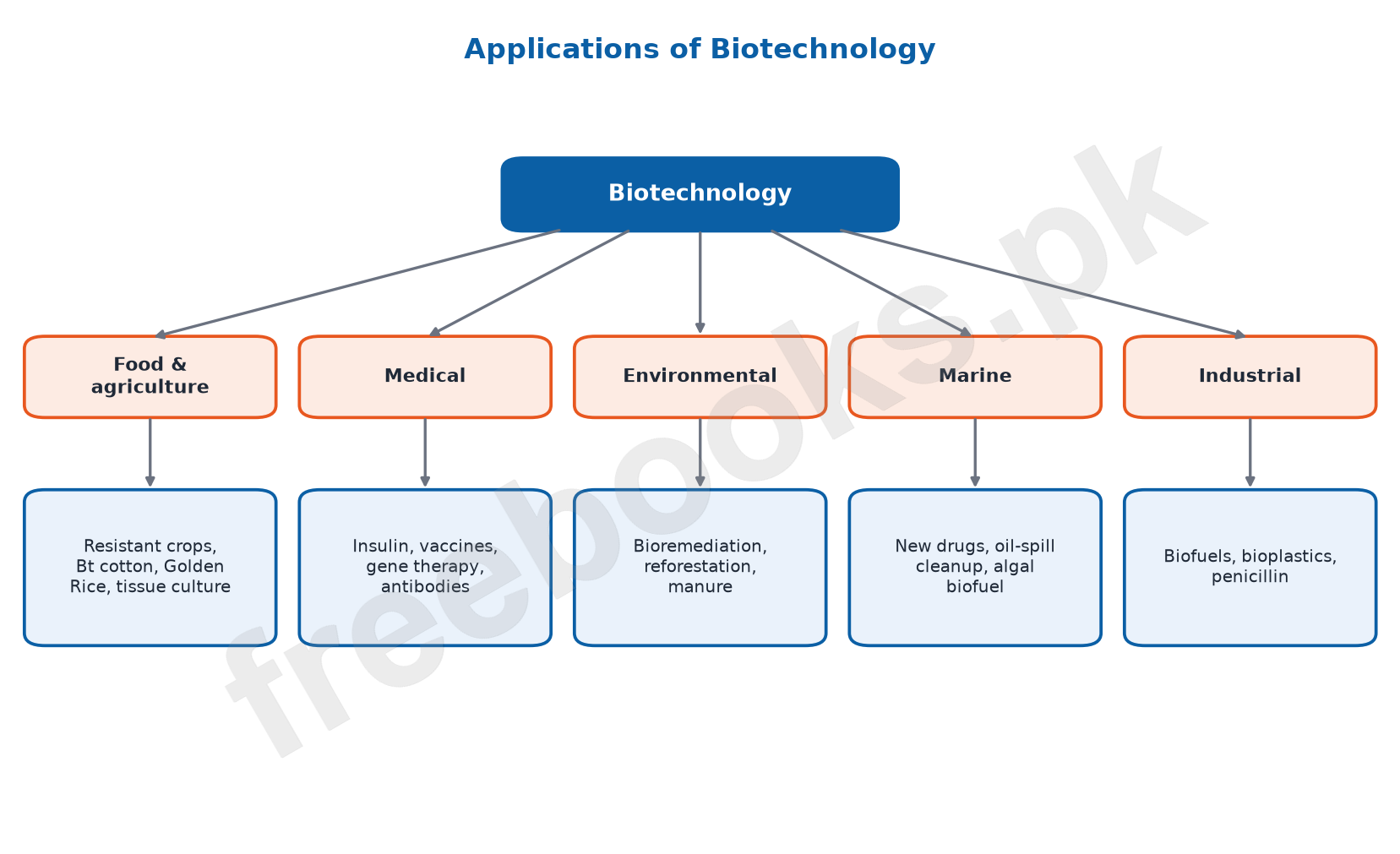
Food and agriculture: pest-, virus- and drought-resistant crop varieties; microbial enzymes for food and alcohol industries. In Pakistan, disease- and pest-resistant rice varieties have been developed and tissue culture is used to multiply high-yield mangoes and citrus.
Medicine: hormones and enzymes for treatment, vaccines, correction of defective genes, targeted antibodies for diagnosis and treatment, and early detection of inherited conditions. The Human Genome Project mapped the location of human genes.
Environment: bioremediation of pollutants by bacteria, plants or fungi; tissue-cultured saplings for rapid reforestation; bacteria to extract metals such as copper; microbes to make manure.
Marine: faster-growing modified fish; new drugs from sponges, corals and marine bacteria; marine bacteria to clean oil spills; algae for biofuels; marine enzymes for industry.
Industry: biofuels (ethanol, biodiesel, biogas), biodegradable plastics from plant starch, and medicines such as penicillin (from the mould Penicillium) and insulin (from bacteria).
8.4 Potential Risks of Biotechnology
Health concerns: some people fear GM foods may cause allergies or long-term effects.
Environmental impact: genes from GM crops may spread to wild relatives by cross-pollination. Loss of biodiversity: if farmers grow only a few GM varieties, traditional varieties may disappear.
Resistant pests and weeds: insects and weeds repeatedly exposed to GM crops may evolve resistance. Ethical issues: some people believe it is wrong to alter the genes of living things. Careful testing and regulation are needed to balance benefits and risks.
Important Definitions
Biotechnology
Use of living cells or organisms to make useful products or processes.
Fermentation
Breakdown of sugar by microorganisms without oxygen.
Yeast
A single-celled fungus used in baking and brewing.
Bioremediation
Use of organisms to remove or neutralise pollutants.
Genetic engineering
Changing genes or transferring genes between organisms.
GMO
An organism whose genetic material has been altered by genetic engineering.
Gene editing
Adding, removing or replacing specific parts of an organism’s DNA.
Vector
A carrier, such as a plasmid, used to transfer a gene.
Plasmid
A small circular DNA molecule found in bacteria.
Bacteriophage
A virus that infects bacteria.
Recombinant DNA
DNA formed by joining DNA from two different sources.
Gene cloning
Making many copies of a gene by multiplying the host cells.
Interferon
An antiviral protein made by cells.
Bt crop
A crop carrying a bacterial gene for an insect-killing toxin.
Golden Rice
Genetically modified rice that produces beta-carotene.
Gene therapy
Introducing genes into a patient’s cells to treat a disorder.
Tissue culture
Growing cells or tissues in a nutrient medium to produce new plants.
Key Facts at a Glance
| Item | Fact |
|---|---|
| Term ‘biotechnology’ first used | 1919, Karl Ereky |
| Structure of DNA worked out | 1953 |
| Dolly the sheep | First mammal cloned from an adult cell |
| Gas that makes dough rise | Carbon dioxide |
| Antibiotic from Streptomyces | Streptomycin |
| Bacterium in yogurt | Lactobacillus |
| Common vectors | Plasmids and bacteriophages |
| Insulin made by | Genetically modified bacteria |
| Hepatitis B vaccine made in | Modified yeast |
| Bt crops | Cotton and maize; insect resistance |
| Golden Rice | Beta-carotene → vitamin A |
| Penicillin made from | The mould Penicillium |
Diagrams
Steps of gene transfer: A flow chart of isolating a gene, forming recombinant DNA in a plasmid, and cloning it in bacteria.
Fermentation by yeast: A diagram of sugar fermented by yeast into ethanol and carbon dioxide, with uses in bread and fuel.
Applications of biotechnology: A chart of the five main fields of biotechnology with examples.
Short Questions and Answers
Define biotechnology.
The use of living cells or organisms to make useful products or processes for specific purposes.
Why does bread dough rise?
Yeast ferments sugars and releases carbon dioxide, which forms bubbles in the dough.
Why does bread not contain alcohol even though yeast makes ethanol?
The small amount of ethanol evaporates during baking.
Why are bacteria useful in biotechnology?
They are simple, multiply quickly and readily take up new DNA.
Give two useful substances made by bacteria.
Antibiotics such as streptomycin and vitamins such as B12 (also enzymes).
What is bioremediation?
Use of organisms such as bacteria to break down or remove pollutants like oil spills.
What is a plasmid and why is it used?
A small circular DNA loop in bacteria; it can carry a foreign gene into a bacterial cell.
What is recombinant DNA?
DNA made by joining a donor gene into a vector such as a plasmid.
What is gene cloning?
Producing many copies of a gene as bacteria carrying it multiply.
How is human insulin produced by biotechnology?
The human insulin gene is put into bacteria, which make insulin that is collected and purified.
What is a Bt crop?
A crop such as cotton or maize carrying a bacterial gene that makes a toxin harmful to insects but safe for humans.
How does Golden Rice help health?
It makes beta-carotene, which the body converts to vitamin A, helping prevent blindness due to deficiency.
Distinguish gene editing and gene transfer.
Gene editing changes an organism’s own DNA; gene transfer moves a gene from one organism into another.
Give two applications of environmental biotechnology.
Bioremediation of pollutants and tissue-cultured saplings for reforestation.
Give two risks of GM crops.
Spread of modified genes to wild plants and evolution of resistant pests (also loss of biodiversity).
Long Questions and Answers
Explain the role of yeast and bacteria in biotechnology.
What is fermentation by yeast?
Breakdown of sugar without oxygen into ethanol and carbon dioxide.
How is yeast used in bread and fuel?
CO2 makes dough rise; ethanol from sugarcane or maize is purified as biofuel.
Which products do bacteria make?
Antibiotics, enzymes for cheese and detergents, vitamins like B12, and yogurt by Lactobacillus.
How do bacteria help in genetic modification?
Plasmids carry foreign genes into bacteria, which then make products like insulin and growth hormone.
Describe the steps of gene transfer into a bacterium.
What is the first step?
The desired gene is identified and cut out of the donor’s DNA.
How is recombinant DNA made?
A plasmid is cut open and the donor gene is joined into it.
How is the gene put into bacteria?
The recombinant plasmid is introduced into a bacterial cell.
What is gene cloning?
The bacterium multiplies into a colony, each cell carrying and expressing the gene.
Describe gene editing and its uses.
What is gene editing?
Adding, deleting or replacing specific parts of an organism’s DNA.
How may it help medicine?
It is being researched to correct disorders such as sickle cell anaemia and cystic fibrosis.
How may it help agriculture?
It can produce crops that grow faster and resist pests, diseases and drought.
Why must it be done carefully?
Changes to DNA can have unexpected effects on the organism.
Give examples of products made by gene transfer.
Which hormones are made?
Human insulin for diabetes and human growth hormone for growth disorders, made in bacteria.
Which protective products are made?
Interferon against viruses and hepatitis B vaccine made in yeast.
Which crops are modified?
Bt cotton and maize resist insects; Golden Rice makes beta-carotene.
What is gene therapy?
Introducing working genes into a patient’s cells to treat genetic disorders such as thalassaemia.
Describe the applications of biotechnology.
In food and agriculture?
Resistant crop varieties, microbial enzymes, and tissue culture of fruit crops like mango and citrus.
In medicine?
Hormones, vaccines, gene correction, targeted antibodies and early diagnosis.
In the environment and sea?
Bioremediation, reforestation saplings, metal extraction, manure; marine drugs, oil-spill cleanup and algal biofuels.
In industry?
Biofuels, bioplastics and medicines such as penicillin and insulin.
Discuss the potential risks of biotechnology.
What are the health concerns?
Possible allergies or unknown long-term effects of GM foods.
What are the environmental concerns?
Modified genes may spread to wild plants through cross-pollination.
How may biodiversity and pests be affected?
Traditional varieties may be lost, and pests or weeds may become resistant.
What are the ethical issues?
Some people consider it wrong to alter the genes of living organisms.
Multiple Choice Questions (MCQs)
The term ‘biotechnology’ was first used by: (A) Mendel (B) Karl Ereky (C) Ian Wilmut (D) Darwin
Correct answer: (B) Karl Ereky. Karl Ereky, 1919.
The oldest form of biotechnology is: (A) Gene editing (B) Fermentation (C) Cloning (D) Gene therapy
Correct answer: (B) Fermentation. Fermentation.
Yeast is a: (A) Bacterium (B) Fungus (C) Virus (D) Alga
Correct answer: (B) Fungus. Single-celled fungus.
The gas that makes bread rise is: (A) Oxygen (B) Nitrogen (C) Carbon dioxide (D) Hydrogen
Correct answer: (C) Carbon dioxide. CO2.
Streptomycin is obtained from: (A) Penicillium (B) Streptomyces (C) Lactobacillus (D) Yeast
Correct answer: (B) Streptomyces. Streptomyces.
Yogurt is made with the help of: (A) Lactobacillus (B) Streptomyces (C) Bacteriophage (D) Penicillium
Correct answer: (A) Lactobacillus. Lactobacillus.
Small circular DNA in bacteria is called a: (A) Chromatid (B) Plasmid (C) Ribosome (D) Histone
Correct answer: (B) Plasmid. Plasmid.
A virus that infects bacteria is a: (A) Plasmid (B) Bacteriophage (C) Interferon (D) Vector gene
Correct answer: (B) Bacteriophage. Bacteriophage.
DNA formed by joining DNA from two sources is: (A) Recombinant DNA (B) mRNA (C) Chromatin (D) Plasmid only
Correct answer: (A) Recombinant DNA. Recombinant DNA.
Human insulin for diabetics is now mostly made by: (A) Pig pancreas only (B) GM bacteria (C) Plants (D) Viruses
Correct answer: (B) GM bacteria. GM bacteria.
The hepatitis B vaccine is produced in modified: (A) Bacteria (B) Yeast (C) Cotton (D) Rice
Correct answer: (B) Yeast. Yeast.
Bt cotton is resistant to: (A) Drought (B) Insects (C) Herbicides (D) Frost
Correct answer: (B) Insects. Bt toxin kills insects.
Golden Rice provides: (A) Vitamin C (B) Beta-carotene (C) Insulin (D) Iron only
Correct answer: (B) Beta-carotene. Converted to vitamin A.
Use of organisms to clean pollutants is: (A) Bioremediation (B) Fermentation (C) Cloning (D) Tissue culture
Correct answer: (A) Bioremediation. Bioremediation.
Penicillin is produced by fermentation using: (A) Yeast (B) Penicillium mould (C) Lactobacillus (D) E. coli
Correct answer: (B) Penicillium mould. Penicillium.
Quick Revision Summary
- Biotechnology: living cells/organisms → useful products; term by Karl Ereky (1919).
- Yeast fermentation: sugar → ethanol + CO2; bread rises (CO2), ethanol biofuel.
- Bacteria: antibiotics (Streptomyces), enzymes, vitamin B12, yogurt (Lactobacillus), bioremediation; plasmids carry genes.
- Genetic engineering → GMOs. Gene editing (change own DNA) vs gene transfer (move gene).
- Gene transfer: isolate gene → insert in plasmid (recombinant DNA) → put into bacterium → cloning.
- Products: insulin, growth hormone, interferon, hepatitis B vaccine (yeast), Bt crops, Golden Rice, gene therapy.
- Applications: food, medical, environmental, marine, industrial. Risks: health, gene spread, biodiversity loss, resistant pests, ethics.
Exam Tips
- Learn the three steps of gene transfer in order; draw a simple plasmid diagram.
- Match each product with its source organism (insulin–bacteria, hepatitis B vaccine–yeast, penicillin–Penicillium).
- Remember: fermentation gives both ethanol and CO2; bread uses the CO2, fuel uses the ethanol.
- For ‘advantages and risks’ questions, give balanced points from both sides.
- Keep a list of the five fields of applications with two examples each.
Note on Facts
The textbook gives virus-resistant tomato and tobacco and herbicide-resistant soybean, maize and cotton as examples of gene editing. These crops were made mainly by gene transfer (adding a foreign gene), not by editing the plant’s own DNA; gene-edited crops are a newer development.
The textbook says the first cloned mammal, Dolly, was produced in 1997. Dolly was born in July 1996; the result was announced to the world in February 1997.
The textbook says Golden Rice was made by transferring a gene from a bacterium. Golden Rice actually carries two added genes: one from a soil bacterium and one from a plant (originally daffodil, later maize), which together let the rice grain make beta-carotene.